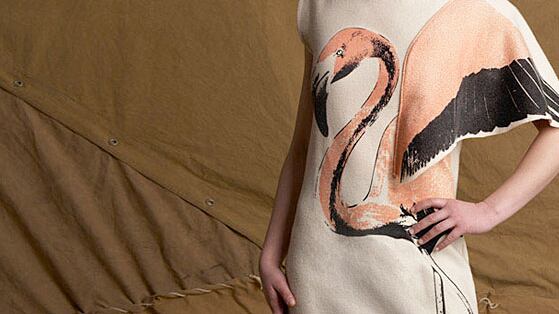
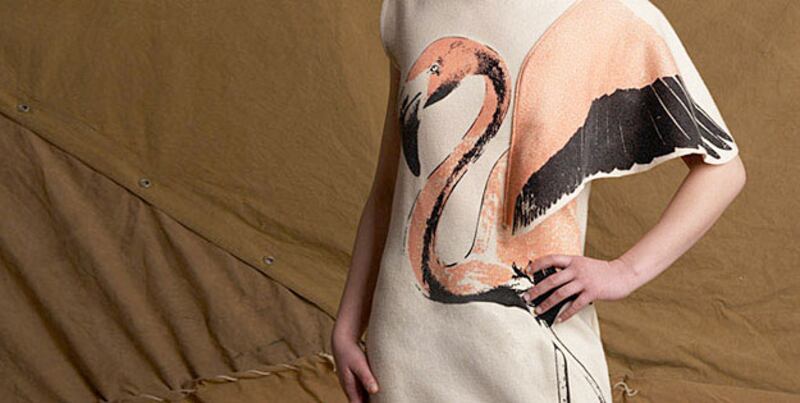
New York-based designer, illustrator and printmaker Mika Machida transfers her nature-inspired imagery to organic, sustainable fabrics with innovative cuts that mimic that natural shape of the animal she’s printed.
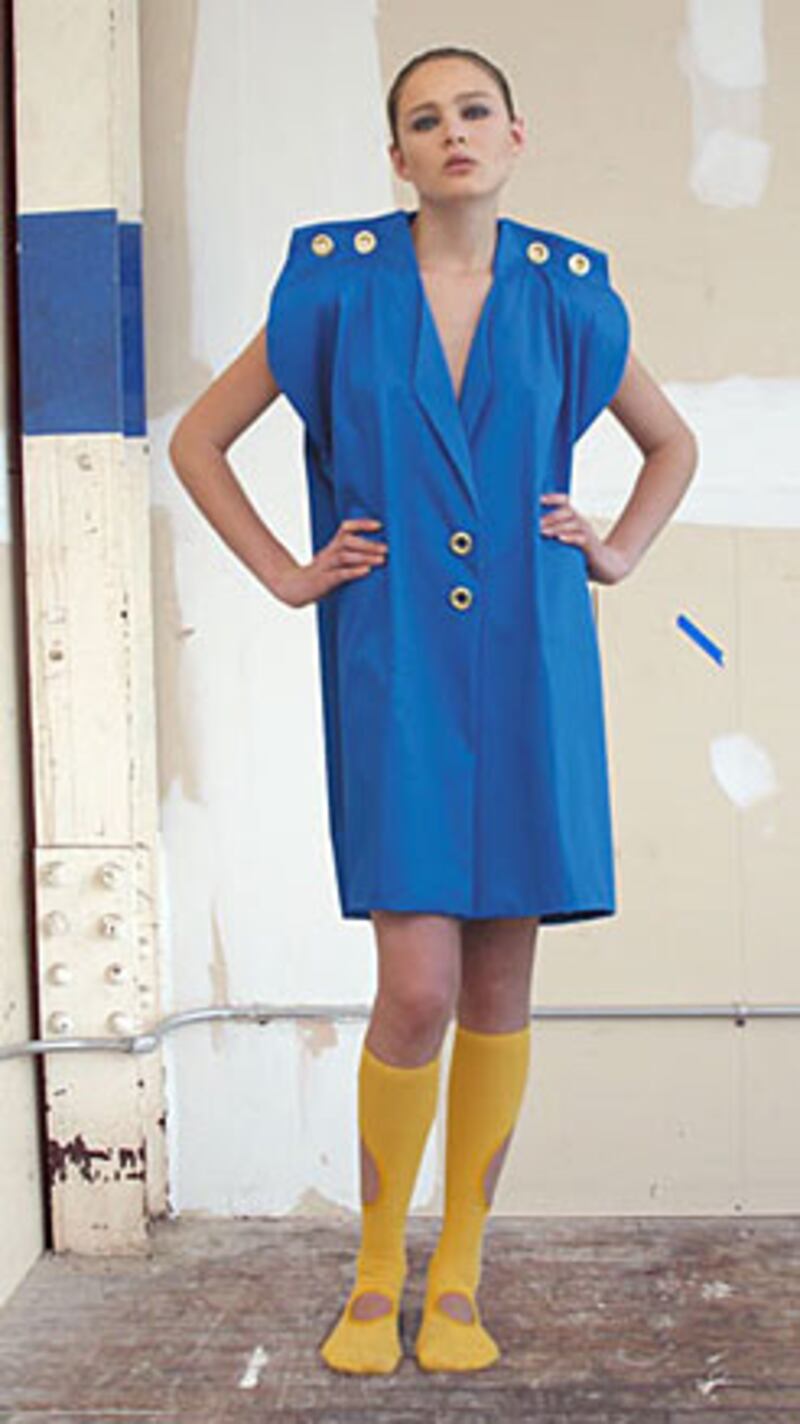
SANS is uneasy with the term “eco fashion” to describe what they do—“We are not an eco brand, and I don’t think any eco brand exists…how can it possibly be good for the environment? You produce things,” designer Lika Volkova told ScribeMedia Art Culture in an interview last month—but nonetheless, their conscious efforts to encourage new ways of thinking about clothing production, from their choice of eco-friendly fabrics like soy to selling patterns of their clothing so that people can make them at home, thus eliminating the need to package and transport their clothes, is a model more and more designers are adopting without question.
Courtesy of Sans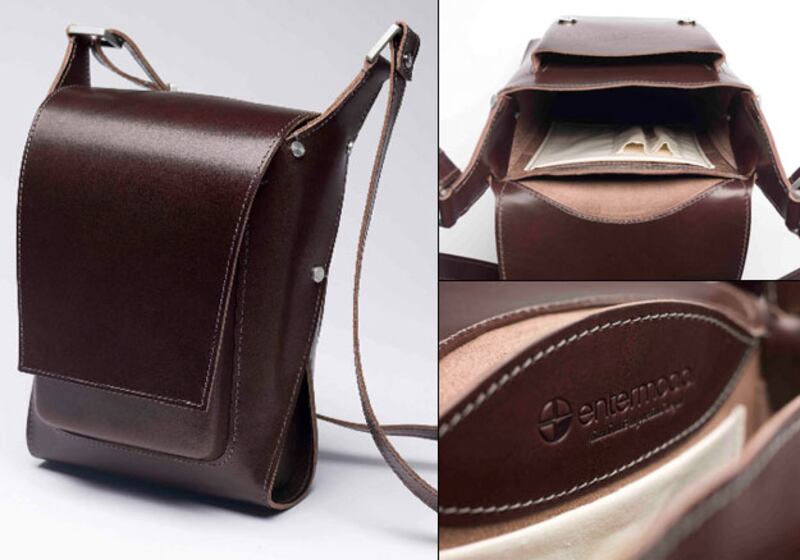
Designer Larry Olmstead applied his experience designing mountaineering packs to Entermodal, his hand-crafted, sustainable line of bags made to last that use pre-Industrial Revolution production techniques (in this case, molding leather over time using only water) and vegetable tanned leather made in Italy, free of formaldehyde and heavy metals. $568 at Juno and Jove.
Carlin Sundell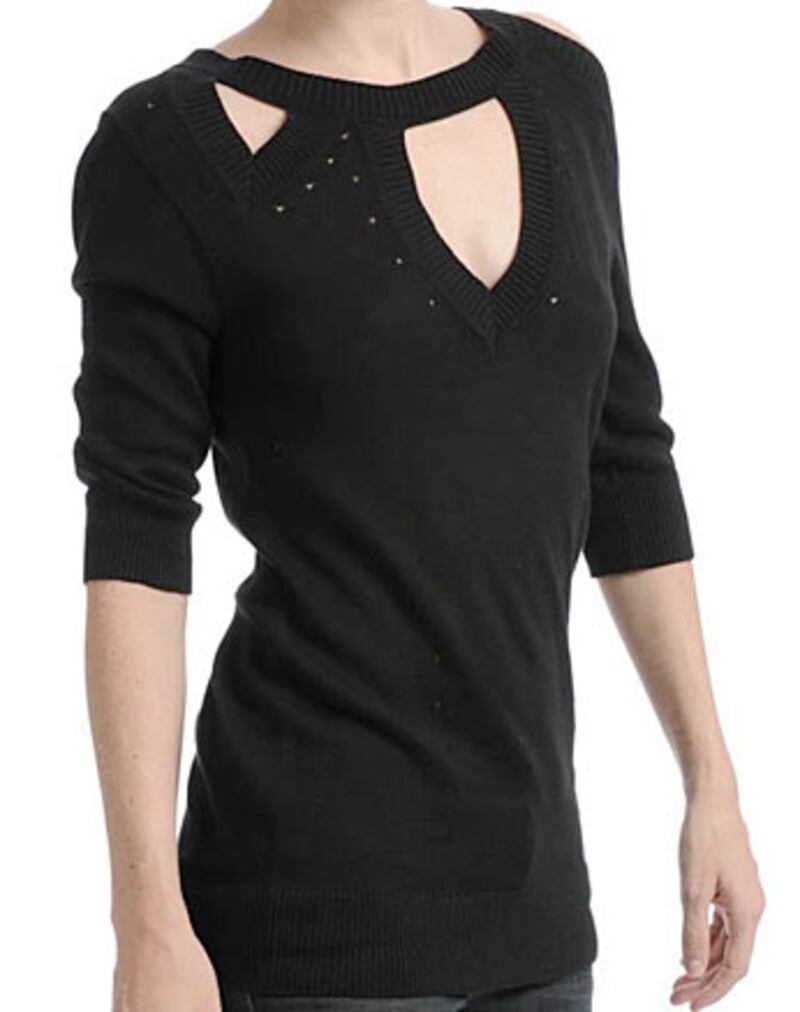
Edun, the brainchild of U2’s Bono and wife Ali Hewson, launched in 2005 with the goal of building sustainable business in factories in developing nations, which currently include India, Peru, Tunisia, Kenya, Uganda, Lesotho, Mauritius and Madagascar.$210 at edunonline.com.
Matthew Frost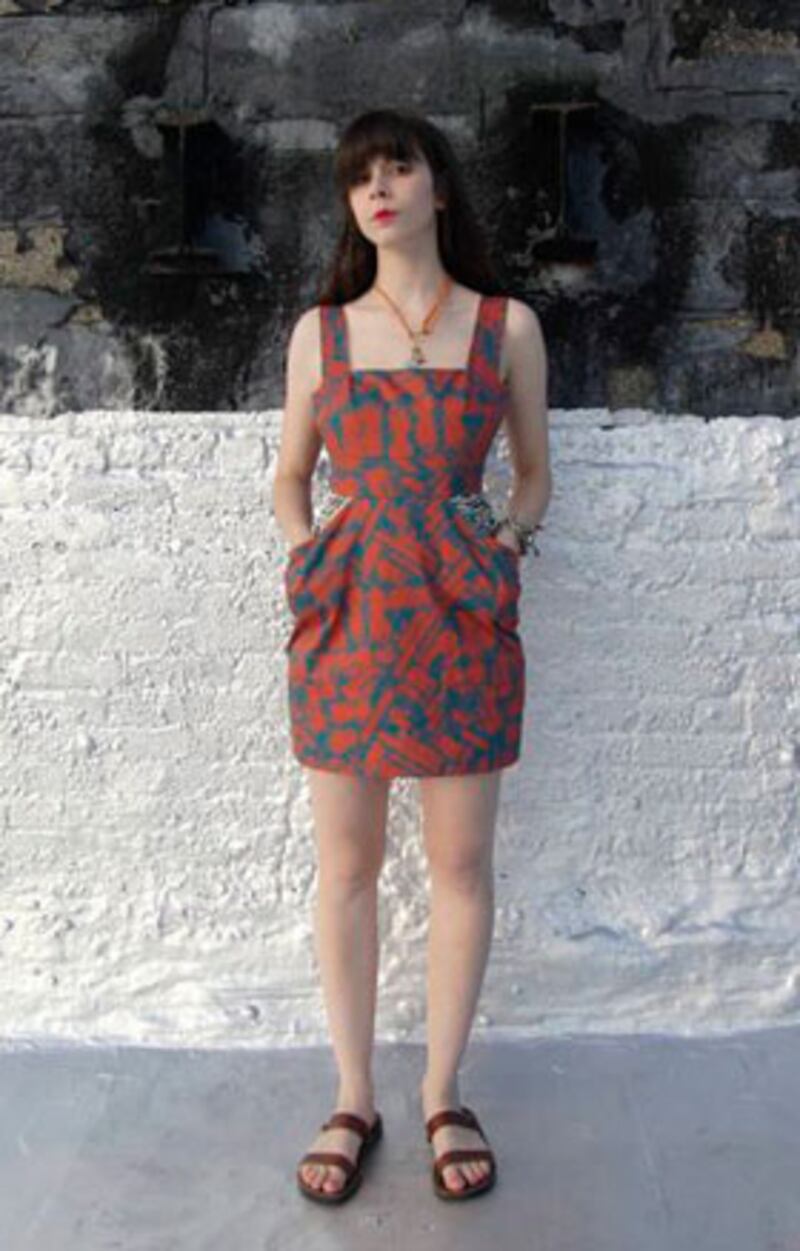
Caitlin Mociun cites the Bauhaus and the plant photography of Karl Blossfeldt as inspiration for the prints in her collection.$336 at mociun.com.
Lena Corwin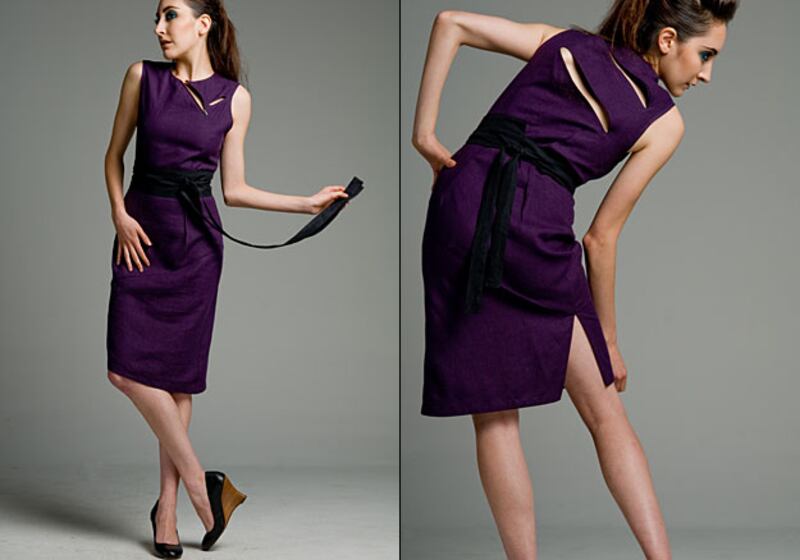
Sharp, futuristic design meets eco-friendly in Naturevsfuture, designed by Nina Valenti, who uses fabrics such as organic cotton, organic wool, hemp, soy, bamboo, seacell® (seaweed), lyocell (wood pulp), Ingeo™ (created from corn), and fabrics made from recycled plastic soda bottles. $288 at naturevsfuture.com.
Simon Gerzina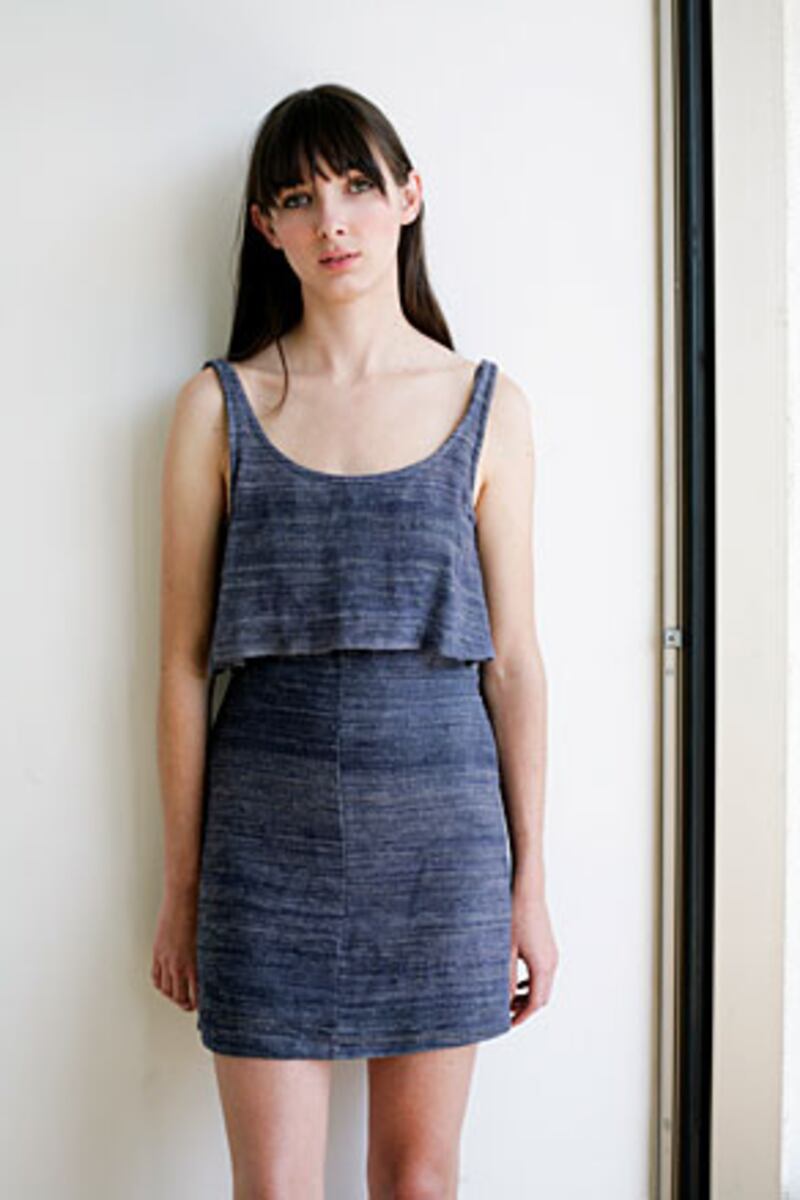
The first eco designer to win one of the Ecco Domani Fashion Foundation’s awards for emerging designers, former fashion writer Eviana Hartman of Bodkin manufactures her collection in New York City using organic cotton, organic wool, recycled-PET nylon and artisanal vegetable dyes. Vegetable dyed organic Ahisma silk dress, from a silkworm farm blessed by the Dalai Lama. $460 at Bird.
Courtesy of Bodkin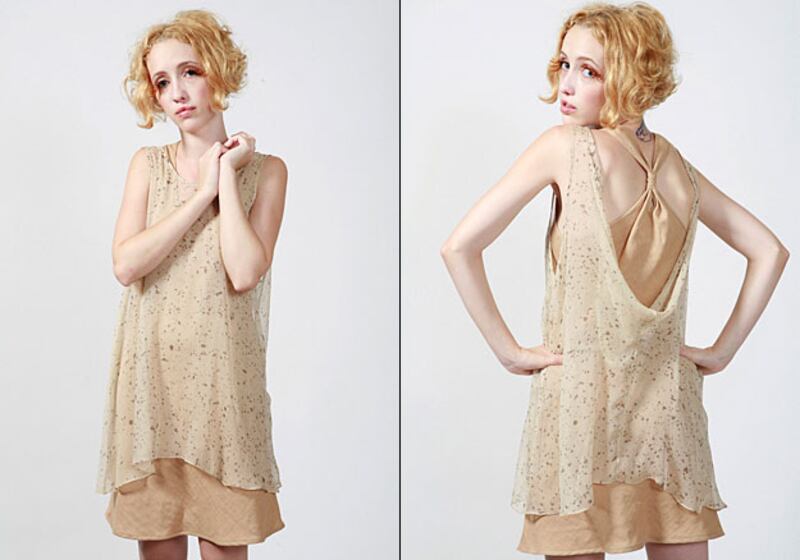
Bahar Shahpar not only designs eco-friendly clothing, but she’s leading the way for other designers to follow suit with a new partnership with C.L.A.S.S., an international eco-textile firm with an office housed in Shahpar’s showroom, The Four Hundred, consisting of an extensive library of environmentally sound materials that are currently available.100% silk georgette tank dress layered with 100% doubleface organic cotton gauze and dyed with natural plant dyes and iron powder, $400 at Juno and Jove.
Courtesy of Bahar Shahpar