Elon Musk appeared to admit for the first time that his work at the so-called Department of Government Efficiency was a total waste of time—which also destroyed his reputation.
He told Katie Miller, who is married to Donald Trump’s deputy chief of staff Stephen Miller, that he would not take the controversial post in Washington, D.C., if he had his time over again.
“I think instead of doing DOGE, I would have basically built—worked on my companies, essentially," he told The Katie Miller Podcast.
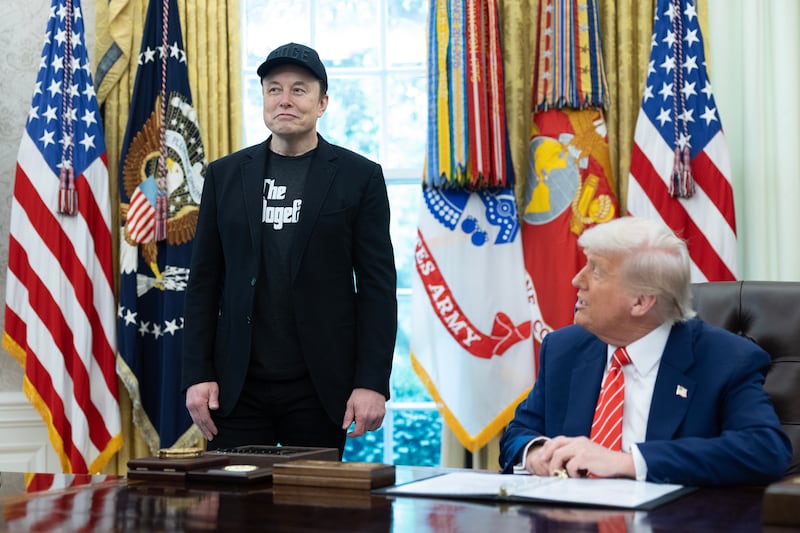
Musk then bemoaned the devastating impact his high-profile role had on Tesla’s reputation. “...And the cars, they wouldn’t have been burning the cars,” he said.
Vandalism of Teslas skyrocketed in the first half of the year as protesters targeted the vehicles.
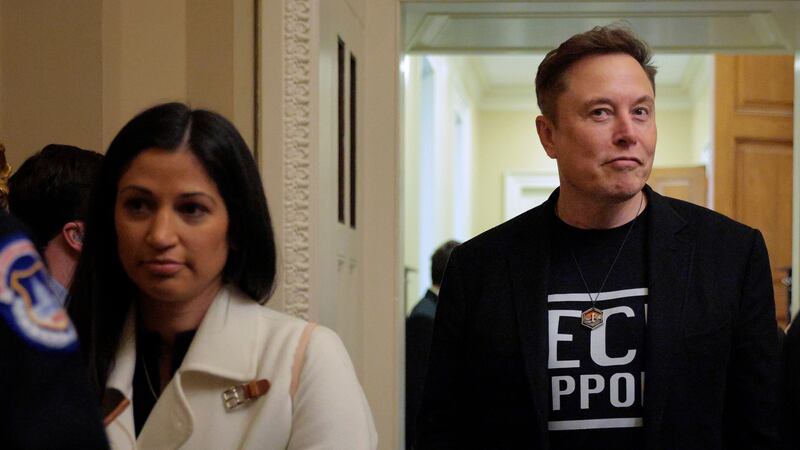
Musk told Miller, who he tempted away from her husband’s side with a role in the private sector, that he had been “somewhat” successful in his brief time in the role, which ended in May.

Miller, 34, asked, “If you could go back and start from scratch like it’s January 20th all again, would you go back and do it differently? And, knowing what you know now, do you think there’s ever a place to restart?”
After a deep sigh, Musk, 54, replied, “I mean, no, I don’t think so.”
“You gave up a lot to DOGE,” she said.
“Yeah,” he conceded, sadly.
In a previous interview after the dust had settled from his controversial gutting of several areas of the federal government, Musk described his time in the Trump administration merely as “an interesting side quest.” This is the first time he has admitted how much damage it did to him.
Among the moves the world’s richest person was criticized for were his cuts to the U.S. Agency for International Development.
The Associated Press reported in May that 163,500 more African children could die from hunger annually after DOGE withdrew foreign aid through the program.

DOGE ended up disbanding in November—eight months ahead of its expected conclusion. And, despite its name, it oversaw a $220 billion jump in federal spending—not including interest—in the fiscal year, according to The Wall Street Journal.