Happy, Sexy 70th Birthday to the Bikini (PHOTOS)
<p>The bikini officially turns 70 today. From Ursula Andress appearing out of the sea in ‘Dr. No’ to the barely-there Brazilian bikini, this summer staple has proved endlessly adaptable to fashion fads and body-shapes.</p>

Photo Illustration by Sarah Rogers/The Daily Beast

How has the bikini endured for 70 years? “Because it’s the skimpiest article of clothing that women are allowed to wear in public,” Valerie Steele, director of The Museum at New York’s Fashion Institute of Technology says, laughing. “Apart,” she adds, “from on French beaches where you can go topless and in Brazil, where women wear ‘dental floss’ bikinis.”
Though its anniversary—it debuted in Paris in the summer of 1946—is being celebrated today, the bikini as a concept wasn’t really invented 70 years ago, says Steele. “That’s when it was named. You can find pictures of French people in two-piece swimsuits in the 1930s. Some define the bikini as showing the ‘belly button’ and that doesn’t come till the 1960s. I call it a two-piece bathing suit.”
Yes, the bikini was seen as risqué once, says Steele, but certain pop-cultural moments—like Ursula Andress appearing out of the ocean in James Bond movie Dr. No in 1962—helped accelerate its popularity. Indeed Andress appearing out of the ocean in that Dr. No bikini was recustomized as a differently gendered, sexy moment when Daniel Craig emerged from the water in a pair of tight trunks as Bond himself in Casino Royale in 2006.
For Steele, the ‘Brazilian bikini,’ with “its teeny-weeny triangle at the front and a thin piece of cloth like dental floss between the cheeks of the bottom, is the most memorable bikini shape, as the bottom rather than the breasts is the focus of erotic attention.” The Wonderbra affected the styling of the cups of some bikinis, and today the bikini can be tiny, or adapted according to different body sizes (see the tankini), or according to faith (like the so-called ‘burkini’ as made famous by Nigella Lawson). “The bikini may be the most forgiving thing if you get it to fit you the right way,” says Steele.
Bikinis today can be sporty or retro; Steele recommends bikini-buyers to purchase them in shops where you can get different sizes in top and bottom components.
Has the bikini been liberating? “The meaning of a piece of clothing is not in the garment—whether it be bikini, high heels or corset,” says Steele. “Those things are not liberating or oppressive in and of themselves. This is about how we intrerpret clothing and construct meanings around it. If the bikini is an option for you, and you are happy in it, then it’s perfectly fine.”
Steele notes that in Brazil all kinds of people of differing body types like wearing skimpy bikinis. “They are confident with their bodies. The same in France. In Germany, people are happy to go naked. The issue of body-shaming is cultural, and not to do with the clothes themselves.”
In this image: Micheline Bernadini models the first official bikini on July 5, 1946, at the Molitor swimming pool in Paris. Designer Louis Réard’s design came a few months after a similar two-piece design was produced by French designer Jacques Heim.
Keystone/Getty

Brigitte Bardot, 1952.
AF archive / Alamy Stock Photo

Marilyn Monroe.
Hulton Archive/Getty

Sophia Loren, 1950.
Alamy Stock Photo

Bettie Page, circa 1955.
Getty

Ursula Andress in Dr. No, 1962.
Collection Christophel / Alamy Stock Photo

Carrie Fisher in Return of the Jedi (1983).
AF archive / Alamy Stock Photo

'Brazilian' bikini.
Radius Images / Alamy Stock Photo
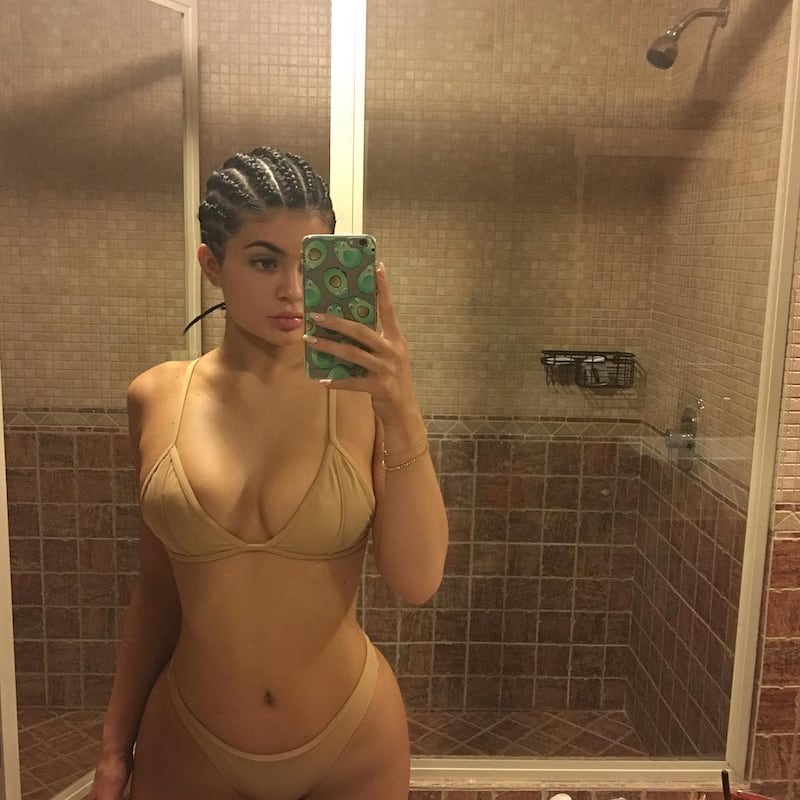
Kylie Jenner.
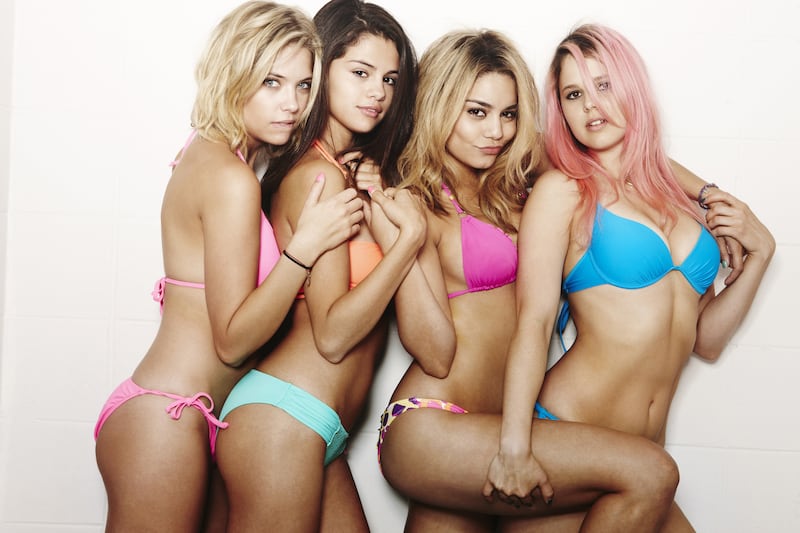
Ashley Benson, Selena Gomez, Vanessa Hudgens, Rachel Korine in Spring Breakers (2013).
A24/Photofest
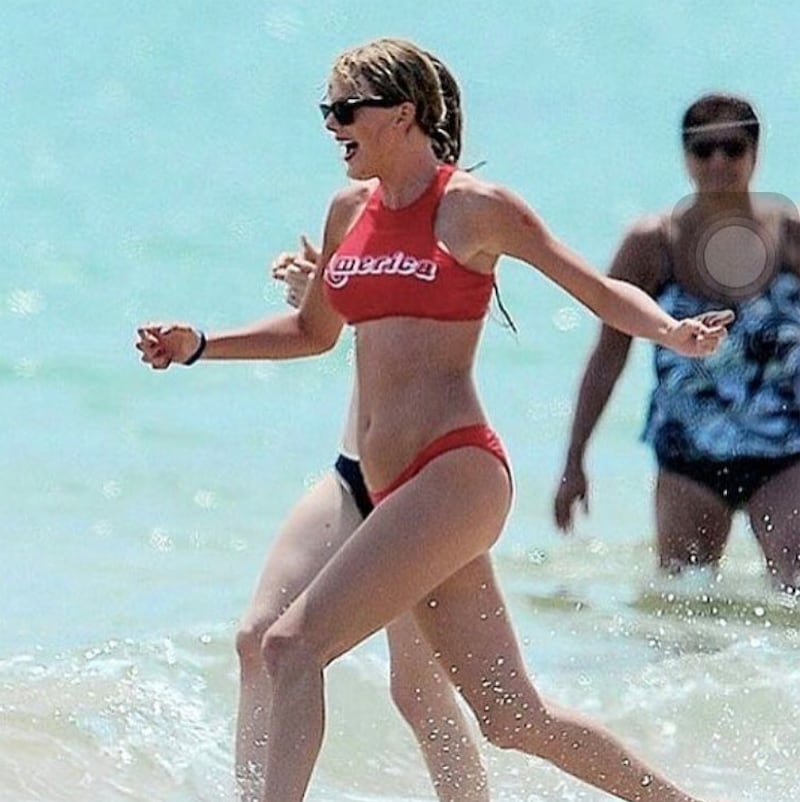
Taylor Swift celebrating July 4 holiday, 2016.
via Instagram
See more of our coverage in your search results.

Got a tip? Send it to The Daily Beast here.
Register below to read this article for free or subscribe
to unlock unlimited access to The Daily Beast.
Monthly
$1
First month then $5.99/month
Annual
$35
First year then $59.99/year
Premium
$79
First year then $119.99/year
*Substack access provided by the next business day, using your subscription email. Choosing the Premium plan constitutes your permission to share your subscription email with Substack and your agreement to Substack’s Privacy Policy.
Already have an account? Sign In
Looks like you already have a subscription!
You're all set!
Thanks for subscribing.