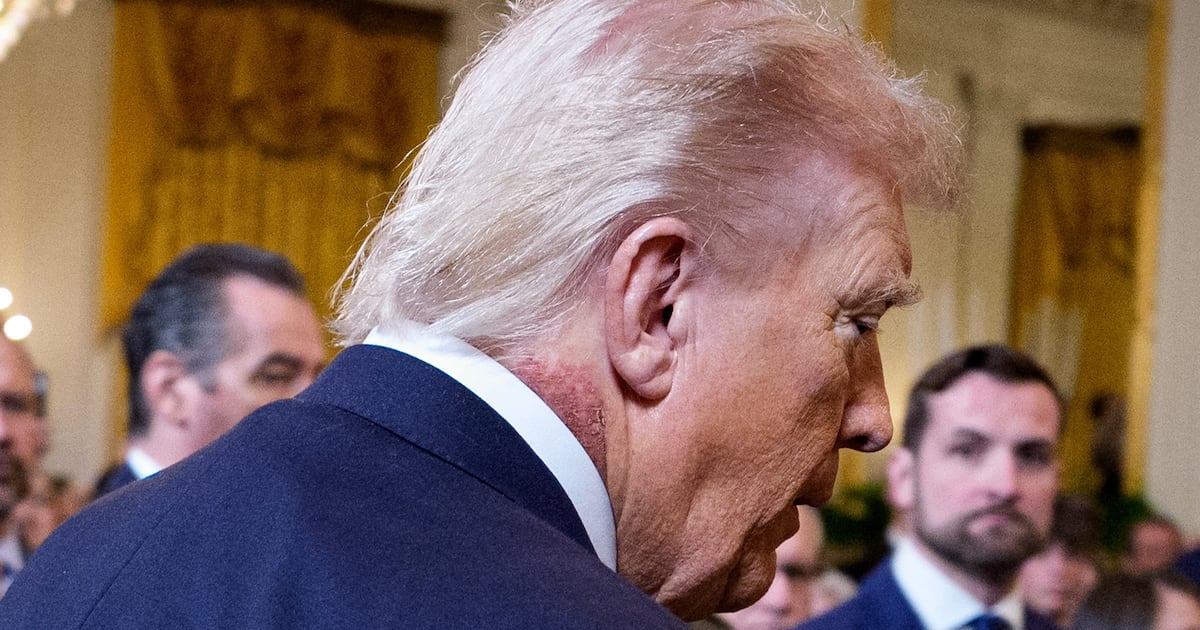
President Donald Trump took us to war against Iran by claiming that he was protecting us from weapons that do not exist.
The shameful war turned shameless 24 hours later, when six American service members were killed while left unprotected from a very real weapon the regime is known to have stockpiled in the thousands.
After the deaths in a drone strike on a tactical operations center in Kuwait, Trump offered not much more than a shrug. He suggested in a video he posted on Monday that such things are just a fact of war, which he has dodged and never seen firsthand.
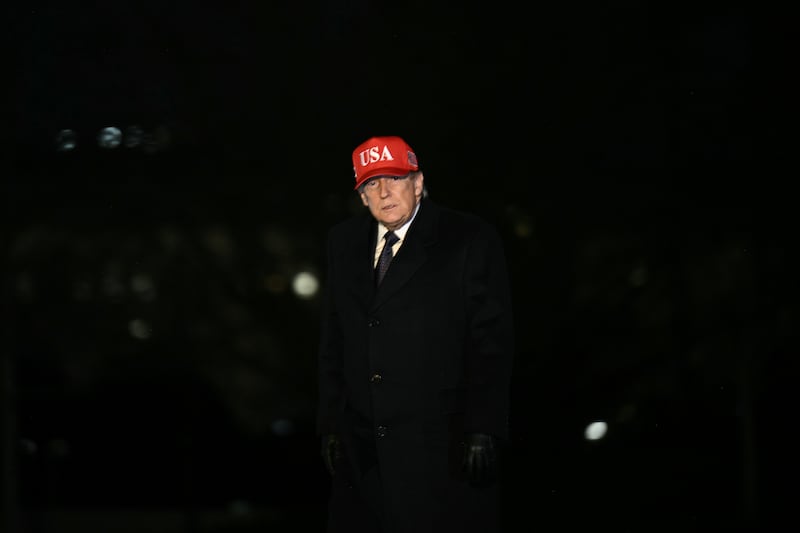
“That’s the way it is,” he said as if out of experience. “There will likely be more.”
He continued to say the war was necessary to save the American homeland from long-range, nuclear-armed missiles that the Iranians have never possessed.
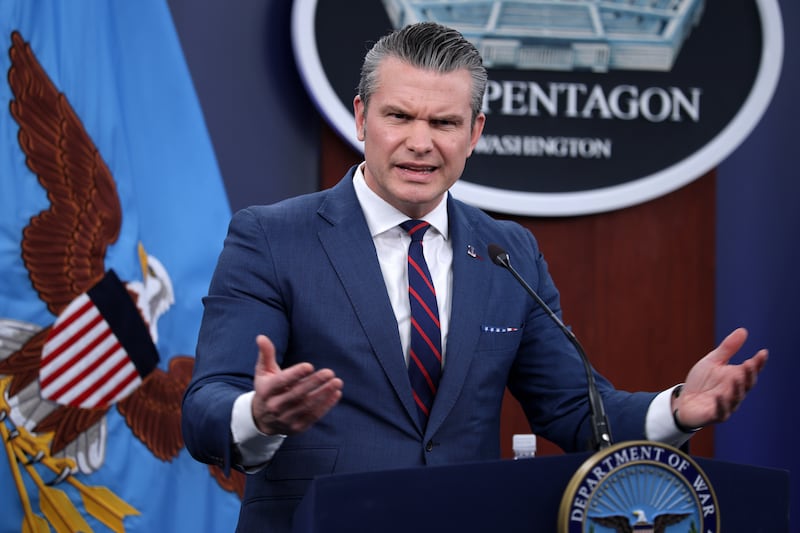
Defense Secretary Pete Hegseth, whose job includes protecting our soldiers against actual weapons, sought to minimize the failure.
“You have air defenses, and a lot’s coming in, and you hit most of it,” Hegseth said during a news conference at the Pentagon. “Every once in a while, you might have one, unfortunately, we call it a squirter, that makes its way through.”
Then Hegseth either lied or was misinformed. He definitely seemed to be a throwback from the pre-drone time of IEDs during his 2005-2006 deployment in Iraq.
“And in that particular case, it happened to hit a Tactical Operations Center that was fortified, but these are powerful weapons,” he said.
The American fatalities were in a “makeshift office space,” a triple-wide trailer protected only by “T-walls,” as reported by CBS News. Those are 12-foot-tall, steel-reinforced concrete barriers that were extensively installed in Iraq and Afghanistan as shields against IEDs, rockets and other explosives.
Pentagon spokesman Sean Parnell responded on X Tuesday, “This ‘reporting’ from CBS is not true.”
“A Tactical Operations Center is not a ‘makeshift office space,’” he said. “The secure facility was fortified with 6-foot walls.”

That was half the height that CBS said, which would mean the ill-fated soldiers were even less protected.
“Here are the facts,” Parnell continued. “We have the most extensive Air Defense umbrella in the world over the Middle East right now and control of the skies is increasing with every wave of airpower. The Iranian Navy has been devastated, and our military is dominating.”
He added, “Every possible measure has been taken to safeguard our troops — at every level. The Department is prepared for this engagement and has hardened our defenses. We’ve moved a significant number of our troops off the X and will always protect our bases and people from a significantly weakened Iran.”
He invoked the memory of the new war’s first dead.
“We will continue fighting in a way that honors our six fallen: no apologies, no hesitation. Epic fury for them and for every American lost at the hands of Iranian radicals.”
But the wall could have been 20 feet tall without offering much protection against the weapons the Iranians do have.
“It’s a different type of war now,” an Army special forces soldier who prefers not to be named told the Daily Beast on Tuesday. ”It’s really about drones. And what’s above.”
Parnell was seriously wounded while deployed with the army near the border of Afghanistan and Pakistan in 2006, and in saying “every possible measure is being taken to protect our troops,” he may not have included drones that can hug the ground and then rise up and plunge into the target at the latest moment.
And, as reported by CNN, there were neither sirens nor other alerts allowing the soldiers to exit and maybe seek shelter in a bunker before the structure was hit in the center of the roof.
“As of 9:30 am ET, March 1, three U.S. service members have been killed in action and five are seriously wounded as part of Operation Epic Fury,” the U.S. Command announced soon afterwards. “Several others sustained minor shrapnel injuries and concussions.”

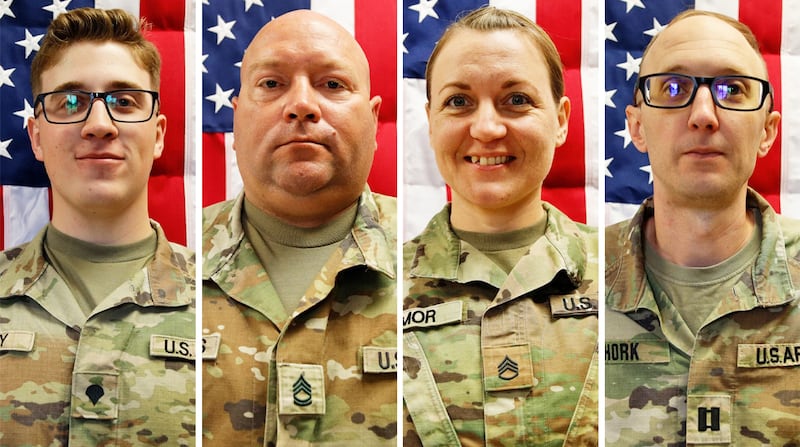
One of the seriously wounded subsequently died. That brought it to four, who would be identified as Capt. Cody A. Khork, 35, of Winter Haven, Florida; Sgt. 1st Class Noah L. Tietjens, 42, of Bellevue, Nebraska; Sgt. 1st Class Nicole M. Amor, 39, of White Bear Lake, Minnesota; and Spc. Declan J. Coady, 20 of West DesMoines, Iowa.
The bodies of two more soldiers were subsequently recovered from the wreckage. That brought the total to six known dead in a failure to protect them from the most significant threat to soldiers in present-day combat.
Nicole Armor’s husband told the Associated Press she and at least some of her fellow soldiers may have been even less protection than Parnell suggested. Joey Armor said his wife had been resettled off base to an unprotected shipping container-like structure that had no defenses a week before she was killed.
“They were dispersing because they were in fear that the base they were on was going to get attacked and they felt it was safer in smaller groups in separate places,” the husband was quoted telling the AP.
He further reported that the couple had been jokingly messaging each other two hours before before her death.
“She just never responded in the morning,” he said.
The husband also said that she expressed “constant concern” over the last month.
“She knew something was coming, she just didn’t know what scale,” he was quoted saying.
He reported that she was due to return home to him and their two children.
As of Tuesday evening, the last two of the American dead had not yet been publicly identified. More dead were likely to come. And, as we arrive at the first primaries preceding the midterm elections, Trump’s war has become a HUGE distraction from Jeffrey Epstein and the economy and ICE.