
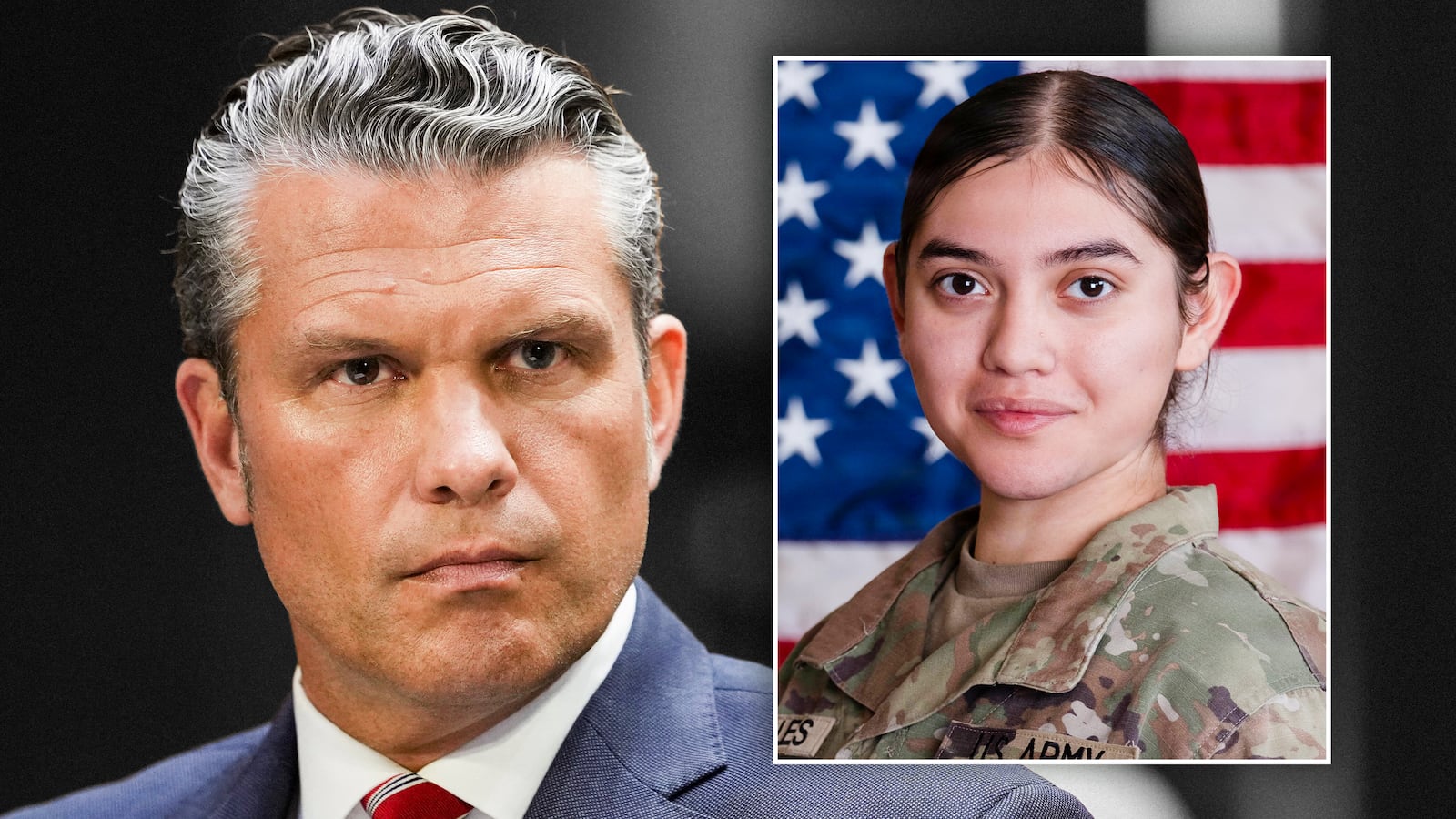
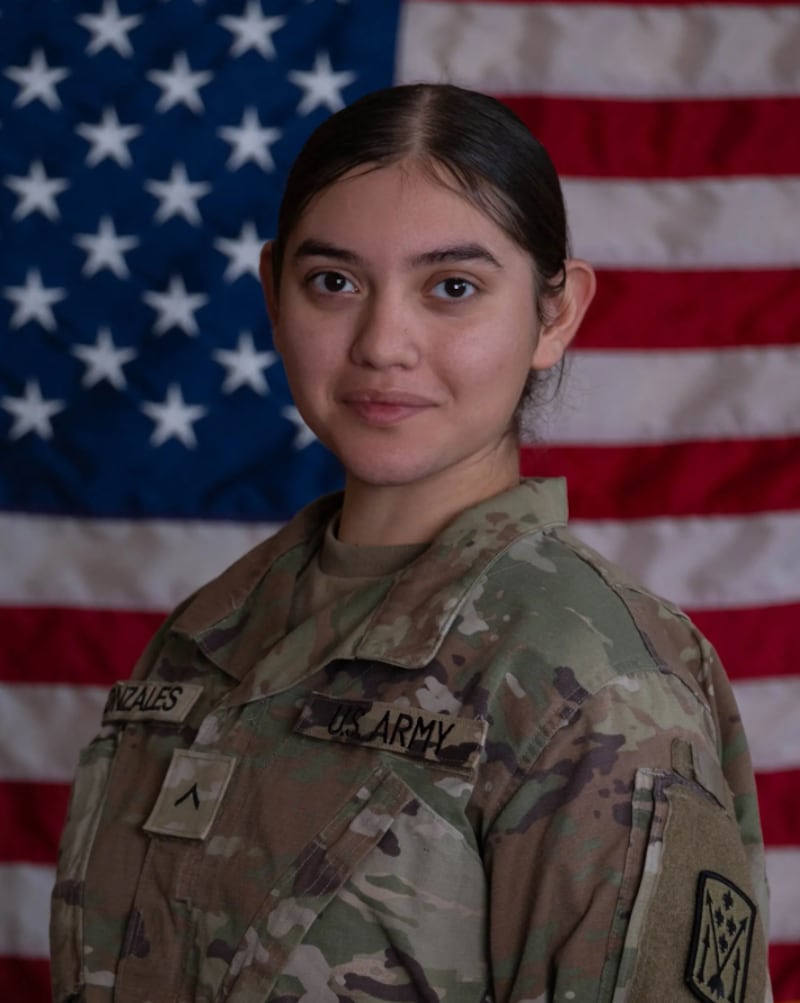
On July 17, two days shy of a year after she left her Texas home to begin basic training, Army Pvt. Isabella Gonzales was killed by an Iranian ballistic missile and drone attack in Jordan.
She was just 19.
“Such a young age,” former classmate Zuleyka Acosta told CBS News Texas. “I think people need to recognize that she’s still just a teenager.”
The teenager from Carrollton was a year younger than Barron Trump, whose entire extended family had never spent a single day in uniform. Gonzales’ friends say she enlisted 49 days after graduating from Hebron High School with the hope of making people proud of her, and she had already accomplished that when she was killed on July 17.
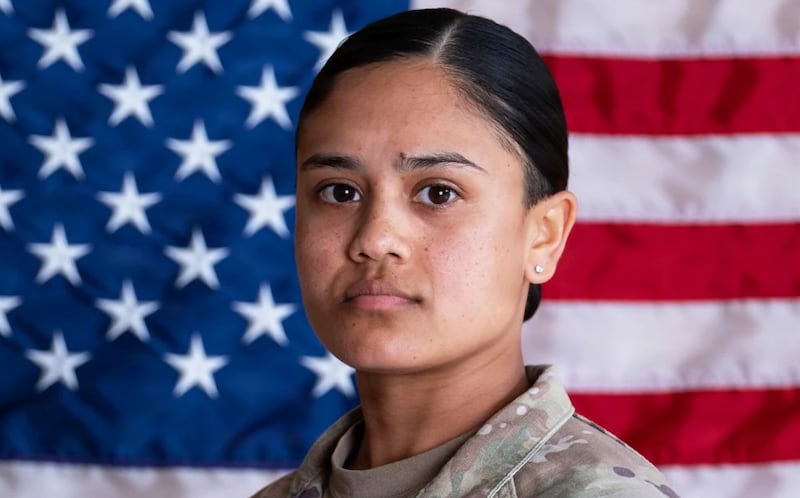
That was exactly 115 days after Trump’s March 24 declaration that, ”We’ve won this war.“ Also killed in the attack on Muwaffaq Salti Air Base was 25-year-old 1st Lt. Tyler James Feehan of Hawaii and Sgt. Angel S. Rampersad, 28, of Ozone Park, New York, who had initially been listed as missing in action.
Gonzales could not have imagined that her sacrifice, or that of her comrades, would be repeatedly cited during the U.S. Senate hearing on the Trump administration’s request for an additional $67 billion to fund a conflict of Donald Trump’s choosing that is said to have already cost $37.5 billion. Gen. Dan “Razin’” Caine, chairman of the Joint Chiefs of Staff, honored the fallen three, along with 30-year-old Sgt. Michael Swinton, who was killed on July 19 during the controlled explosion of a downed Iranian drone in Iraq.

“I ask all of us here in the Senate and across the American people to never forget our fallen and their families who continue to show us what courage, tenacity, grit, and commitment to the nation looks like,” Caine said.
Defense Secretary Pete Hegseth was the focus of intense questioning by Democratic Sen. Jon Ossoff of Georgia.
“On day 14 of this conflict, Mr. Secretary, day 14, nearly five months ago, you stated that Iran’s military had been, ‘destroyed,’ and “made combat-ineffective,’” Ossoff said. “Was that an accurate statement? “
“They didn’t have a navy any longer,” Hegseth replied. “It was completely sunk. Their missiles were buried underneath a lot of their underground facilities, and their defense industrial base has been almost completely destroyed.”
Ossoff kept pressing.
“Mr. Secretary, early in the conflict, day three, you said one of those core objectives was to ‘destroy the missile threat,’” Ossoff noted. “And, as you restated it on day five, to ‘obliterate’ Iran’s missiles and drones. Those were clearly and repeatedly stated core objectives of the campaign, which, four months ago, you declared had been completed victoriously with every single objective achieved. Were those objectives achieved four months ago?”

Hegseth said, “No one ever stated that every single missile was gone. Ultimately, ‘combat-ineffective’ means they’re not able to dig them out of their UGFs [underground facilities]. …It doesn’t mean they don’t have underground facilities where they put missiles in them and hold onto them because they’re the world’s largest state sponsor of terrorism. So we never expected they would stop having capabilities to shoot.”

Hegeseth seemed to imagine he was making sense.
“The question is, at scale, against an opponent like the United States of America, which, when toe to toe with them, Iran couldn’t,” he continued.
Ossoff was not done. He reminded Hegseth that on day nine of the war he had “assured the American people that Iran would surrender.
“Does that remain your prediction”? Ossoff asked.
Hegseth resorted to what Trump always says when pressed about the war he started with the illusion that knocking out the regime in Iran would be as easy an “excursion” as deposing the Venezuelan President Nicolás Maduro.
“Ultimately, Iran will never have a nuclear weapon to threaten the United States of America,” Hegseth said. “That has been the objective, and it remains so.”
Ossoff kept at him.
“So just to review, you will not answer whether your statement made on the 14th day of the war that Iran’s military had been ‘destroyed’ and ‘made combat-ineffective,’ was a truthful statement to the American people, as you sit here and ask for tens of billions more.”
At one point, when his warfighter testosterone seemed to fail him in the face of persistent fact, Hegseth called out, “They can lob missiles!” as if that were really nothing in the face of American lethality.

But what Iran was still able to lob killed Gonzales and the three other Americans whose flag-covered caskets will be carried from plane to tarmac at Dover Air Force Base in Delaware on Tuesday. That will bring the total of slain American service members in Trump’s war to 18.

“The most important thing that I do is make sure that the president and the other leaders understand the risks and carefully consider the Dover test,” Caine said near the conclusion of the hearing. “And that is: are we willing to go to Dover, as we will tomorrow, to bring back the fallen?”
A year and five days after she left Texas to begin basic training, Gonzales will come home, never to see 20. She is no less a hero because her country failed the Dover test with a war of choice.