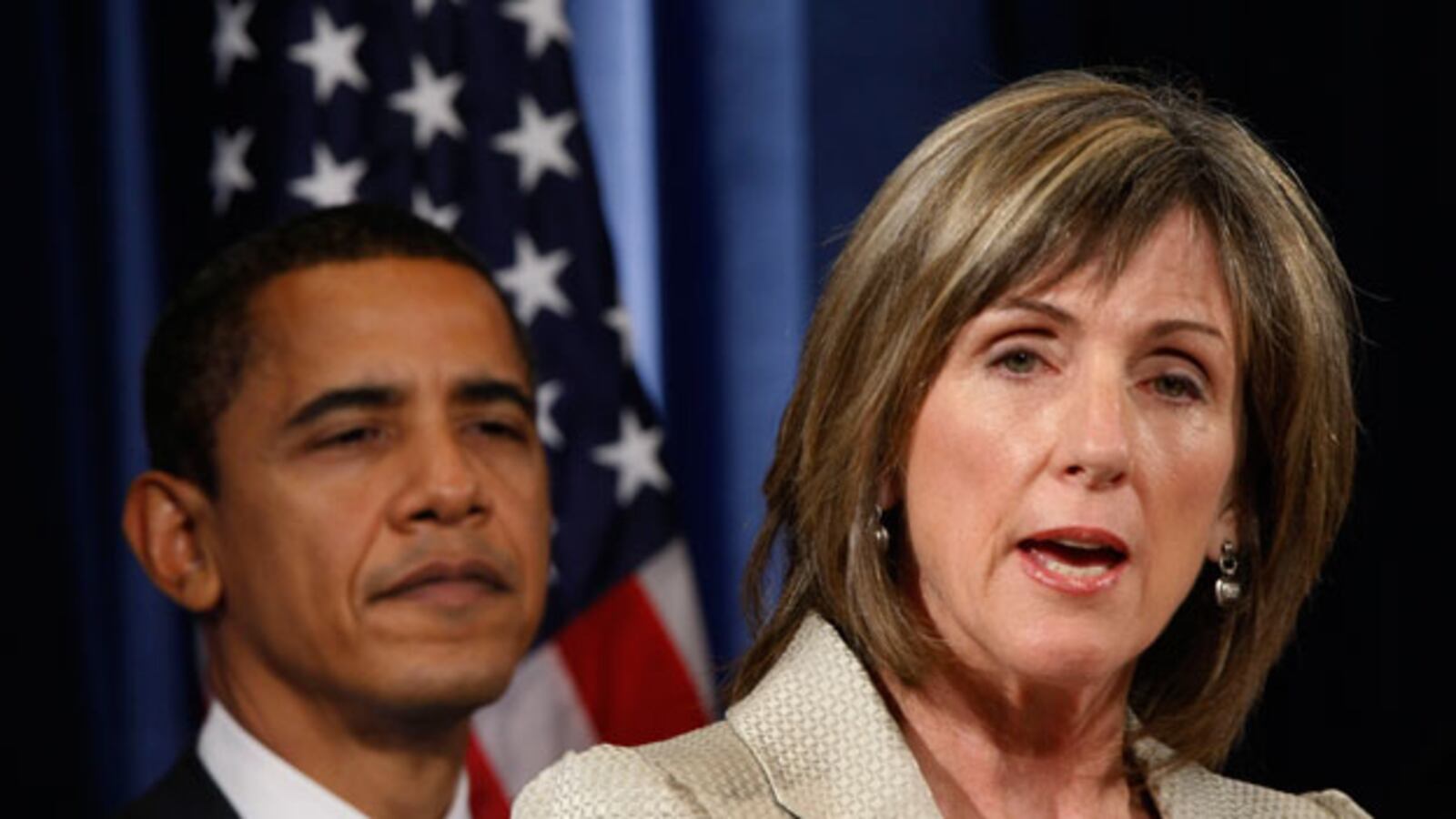
When asked what grade he would give President Obama on climate and energy, Professor Sachs responds, “A for effort and A for the portfolio of policies that have been put on the table. But no more than a B for national strategy. What I would like to see from the administration is a blueprint, a timeline and a more integrated strategy,” he says. “And that’s considered politically dangerous because it seems right now in America, putting any plan on the table is politically dangerous.” Here, Carol Browner, previous head of the Environmental Protection Agency under President Clinton, who is now charged with ensuring effective collaboration between all manner of climate and energy stakeholders as Obama’s White House Energy Coordinator.
AP Photo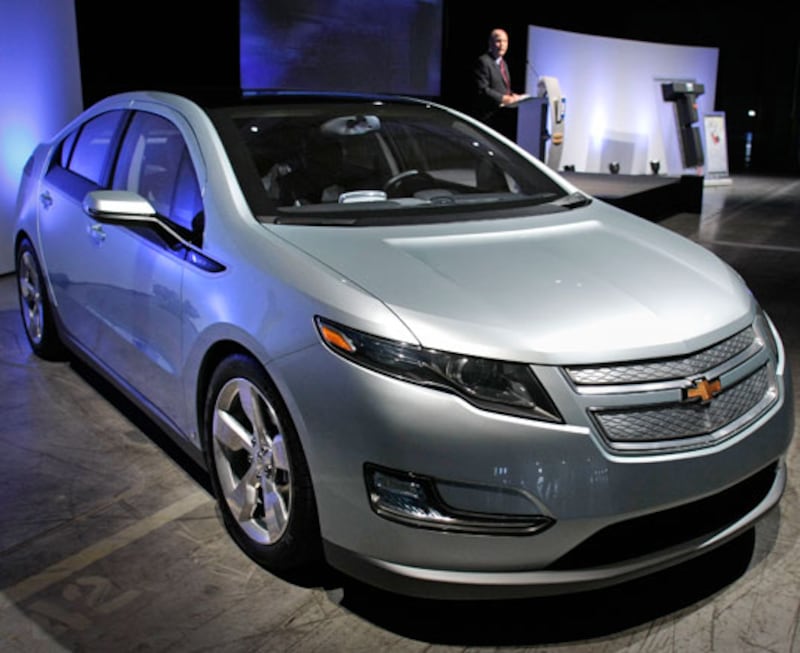
“The real question is whether we get not only [auto] companies that are surviving, but also companies that are producing cars that consumers want, and that are environmentally advanced,” Sachs tells The Daily Beast. “As a society we’re going to have to embrace the idea of electric vehicles as a major new direction for this country because it’s the one that makes sense for the environment and energy security. This has to be better explained to the public. Obama is doing it step by step.” Current estimates have the Chevy Volt plug-in hybrid averaging 230 miles per gallon. GM says it will hit showrooms in late 2010.
Bill Pugliano / Getty Images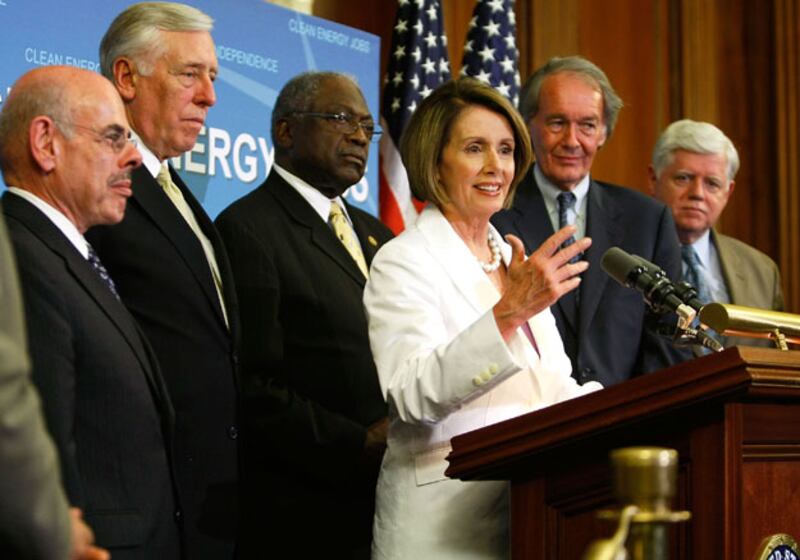
On the narrowly passed House climate and energy bill, Sachs admits, “It’s progress compared to the past, but it’s nowhere up to the intensity, speed, and coherence that this crisis requires. A politician might say the latter is impossible anyway. The climatologists would say that may be the political reality, but it’s not the climate reality.” Henry Waxman (far left) and Ed Markey (right of Speaker Pelosi) co-sponsored the bill, but Sachs doesn’t believe “this is going to get done by leaving it to the various committees of congress.”
Alex Wong / Getty Images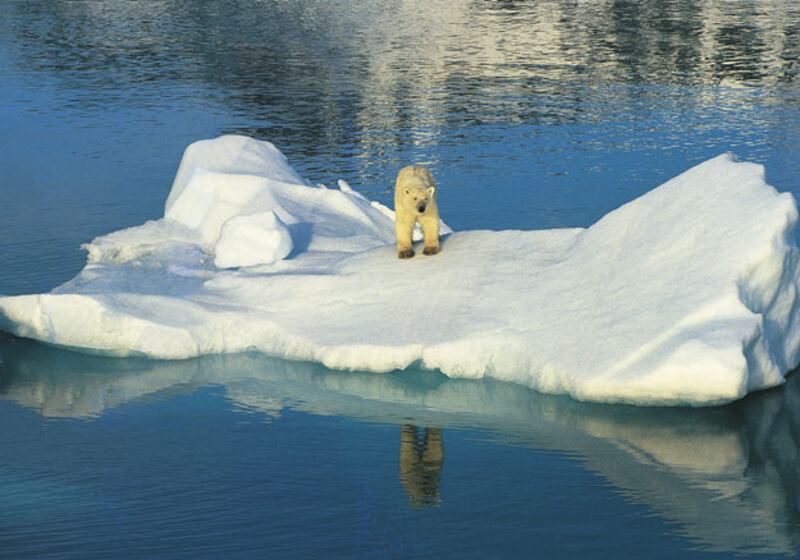
“There are short-term variations around long-term trends and no one is claiming there’s a precisely known timetable or magnitude of effects. But events are taking course much faster and more dangerously than the politicians even begin to contemplate,” warns Sachs. “The early stages of warming change the nature of the planet in such a way that it leads to an accelerated path of natural forces that amplify the human effects. The melting of sea ice, which changes the reflectivity of the plane¬t, is an example of that.”
DEA, C. SAPPA / De Agostini/Getty Images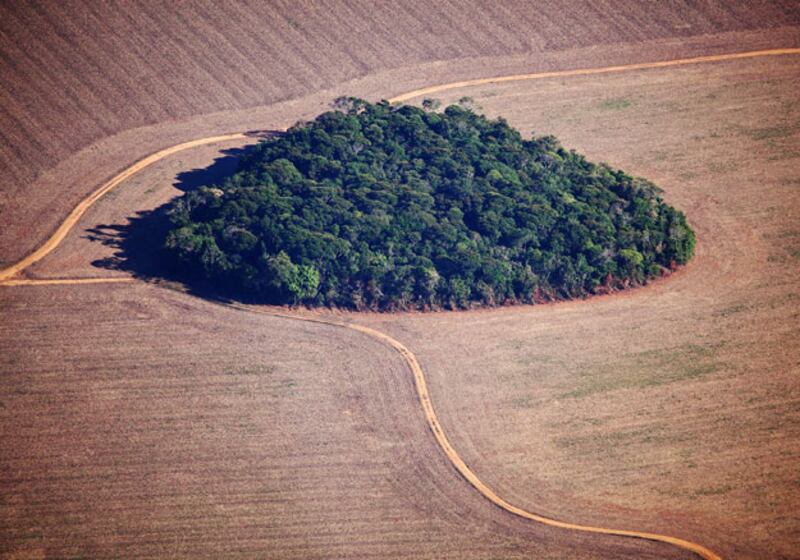
Much discussion surrounds the U.S. and China because together the two power-hungry countries produce 40 percent of all emissions. But Prince Charles has been sounding the rainforest alarm as another 17 percent is the result of tropical deforestation. On this front, Sachs says “There has been a big advance in the last year. The notion is coming into focus that biological carbon sequestration serves many important functions, both on climate change mitigation and bio-diversity conservation.”
Rodrigo Baleia / Getty Images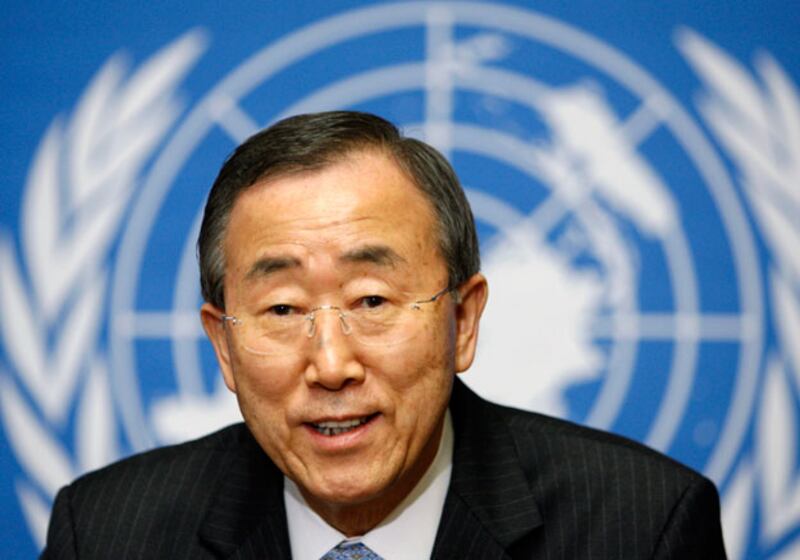
In December, all eyes will be on Copenhagen, site of the U.N. Climate Change Conference. The high-stakes meeting is meant to produce a successor to the Kyoto Treaty. But given the Senate’s delay on producing a climate bill, some in Europe are now questioning whether the U.S. has the political will to play the primary role it must if the worst effects of global warming are to be avoided. As special advisor to U.N. Secretary-General Ban Ki-moon, Sachs says “Most governments, including our own, do not have clear pathways to achieve any targets they might set. So when we negotiate, whether it’s 15 percent [reduction in emissions] by 2020 or 25 percent to 40 percent relative to 1990 levels and all the other numbers being thrown around, there’s very little underpinning them.”
Denis Balibouse / Reuters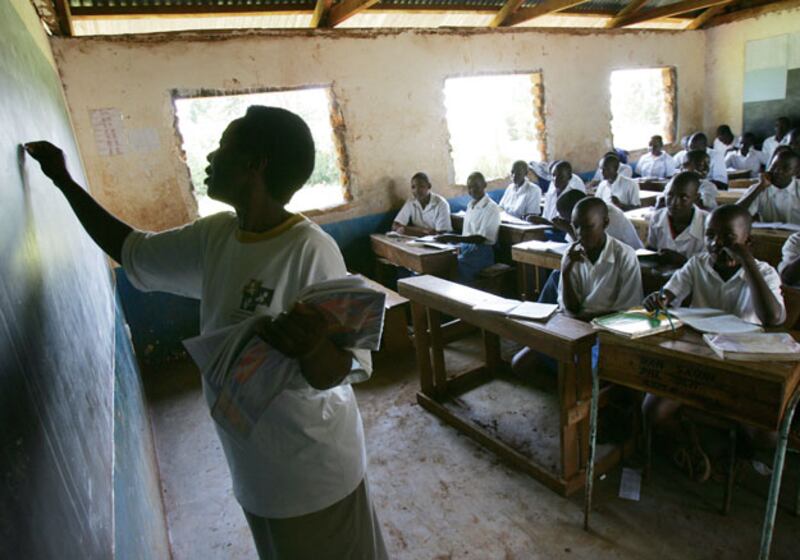
Developed jointly by The Earth Institute and U.N., The Millennium Village program focuses on agriculture, health, education, infrastructure and business development in poor, developing nations. “In Kenya we’ve had vastly improved harvests resulting in a decisive decline in hunger and childhood stunting, a decisive improvement of nutritional status, school attendance and performance, and a huge decline–90 percent–in malaria,” Sachs tells The Daily Beast. But despite local successes, wider goals in Africa remain elusive. “There has been a lack of follow through on aid commitments made by the rich countries and the global recession makes it even tougher. On top of all that the frequency of climate shocks seems to be rising,” he says. “We’ve definitely gone backward in the last year with the number of people in hunger rising.”
Roberto Schmidt / Newscom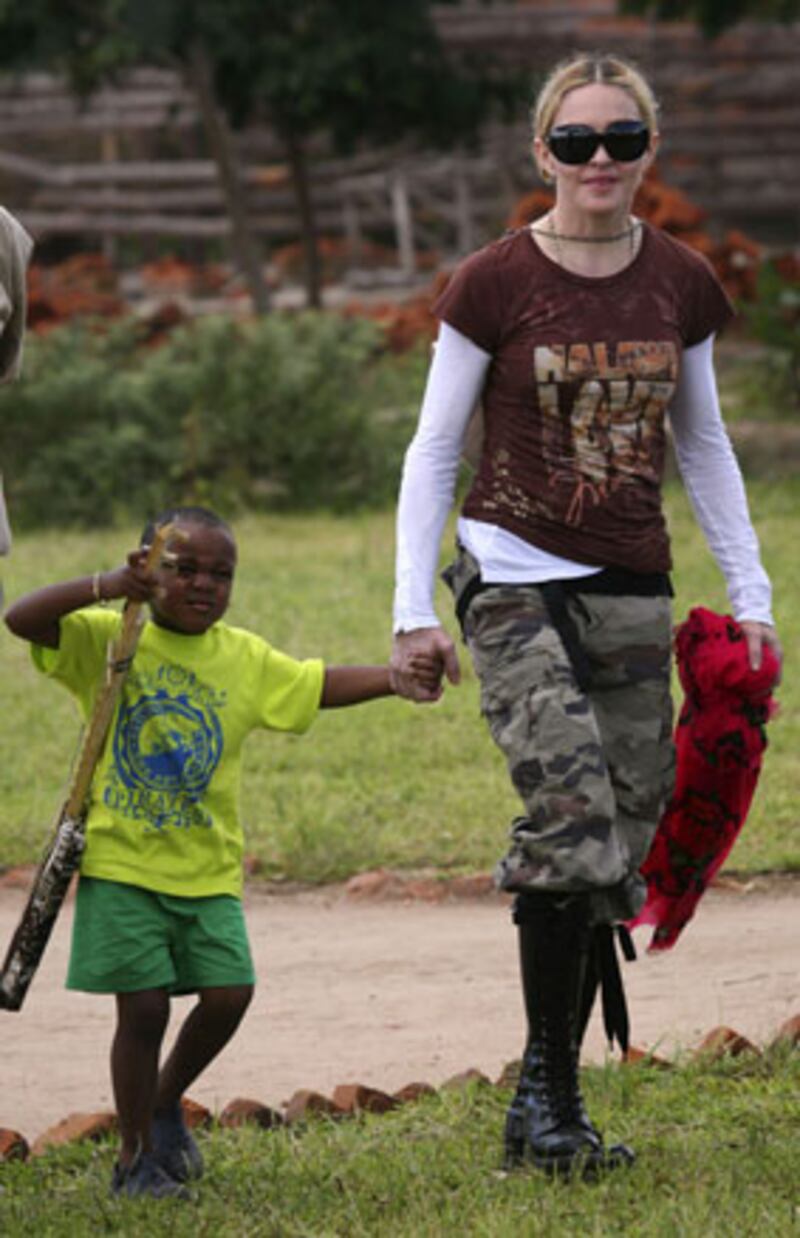
“People are unaware of just of how generous, bold and consistent Madonna has been. She works around the clock and puts a vast amount of her money specifically into the fight against poverty in Malawi. I see it with my own eyes,” Sachs tells The Daily Beast. “And what people don’t know is that she’s saved the lives of these kids. Her son [David] was at risk of death from a typical, but killer respiratory infection on the eve of the adoption and it was the process of adoption that saved him. So all of this outside punditry on whether the child would be better off or not? The child would be dead.”
TSVANGIRAYI MUKWAZHI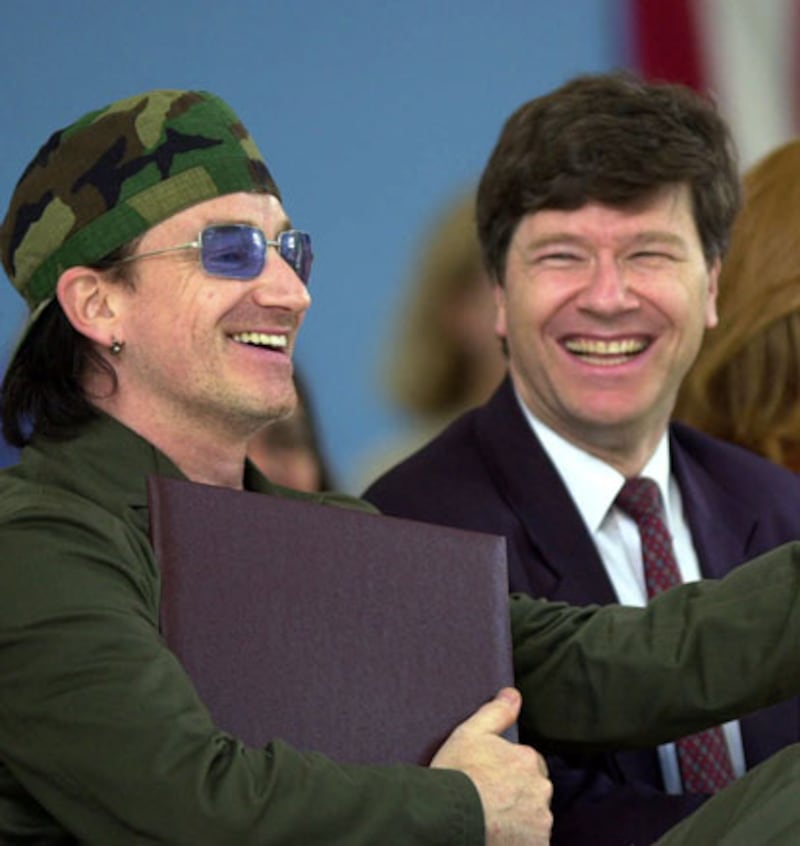
Both passionate and unrelenting, Bono and Sachs have joined forces on more than one occasion to boldly address the challenge of global poverty, disease and related issues. Bono even wrote the foreword to The End of Poverty, a best-selling book by Sachs.
Elise Amendola / AP Photo
“There’s just not a major company in the world that isn’t doing something now and I think they’ve not only realized they have technologies that can add to the solutions, but they also have customers that care about these things,” says Sachs. “But the ultimate scaling up requires political leadership and that’s the missing component right now.” Motorola is just one of over a dozen companies currently signed on to Bono’s (PRODUCT) RED program. Participants produce RED branded products and a percentage of each sale goes to The Global Fund To Fight AIDS, Tuberculosis and Malaria.
Daniel Berehulak / Getty Images