
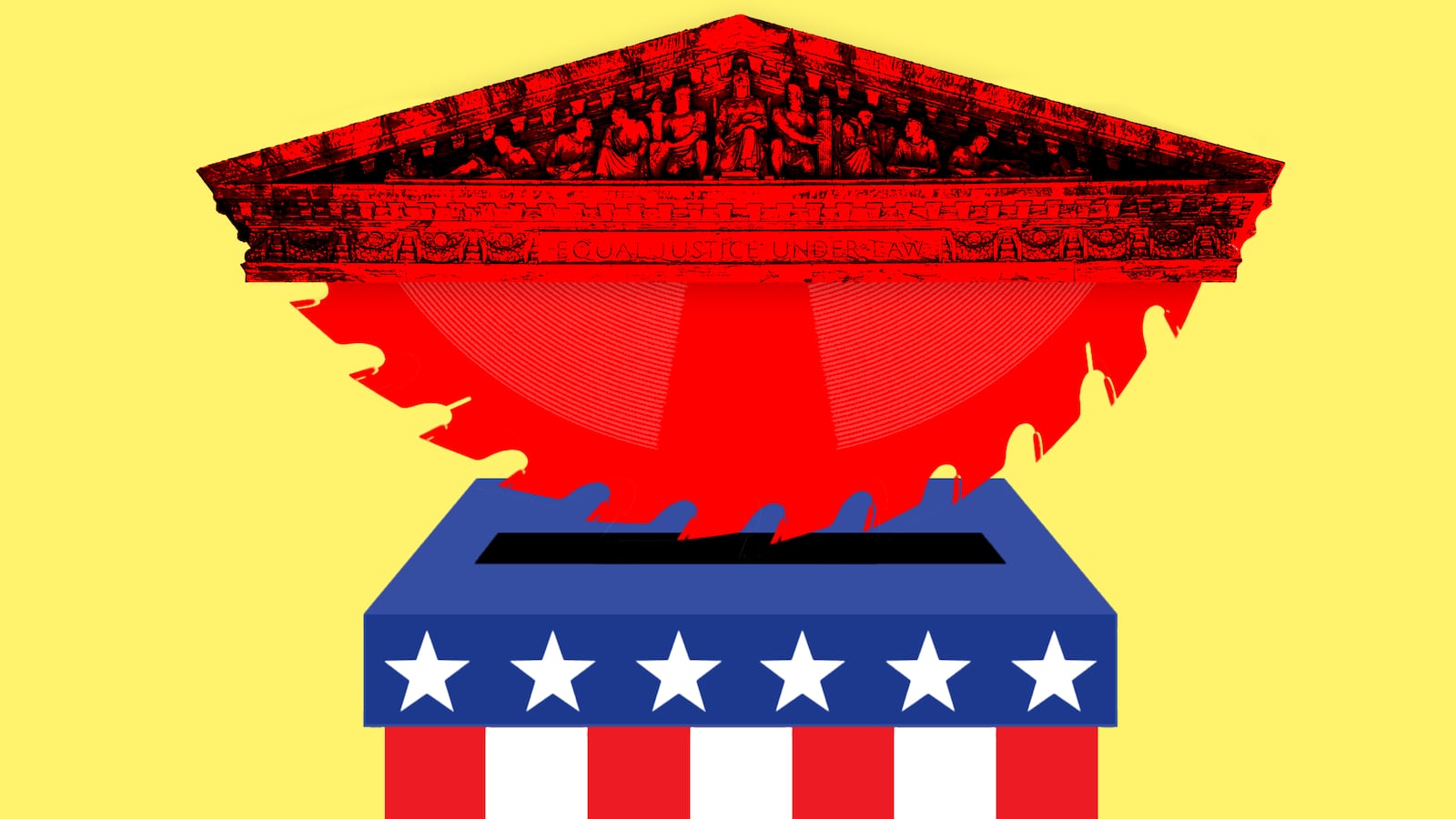
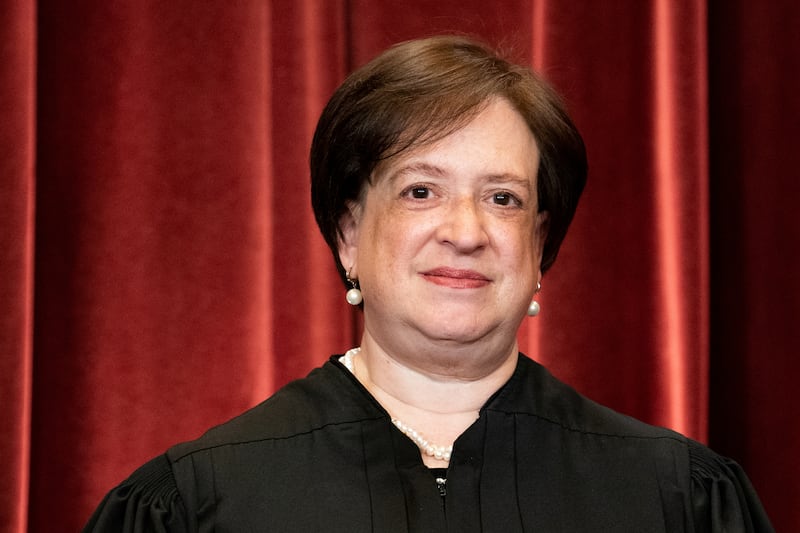
Supreme Court Justice Elena Kagan has lashed out at her conservative colleagues for “eviscerating” voting rights for millions of Americans after a contentious ruling that could dramatically reshape the race to control Congress.
In a 6-3 vote based on partisan lines, the U.S. Supreme Court on Wednesday delivered a brutal takedown of the Voting Rights Act, the landmark civil rights law that proponents say has restricted racial gerrymandering and racial discrimination in voting for 60 years.
This was done after conservatives on the court struck down Louisiana’s congressional map, which had been redrawn following lower courts’ findings that the state’s original post-2020 census map likely diluted Black voting power.
Black residents make up roughly one-third of Louisiana’s population, but state lawmakers initially created just one majority-Black district out of six. After the map was redrawn, Louisiana had two majority Black districts.
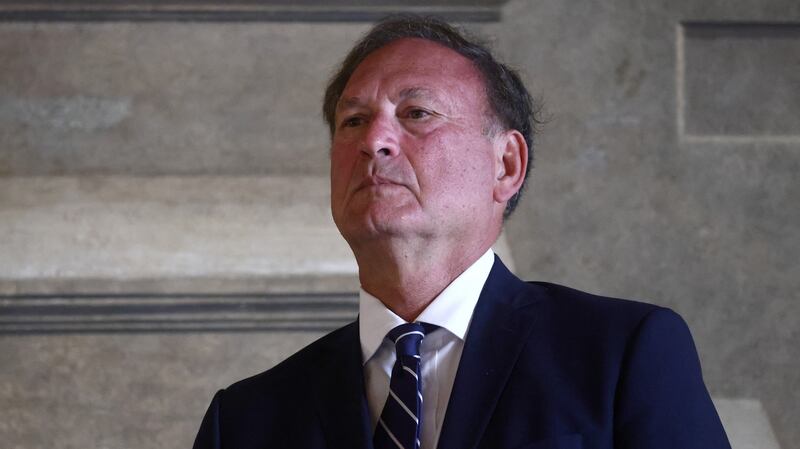
But in the ruling on Wednesday, conservative Justice Samuel Alito, writing for the majority, said that while there may be extreme situations where the use of race can be justified to draw a map, it was not in the Louisiana case.
As a result, he argued, the new map was an “unconstitutional racial gerrymander”—a view that Republicans immediately welcomed.
However, in blistering dissent, Kagan joined liberal justices Sonia Sotomayor and Ketanji Brown Jackson, accusing the conservative majority of hollowing out one of the last meaningful protections in the landmark Voting Rights Act.

Describing the ruling as the “latest chapter in the majority’s now-completed demolition” of the Act, she wrote that: “I dissent because Congress elected otherwise. I dissent because the court betrays its duty to faithfully implement the great statute Congress wrote.
“I dissent because the court’s decision will set back the foundational right Congress granted of racial equality in electoral opportunity. I dissent,” she said.
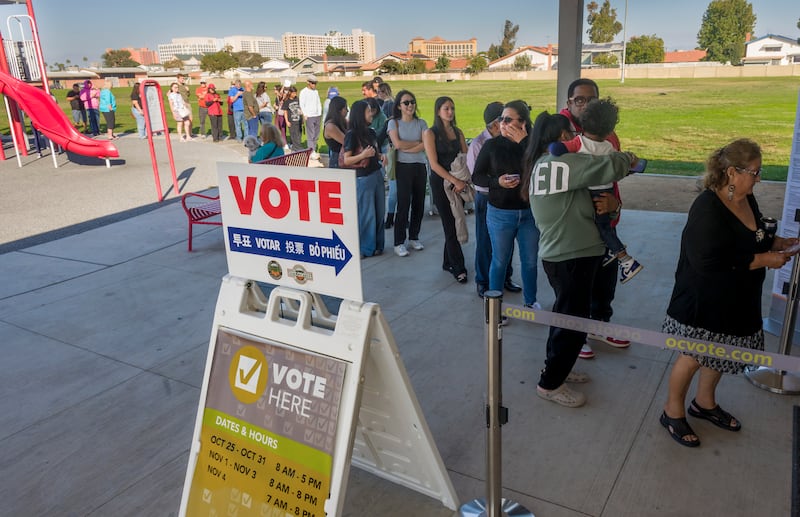
The decision means Louisiana will now need to redraw its map. And while there are only a few months before November’s midterms, the ruling could also set off a rush by the GOP to redraw majority-minority congressional districts, especially in the South, which could cost many Black Democrats their seats.
Donald Trump, concerned about getting impeached if the GOP loses its House majority, began pushing Republicans to draw better lines for themselves earlier this year, leading to a midterms arms race in places such as Texas, California, Virginia, and Florida.
By allowing the dismantling of minority districts currently held by Democrats, critics fear the ruling could give the GOP enough additional seats for years.
“Voter suppression is a way of life for Donald Trump and far-right extremists on the Supreme Court,” said House Democrat Leader Hakeem Jeffries.
“Republicans know they cannot win a free and fair election in November and so they are desperate to rig it. We will never let them succeed.”
The ruling centered on Section 2 of the Voting Rights Act—one of the few remaining provisions that had not yet been gutted by the Supreme Court, led by Chief Justice John Roberts.
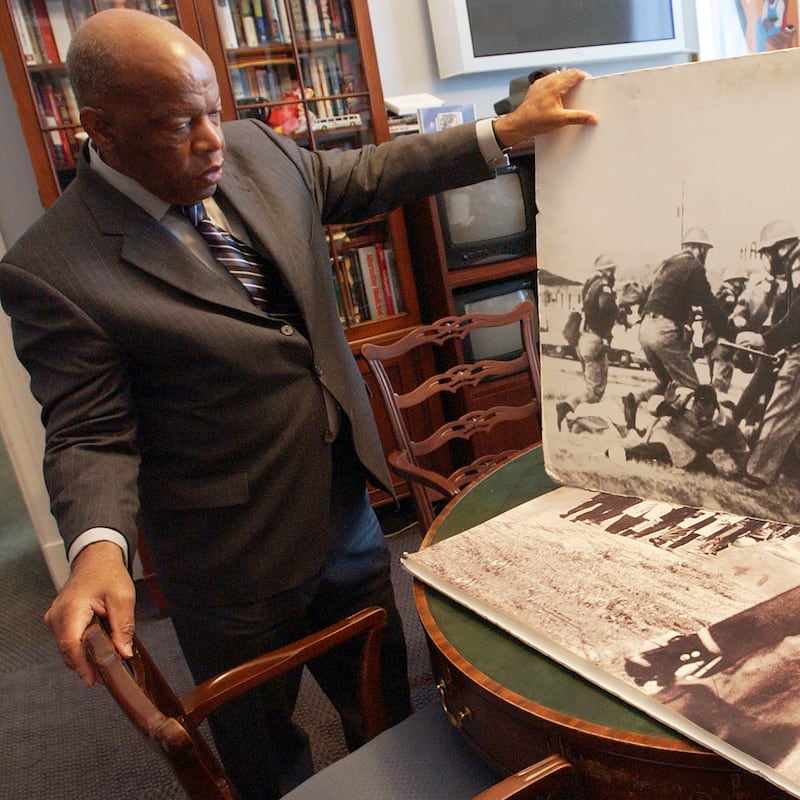
Kagan argued that the Act was “born of the literal blood of Union soldiers and civil rights marchers, a partial reference to “Bloody Sunday” when roughly 600 civil rights marchers were violently attacked by Alabama state troopers and local police while peacefully protesting for voting rights at the Edmund Pettus Bridge in Selma, Alabama.
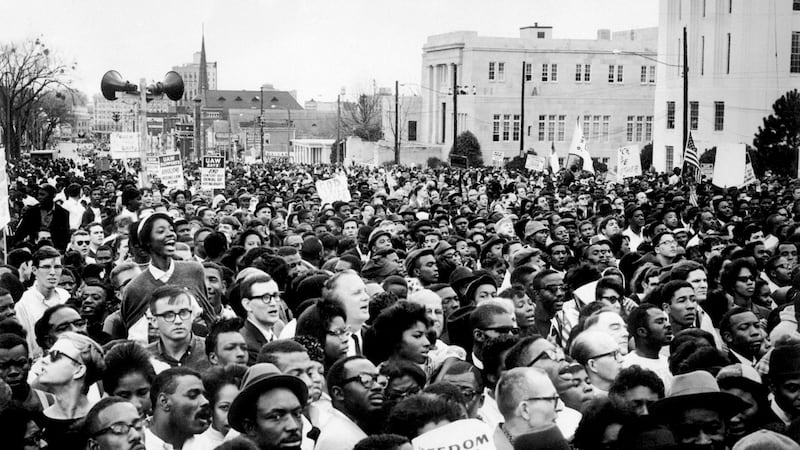
Among them was the late civil rights activist turned Congressman John Lewis, whose skull was fractured after he was violently beaten by police for leading the demonstration.
Since his death five years ago, Democrats have tried but repeatedly failed to pass legislation in his name, which would restore and modernize the Voting Rights Act of 1965 after years of being gutted by the court.
The ruling effectively invalidates Section 2 of the Act without explicitly striking it down.
It will now require proof of intentional discrimination, but this is something Congress did not write into the law and would be difficult for plaintiffs to prove.
Alito argued that “allowing race to play any part in government decision-making represents a departure from the constitutional rule that applies in almost any other context.”
However, Kagan disagreed, describing the majority opinion as “understated, even antiseptic.”
“The majority claims only to be “updat[ing]” our Section 2 law, as though through a few technical tweaks... But in fact, those “updates” eviscerate the law, so that it will not remedy even the classic example of vote dilution given above,“ she said.