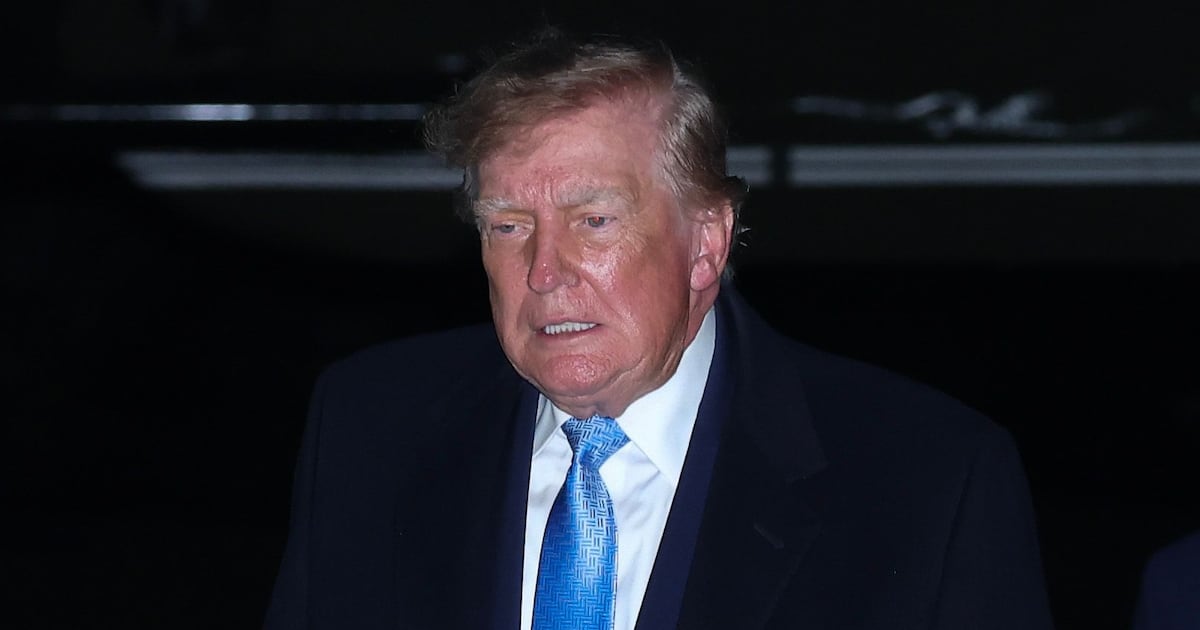
Three political candidates bet on themselves and lost.
Kalshi, an online betting market, said it fined and suspended three Democratic and Republican candidates who bet on their own races as part of a crackdown on political insider trading.
“Just like in traditional financial markets, bad actors will try to cheat,” Kalshi’s enforcement and legal counsel Bobby DeNault said in a statement. “Regulated exchanges must constantly evolve and adapt their systems to address insider threats. These three cases are an example of how developing proactive engineering solutions can help identify illicit trading activity.”

The three politicians were Matthew Klein, a Democratic state senator in Minnesota running for a U.S. House seat; Zeke Enriquez, a Republican candidate in Texas who lost a House primary; and Mark Moran, an independent candidate for U.S. Senate in Virginia.
Klein, 58, traded a small amount of money on the outcome of his own race, according to Kalshi. When the company called him out, Klein acknowledged that he violated the rules and agreed to pay a fine of over $500 and a five-year suspension from the platform.
Klein said in a statement that he became curious about Kalshi after hearing that there were wagers being placed on his primary race.

“I set up an account and bet $50 of my own funds that I would win the primary. I was informed in March of 2026 that this was a violation of the platform rules. In compliance with their request, I paid a penalty and agreed to be suspended from the platform,” he said.
“That was the only wager I have ever made on a predictions market. This was a mistake, and I apologize. My experience, like many other Minnesotans, points to the need for clearer rules and regulations for these types of markets,” he added.
Enriquez, a U.S. Marine Corps veteran who placed 11th in the Republican primary for Texas’s 21st congressional district, similarly traded an amount under $100 on the outcome of his own election.
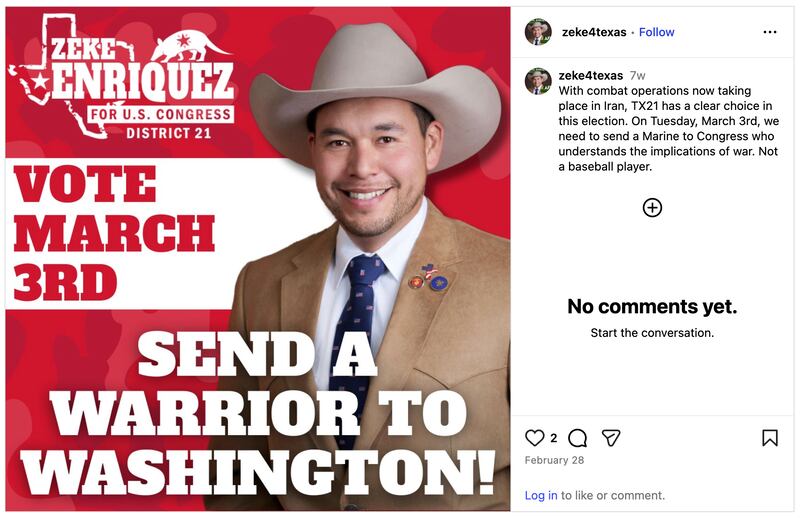
Kalshi said he was “fully cooperative with the investigation,” agreeing to a fine just under $800 and a five-year suspension from the platform. Enriquez did not immediately respond to a request for comment.
Moran, the independent candidate in Virginia, took a less modest approach when he got caught.
Kalshi said Moran traded in two markets related to his campaign. In one instance, he placed a bet that he would announce a political run—then publicly launched his campaign months later. After declaring his candidacy, he again bet on himself.

“We contacted the trader, who initially acknowledged being a candidate and violating the rules, but later stopped all communication with our team and did not comply with requests to respond or settle the matter,” the company said. “We fined him $6,229.30 and gave him a 5-year suspension from our platform.”
Moran, a Wall Street banker turned contestant on the reality TV show FBoy Island, said he did it on purpose.
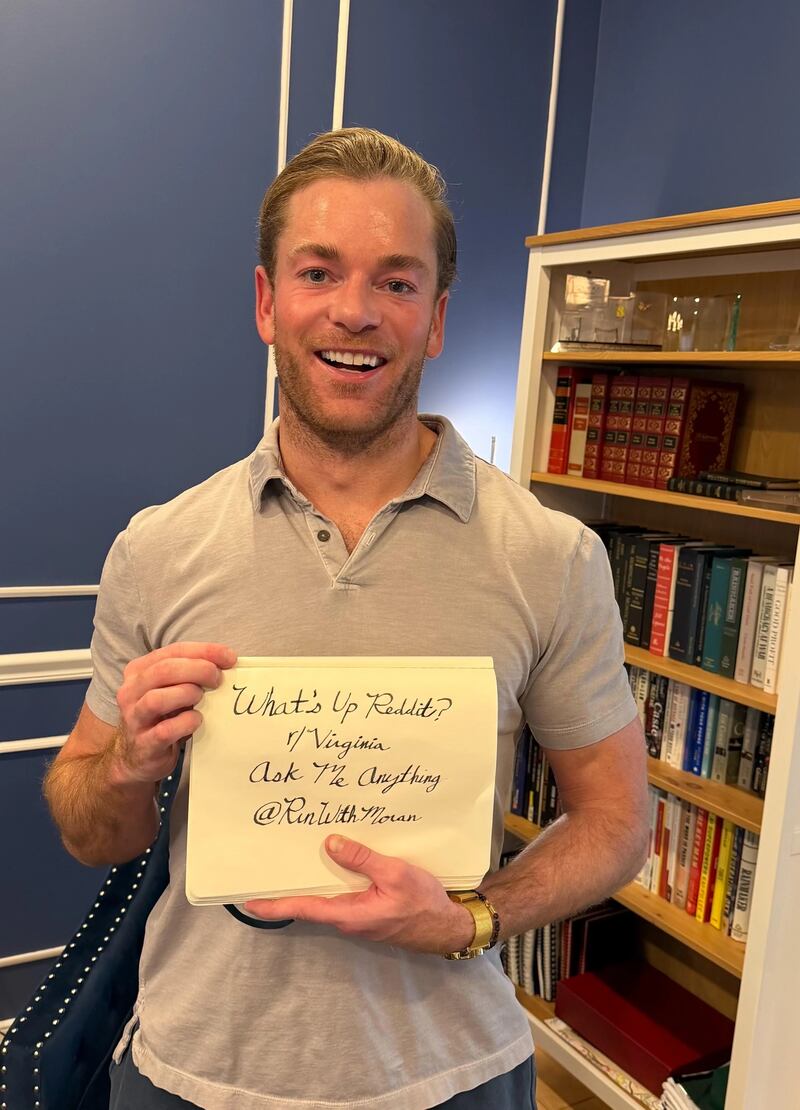
“It’s to call attention to something much larger: how elections can be bought and our democracy is up for sale, and Kalshi is responsible,” he said in a video statement. “I have not made any money. I’ve p---ed off a lot of people. A lot of people are angry at me because I keep speaking out, but I view that as my patriotic duty.”
Moran, Klein, and Kalshi did not immediately respond to a request for further comment.
Prediction markets like Kalshi and Polymarket have come under intense scrutiny in recent months, following curiously well-timed bets on major developments such as the war with Iran.
Last month, a group of Democratic lawmakers introduced a measure seeking to ban prediction market bets on elections, government actions, war, and sports.