A major warning that Iran is poised to unleash terrorism in the U.S. in revenge for Donald Trump’s war has leaked—despite the White House trying to hush it up.
The joint statement by embattled FBI Director Kash Patel, Kristi Noem’s Department of Homeland Security, and the National Counterterrorism Center, was drawn up after Trump started bombing his Middle Eastern enemy, and should have been released already.
But Patel’s intelligence bulletin was held up by Trump’s White House, only to leak in its entirety to the Daily Mail. That move was rare in itself, but the leak of such a sensitive document is likely to spark fresh concerns at Patel’s conduct. He is already under scrutiny for his lavish private jet use, and his wild beer-drinking antics in the locker room of the U.S. men’s hockey team after they won Olympics gold.
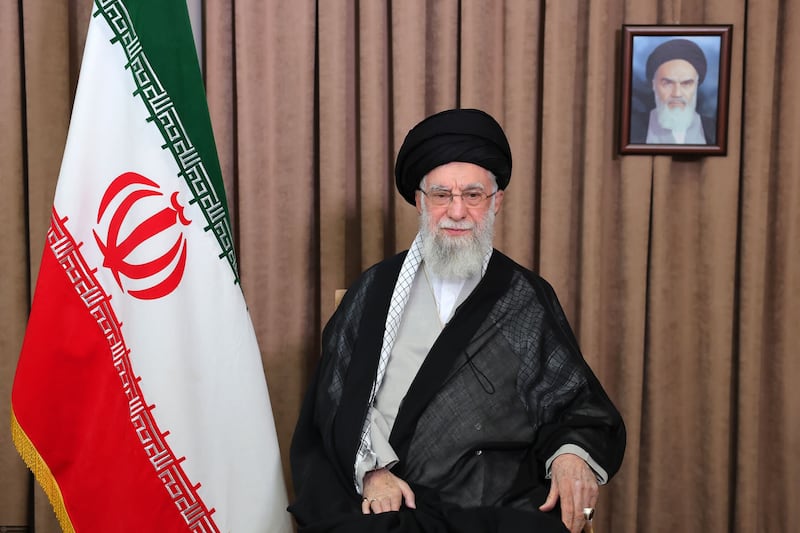
Patel’s document contains a dire list of warnings about how the Iranian regime could activate sleeper cells, conduct assassinations, target the Jewish community, and exploit anger at images of the war, all as part of a revenge scheme.
The five-page bulletin is titled “A Public Safety Awareness Report: Elevated threat in the United States during US-Iran conflict.”
Among its doomsday alerts are a warning about how Iranian agents could strike.

“Most of the government of Iran’s attack plots in the United States involve the potential use of firearms,” the report reads, according to the Mail. “Other assassination methods may include stabbings, vehicle rammings, bombings, poisoning, strangling, suffocation, and arson.”
The bulletin also warned that clandestine operatives could try to lure victims to countries closer to Iran for kidnapping, and that Americans could face cyber attacks through “spear-phishing, email spoofing, and voice cloning to gain access and information for target surveillance.”
The FBI believes that the Iranian regime prefers “radicalized individuals with a variety of ideological backgrounds… with existing U.S. legal status or U.S. access,” according to the Mail.
It also warns of the level of sophistication of Iranian operations. “Communication practices include meeting in person, leaving cell phones turned off, using codewords, and burner phones, using end-to-end encrypted messaging apps, and sharing information via cloud accounts,” the Mail reported the bulletin said.
Meanwhile in Iran, intelligence uses “social media sites, live streams, publicity, and map applications to determine target locations.”
The report advises U.S. law enforcement to monitor individuals “posing with weapons and imagery associated with terrorism or criminal actors in photos and videos,” as well as the “unusual purchase of military- or law enforcement-style tactical equipment… in a manner that raises suspicion.”
Specific possible targets name in the report are government officials, leaders of the Jewish community, and known dissident Iranians who have sought safety in the U.S.
The Iranian regime has previously attempted assassinations on American soil, including a plot to target Trump, which he has cited as one of his reasons for going to war. There was also an attempt to kill a dissident journalist and activist, Masih Alinejad, at her home in Brooklyn, New York, which was narrowly foiled by the FBI.
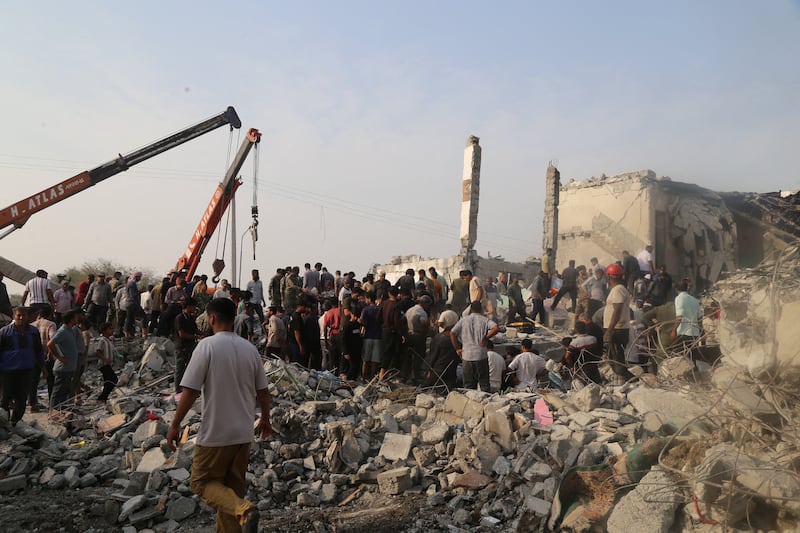
The leaked report also warns the Iranian regime would try to turn images of the war into propaganda victories which in turn could radicalize people in the U.S. enough to carry out attacks, the Daily Mail reported. The report appears to have been written before the strike on a school in Minab which killed 175 people, almost all of them children. The Pentagon still says it is investigating, while Trump said it appeared to be a Tomahawk strike, then claimed it could be an Iranian Tomahawk. In fact, only the U.S., U.K., Australia and the Netherlands have the weapons, and only the U.S. has used them against Iran.
The report was written as a routine, non-political bulletin sent from the National Counterterrorism Center, also known as the NCTC, to reflect a higher threat than normal.
But it was blocked at a political level, and sent to the White House.
The Trump administration maintained on Tuesday that “nothing was blocked.”
“The White House is coordinating closely with all government agencies to ensure information being disseminated is accurate, up to date, and has been properly vetted — even if that means taking additional time to review to ensure nothing is done in a vacuum,” White House spokesperson Abigail Jackson said in a statement to the Daily Beast.

A Homeland Security spokesperson also told the Daily Beast over the weekend that “it is normal procedure for DHS to share intelligence bulletins with the White House for review before they are sent out. This is done so we can ensure all information has been vetted and reviewed by the correct intelligence agencies.”
The FBI and the DHS did not immediately return a request for comment from the Daily Beast on Tuesday.