
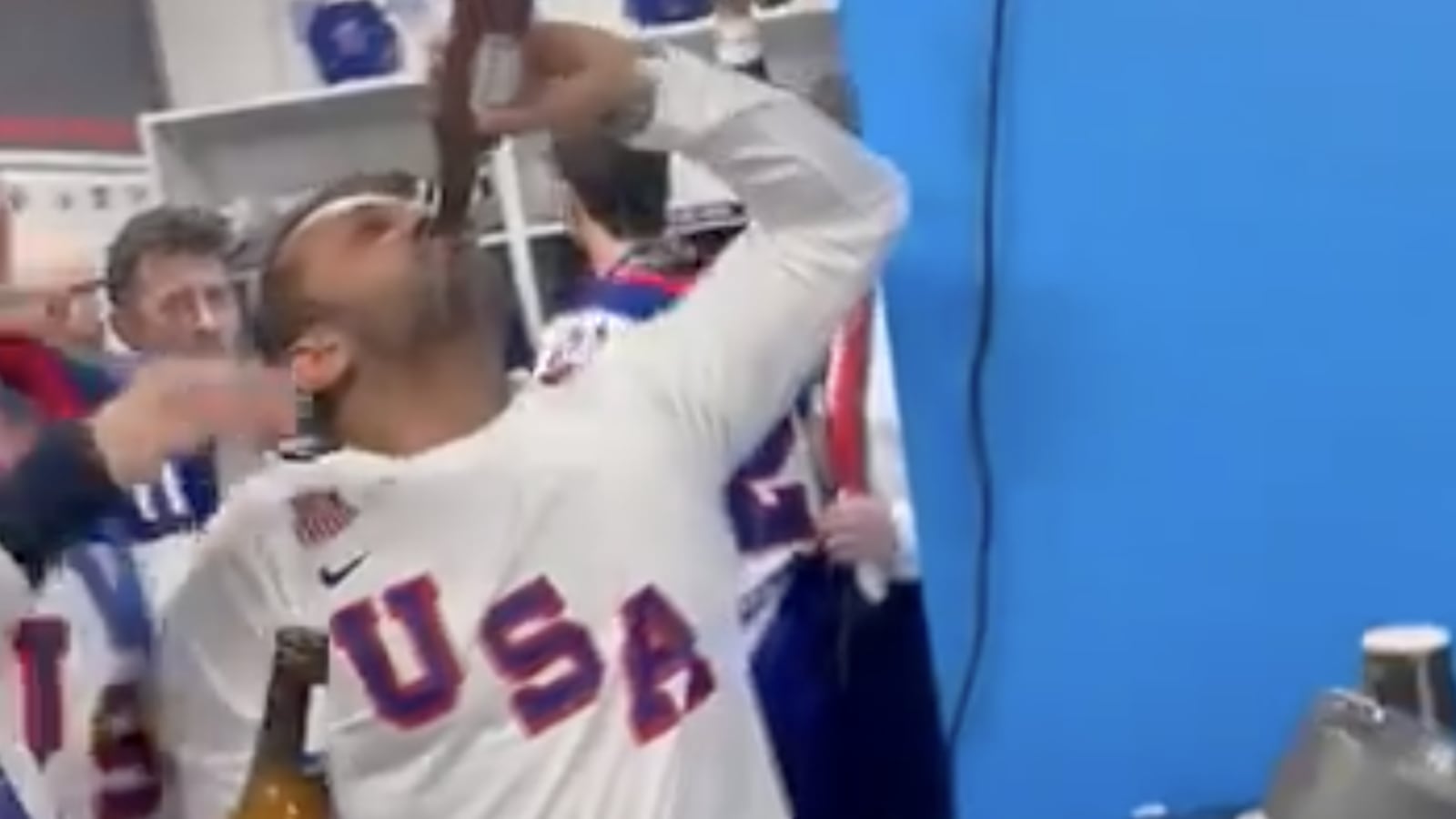
Kash Patel’s legal team has revealed more allegations were leveled against him than were published in a bombshell report by The Atlantic—and said what they were.
The Atlantic’s devastating report alleges that the FBI director has been binge-drinking on the job, behaving erratically, and that a SWAT team asked for “breaching” gear because he was uncontactable behind a locked door.
As soon as it was published, Patel’s external advisers used X to attack the story. The attacks included publishing his attorney’s three-page response to The Atlantic, sent before the article was published.

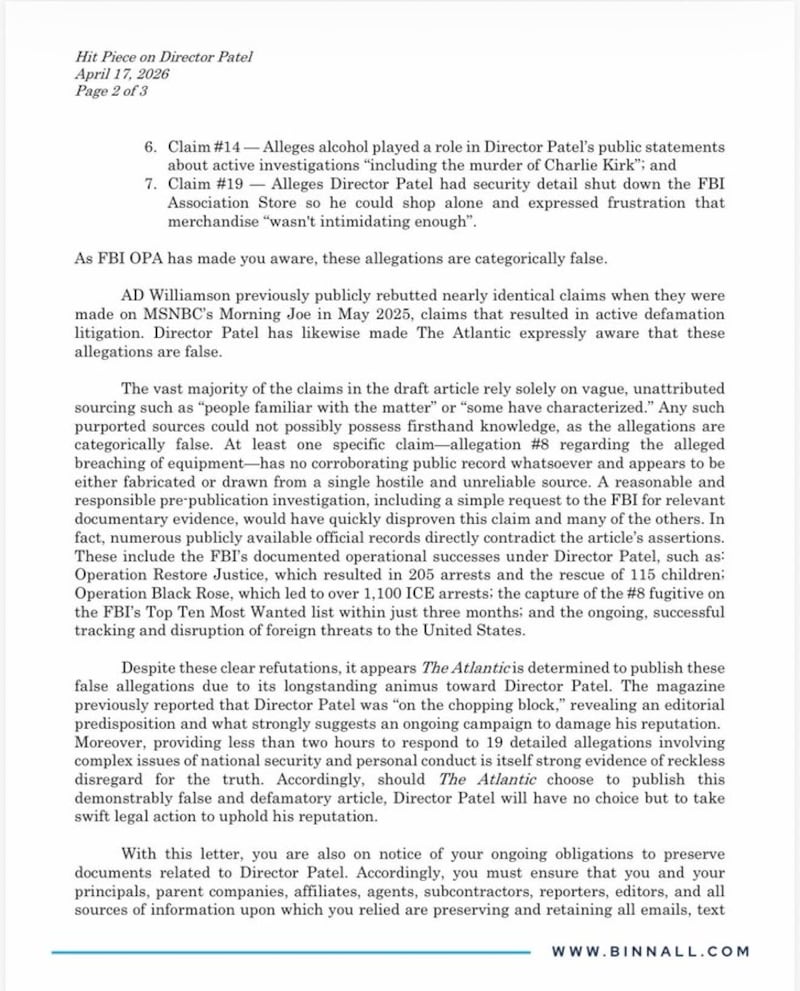
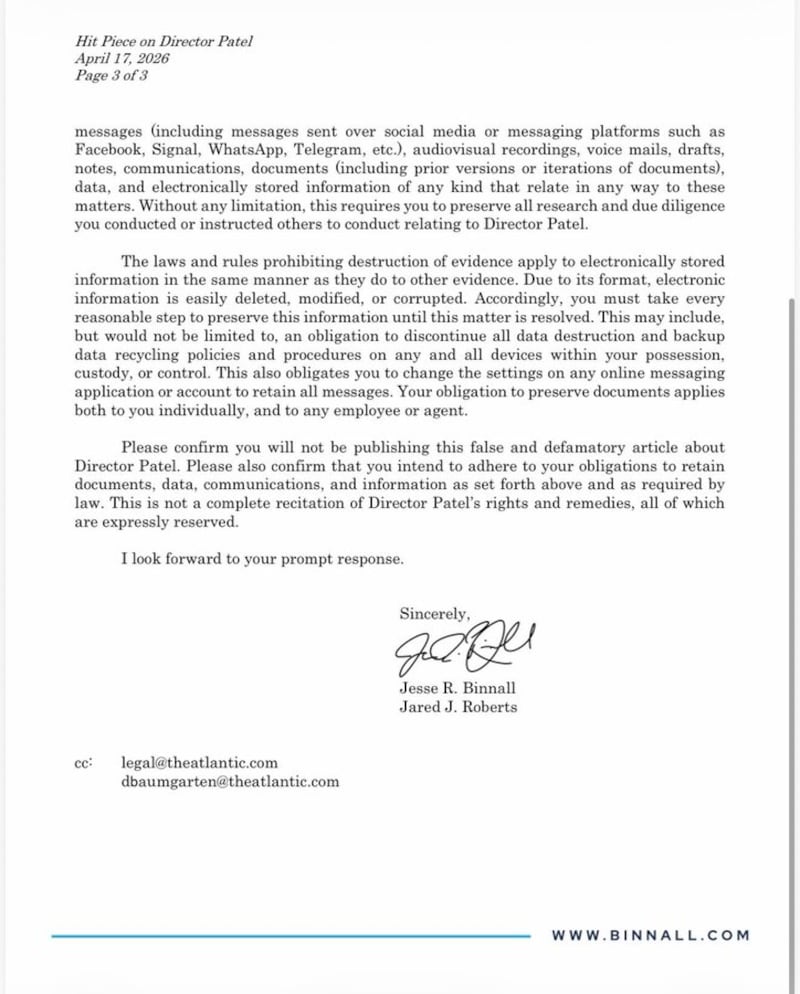
It makes point-by-point responses to what appear to be questions from The Atlantic, going through a series of claims the magazine had put to them for fact-checking and to seek comment, describing them as “defamatory assertions,” which are “categorically denied.”
Many of the “defamatory assertions” the attorney, Jesse Binnall, describes are exactly those that The Atlantic published. Those include that Patel drinks to “the point of apparent intoxication” in exclusive venues in D.C. and Las Vegas, that his security detail has “had difficulty waking” him, and that alcohol played a role in his mishandling of the murder of Charlie Kirk.
But Binnall also published two allegations that The Atlantic did not publish, and which he called false and defamatory.
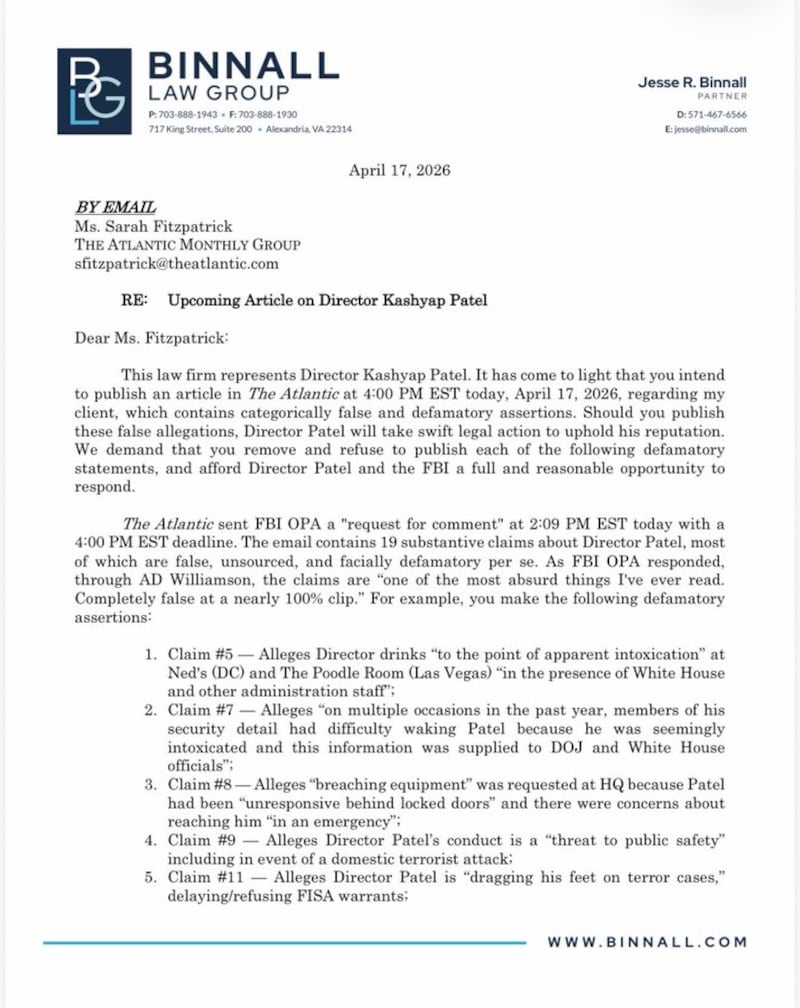
The first is an allegation that Patel was viewed as a “threat to public safety,” including concerns about how he would respond in the event of a domestic terror attack. The phrase “threat to public safety” was not in The Atlantic’s report.
The second is that an allegation that he once had his security detail shut down the FBI Association Store so he could shop alone, and complained that the merchandise “wasn’t intimidating enough.” The claim that the merchandise was not sufficiently intimidating was published; that the store was shut down by his detail was not.
That means that the letter, which came from a personal attorney for Patel rather than from the FBI’s own counsel, effectively put what it describes as false and defamatory statements into public circulation.
The letter ended by saying, “Please confirm you will not be publishing this false and defamatory article about Director Patel.”
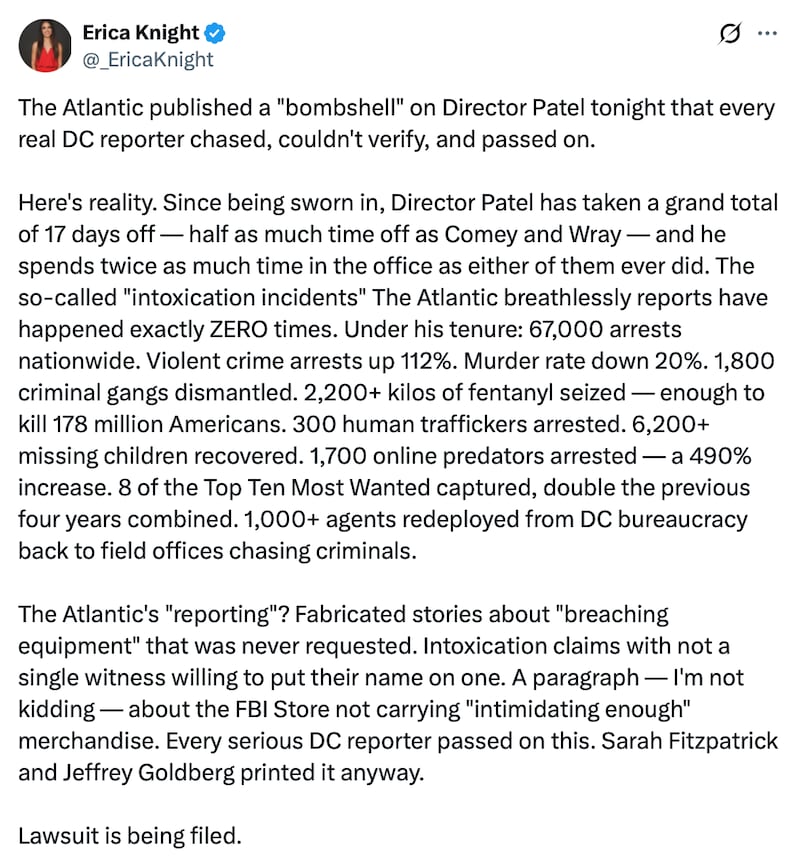
Publishing the entirety of legal communications with The Atlantic is an unusual move for an attorney. Patel’s communications strategist Erica Knight—who is not an FBI employee—also blasted the allegations in a post on X, calling them “fabricated.”

“The so-called ‘intoxication incidents’ The Atlantic breathlessly reports have happened exactly ZERO times,” she wrote.
“Every serious DC reporter passed on this. Sarah Fitzpatrick and Jeffrey Goldberg printed it anyway. Lawsuit is being filed.”
But the reporter behind the story isn’t backing down.
“I am a very careful, very diligent, award-winning investigative reporter,” Fitzpatrick told MS NOW anchor Jen Psaki.
“I stand by every word of this reporting.”
She also pointed to a notable lack of pushback from officials when given the chance to respond.
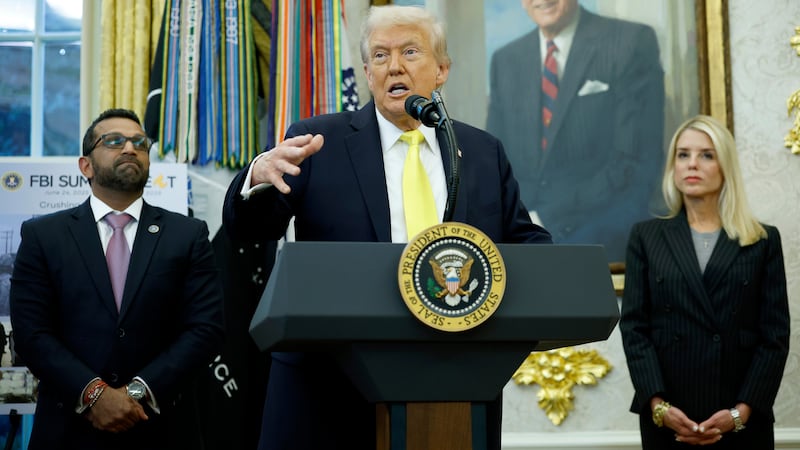
“We reached out for comment to the White House and to the Justice Department, neither of which disputed anything,” Fitzpatrick said.
“These [sources] are not the types of people who are willing to speak out outside of the FBI… for it to be this level of alarm, this is people genuinely concerned that America is a danger as a result of this conduct.”
The Daily Beast has reached out to both the White House and the FBI for comment.
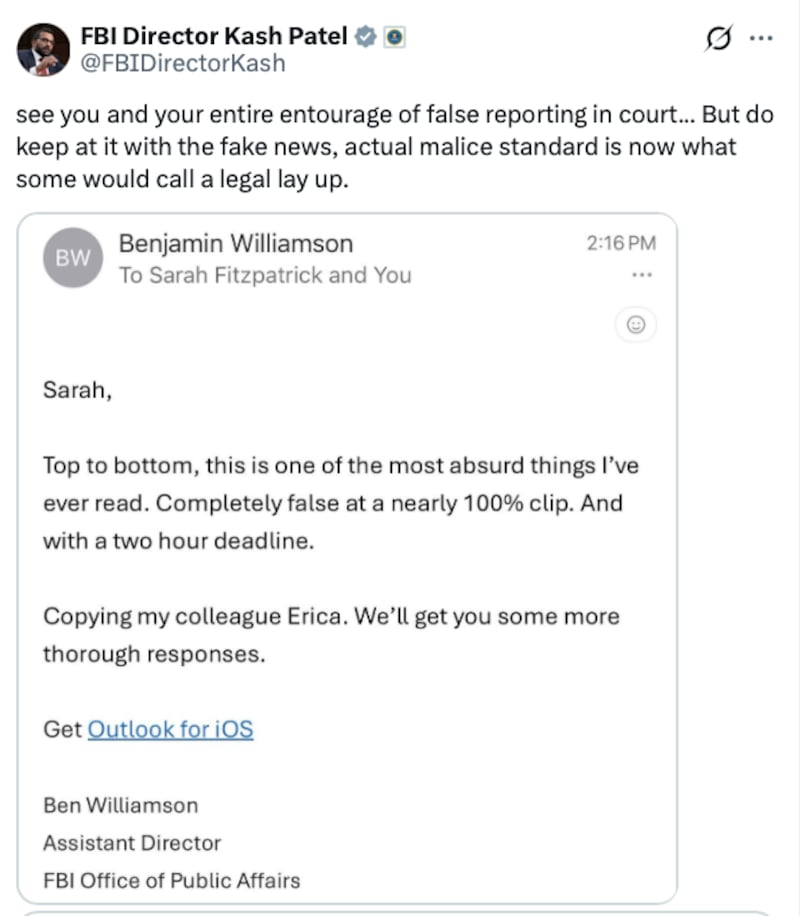
Just before 10:30 p.m. on Friday, Patel responded directly to the story and repeated his plans to take legal action. “See you and your entire entourage of false reporting in court,” he wrote. “But do keep at it with the fake news, actual malice standard is now what some would call a legal lay-up.”