MAGA Goon Threatens Researchers Over Ugly Trump Numbers
Kevin Hassett said the findings “wouldn’t be accepted in a first semester econ class.”

President Donald Trump’s top economic adviser is lashing out at Federal Reserve researchers after a new study undercut one of the administration’s core talking points on tariffs.
Kevin Hassett, director of the National Economic Council, went on a tirade Wednesday morning during an appearance on CNBC’s Squawk Box, blasting a Federal Reserve Bank of New York paper that found Americans—not foreign exporters—are footing the overwhelming cost of Trump’s tariffs.
“The paper is an embarrassment,” Hassett, 63, said of the study. He went further, calling it “the worst paper I’ve ever seen in the history of the Federal Reserve system” and suggesting that the authors behind it should be “disciplined” for their findings.
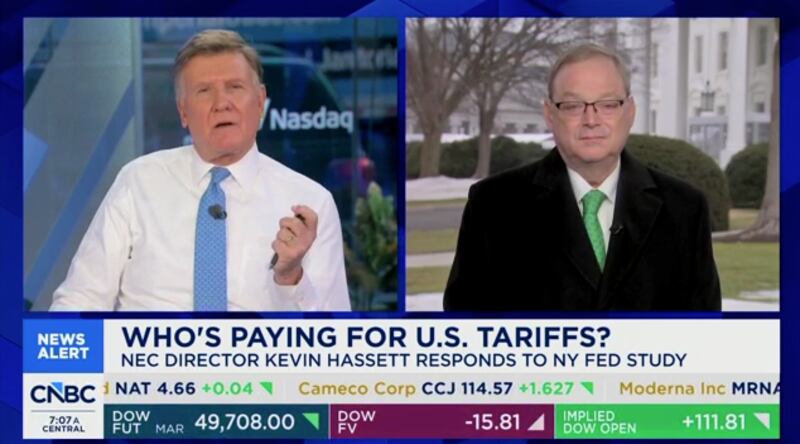
Kevin Hassett appeared on CNBC 'Squawk Box' defending Trump's tariffs.
CNBC Squawk Box
The study, published Feb. 12 by the New York Fed, examined whether tariffs imposed at the start of Trump’s second term were successfully forcing foreign exporters to lower prices. Instead, researchers found the opposite: roughly 90 percent of tariff costs are being passed on to U.S. consumers and businesses.
That conclusion directly contradicts Trump’s repeated claims that tariffs strengthen the economy without hurting Americans. The president, 79, has touted the policy as both an economic and national security win, writing in a recent Truth Social rant that “TARIFFS have given us Economic and National Security.”
Sign Up for The Swamp Newsletter
By clicking “SUBSCRIBE” you agree to our Terms of Use and Privacy Policy.
Reached for comment, White House spokesperson Kush Desai blasted the analysis.
“Kevin Hassett is right: the New York Fed’s tariff report is the latest ‘study’ that does not match reality or hold up to any scrutiny. The average American tariff has increased nearly sevenfold in the past year, while inflation cooled, real wages increased, and economic growth accelerated – the exact opposite of what the ‘experts’ and a growing body of ‘studies’ said would happen. More pointless reports are not going to change the fact that President Trump was right and the Panican experts were, and remain, wrong."
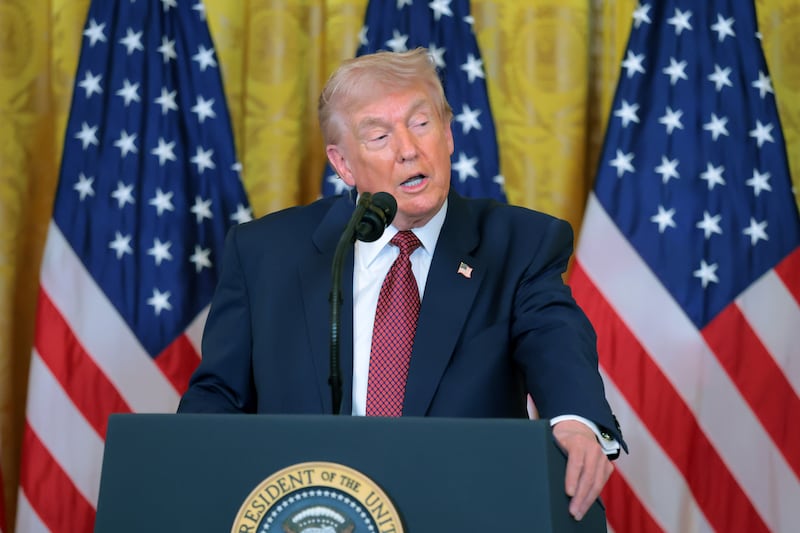
President Donald Trump has defended his tariff policies despite mounting backlash.
Anna Moneymaker/Getty Images
When questioned by Squawk Box host Joe Kernen, 70, on American consumers eating the cost of tariffs, Hassett dismissed the Fed’s analysis as politically motivated. He argued the findings had fueled “highly partisan” coverage and claimed the paper relied on flawed assumptions that “wouldn’t be accepted in a first semester econ class.”
Pressed on who actually bears the burden of tariffs, Hassett insisted the study was too narrow—faulting it for focusing primarily on price changes while ignoring broader economic dynamics like supply and demand interactions and shifts in consumer and producer behavior.
Instead, he offered a far rosier picture of the administration’s policy, claiming tariffs have ultimately benefited Americans. “Real wages were up $1,400 on average last year,” Hassett said, arguing that American consumers are “better off” despite rising import costs.
The New York Fed declined to comment on Hassett’s remarks.

Hassett was in the running to run the Federal Reserve.
Kevin Dietsch/Getty Images
Trump has made tariffs a cornerstone of his second term, dramatically increasing duties on imports from countries including China, Mexico, and Canada. Since last year, average tariff rates have jumped from roughly 2.6 percent to about 13 percent, according to the study.
But the policy has triggered a cascade of consequences—both economic and political.
Canada, one of the countries hit by the tariffs, has already responded with retaliatory measures, including pulling U.S. alcohol from shelves in Ontario’s government-run liquor stores. The escalating trade tensions have added strain to relations between the two longtime allies.
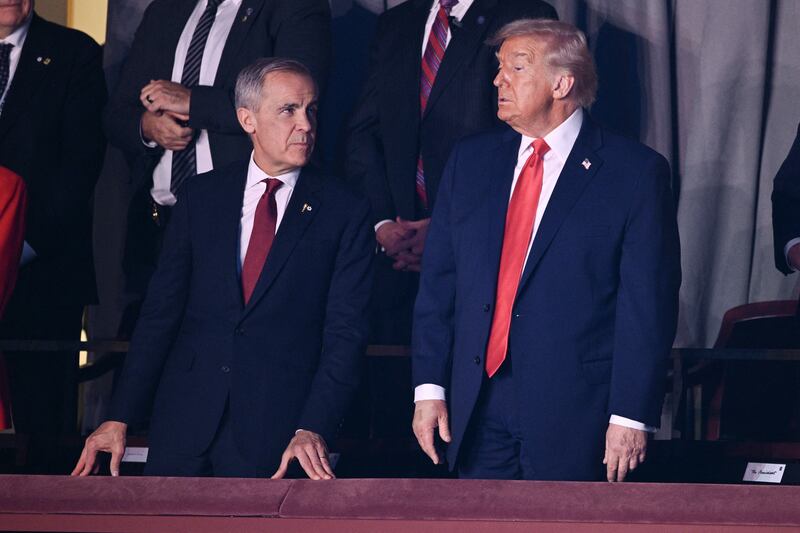
Tensions between Canada's Prime Minister Mark Carney and U.S. President Donald Trump have heightened over tariff disputes.
BRENDAN SMIALOWSKI/AFP via Getty Images
Back in Washington, Trump is also facing mounting resistance from within his own party. In a notable rebuke last Tuesday, six House Republicans joined Democrats in voting to end the emergency tariffs imposed on Canada.
The vote marked an unusual crack in GOP unity on one of Trump’s signature policies—and the president did not take it lightly.

In a fiery Truth Social post, Trump warned that Republicans who opposed him could face consequences in upcoming midterm elections, signaling he’s prepared to punish within his own ranks.
Even within the Trump administration, there are signs that officials may be quietly reconsidering parts of the tariff strategy.
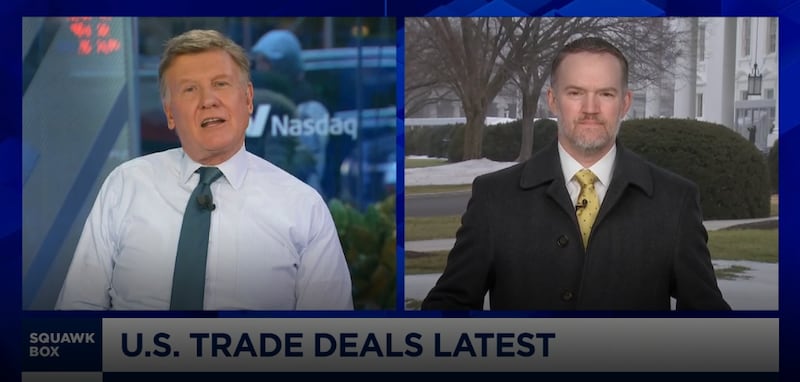
U.S Trade Rep. Jamieson Greer appeared on CNBC 'Squawk Box' to discuss Trump's tariff policy.
CNBC Squawk Box
U.S. Trade Representative Jamieson Greer, 46, suggested Tuesday during an interview on Squawk Box that some tariffs—particularly on steel and aluminum—could be adjusted for companies struggling to comply with the steep duties.
Meanwhile, Canadian officials are gearing up for what could be a contentious round of negotiations. Prime Minister Mark Carney, 60, announced on Monday that veteran diplomat Janice Charette will serve as the country’s chief trade negotiator in upcoming free-trade agreement talks with the United States.
See more of our coverage in your search results.

Got a tip? Send it to The Daily Beast here.
Register below to read this article for free or subscribe
to unlock unlimited access to The Daily Beast.
Monthly
$1
First month then $5.99/month
Annual
$35
First year then $59.99/year
Premium
$79
First year then $119.99/year
*Substack access provided by the next business day, using your subscription email. Choosing the Premium plan constitutes your permission to share your subscription email with Substack and your agreement to Substack’s Privacy Policy.
Already have an account? Sign In
Looks like you already have a subscription!
You're all set!
Thanks for subscribing.
Sign in or create an account
Login dialog
Loading comments…