Conservative Supreme Court justices are being slammed as hypocrites for ruling on election cases so close to Election Day—something they have admonished lower courts for doing in the past.
The high court first invited such criticisms when it ruled on April 29 that a congressional map in Louisiana was a racial gerrymander, upending an election in which early votes were already being cast and effectively eliminating a Black-majority district.
Louisiana’s Republican Gov. Jeff Landry quickly suspended the state’s House primary elections, which were scheduled for May 16, so the state could draw up a GOP-friendly congressional map first.
“I don’t think you can see this as anything other than a raw exercise of power,” Brennan Center for Justice Lawyer Kareem Crayton told NBC News. “The court is effectively, whether they are trying to or not, playing an outsized role in this midterm election. It’s quite unfortunate they have chosen this path.”

Americans’ confidence in the Supreme Court, which has a 6-3 conservative majority, is at an all-time low. Many view those on the court as political actors, even as Chief Justice John Roberts complains that it is not a fair characterization to say as such.
These criticisms have only grown louder after the Supreme Court ruled in the GOP’s favor in Louisiana after sitting on the case for over a year. That ruling contradicted Purcell, the Supreme Court doctrine that says federal courts should not make changes to state election laws “too close” to an election.
Justice Brett Kavanaugh, who was appointed by President Donald Trump, argued in support of Purcell as recently as 2020, writing that federal courts should not interfere with an imminent election.
“It is one thing for state legislatures to alter their own election rules in the late innings and to bear the responsibility for any unintended consequences,” he wrote. “It is quite another thing for a federal district court to swoop in and alter carefully considered and democratically enacted state election rules when an election is imminent.”
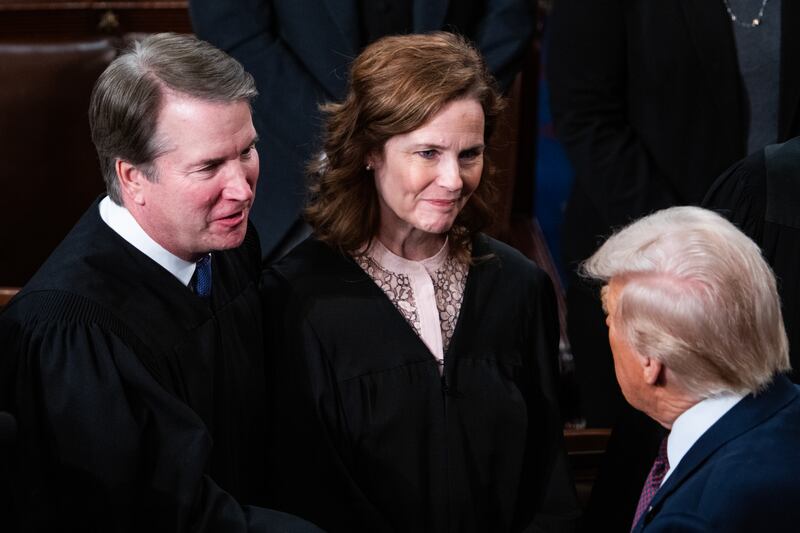
Kavanaugh added in the 2020 case, “This Court has repeatedly emphasized that federal courts ordinarily should not alter state election laws in the period close to an election—a principle often referred to as the Purcell principle. The Court’s precedents recognize a basic tenet of election law: When an election is close at hand, the rules of the road should be clear and settled.”
Explaining why he believed in the Purcell principle at the time, he wrote, “That is because running a statewide election is a complicated endeavor.”
Despite this, Kavanaugh and the court’s five other conservatives ruled in favor of inviting chaos at the 11th hour in Louisiana and other southern states, which are now rushing to redraw their congressional districts with the Supreme Court’s blessing.
MS Now legal contributor Joyce Vance writes that the high court has sent Alabama into “disarray” ahead of its primary election on May 19, too, when it awarded the red state the right to redraw its congressional map in favor of Republicans this week.
“It is a sad, difficult day for democracy, with the Court as a willing participant,” she said on Monday.
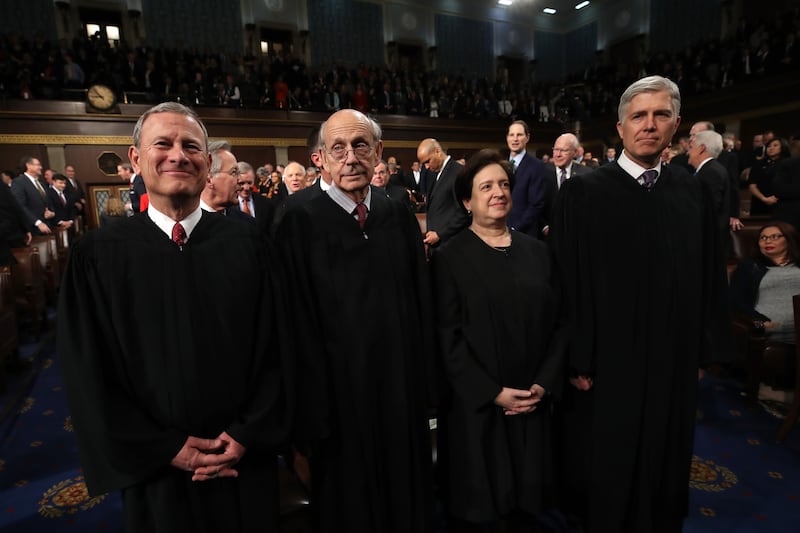
Justin Levitt, an election law expert at Loyola Law School in Los Angeles, told NBC that the court had been more laissez-faire regarding election rulings prior to last month.
“It was a firmer, hands-off, pencils-down principle,” he said.
Now, Levitt accuses the high court of unevenly favoring Republicans.
“It seems the Supreme Court is picking winners and losers, not doing law,” he said.