The Supreme Court handed Donald Trump victory on two fronts Tuesday as it once again challenged lower court decisions reining in the president’s authoritarian instincts.
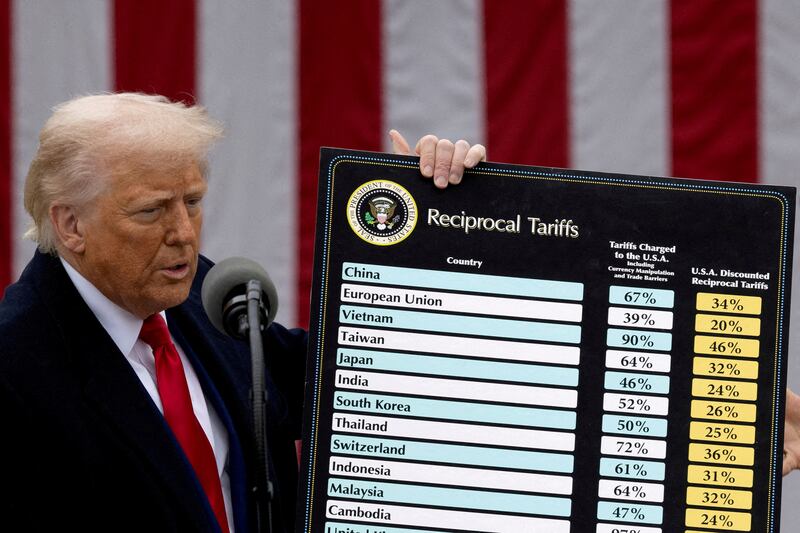
First, the conservative-majority court announced it would hear the Trump administration’s argument that the president has the authority to impose tariffs under the International Emergency Economic Powers Act, which permits doing so in the case of an “unusual and extraordinary threat” from outside the U.S.
It also paused a federal judge’s order that the administration should cough up billions in foreign aid mandated by Congress.

Although neither move was a final ruling, they came as divisions on the nine-member court are increasingly clear after a blistering dissent from liberal justice Sonia Sotomayor in a case over racial profiling.
A series of cases in which the Supreme Court’s 6-3 conservative majority has backed Trump to overturn lower court rulings—while the president and his MAGA allies relentlessly attack the judiciary—has prompted claims of a constitutional crisis.
When invoking the emergency law in February to impose tariffs on China, Mexico and Canada, Trump pointed to Chinese-made fentanyl coming through the southern and norther borders. In establishing “reciprocal” tariffs two months later, he cited trade deficits.
But lower courts have ruled against the president on that issue. Last month, the U.S. Court of Appeals for the Federal Circuit affirmed 7-4 that the legislation didn’t justify Trump’s actions.
The August ruling in favor of a group of Democratic states and small businesses, which did not take effect immediately, spurred the administration to request a speedy appeal. And on Tuesday the court agreed to hear the case in early November.
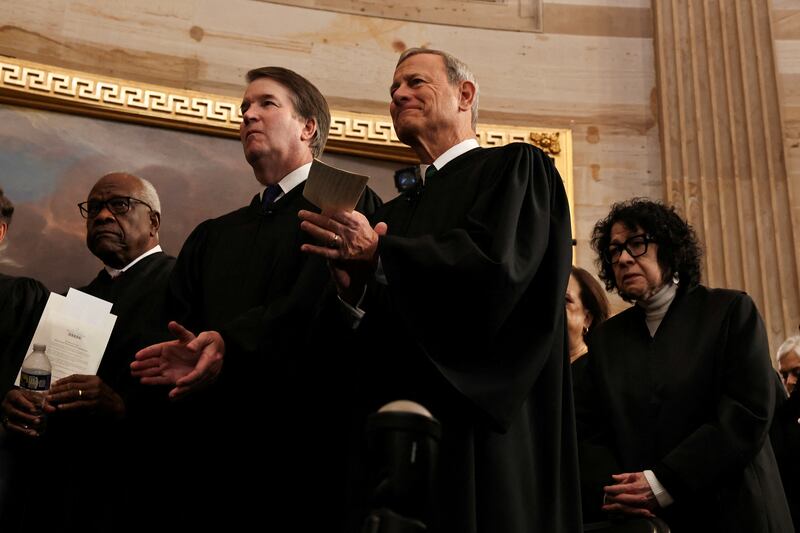
On the subject of foreign aid, Trump was handed another win when Chief Justice John Roberts told the administration it did not have to release approximately $4 billion in funding that Congress had appropriated—not yet, at least.
Roberts, who was appointed by President George W. Bush, put a temporary pause on a federal judge’s order requiring the payout until the full court considers whether to extend the “administrative stay.” That decision could come next week, according to The New York Times.

Solicitor General John Sauer argued the lower court’s order presented a “grave and urgent threat to the separation of powers.”
Yet Judge Amir Ali of the Federal District Court in Washington ruled last week that the administration had “given no justification to displace the bedrock expectation that Congress’s appropriations must be followed.”
Senate Appropriations Committee Chair Susan Collins, a Republican, also called Trump’s effort to claw back funds a “clear violation of the law.”