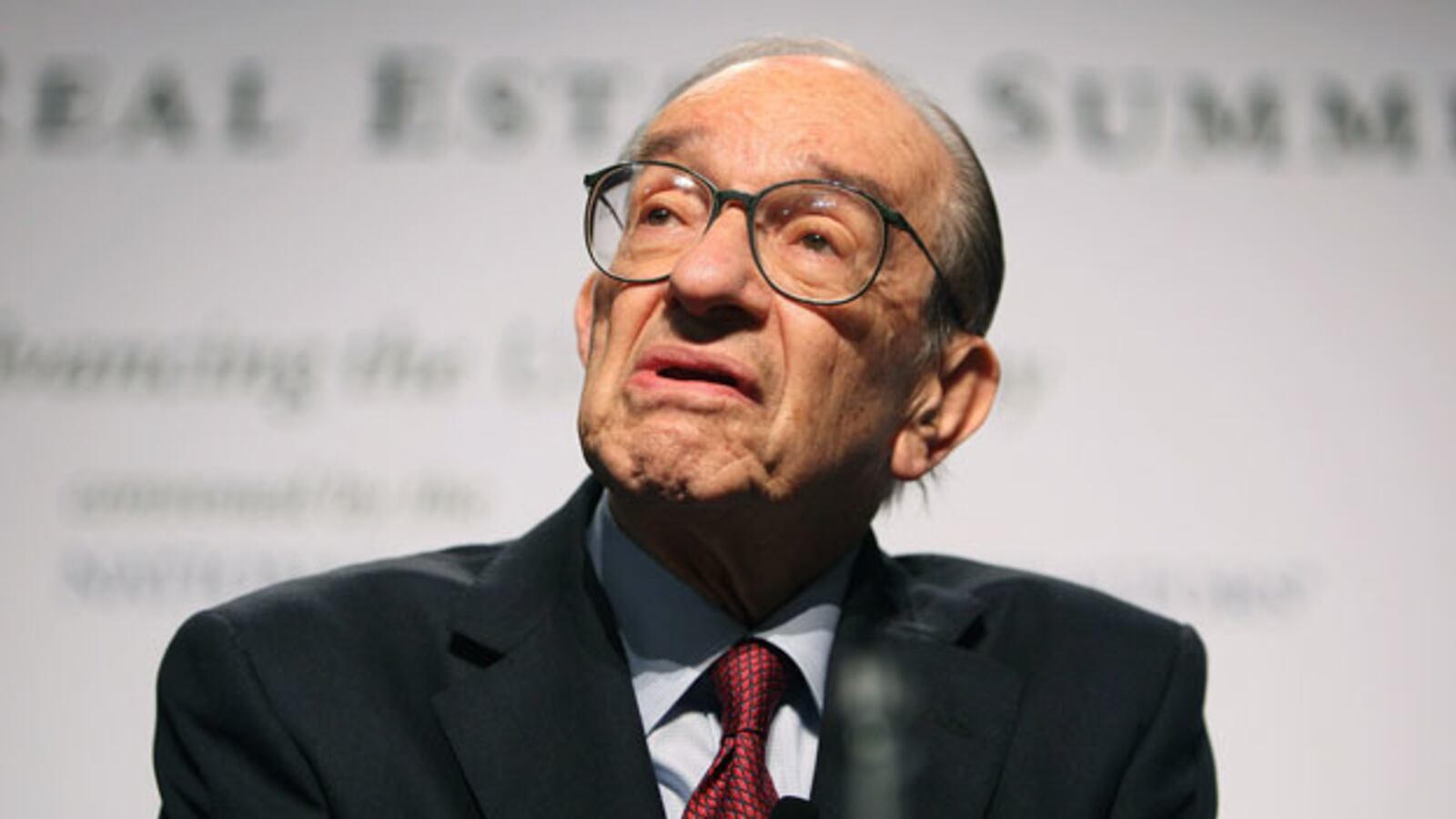
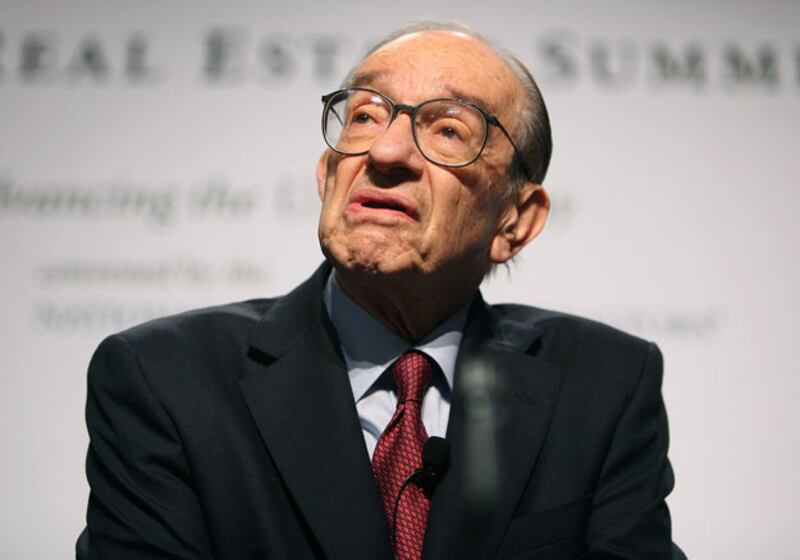
Position: Federal Reserve chairman (1987-2006)
Sin: Sowed the seeds of market excess.
The well-burnished legacy of Greenspan, the oracle of the free market and most important financial figure of the last two decades, was irreparably tarnished by the financial meltdown he failed to anticipate or prevent.
Of all the public officials who had the potential power to regulate the excesses in the financial markets before they triggered the current recession/depression, Greenspan was the one atop Mount Olympus. Instead, his actions enabled banks, brokerages, and insurance companies to abandon their duty to public trust while allowing them to speculate heavily in exotic financial instruments without disclosing their risk-taking fully. Greenspan, as Federal Reserve chairman, did not feel the need to either regulate or rely on disclosure of excessive risk taking.
Infamous Quote: “Those of us who have looked to the self-interest of lending institutions to protect shareholder’s equity—myself especially—are in a state of shocked disbelief,” said Greenspan to Congress last October as he admitted to being “partially” wrong.
Where Is He Now?: Speaker, economic consultant. Since leaving office, on payroll of hedge-fund titan John Paulson, bond firm Pimco, and Deutsche Bank, among others.
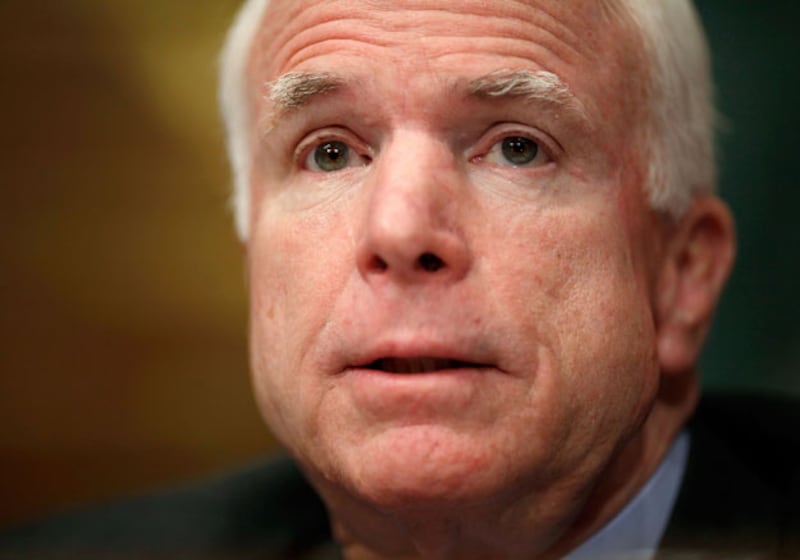
Position: Arizona senator; Republican presidential candidate
Sin: Failed to grasp the severity of the economic crisis, dooming his candidacy
As the Republican presidential nominee following George W. Bush, McCain might not have had a chance to beat Barack Obama under any circumstances. But McCain’s inability to grasp what to do about the economy following the collapse of Lehman Brothers last September 15 finished him off. His bid to suspend the campaign to contemplate the financial crisis appeared clueless and desperate. (It was not as though the crisis could be addressed in a week.) His dithering before the September presidential debate did him far more damage than did selecting Sarah Palin as his running mate.
Infamous Quote: “The fundamentals of the economy are strong,” stated on “Black Monday,” September 15. The campaign effectively ended with those words.
Where Is He Now?: U.S. senator, Arizona.
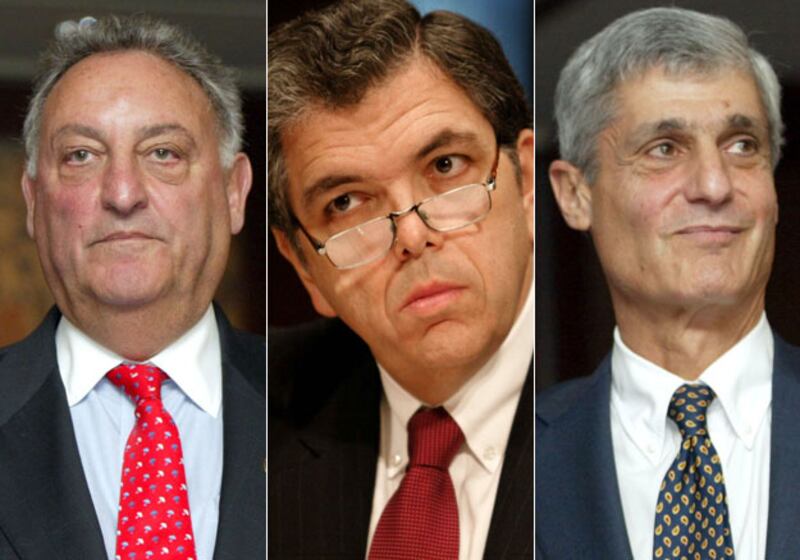
Positions: Former CEO and chairman; CEO and chairman; board member and senior executive
Sin: Destroying the world’s largest bank, damaging millions of customers, shareholders—and the financial system—in the process.
Assigning blame for the collapse of the American banking system is difficult to calculate but certainly the troika in charge of what was America’s biggest bank—the Wall Street equivalent to the three wise monkeys, “Hear No Evil, See No Evil, Speak No Evil”—deserve to be taken to task publicly.
Taking the position that the bank’s awesome slide was an honest mistake due to market forces is ludicrous. Admitted losses of $27.7 billion for 2008 serves as Exhibit A for why banks need to be more regulated, not less. Financial architect Sandy Weill, with Alan Greenspan’s assistance, steamrolled the Glass-Steagall Act, which had kept banks out of the securities business. Weill wanted his bank to control every aspect of its customers’ finances. So it was only a matter of time before the so-called synergy of the deal was revealed as the toxic mess it actually became.
The fact that these gentlemen have lost millions of dollars in their Citibank stock holdings, leaving them diminished but still fabulously wealthy, is hardly solace.
Infamous quotes: None. They have all been scrupulously avoiding the press and any comments on their own culpability.
Where Are They Now? Weill—chairman of the board, Carnegie Hall; Rubin—co-chairman of the Council on Foreign Relations; Prince—became chairman of Stonebridge International, a consulting firm; when Madeleine Albright’s firm recently merged with it, Prince’s name wasn’t mentioned.
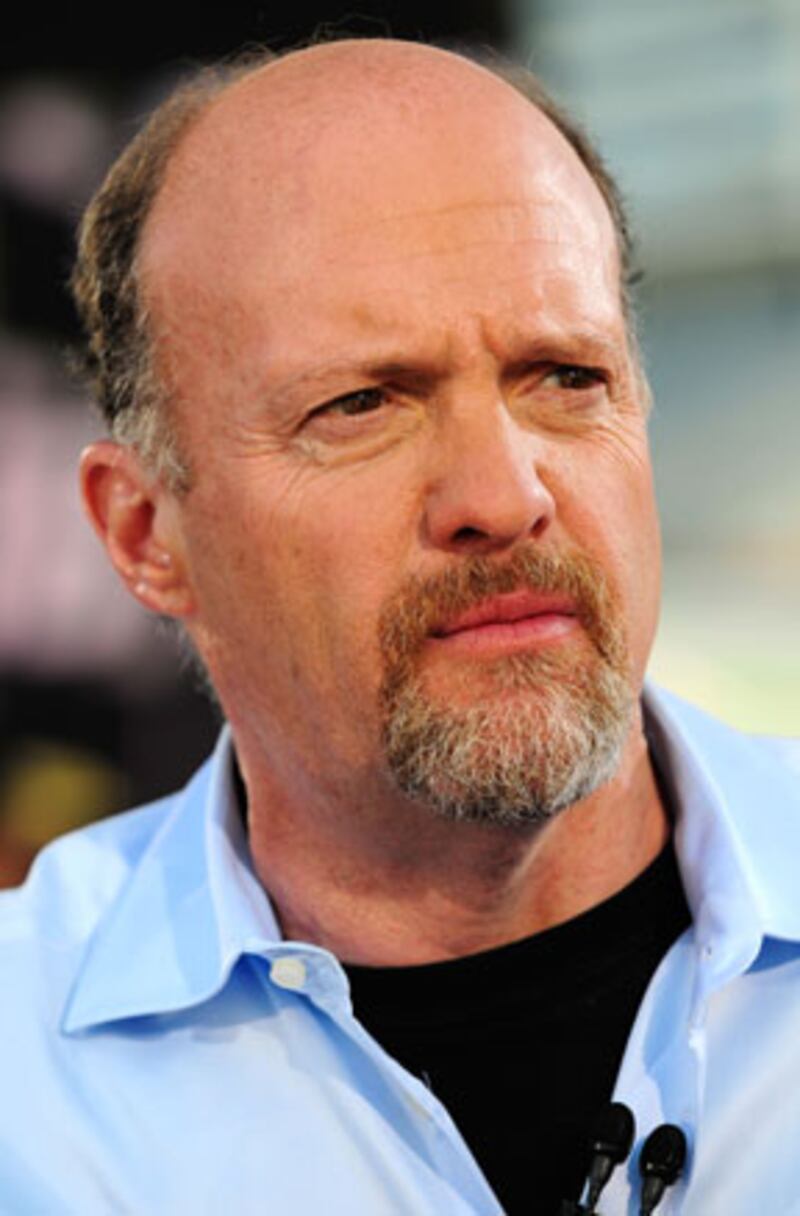
Position: CBNC host,
Mad Money”
Sin: Cost viewers money
The most popular anchor on the country’s leading financial network is a walking credibility crisis. This loudmouth money manager-turned-TV clown is still is bleeding from the 1,000 small cuts administered to him by comedian Jon Stewart, even as CNBC’s ratings have risen during the financial crisis.
Cramer’s calls on CNBC as the meltdown approached were doozies, and dearly cost loyal viewers who actually put their money where his mouth was. My favorite Cramer call: Hold Bear Stearns. That was even better than: Buy Wachovia.
His actual worst legacy: lame attempts to emulate him by other financial news anchors who somehow think that shouting at the camera gives them more authority. Or, like Cramer, that every minute they are on television, they are getting smarter.
Infamous Quote: “Bear Stearns is fine!...NO! NO! NO! ... Bear Stearns is not in trouble ... Don't move your money from Bear! That's just silly! Don't be silly!"—Cramer on
Mad Money, March 11, 2008
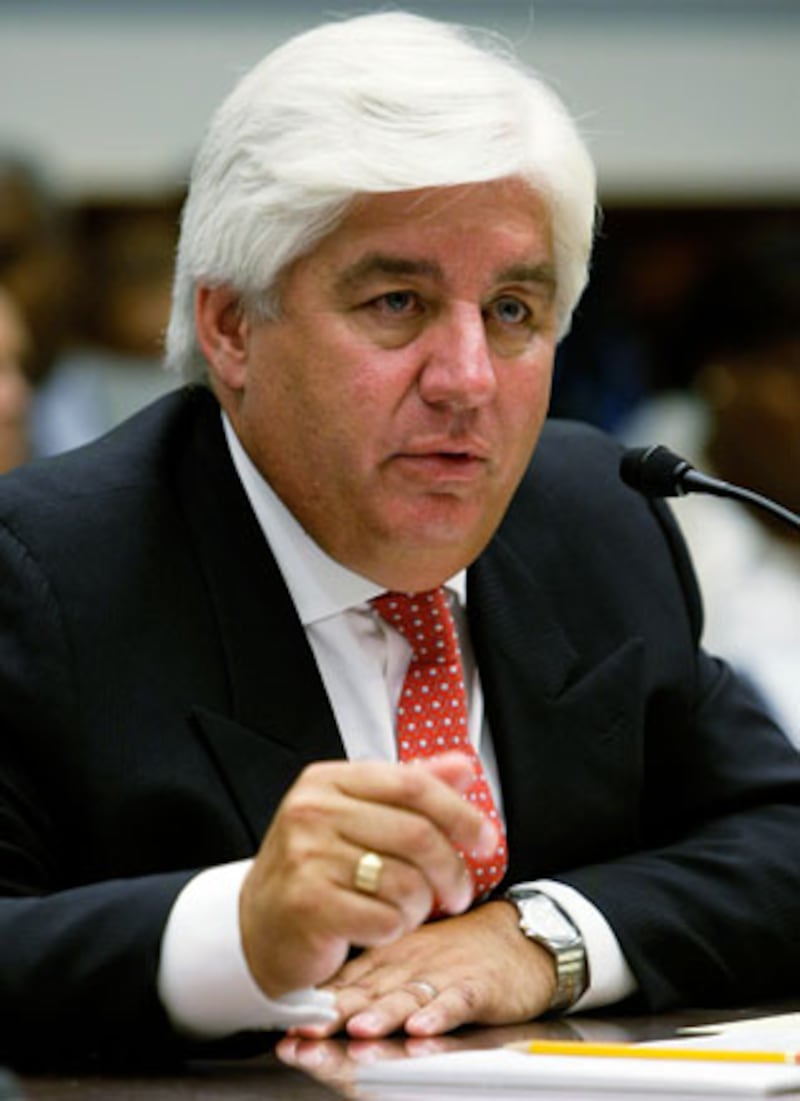
Position: CEO, AIG
Sin: Sinking the entire credit market and the world’s largest insurer.
Unlike Jim Cramer, Martin Sullivan does not make any public claim about being the smartest guy in the room. This jovial successor to the irascible, iron-fisted longtime AIG CEO Maurice “Hank” Greenberg allowed Joseph Cassano and his guys in the financial-products division in London to run wild selling billions of dollars in securities they did not understand. At the same time, under Sullivan, the quieter guys in New York on the insurance side goosed profits and eventually lost tens of billions of dollars in “securities lending.” The once-grand company collapsed last Sept. 15 and is now a ward of the state.
Where Is He Now? Sullivan, an Englishman who has not said one word of apology, is presumed hiding at his home in Westchester County, somehow hoping he escapes with remnants of his pay package. When he testified before Congress last October, he tried to blame accounting rules—“mark-to-market” for the collapse.
Infamous Quote: “We are all struggling to understand how this crisis happened in the first place and to find out what might have prevented it. There are no simple answers to these questions. I am not an accountant or economist—I have been an insurance man all my life.”—Testimony to Congress, October 7, 2008
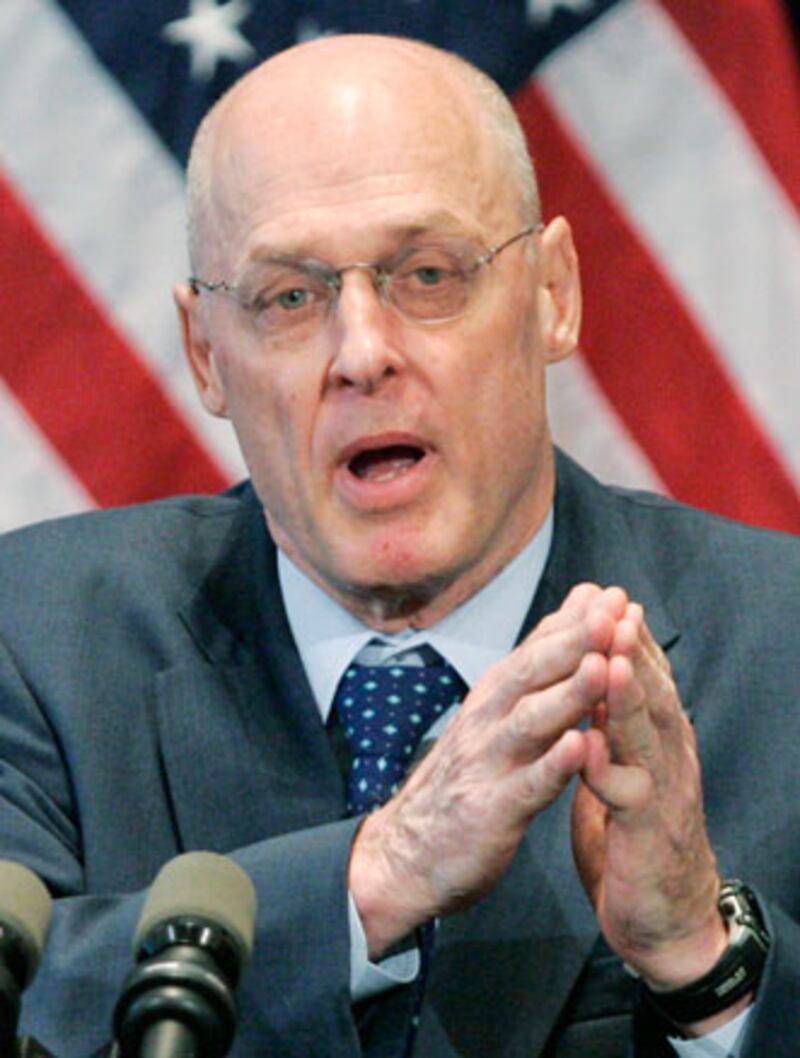
Position: Bush secretary of Treasury, Goldman Sachs CEO
Sin: Not doing enough soon enough
Paulson, the leading Bush administration official in charge of overseeing the economy and safeguarding the financial system, let the situation get out of control. Neither he, nor his Bush administration predecessors, did any meaningful oversight of financial markets or the housing bubble. Once it was discovered in 2004 that Fannie Mae had been inflating results to boost executive bonuses, even the Bush administration officials at Treasury should have been able to figure out something was rotten in housing. Instead, we had to wait until everything collapsed.
Infamous Quote: “I support the steps taken by the Federal Reserve tonight to assist AIG in continuing to meet its obligations, mitigate broader disruptions and at the same time protect taxpayers.”—Paulson, on September 15, 2008
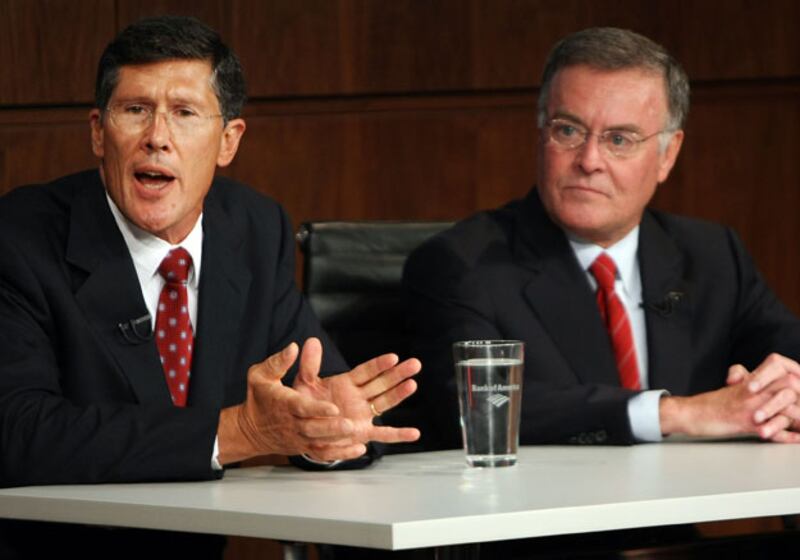
Positions: Merrill Lynch CEO; Bank of America, CEO and chairman
Sins: Destroying Merrill Lynch, making BofA even weaker
Thanks in part to New York Attorney General Andrew Cuomo, the public has learned a lot more about the executive bonuses at Merrill, Thain’s office re-decorations, including a $1,400 waste basket, and Merrill’s losses of more than $15 billion in the fourth quarter of 2008. Then there’s Ken Lewis’ hesitation about buying Merrill as well as the bullying of the two by Henry Paulson and Federal Reserve Chairman Ben Bernanke.
Thain, once the man with the golden resume from Goldman and his tenure as CEO of the New York Stock Exchange, had a chance to be a hero picking up after former Merrill disaster Stan O’Neal. Instead, Thain led the Thundering Herd into oblivion.
Infamous Quotes: “Bonuses were determined based upon the performance and the retention of people…. There is nothing that happened in the world or the economy that would make you say that those were not the right thing to do for the retention and the reward of the people who were performing.”—Thain, as quoted by New York Attorney General Cuomo
"They were a public company until the first of the year, they had a separate board, separate compensation committee and we had no authority to tell them what to do…" Ken Lewis, to Congress, about Thain’s now-infamous bonus plan
Where Are They Now? Lewis: Defrocked of chairman’s title. Now barely hanging on to CEO job as legal problems worsen. Thain: Hoping to escape shareholder lawsuits.