A sketch artist captured the historic moment a humiliated Donald Trump fled the Supreme Court.
Trump, 79, became the first sitting president to observe oral arguments on Wednesday as his administration attempted to defend his executive order to seek to restrict birthright citizenship.
He seeks to overrule the constitutional and statutory protections that grant automatic citizenship to nearly all children born in the United States.
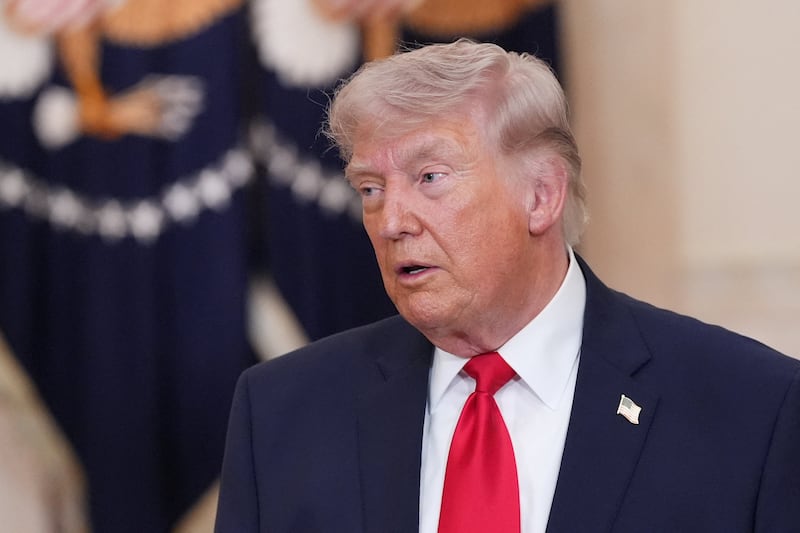
The administration is using the limitation of birthright citizenship as a way to rein in illegal immigration, one of Trump’s obsessions.
But Trump suddenly left the hearing after getting an up-close view of justices—including conservatives he personally appointed—expressing skepticism toward the administration’s constitutional arguments.
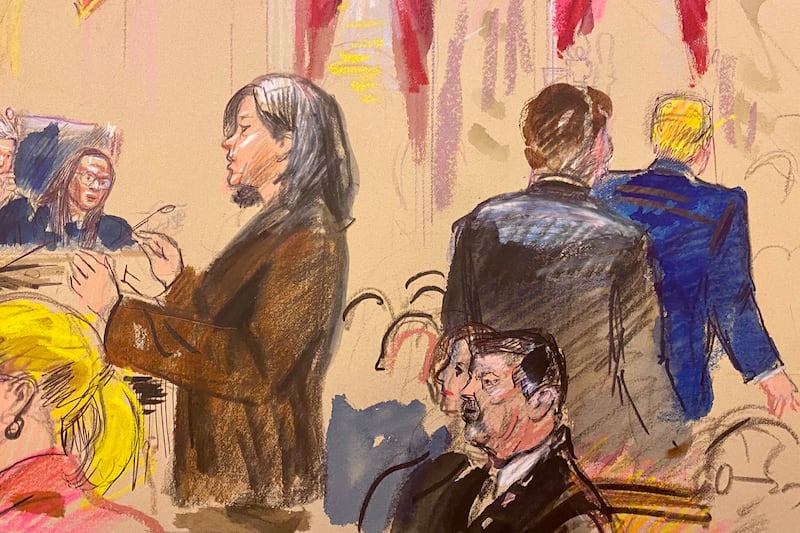
A court sketch captured the president’s hasty exit for posterity.
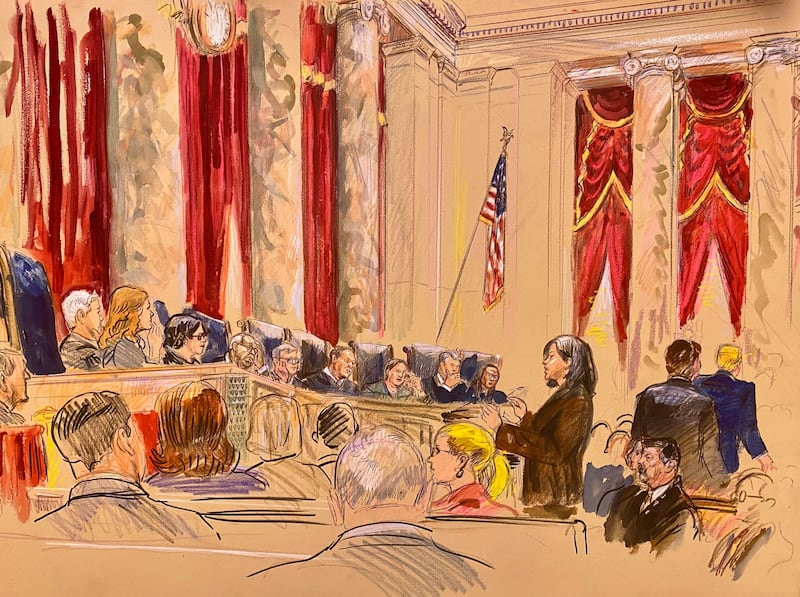
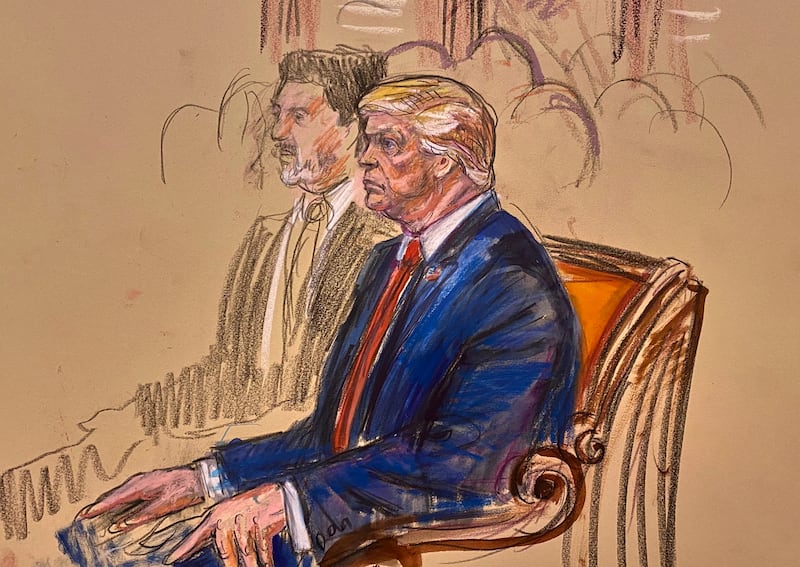
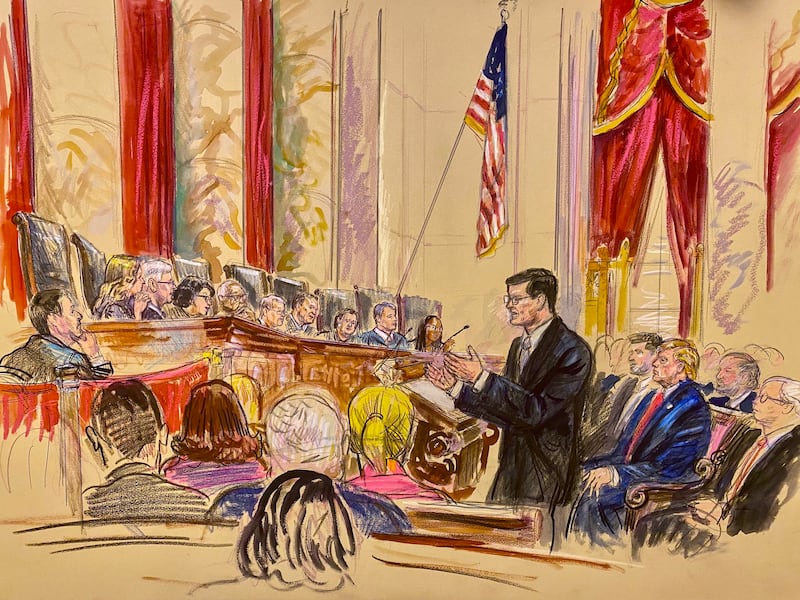
In the sketch, American Civil Liberties Union legal director Cecillia Wang can be seen beginning to make arguments on behalf of the opposing counsel while Trump is rushing for the exit.
Trump had been at the Supreme Court for 90 minutes, sitting silently with his hands in his lap.

While there were no cameras or videos in the country’s highest court, reports from inside the room said Trump was spotted with his eyes closed.
“He closed his eyes for brief times during the session, but looked alert and focused throughout his time in the courtroom,” Fox News said.
Trump’s motorcade was sighted by the Daily Beast leaving the Supreme Court at about 11.25 am.
Less than an hour later, Trump broke his uncharacteristic silence with a short but sour Truth Social post.
“We are the only Country in the World STUPID enough to allow “Birthright” Citizenship!" he posted after returning to the White House.
However, more than 30 countries automatically grant citizenship to children born within their borders with no conditions.

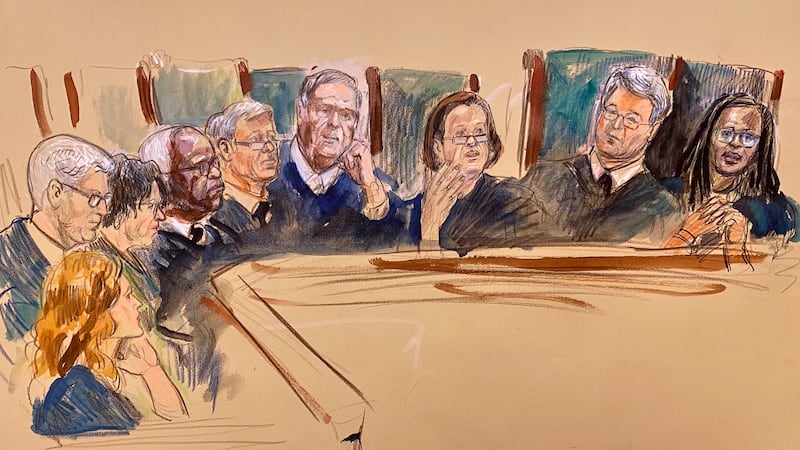
The birthright citizenship case is challenging Trump’s executive order that aims to deny automatic U.S. citizenship to children who are born in the United States if their parents are in the country illegally or are on temporary visas.
The case is titled Trump v. Barbara, with the central argument being that the 14th Amendment has long been used to grant citizenship to almost everyone who has been born on U.S. soil, barring exceptions including the children of foreign diplomats.
Trump signed his order in January last year, and it has been blocked by multiple lower courts, so has never been put into action.
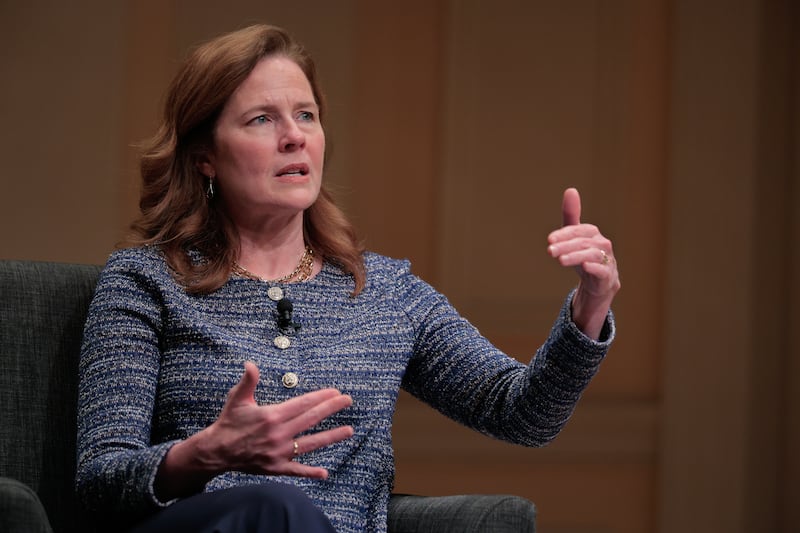
On Wednesday, one of the skeptical voices in court was Trump appointee Amy Coney Barrett, who pressed Trump’s lawyer, Solicitor General John Sauer, on the historical understanding of the 14th Amendment, which had been adopted in 1868 after the Civil War.
“You say the purpose of the 14th Amendment was to put all newly freed slaves on equal footing and so they would be citizens,” she said. “But that’s not textual. So how do you get there?”

Sauer told conservative Chief Justice John Roberts that “we’re in a new world where 8 billion people are one plane ride away from having a child who’s a U.S citizen.”
Roberts told Sauer, “It’s a new world. It’s the same Constitution.”