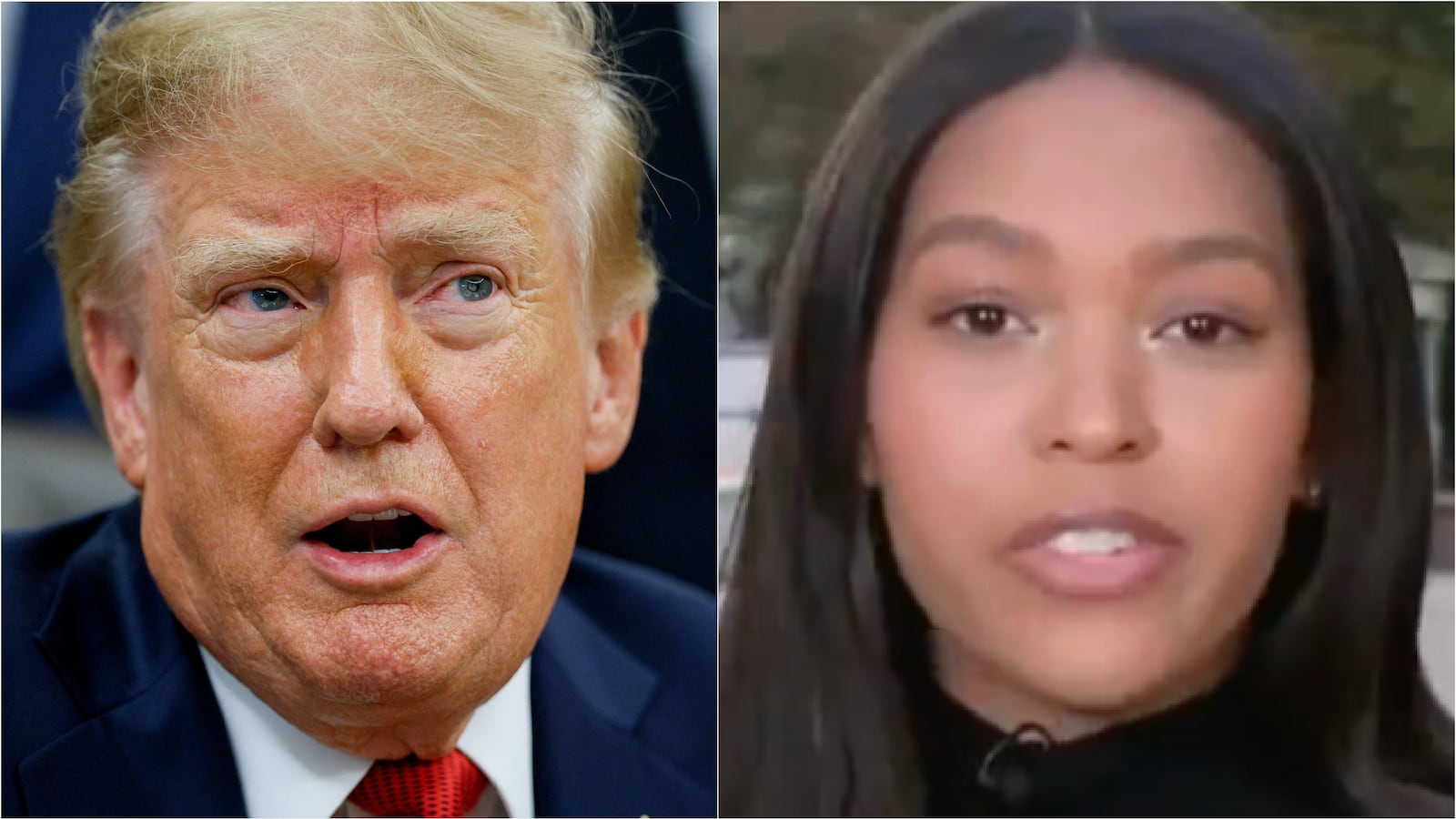
Reporters were dramatically denied entry to the White House on Saturday, a day after President Donald Trump bizarrely—and abruptly—announced he was banning three media organizations.
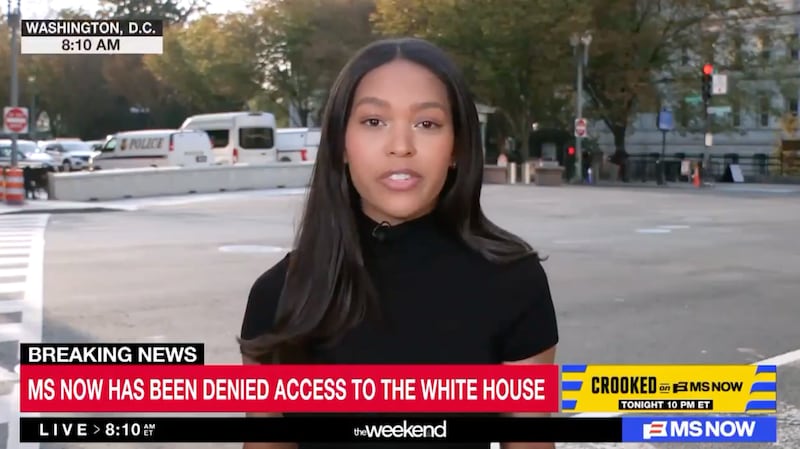
MS NOW’s White House reporter, Akayla Gardner, said on the air that her badge flashed red when she showed up to work. She says she was literally turned away at the door.
“I attempted to scan my badge, which we have to do to be able to get into the White House grounds; it did not work,” she said from a street near the White House. “There was a red beeping light, and so the officer asked me to hand over my badge; he said that it was disabled.”
Gardner said she was waved through two outside checkpoints before having to scan her pass to enter the White House, where she was denied entry. She says she was with an MS NOW producer as the scene unfolded.
“I asked why I was not able to get inside,” she said, referring to a security agent. “He said it was above him, and then our producer, after me, also scanned her badge.”
The producer’s badge was still authorized, and she was allowed in, Gardner said.
Trump, 80, announced his ban in a Friday afternoon tirade on Truth Social, saying he was barring CNN, Politico and MS NOW from the White House for producing “fake news.” He did not cite any specific news story.
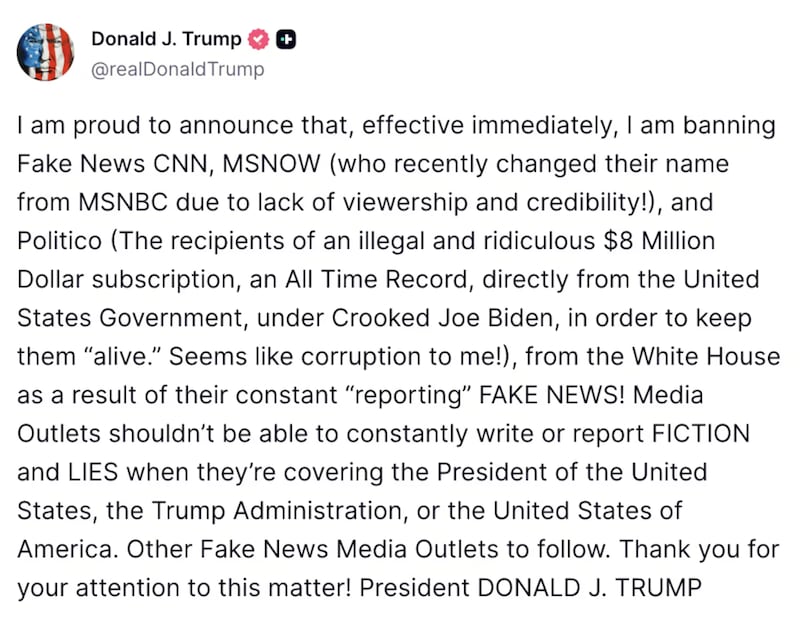
Trump confirmed in a subsequent Oval Office event that he was serious about the ban, claiming that it does not run afoul of the First Amendment. He also threatened to extend the ban to more outlets, brazenly suggesting that a way to ensure access is to write positive stories about him.
Gardner said she turned up at the White House on Saturday because the “banned” journalists were not kicked out of the White House on Friday afternoon.
“Yesterday our journalists were able to stay here working on the White House grounds,” she said. “This is the first action that we know of, of them actually denying us entry into the White House.”
CNN’s Betsy Klein said on air that she was denied entry and that her White House badge was seized at the White House on Saturday morning, too. Politico announced that reporter Cheyenne Haslett was similarly denied entry.
CNN issued a statement that labelled the ban an “illegal assault” on the network’s first amendment rights and MS NOW hinted that the network was getting ready to challenge the ban in court.
“The White House belongs to the American people and the decisions made inside are funded by our tax dollars. MS NOW intends to take any and all steps necessary to defend our First Amendment rights and the essential role of independent journalism in our democracy,” a spokeswoman said in a statement.
Trump’s ban comes amid a brutal news cycle for him and his goons. Polls show his approval is sinking further underwater over the Iran war and the cost of living—disgust that is now harming once-safe Republicans running for office in November’s midterms.
The courts have also dealt Trump setbacks this week, including blocking his latest attempt to put his name on the Kennedy Center and all three of his Supreme Court appointees ruling against his wish to upend mail-in voting by the midterms.
News also broke Friday that the Iran war death toll was higher than had been publicly reported and that Trump’s administration has lost track of highly sensitive F-35 components that were diverted to Hong Kong, of all places.
The chilling ban is likely to be challenged in court on First Amendment grounds. In 2018, then-CNN reporter Jim Acosta had his pass revoked after nasty run-ins with Trump. The network sued, and a federal court sided with CNN, allowing Acosta to continue reporting from the White House.
On Friday, Trump said there was “something wrong with a country that can allow people to write purposely negative stories.”
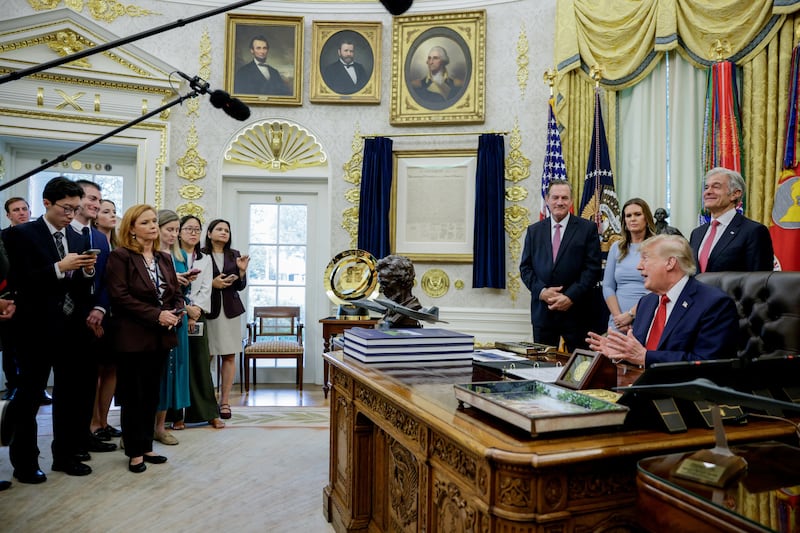
“Now, if they want to write them, that’s fine,” he said. “But I don’t have to let them into my—in the People’s House.”
Even allies of the octogenarian president have condemned his actions as rash. Conservative legal scholar Jonathan Turley, a longstanding defender of the president, said that “barring disfavored media from the White House is a terrible precedent and practice.”
Turley warned that Trump’s ban raises “serious constitutional questions.”