President Donald Trump’s judicial appointees are delivering on his agenda at an astonishing rate, even compared to federal judges appointed by other Republican presidents.

A new study from the legal watchdog group Court Accountability found that across 245 federal district court orders in cases challenging the Trump administration’s policies, Trump won just 41 percent of the time.
Democratic-appointed district judges ruled in the administration’s favor 39 percent of the time, while Republican-appointed judges overall ruled for Trump in 46 percent of the cases.
But when it came to judges appointed by Trump versus judges appointed by other Republican presidents, a large divide emerged.
As of January, the Trump appointees had ruled in the president’s favor an incredible 69 percent of the time.
The non-Trump Republican appointees ruled for the administration just 21 percent of the time.
The results at the appellate level were even more extreme.
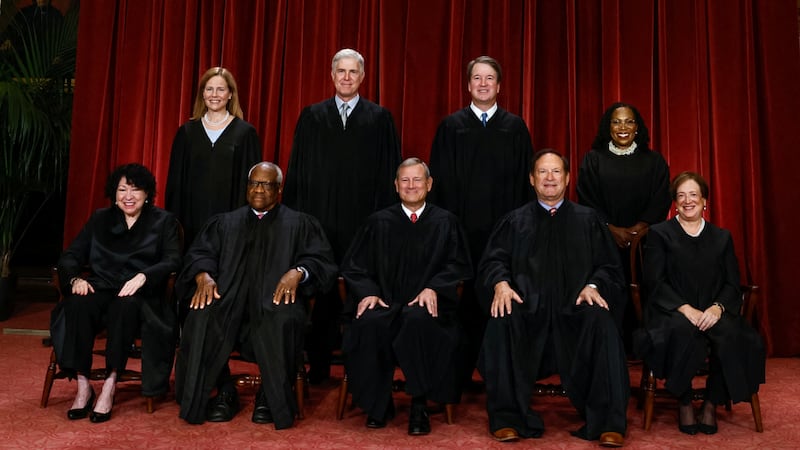
As of late February, Trump-appointed appellate judges had ruled in his favor 92 percent of the time, while the Supreme Court—which has three Trump appointees—had sided with the president 84 percent of the time.
The findings suggest that the Trump-appointed judges go beyond being politically conservative to acting as Trump loyalists who are willing to greenlight the administration’s policies even when other Republicans reject them, according to Court Accountability.

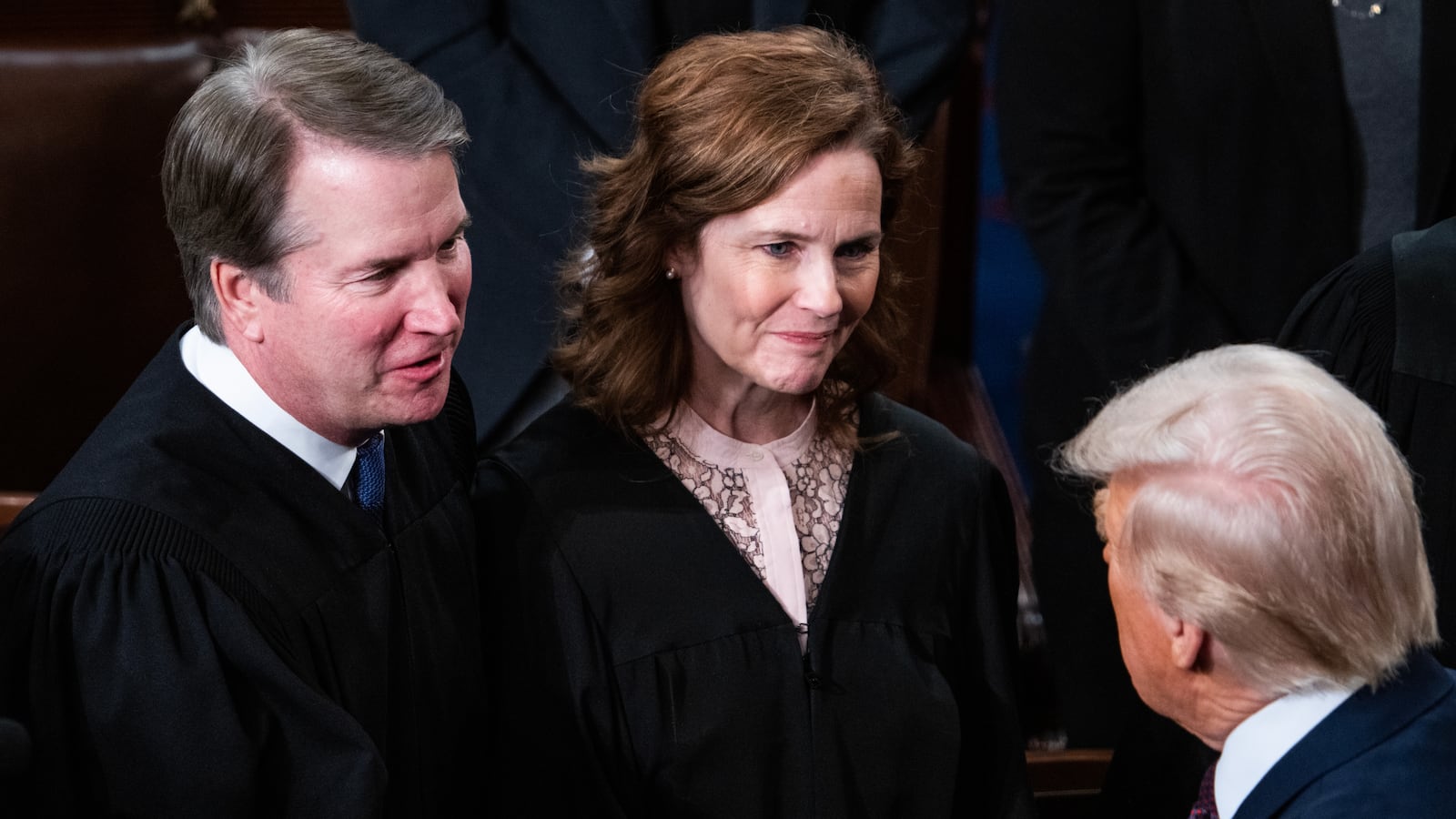
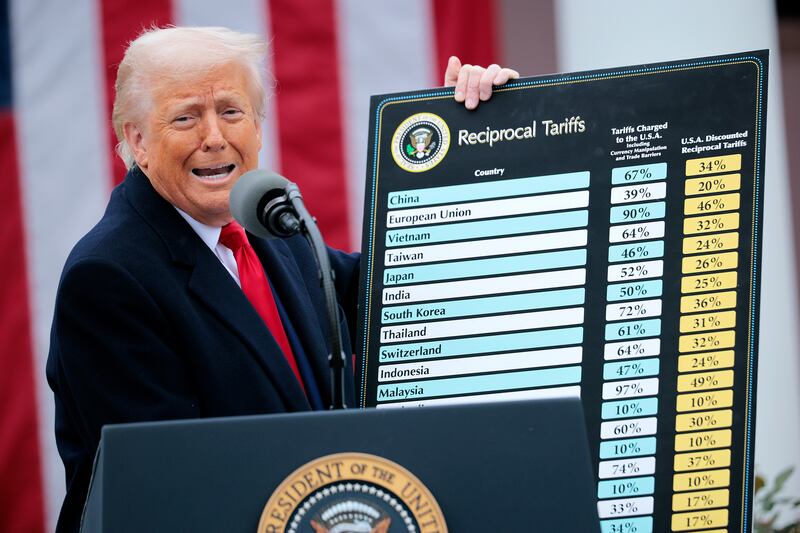
In the rare cases that the Supreme Court has ruled against Trump—including blocking his National Guard deployment and striking down his use of emergency powers to impose crushing tariffs on products from dozens of U.S. trade partners—the president has gone scorched earth on the justices.
After the justices struck down his tariffs 6-3, the president called an impromptu press conference and described the justices who ruled against him as “lap dogs,” a “disgrace to our nation,” and “disloyal to the Constitution.”
But those decisions should not be interpreted as the Court declaring its independence from Trump, Court Accountability senior advisor Mike Sacks told the Daily Beast.
“It’s the Roberts court reminding everybody who’s in charge when Trump is gone,” he said.
In cases where Trump’s decisions don’t coincide with the broader conservative legal movement, Chief Justice Roberts and the more corporatist justices will side with the liberals to oppose them, while still expanding Trump’s executive power in most cases, Sacks said.
At the same time, the Court Accountability study found that the lower courts have largely served as a check on Trump’s executive power despite the loyalty of his appointees, with the administration’s challengers winning 59 percent of the time at the district court level and 54 percent of the time of the circuit court level.
Those decisions have at times been scathing.
When George W. Bush appointee Judge Cynthia Rufe ruled against the administration’s efforts to remove a National Parks display about nine people enslaved by President George Washington, she cited the dystopian novel 1984.
Another Bush appointee, Judge Richard Leon, lectured the administration about the First Amendment in a ruling that struck down Defense Secretary Pete Hegseth’s effort to censure and demote Democratic Sen. Mark Kelly for appearing in a video reciting the Military Code of Justice.

And Judge Harvey Bartle, a George H.W. Bush appointee, wrote in a blistering decision that the Department of Homeland Security was intentionally breaking the law and wasting the judiciary’s resources with its mandatory detention policy for migrants.
“We have to invert the judicial pyramid and pay attention to those who are actually staying faithful to the law,” Sacks said.

“We have on display no shortage of judges from both parties… who when confronted with the facts and the clear, applicable law, have not only done the right thing, but have written with moral, intellectual, and legal clarity,” he added.
The Daily Beast has reached out to the Supreme Court for comment.