The number of Americans not working has climbed to a record high under President Donald Trump.
According to figures from the Federal Reserve Bank of St. Louis, the ranks of Americans classified as “not in the labor force” (NILF) swelled to 105.8 million in June, marking the highest level ever recorded.
That means the total number of Americans classified as “not in the labor force” is now higher than it was during the Great Recession or the COVID-19 pandemic.

The category includes everyone age 16 and older who is not working, from retirees and students to people who have stopped looking for a job.
About 5.3 million Americans—roughly 5 percent of the total—are no longer searching for work because they have become discouraged. Another 23.3 million, or around 22 percent, are out of the workforce due to long-term illness, disability, or other benefit programs.

Retirees make up the largest share of the group, accounting for about half of all Americans who are not working, largely because of the Baby Boomer generation, born between 1946 and 1964.
But labor economist Nicholas Eberstadt argues that an aging population alone does not explain the trend.
“If you look at what’s going on in Europe and Japan, which are both aging, shrinking societies, their workforce participation rates are going up now. So it’s not as if it’s impossible for aging, shrinking societies to mobilize more or involve more in the workforce,” he told the New York Post.
“These are the healthiest, best educated Americans that have ever lived on the planet,” Eberstadt said.
The Daily Beast has contacted the White House for comment.
The record number of Americans outside the workforce comes as the U.S. job market is also showing fresh signs of slowing under Trump, who has promised to usher in a “golden age of America.”
The economy added just 57,000 jobs in June—barely half of the 115,000 economists had expected. The Labor Department also sharply revised previous figures lower, reporting 31,000 fewer jobs were created in April and another 43,000 fewer in May than originally estimated.
One of the biggest drags came from the leisure and hospitality sector, which lost 61,000 jobs in June instead of ramping up for the busy summer travel season.
The weak performance surprised economists, who had expected the industry to benefit from seasonal hiring as well as a boost from the FIFA Club World Cup.

Angela Hanks, chief of policy programs at The Century Foundation, described the report as “yet more evidence of a fragile economy under President Trump.”
Meanwhile, the reality is even grim for Americans who are working.
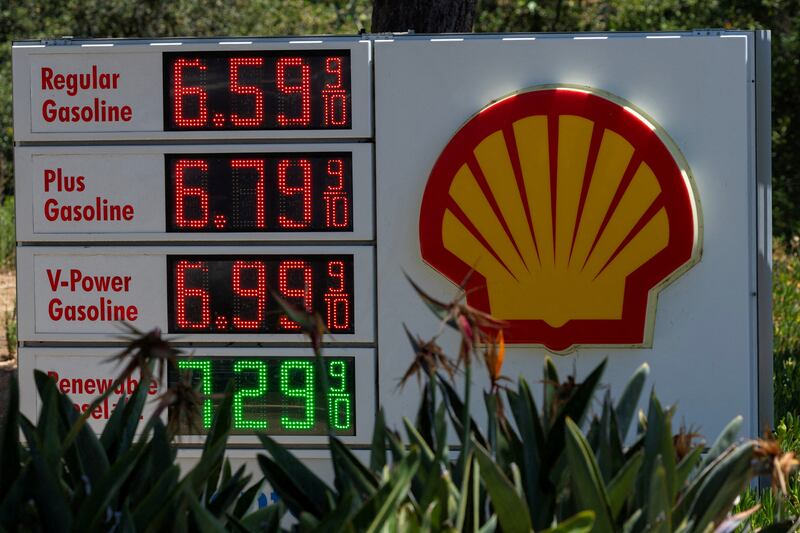
Wage growth has not been keeping up with inflation, which soared because Trump decided to go to war with Iran, driving up energy costs.
In June, wages rose 3.5 percent from a year earlier—the same rate as inflation—leaving workers with virtually no gain in purchasing power, according to the Bureau of Labor Statistics.