This piece first ran on the Obsessed by Kevin Fallon Substack. Subscribe here to read more like it!
Every season on Top Chef, there’s a contestant who doesn’t get told to “please pack your knives and go.”
(Warning: Spoilers for the finale of Top Chef.)
Occasionally, however, there is also one who is never done packing and unpacking and repacking their knives the whole time. And it’s worth it.
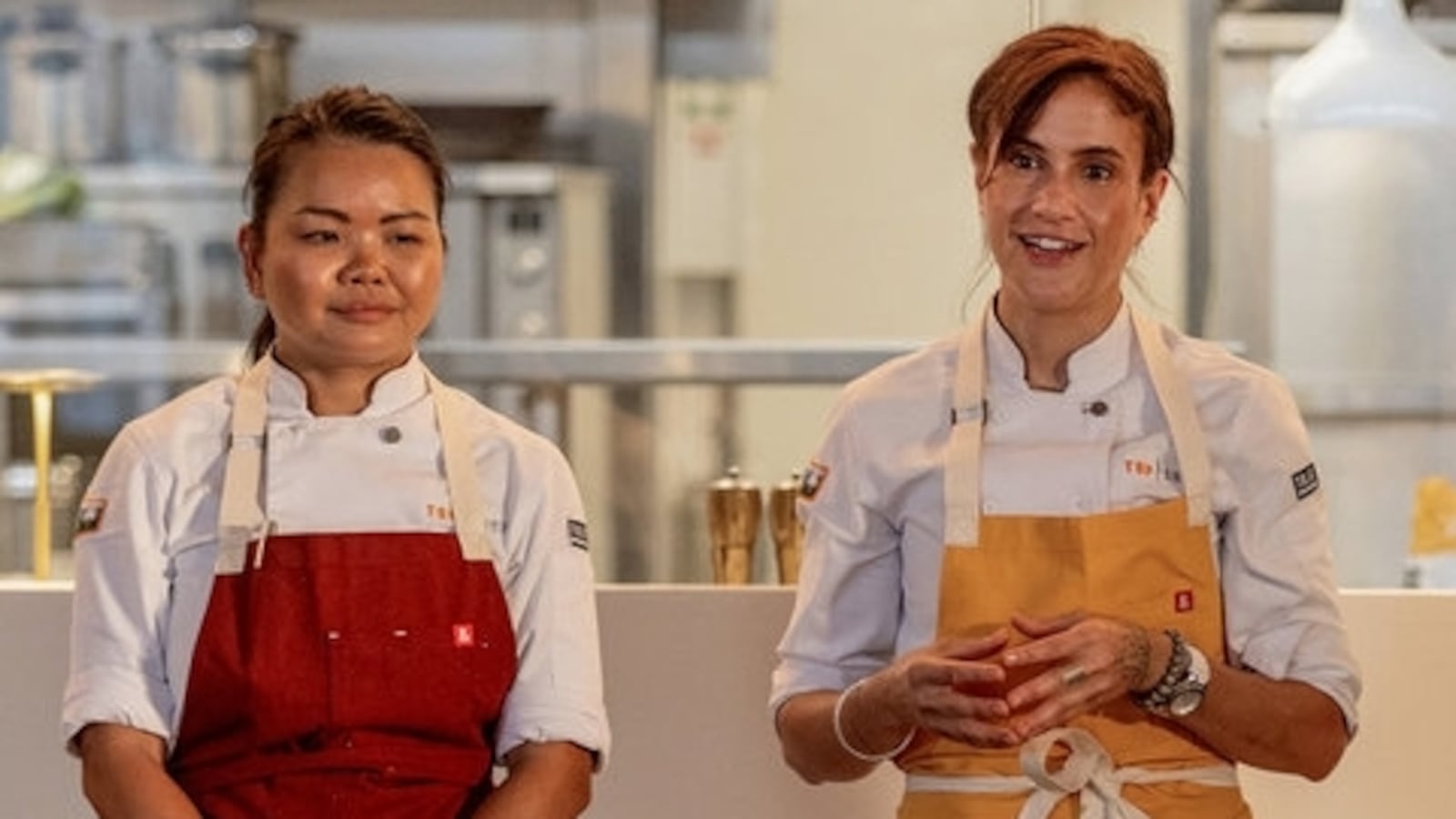
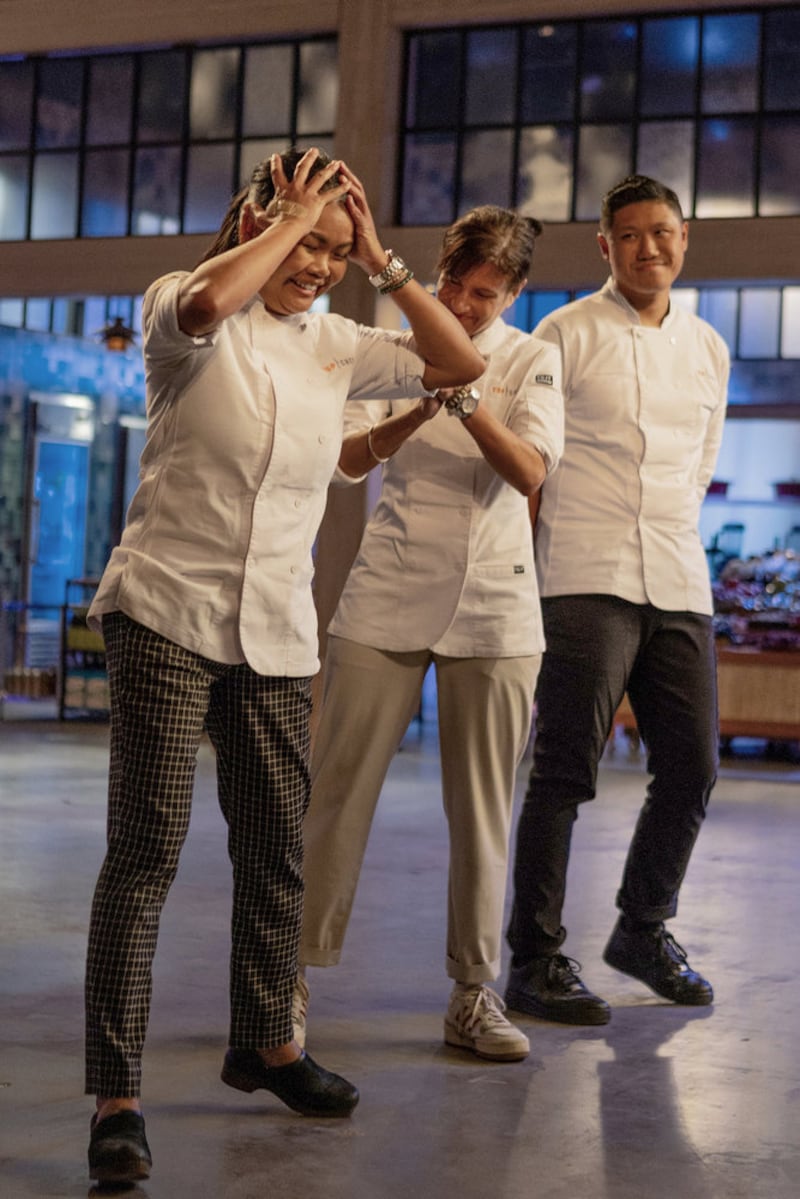
The finale of Season 23 of Top Chef just aired, anointing its new champion: Rhoda Magbitang. She had one of the most dramatic runs in the long-running franchise’s history.
She was the first contestant to ever, in 23 seasons, win the first two elimination challenges, setting her up for frontrunner status. Then she made a disastrous mistake that led to her shockingly early elimination. Rhoda then weathered the gauntlet of the Last Chance Kitchen competition, eliminating one chef after another until she was brought back to the full-time cast. Then, she won the whole damn thing.
That puts her in esteemed company of chefs who won the entire series after returning thanks to Last Chance Kitchen. (Among them, current host Kristen Kish.)
Hours after the finale aired, I spoke with Rhoda from her Hawaii restaurant, CanoeHouse on Mauna Lani, about her roller-coaster journey on the show, the season’s big viral moment (Sieger!!!!), and all the tears along the way.
I don’t know if I’m supposed to say this, but I was rooting for you the entire time. I really wanted you to win.
Oh, that’s very nice. I know I didn’t really make it easy for people to root for me sometimes. You go into this, and you don’t really intend to be perfect, but you want to be. Obviously, you want to do your best and show your best the whole time.
That’s interesting that you thought it wasn’t easy to root for you because in my mind it was. You were so strong at the beginning, and then you had a misstep that got you into Last Chance Kitchen. And to watch you go through that gauntlet and get back into the game, to me, that is a very rootable thing.
Thank you. It was tough, especially after the first two challenges, and then you get to really get to know everybody. And you have these one-on-one conversations. I don’t hang out with a lot of chefs. And then, you know, to be in close quarters with them, that was hard. That gets in your head.
After you won those first two challenges, which we all know now is historic— no one else has done that before—what was your mindset after that? Did you feel Teflon or did you feel more vulnerable?
I definitely felt more vulnerable. I felt like, okay, I can’t drop the ball now, which is exactly what I did. I started overthinking a lot of things, and instead of just—I don’t even wanna say this—like, sticking with something that’s safe. I just knew that the challenges were only gonna get harder and harder.
So that was a really tough thing to contend with. Do you wanna keep showing off or do you wanna just sort of, like, cruise? And I kept wanting to swing for the fences. It just didn’t land as well as I thought it would. So then your second guesses slowly start creeping in. It messes with your head.
What was the experience like going through the gauntlet of Last Chance Kitchen and coming back into the show? Do you feel like because you had done all of that, like, you’re just like, “I’m on fire. I’m ready to do this,” or do you feel like because you were gone and you came back that you had something to prove?
I missed, like, three elimination challenges. The chefs have gone through two of the biggest challenges this season, which were the Whole Hog and the Restaurant Wars. I definitely felt intimidated, and I didn’t think that I was invincible at all. It felt like I had a lot more to prove, but at the same time, I knew that I had it in me to do so and to, to keep going. It was just a little trickier to channel it right away.
That makes total sense.
Especially being in that mindset of Last Chance Kitchen. It’s exhausting. The whole thing is exhausting. When I first went into the “loser hotel,” which we call it, I slept for two days, Kevin. You know? I had to. And they had to check on me. I just needed to reset, and I needed to just really assess what I wanna do, because I’ve never been in a cooking competition before. This is the first one that I’ve ever done, and for a reason.
I have so much respect for Top Chef and the whole franchise, and I am fully aware of what it does to people’s careers. When I felt like, man, I really messed that up, I had to take time for myself to just, like, get back in it, and eventually I got there.
You were just sort of alluding to all this, but I’m very curious what was the motivation for you to do this in the first place? Why did you submit yourself to this?
To be honest with you, I’m still trying to figure that out. I’m not even kidding. I like my life. I like where I live. My career is going great. I work for a great company. It’s different with, like, people in sports. That’s something that you train for all your life, but there’s so much physicality in it.
With cooking, when you’ve grown up watching Top Chef for the last 20 years, and you just cry at a lot at the finale scenes when they announce the winner, you sort of imagine yourself in that spot. You just get this, like, really overwhelming feeling of like, holy s--t, like what if? What if? I wonder if I can do that? I wonder if I could be that person.
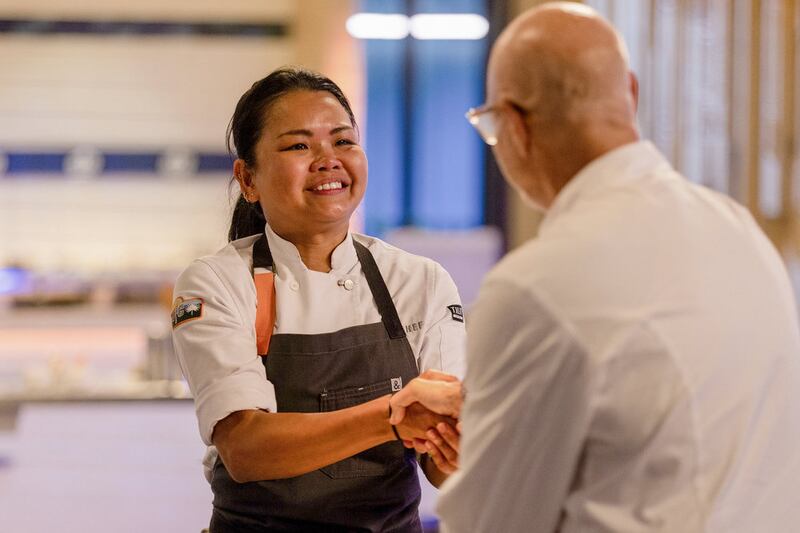
You mentioned crying, which I did a lot of while watching the finale.
Oh, nice.
Which I think you also did too.
Yeah, I did.
There was this beautiful moment where everyone’s families came to the table in the finale. You had already planned your menu, which was a toast to your culture and your family. How did it feel knowing that you already had that menu planned to then see your sister come and bring that dish that was part of your culture?
There were so many things that happened during filming that I felt like it was going full circle every time. During the Appalachian Challenge, the reason why, you know, like I went the direction of the cabbage rolls is because I was pleasantly surprised that one of the best restaurants in Asheville is a Filipino fine dining place. Having Joe Flamm as a mentor, and him having survived Last Chance Kitchen after being eliminated, after winning Restaurant Wars, that’s super cool. He powered through, and I happened to pick him.
And then this, with my sister being there and one of my favorite dishes that she makes. It was brought over by Tom, and I couldn’t believe it. I thought Tom looked it up on Pinterest. I said like, “Wait, what did you guys do? Like, did you guys look this up on Pinterest?” It looks exactly how they would make it. It’s all kismet.
I have one last question for you. Obviously, the viral moment of the season has been Sieger’s talkback to the judges. I know you weren’t present for that, but what was it like to be hearing about that in the background?
We didn’t actually hear it, but there was a longer conversation about it when they got back from the judges’ table. It was heartbreaking. You obviously don’t want to see your friend kind of explode like that, especially on national television. But at the same time, I have no idea what was said. We only know what is shown to us. I’m sure it got very heated on both sides.
It broke my heart. It really did. We understand the pressure of the competition and the severity and just like the consequences of this whole thing, you know? Whether it’s good or bad. When you put like a bunch of really passionate, really dedicated chefs under some crazy circumstances, you’ll get that sometimes.