
When you look up Lizzie Borden and Aileen Wuornos on Google, the AI overview tells you the two women “never met and shared no historical connection.” No s--t, Sherlock, considering Wuornos was born 30 years after Borden died.
But that doesn’t stop the new season of the true-crime anthology Monster (streaming now on Netflix) from drawing a line between the two, culminating in a fever-dream final sequence that sums up The Lizzie Borden Story’s descent into delirium.
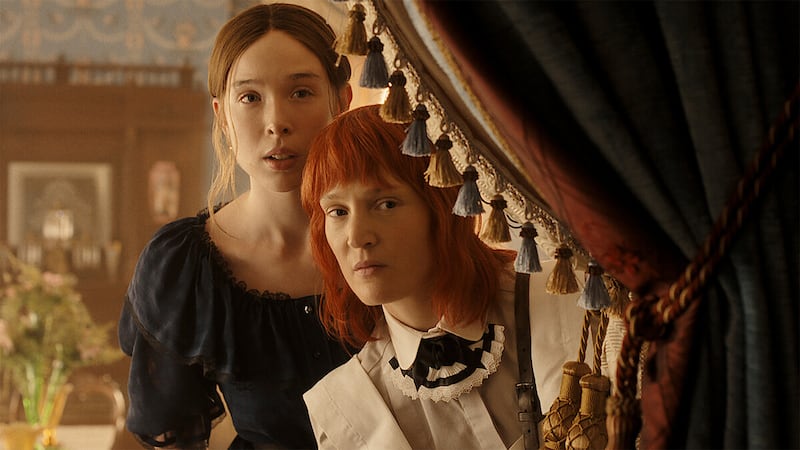
As with the previous version of Ryan Murphy’s anthology series, the hit show has a “throw everything against the wall” approach that raises compelling questions amid the lurid, bombastic choices. Still, by the end of the eight episodes, it feels like you have been (metaphorically) slapped across the face. Even if that is the point, the series veers so far into murderous make-believe that any of the salient observations about how women killers are portrayed and misunderstood are immediately drowned out by goofy extremes.
Of course, any dramatization of a historical event requires some suspension of disbelief regarding its accuracy. But Monster has always been keen on serving vibes rather than precision in depicting infamous convicted killers like Jeffrey Dahmer, Lyle and Erik Menendez, and Ed Gein, who have all drawn media and Hollywood attention.
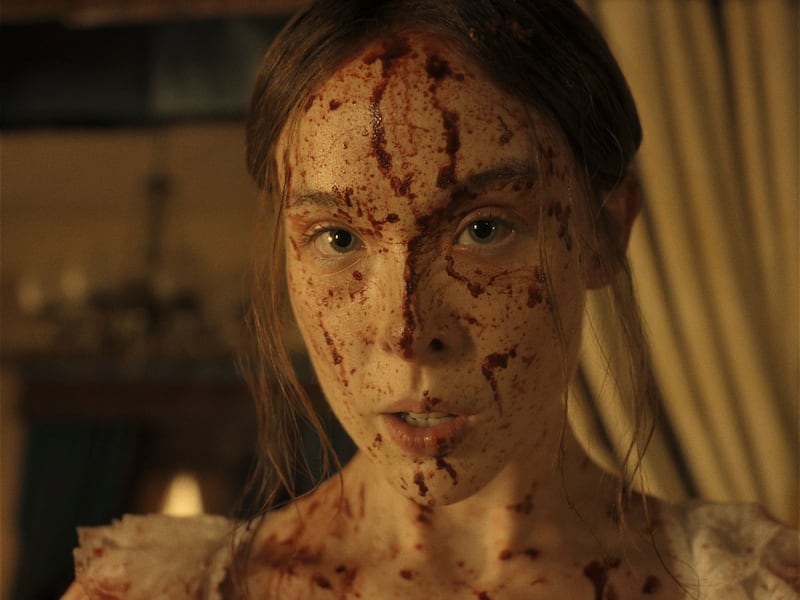
The first episode wastes no time in depicting Lizzie (Ella Beatty) and her axe giving her (step)mother around 40 whacks. She then gives her father 41—or thereabouts. The nursery rhyme is core to Borden’s reputation, appearing in the premiere and finale. When Lizzie hears children singing the evocative lyrics in the latter, it triggers a split-second flashback to visceral rage and a fountain of gore.
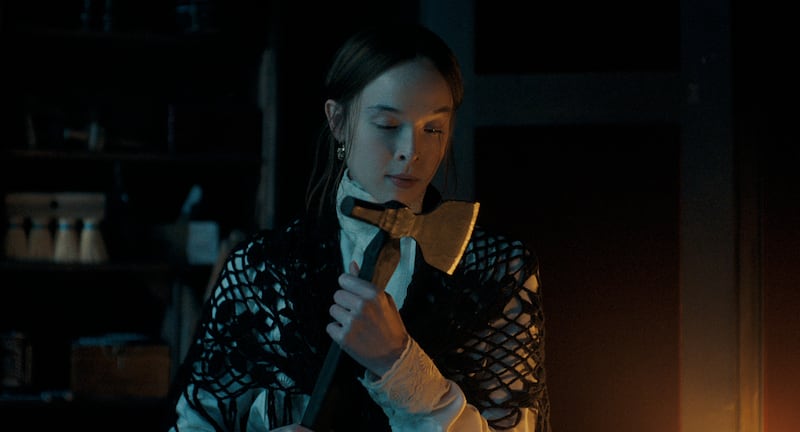
By this point, the sight of a character drenched in blood has little impact. Creator Ian Brennan has said he believes Borden committed the crimes, an opinion evident in this depiction and in Lizzie’s pleas for forgiveness from God, Andrew (Charlie Hunnam), and Abby (Rebecca Hall) for the “terrible thing” she did as the story nears its conclusion.
But unlike the three male titular figures featured in the Ryan Murphy-produced Netflix series, Lizzie Borden was acquitted of the double homicide that has made her a household name.
On August 4, 1882, Lizzie’s father Andrew and her stepmother Abby were brutally murdered in their own home in Fall River, Massachusetts. A week later, Lizzie was arrested. The penultimate episode depicts the aftermath of the Borden murders, featuring the signature scenery-chewing flourishes you’d expect from this franchise, ensuring it isn’t a paint-by-numbers true-crime retelling.
The trial illustrates that a good defense is as much about reputation and behavior as it is about evidence. Despite many stumbles this season, it looks like Monster is back on track just in time for the finale.
Not so fast, as the attempt to draw more lines between Lizzie and other notorious women while throwing in the suffrage movement at this late hour veers far into WTF territory.
Going into this finale, I could never have predicted the transition from celebrating the landmark moment when women got the right to vote to hearing “Carnival” by Natalie Merchant. Aileen has asked for this song to be played when she receives the lethal injection during an earlier scene, automatically cluing us into the overlapping stories. Lizzie and Bridget (Vicky Krieps) greet Aileen (Sarah Paulson) in the afterlife and let Aileen know she is now understood. It feels like a hallucination.
Lizzie’s legacy is feminism. Or something like that.
What works in “The Carnival” is the opening sequence depicting Aileen’s sentencing in 1992 and how little the violence she has experienced affects the judge’s decision. Episode 7 ends with Lizzie being found not guilty, illustrating how much the justice system failed Aileen in comparison. Unfortunately, because Aileen has already been turned into a Lizzie Borden stan who is eager to get laid in the same room where Lizzie allegedly killed her father, the overall connection is reduced to a fantasy scenario that undercuts the reality.
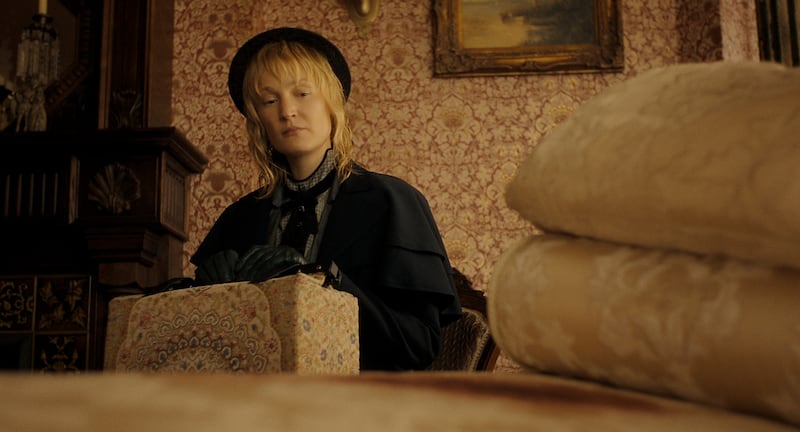
Before the delirious climax, Lizzie finds the years spent living as a free woman after her trial a mixed bag. Blood that so defined her story—first when Lizzie bled all over Abby’s expensive chaise lounge—has dried up. Do periods make monsters of us all??
The forthcoming Carrie might also have something to say about that. Or rather, the misunderstanding of women’s bodies and autonomy (or lack thereof) is core to this depiction. However, any subtlety in this motif is drowned out by bombastic visuals and an overreliance on gushing bodily fluids throughout.
The finale is more sedate when it comes to gore, instead leaning into how Lizzie is perceived in the Fall River community. Lizzie’s life is a zoo-like attraction, so why shouldn’t she fill her palatial home with all the animals she could ever want? Lizzie hosts fancy dinner parties, but her closest relationships are fractured; actress Nance O’Neil (Jessica Barden) coached Lizzie before her trial and now wants Lizzie’s financial backing to make the move from the stage to movies. Lizzie’s sister Emma (Billie Lourd) has a laudanum addiction and wants out of this circus.
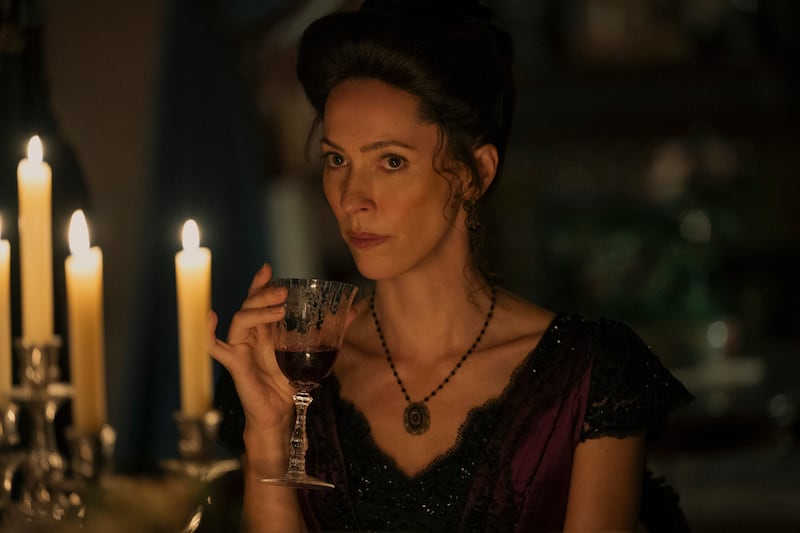
Lizzie has become a living legend, with Fall River children dressing as her for Halloween, the local bookseller profiting from her story without a second thought, and kids taunting her in the street with nursery rhymes. Considering everyone thinks Lizzie is a killer, they aren’t particularly afraid of her.
Peace is found when Lizzie asks for forgiveness and in the arms of her lover, Bridget, who reads the concluding part of the 16th-century Countess of Blood. The story of the infamous Hungarian noblewoman Elizabeth Báthory (also played by Krieps) shows how “monstrous” women take shape over time, with mixed results.
In one version, Elizabeth’s bloodlust is tied to her desire for eternal beauty; in another, she wants revenge for being raped and having her baby drowned. In the end, Elizabeth does not go out in a blaze of glory. Instead, she is confined behind a wall without a trial and meets her maker there.
One (tenuous) parallel is that Lizzie feels walled-in by her reputation. If only Elizabeth had joined the afterlife waiting room to take Aileen to the next plane of existence. Sure, it would still have scored high on the “huh” scale, but at least the thread among the three women would be complete.
Liberties are taken throughout Monster: The Lizzie Borden Story, and one more outlandish turn would hardly be detrimental to a story that has long since gone off the historical rails.