In the 18 months since it debuted on Paramount+, MobLand has delivered as much drama off-screen as on, with rumors swirling that Tom Hardy was fired from the series for difficult behavior stemming from anger over his role’s diminished prominence. His co-star, Helen Mirren, ultimately came to his defense before the studio announced that the Mad Max: Fury Road and Dark Knight Rises star was, in fact, returning for a third season.
Such “creative differences” tumult has cast something of a pall over the show, and it’s true that in its sophomore engagement (streaming Sept. 18), Hardy’s protagonist Harry Da Souza is less the primary center of attention than one piece of its puzzle. Nonetheless, that shift in direction is slight and does little to derail its ongoing tale of North London’s Harrigan crime family, which remains as clichéd as before—but also cartoonish enough to prove mildly engaging.
It’s a knockoff that’s elevated by its over-the-top melodrama and larger-than-life personalities, the finest of which continues to be Oscar winner Mirren, 81, as a degenerate gangland Lady Macbeth.
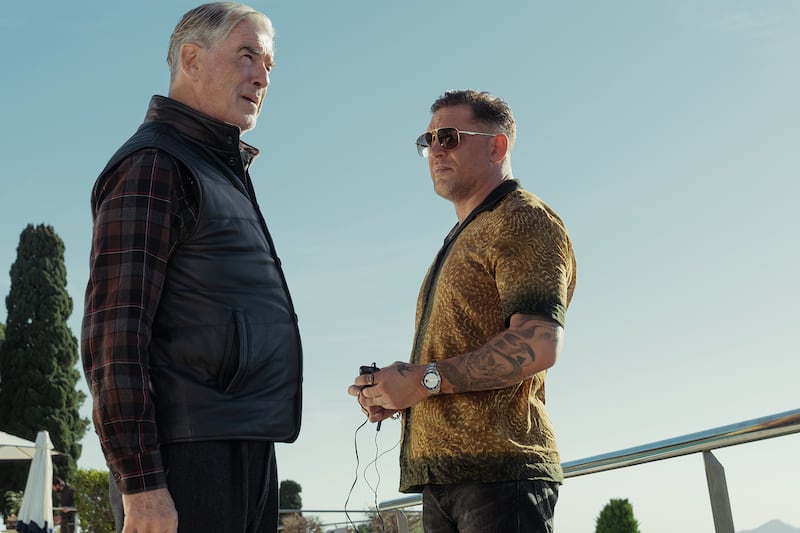
Created by Ronan Bennett and overseen by Jez Butterworth, MobLand started off creaky and corny and yet ultimately found its exaggerated groove, energizing rote storylines with flashes of inspiration and characters who felt like deranged variations of archetypes. In its second go-round, it maintains that balance between the hackneyed and the hyperbolic, beginning with kingpin Conrad Harrigan (Pierce Brosnan) feeling disrespected by a potential drug-trade partner and responding by turning their dog-track meeting into a shooting gallery.
The nominal source of his frustration is his son Kevin (Paddy Considine), who wants to take over the family business and is operating behind his back. However, as with most of these characters, his real problem is that he’s a madman with severe impulse control issues.
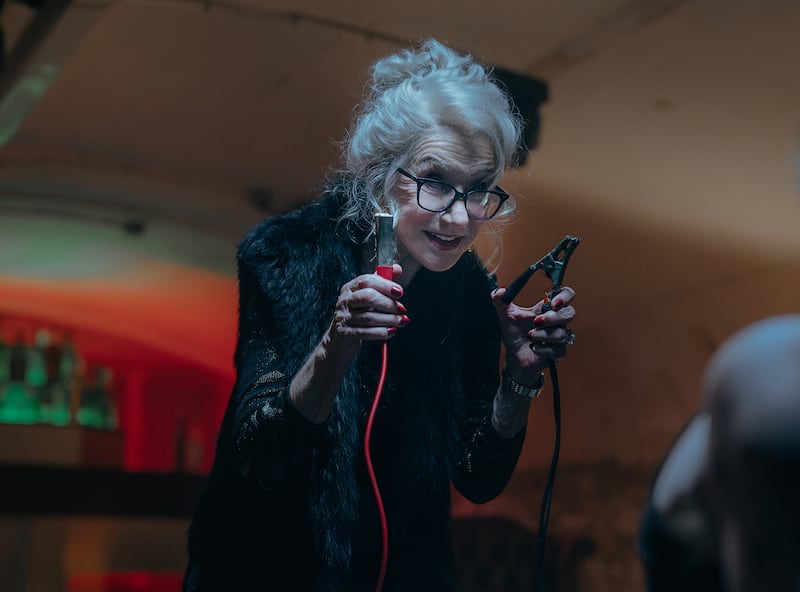
Eventually, MobLand diagnoses Conrad’s rashness as the byproduct of an absurd medical condition, and such silliness is matched by Mirren’s campy tour-de-force as his wife Maeve. A ruthless schemer who stokes her husband’s murderous instincts at every turn, Maeve is a monster in stylish threads and with an arsenic smile. Thus, she unsurprisingly takes great delight in her husband’s massacre, even as she covertly conspires to enhance the stature of her vicious grandson Eddie (Anson Boon)—who’s actually her stepson, as he was fathered by Conrad with Kevin’s wife Bella (Lara Pulver), his former mistress.
If that weren’t soapy enough, Maeve also not-so-subtly fancies Eddie, resulting in squirm-inducing incestuous undercurrents that peak during a chat between the two on a waterbed.
Outrageousness abounds in MobLand, and to its benefit, considering that its narrative concerns merely another familiar underworld war—this time between the Harrigans and Kat McAllister (Janet McTier), a nefarious wheeler-dealer who’s revealed in season two to inhabit the corridors of American power. Kat wants to destroy the Harrigans because Harry, the clan’s fixer, asked for her assistance with their prior beef with Richie Stevens (Geoff Bell) and then turned down her job offer. Consequently, she partners with corrupt ex-cop Colin Tattersall (Toby Jones), who helps her initiate a plot to tear the Harrigans apart from the inside.
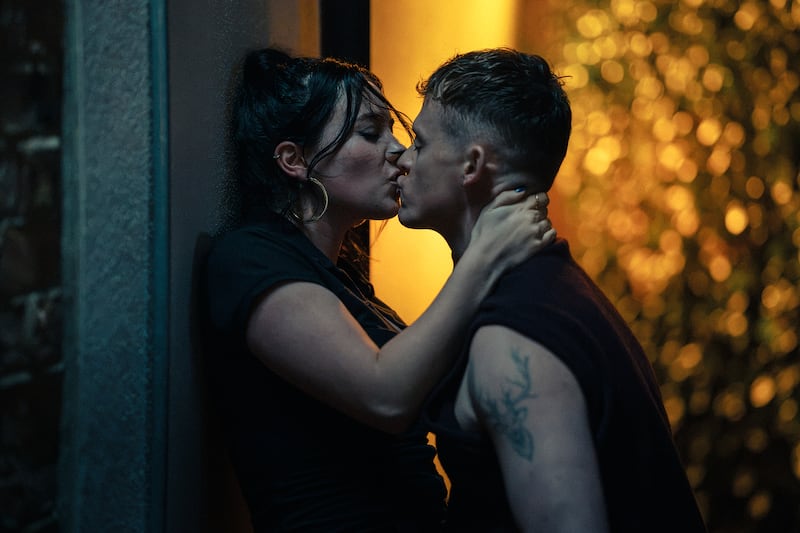
If, as was originally reported, Hardy was upset about Harry’s relegation to ensemble player, his gripe wasn’t totally unfounded, as MobLand’s story pivots around him while simultaneously reducing him to simply one cog in its mafia machine. With Conrad and Kevin at each other’s throats, Harry assumes mediator responsibilities during much of the season’s first four installments (which were all that were provided to critics)—at least, when he’s not keeping tabs on his daughter Gina (Teddie Allen), whose fury at her father’s ugliness has driven her into the arms of creep Eddie.
This leaves him with little time to deal with his wife, Jan (Downton Abbey’s Joanne Froggatt), who wants a divorce, although that’s something of a mercy given that every scene with Jan—a character whose dreariness sets her apart from her compatriots—is a cue to check your phone.
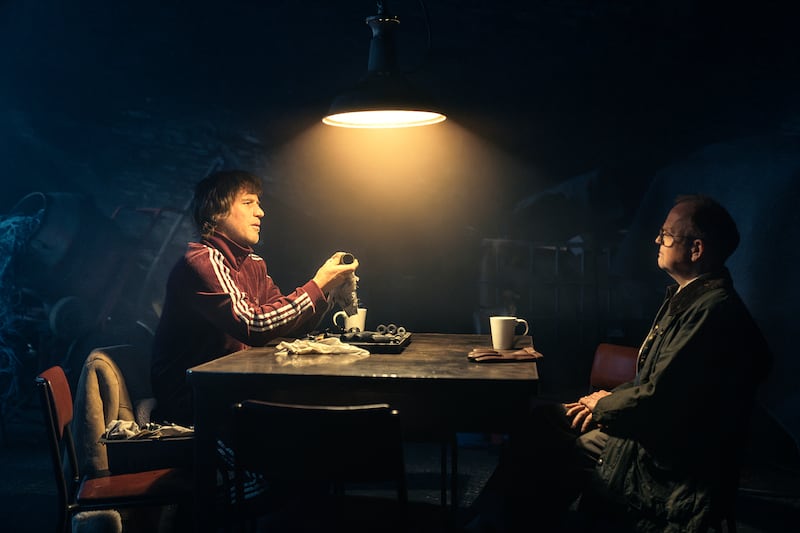
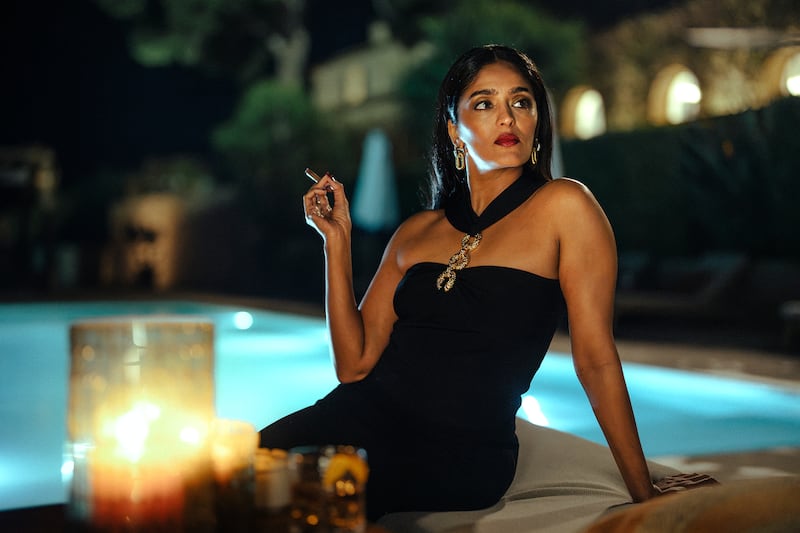
Conrad’s daughter Seraphina (Mandeep Dhillon)—whom he had with another woman, much to Maeve’s eternal ire—additionally factors into the action, secretly partnering with Kat to further complicate the family’s mess. So too does Frankie Cooper (Johnny Flynn), a gangster who, with Kat’s backing, exploits the Harrigans’ crazy domestic difficulties to his advantage. Double-crosses and clandestine ploys are everywhere, and if they’re never totally surprising, Butterworth and executive producer Guy Ritchie (who helms the first two chapters) stage them with flair, complete with suspenseful cross-cutting and the occasional look-at-me oner.
While Mirren chews scenery with gusto in MobLand, Hardy goes in the opposite direction, adopting a calm, measured voice that, when coupled with his stoic visage, makes Harry a scarily composed enforcer. At times, the actor seems to push the limits of affectlessness, and though that makes his protagonist somewhat mannered, it also casts him as an amusingly intimidating brute. There’s no crisis capable of raising Harry’s pulse, and despite being consigned to plot-mechanism duties at the new season’s outset, he’s still a criminal whose habit of carrying out grim tasks with an unemotional expression and monotone instructions is consistently captivating.
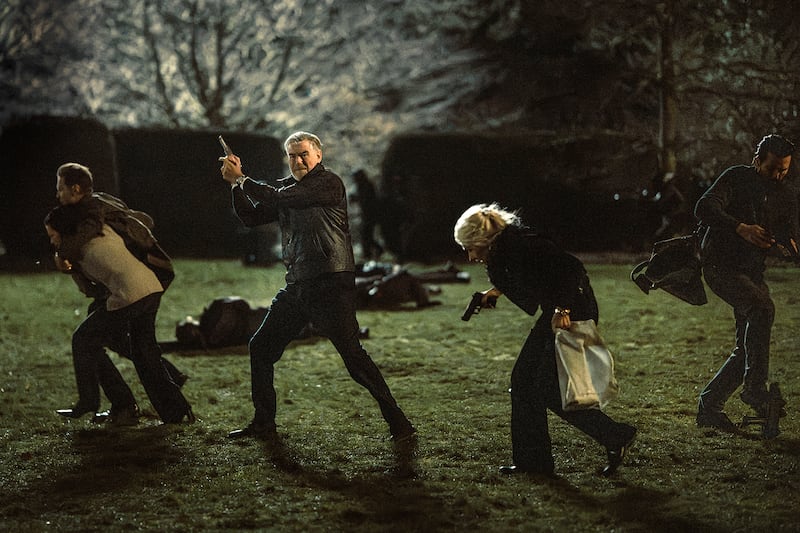
MobLand is hampered by the familiarity of its milieu and the intricacies of its feuds, but it makes up for that staleness with a decidedly demented streak. Between Conrad, Maeve, Eddie, and their adversaries, everyone (save for Harry and Jan) has more than a few screws loose, driving them to do insane and/or imprudent things that exacerbate their perilous predicaments.
Brosnan’s full-throated skeeviness and Mirren’s dragon-lady mercilessness bring dynamism to what would otherwise be routine mob shenanigans, and with Hardy as their pokerfaced foil—and Emmett J. Scanlan’s Harrigan enforcer Paul as the material’s assured comedic relief—the series largely gets by on its bold, lurid color.
Orchestrated with the same formal efficiency as a Taylor Sheridan offering, MobLand is neither as shoddy as it initially appeared nor as wild as it potentially could be. It won’t make anyone forget The Godfather or Goodfellas, but it’s on par with many of Ritchie’s big-screen features—which is to say, it’s an eminently watchable imitation game.