Ricky Gervais’ descent into self-congratulatory edgelord has left many believing that co-creator Stephen Merchant was the true talent behind the original British version of The Office.
But now, the man who played oddball sycophant Gareth Keenan has surpassed them both with a style of humor that proudly leaves all cynicism and cruelty at the door.
Following a lovingly crafted remake of ‘70s kids’ classic Worzel Gummidge and an affectionate insight into the world of metal detectorists, Mackenzie Crook has struck comedy gold for a third time with a show that’s trumped Gervais’ god-awful Alley Cats in every way conceivable.
While Gervais is still desperately pleading with fans to rewatch his animated disaster, his one-time underling can rest easy knowing that Small Prophets (Oct. 7 on Apple TV) already has a second season in the bag, having broken all kinds of viewership records on its BBC debut earlier this year.
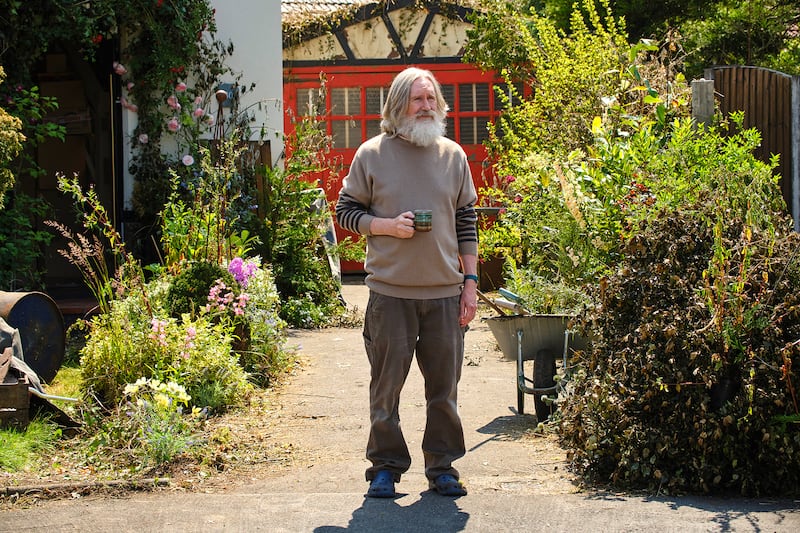
Now, as Apple TV’s first-ever acquisition, those outside the U.K. can finally enjoy its many whimsical charms.
At first, the six-part series seems like another bittersweet slice-of-life sitcom about middle-aged men. Well, one particular middle-aged man in the shape of Michael Sleep (Pearce Quigley), a slightly disheveled DIY store employee who—for reasons that soon become clear—occupies a very disheveled house.
Crook has always been skilled at world-building, and Michael’s working-class corner of Northern Britain not only feels lived-in, but, compared to the London-based swankiness of Ted Lasso and Trying, is an entirely new environment for Apple TV.
Michael punctuates his mundane existence by toying with his passive-aggressive next-door neighbor obsessed with the wild foliage blocking his sunlight, trolling customers with talk of new paint colors—“It’s a kind of very dark sort of white... if you can imagine a kind of red and blue, it’s like stripes, almost see through. It’s basically tartan. It’s impossible to describe”—and visiting the retirement home where his dementia-suffering dad Brian (Monty Python icon Michael Palin) spends his days entering postal competitions for impractical prizes.
While talking to his father, in a conversation he’s clearly had countless times, the cause of Michael’s stasis is revealed: Seven years ago, the love of his life, Clea, disappeared without a trace. Despite all evidence pointing to the contrary (her car was found at a nearby bridge, for example), he still believes she’s alive. It’s why their home remains similarly frozen in time, most notably the lounge he decorated shortly before Clea went missing to recapture her most cherished childhood Christmas, a gift she tragically never got to see.
However, during the next father-son encounter, the show takes an unexpected pivot into magical realism, inspired by a footnote Crook spotted while reading about the 16th-century alchemist Paracelsus. Here, Brian suggests growing homunculi—small humanoid creatures guaranteed to correctly answer any question posed—to discover the truth about Clea’s whereabouts.
Although he naturally dismisses the idea as the ramblings of a confused old man, Michael soon finds himself assembling the required ingredients (silver coins, rainwater, frankincense) in his garden shed and carrying out the necessary bizarre steps (burying them in manure while dressed in white robes) in the vain hope his dad’s words had substance.
It’s an absurd premise for sure. Yet Crook handles the combination of suburban malaise and the otherworldly so deftly that you’re soon willing to suspend your disbelief when the deeply haunted creatures, perhaps best described as chess pieces imbued with the spirit of Edvard Munch’s The Scream, do start to form.
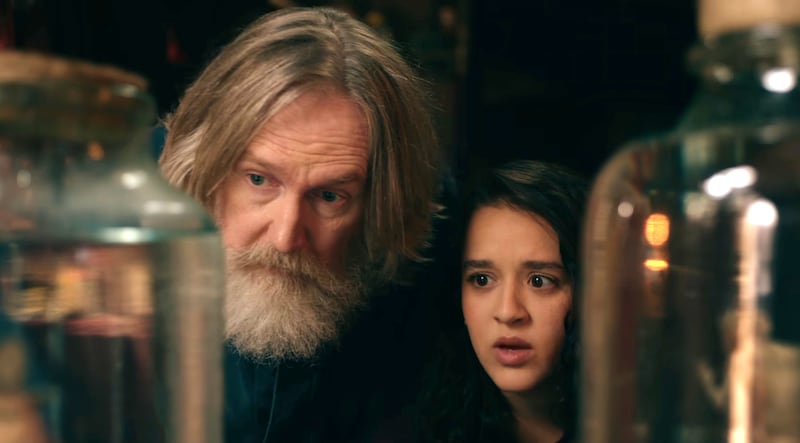
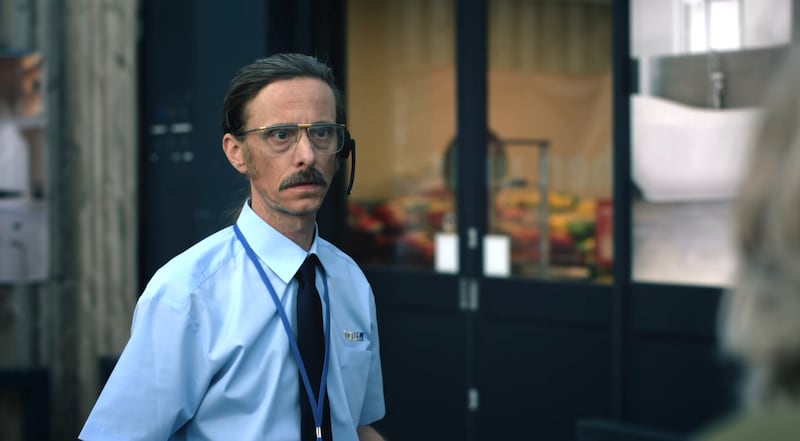
The most magical part of Small Prophets, however, is the very human relationship between Michael and younger co-worker Kacey (Lauren Patel), the only other individual privy to his hush-hush experiment. Indeed, after first bonding over their mutual dislike of Gordon (a greasy ponytailed Crook), the jobsworthy boss who essentially provides the show’s sole catchphrase—“Have you had your break?”—the pair foster the funniest intergenerational friendship outside of Hacks.
Kacey occasionally shows an interest in entertainment, too: she’s an avid reality TV viewer (the entirely fictional “Celebrity Barrel Scrapers” could be a reference to Gervais’ Extras) and practically suffers an existential crisis after meeting a local newsreader. And while Michael needs to ask the soothsayers a literal life-and-death question, she wants to know whether she’ll fulfill her lifelong dream of appearing in an Aussie soap opera.
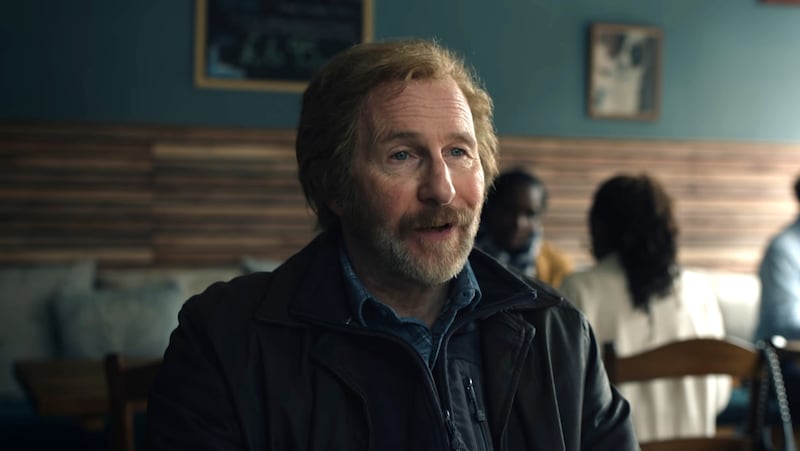
“Wasn’t Neighbours canceled?” the former asks, not wanting to burst her bubble. “Don’t worry, we’ll bring it back. I’ll start a crowdfunder.”
But with her new BFF a proud non-TV owner, it’s the minutiae of everyday life, rather than the dog-eat-dog world of showbiz, which ties the pair together. That, and a shared Mancunian sense of humor, prompts Kacey to reveal their shed-based secret over the shop-floor loudspeaker and Michael to fabricate an entire career in underwater welding just for shits and giggles.
You could quite happily watch them winding each other up for half an hour instead. Refreshingly, the show never once threatens to turn things from platonic to romantic. In fact, on both arriving late for work, Michael explicitly calls out Gordon for jumping to the wrong conclusion (“Jesus! Are you having a laugh?! I’m old enough to be her dad!”)
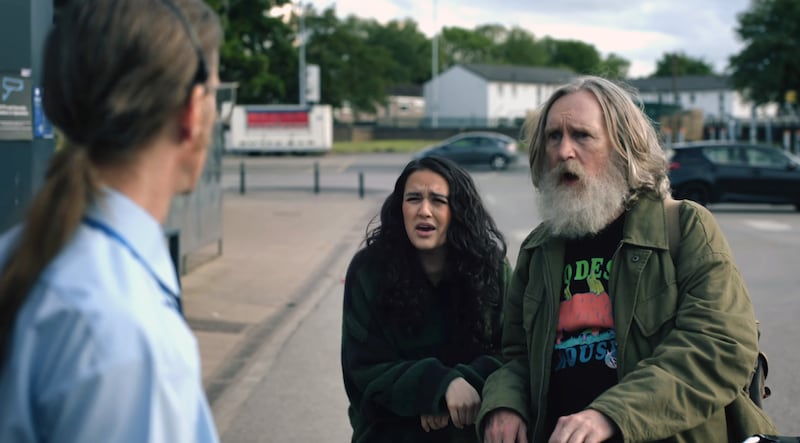
Quigley, playing the polar opposite to his coke-trafficking crime boss from Guy Ritchie’s The Gentlemen, delivers a beautifully melancholic portrayal of a 50-something simply trying to get by. In less sure hands, Michael could have been mopey and self-pitying, but his default hangdog expression hides an acerbic streak that keeps you hanging on his every word. Patel matches him in every way as a young woman determined to coax her unlikely ally out of his funk, even if that means growing artificial beings in a jar. It’s the kind of star-making turn that should see the top-tier comedic roles flood in.
All the performances, though, are perfectly attuned to the brilliantly observed script. Palin, who you could argue is to anti-woke Monty Pythoner John Cleese what Crook is to Gervais, brings an honesty and grandfatherly warmth to a pensioner determined to wring every ounce of joy from his final years. Paul Kaye, who once struck fear into the heart of every Hollywood star as spoof reporter Dennis Pennis, restrains himself with an empathetic turn as Clea’s brother Roy, a man resigned to the more likely possibility that she’s never coming back.
And Jon Pointing (Plebs, Big Boys) continues his journey up the British comedy ladder as the curtain-twitching Clive: His increasingly exasperated phone call to the local council about the man hiding “monkeys” next door provides the series’ biggest laugh-out-loud moment.
Unlike Gervais’ oeuvre of late, though, Crook recognizes the importance of nuance and characterization, positioning him more as a harmless nuisance than an out-and-out villain.
Small Prophets does occasionally stray into the twee. The alleyway scene in which a teenage mugger mistakes Michael for Santa Claus stretches credulity further than pickled oracles, and apparently a mutual love of Modest Mouse is enough to break down a surly teen’s emotional barrier. A late-in-the-day treasure hunt also needlessly pulls focus away from the far more intriguing central premise.
But these are small qualms for a big-hearted show that cements Crook as the new king of gentle comedy. Who could have predicted that?