In style as in life, tradition is always at war with progress. This conflict is acutely relevant to movie sequels, which try to conjure magic by finding novel ways to do what worked in the original.
Alas, The Devil Wears Prada 2 struggles to marry the old and the new through a story about that very struggle, revisiting its iconic characters and haute couture culture without the wit and romance that made its predecessor a hit. Despite looking great, it comes off as a humdrum knockoff of bygone fashion.

Director David Frankel’s 2006 The Devil Wears Prada was an assured amalgam of a romantic comedy and a young-woman-makes-it-in-the-big-city fantasy, with Anne Hathaway as the flummoxed ingenue in a foreign fashion (and publishing) world and Meryl Streep as the imperious Cruella de Vil-style Anna Wintour proxy.
Snappily helmed and written, and featuring a star-making supporting turn from Emily Blunt as Streep’s haughty and image-obsessed assistant, it was a charming 21st-century update of Mike Nichols’ Working Girl, complete with on-location NYC action that contributed to its bustling, glamorous atmosphere.
What The Devil Wears Prada was not—despite being based on a novel by Lauren Weisberger, who went on to pen a 2013 follow-up—was a ready-made franchise-starter. Hence the fact that it’s taken 20 years to reunite its stars, director, and screenwriter. As a result, The Devil Wears Prada 2 strains from the start to get the gang back together.
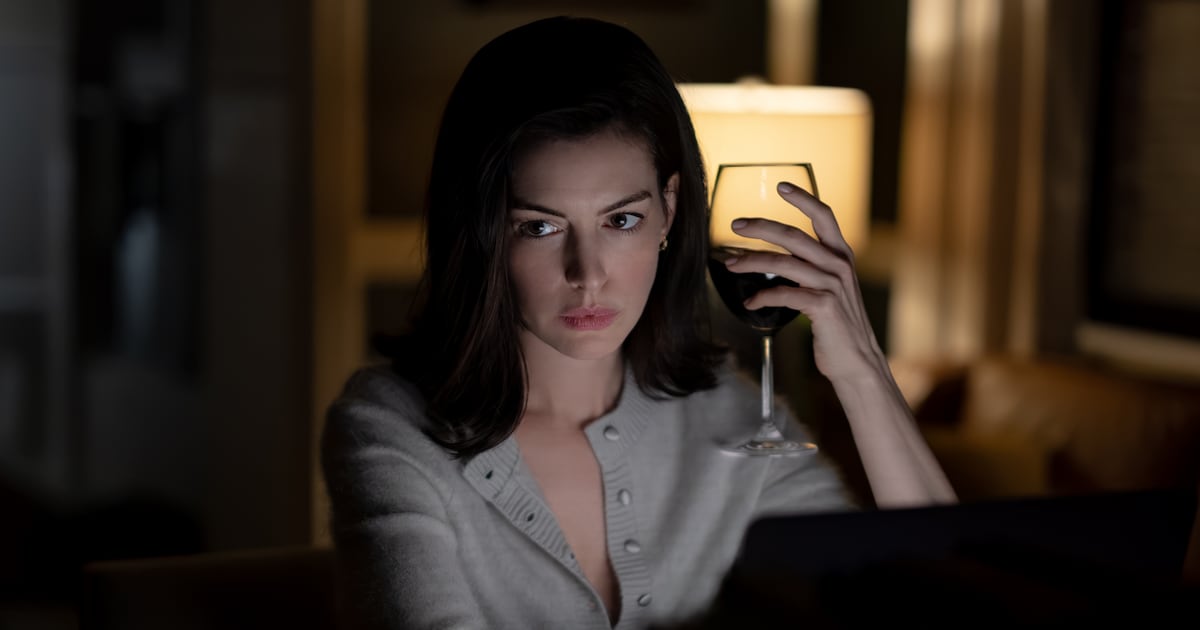
Two decades after leaving Runway magazine and its authoritarian editor-in-chief Miranda Priestley (Streep), Andy Sachs (Hathaway) is thriving as a serious reporter for The New York Vanguard. Yet no sooner has she won an industry award than she and her colleagues are unceremoniously let go—a symptom of a swiftly collapsing media landscape.
Things aren’t much better at Runway, courtesy of a sweatshop scandal that’s threatening to destroy its relationship with advertisers. In desperate need of credibility, chairman Irv Ravitz (Tibor Feldman) and his son Jay (B.J. Novak) convince Andy to return to the magazine as its features editor. While it’s a position she doesn’t really want, desperate times call for desperate measures, and she joins the staff, excited that Miranda has such trust in her.
As it turns out, though, Miranda doesn’t remember Andy and is none too pleased about her magazine being saved by a plucky outsider who cares more about integrity than reader traffic.
The times they are a-changin’ in The Devil Wears Prada 2, what with newspapers folding at a rapid clip and Runway forced to rely on viral videos and adverts to stay afloat. Nonetheless, not everything has evolved, as evidenced by Miranda’s right-hand man Nigel Kipling (Stanley Tucci), who’s just as loyal and catty as ever.
Whereas Miranda has no memory of Andy, Nigel does, immediately calling her by her nickname “Six”—the one time that Frankel’s sequel (once again scripted by Aline Brosh McKenna, albeit not based on Weisberger’s tome) references its ancestor’s numerous gaslighting jokes about the slender Hathaway’s physical heaviness.
The Devil Wears Prada 2 strives to generate timely humor from Miranda hanging up her own coat and being chastised by her assistant, Amari (Simone Ashley), for politically incorrect boardroom insults. But a neutered Miranda is a pointless Miranda. Beset on all sides by corporate, market, and cultural forces conspiring to reduce her clout, Miranda is far less caustic and scary than before and, consequently, a good deal less funny.
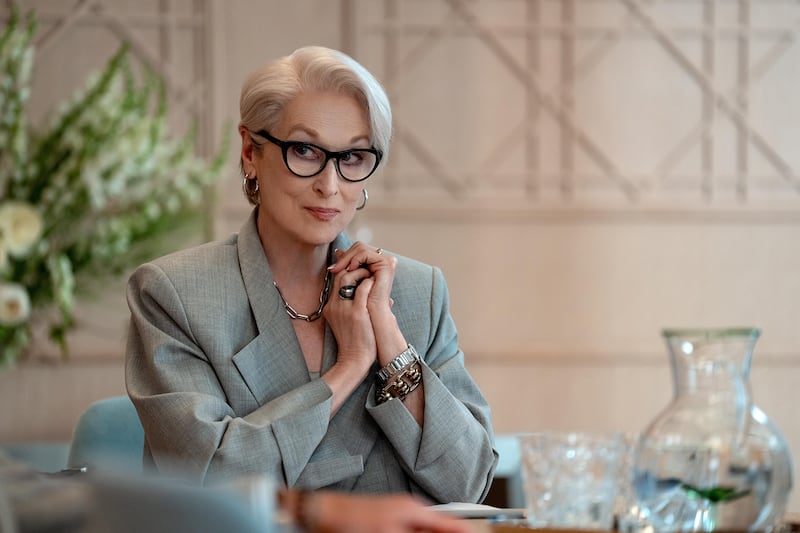
Streep still embodies the character’s ice-queen snootiness, especially in Andy’s presence. However, as a once-fearsome titan now facing irrelevance, she’s a soft and vulnerable shadow of her former self—and the effect is that the film lacks the tyrannical axis around which its forerunner revolved.
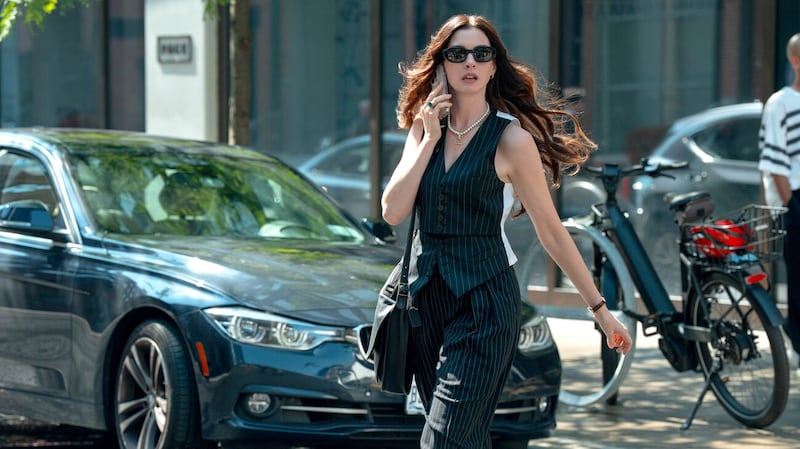
Hathaway’s Andy is likewise less interesting, feigning in-over-her-head nervousness when picking out clothes for a Hamptons getaway but generally acting too self-possessed to give the material its anxious edge.
The Devil Wears Prada 2 reintroduces Emily (Blunt) as a bigwig at Dior, and she remains, for the most part, amusingly cutting. Yet she feels awkwardly shoehorned into a narrative that eventually hinges on both Jay’s profiteering villainy and a newly divorced billionaire couple, Sasha (Lucy Liu) and Benji Barnes (Justin Theroux), the latter of whom becomes an item with Emily, creating all sorts of testy power dynamics.
There’s plenty of plot in The Devil Wears Prada 2, as well as cameos from the likes of Donatella Versace, Heidi Klum, Ashley Graham, Tina Brown, and New York Knicks center Karl-Anthony Towns. What there’s precious little of, unfortunately, is a sense that this tale is building upon its precursor.
Nowhere is that more blatant than in Andy’s blossoming amour with real estate contractor Peter (Patrick Brammall) and Miranda’s marriage to classical musician Stuart (Kenneth Branagh)—two subplots that are treated with such tossed-off disregard that they epitomize the proceedings’ dearth of imagination.
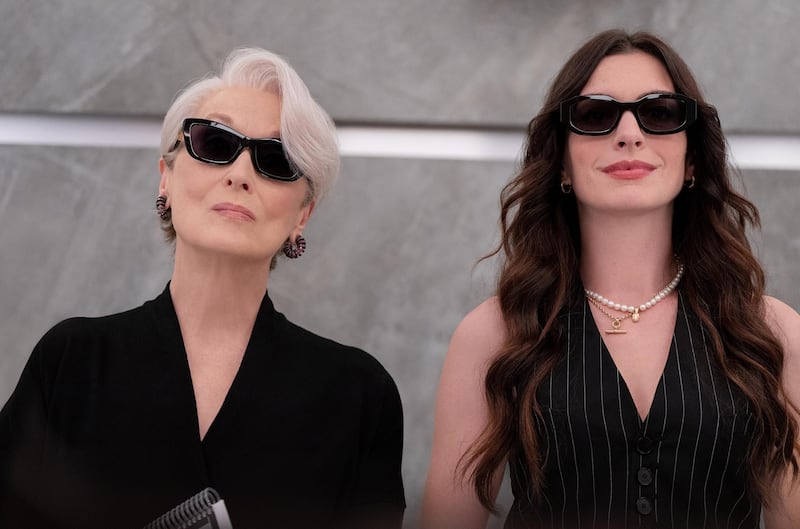
Whether it’s Miranda angling to attain a coveted Global Head of Content gig, or her and Andy partnering to save their beloved publication from being stripped for parts by corporate “undertakers,” the film makes the case for tried-and-true media paradigms.
Ironically, though, it’s not capable of recapturing the blend of comedy, romance, and affectionate industry satire that energized the series’ maiden outing. That’s particularly apparent in its final act, during which Frankel and McKenna tug at the heartstrings with an overtness that grates. Leaning into mushiness may hit certain nostalgic moviegoers right where it counts, but it mainly resonates as a desperate fallback maneuver for an enterprise unsure of why it exists.
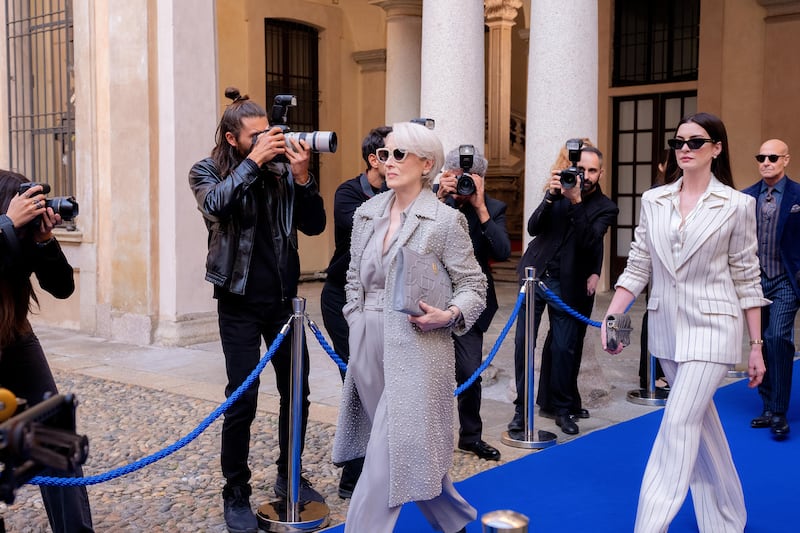
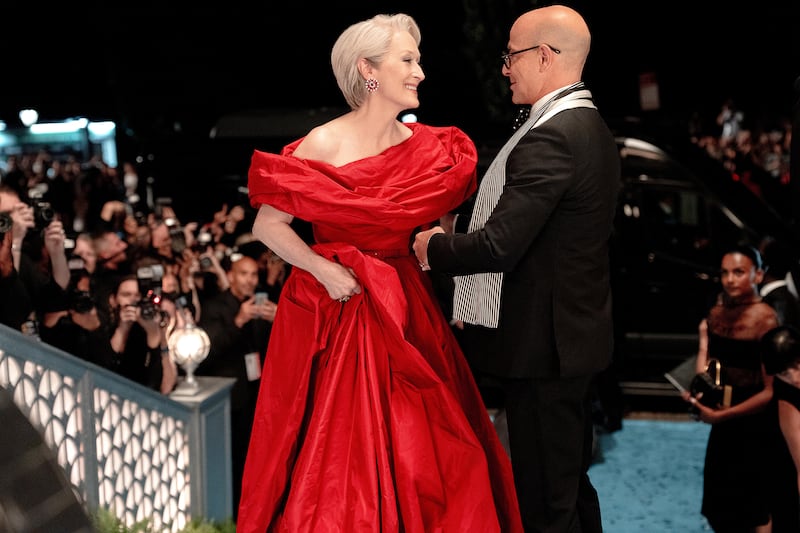
The reason, of course, is that sequels are reliable cash cows, and to be sure, The Devil Wears Prada 2 boasts enough glitzy fashion-gala set pieces (complete with a cavalcade of well-known faces) and chic Hathaway outfits to make it, on a superficial level, a spiritually faithful second helping.
Still, it’s ultimately so short on inspiration—including when it comes to saying something meaningful about the perils posed to journalism by consolidation and downsizing—that it never reaches the fizzy fairy-tale highs that defined the first film. All of which just goes to show that, when it comes to fashion and cinema, imitations may sell, but nothing beats an original.