This piece first ran on the Obsessed by Kevin Fallon Substack. Subscribe here to read more like it!
The Tony Awards reliably does right what every other award show does wrong, and this year’s ceremony, hosted by an infectiously enthusiastic Pink, was no exception.
The telecast each year is a celebration of the work the theater industry accomplished, a spotlight on the nominated talent, and an unabashed annual call to arms to continue artists’ mission of provoking, interrogating, uniting, and inspiring.
That’s a whole lot of words that could read as “hokey!” “corny!” or “pedantic!” in blinding neon signs, the kind you see on the marquees on Broadway. But that’s the beautiful thing about Broadway and those neon lights. They’re not meant to be subtle. That the Tony Awards ceremony each year so gleefully embraces what it’s actually about—theater!—is what makes it such a blast to watch, and one of the most entertaining nights of TV.
The Tonys get what other telecasts like the Oscars and the Emmys don’t.
It’s relentlessly confusing how often those shows punch down on viewers, each year contorting themselves in uncomfortable ways to trick audiences into thinking they’re not watching what the ceremony is technically there to do, in the foolish hope that it might make them more interested. “If we get a few pop stars to sing for no discernible reason, they won’t remember this is to give out trophies to movies they didn’t see!” “Quick, assemble the Avengers to present, and maybe they’ll forget we didn’t nominate a Marvel movie for Best Picture!”
On paper, the Tony Awards are at a disadvantage: the projects being rewarded are seen by a minuscule number of the potential TV viewing population. Only the people who made it to New York and bought pricey tickets to a nominated show or two have context for the nominees; the number of people who have seen most of all of them is even smaller.
So what does the Tonys do to account for that? It shows us the shows! What a concept!
Sunday’s telecast was an onslaught of musical numbers from nominated shows, serving multiple purposes: providing context for viewers, offering passports for theater fans who otherwise wouldn’t be able to see these performances, and advertising the shows themselves.
For people like me who have seen many of the shows, a performance like the one from Cats: The Jellicle Ball was a thrill. For those who might have heard about this joyously provocative reimagining of the pop-culture joke of a musical, finally getting a glimpse at what on earth this show is must have been a blast. I imagine there was a similar reaction from anyone who has heard about this Titanique musical mash-up of Titanic and Céline Dion, and now understand more just how kooky-crazy the show really is.
When Schmigadoon! was announced as Best Musical, audiences had already seen a solid example of what the satirical love letter to golden-age musicals is. Ditto to the Best Revival of a Musical winner Ragtime, which showcased its stunning staging and roof-shaking vocals.
And when acting or directing categories come and go and the viewer hasn’t seen the nominees, well, that’s no different from any other show. The difference with the Tonys is that the winners aren’t played off in a rush to get to a montage of action movies nobody asked for or a James Bond musical tribute that makes no sense. They’re given the time and space to say why their show mattered, how this art form changed their lives, and what they’ve learned through their work that they hope to pass on to the people watching at home.
It’s meaningful, moving, and inspiring, and the point of the Tony Awards. Ragtime’s Joshua Henry or The Lost Boys’ Ali Louis Bourzgui may not be household names, but they delivered speeches that belong in the YouTube Awards Playlist Hall of Fame alongside any movie star’s Oscar thank yous. And when someone more famous wins an award, like Death of a Salesman’s Laurie Metcalf, Giant’s John Lithgow, or Becky Shaw’s Alden Ehrenreich, it’s like being invited into a fun, illuminating secret: “Whoa! Did you know that Aunt Jackie from Roseanne is so good that she’s a respected theater actress, too?!”
Pink was an exceptional host because—and this sounds so laughably obvious, but it’s remarkable when it comes to these things—she seemed really excited to be there and to, more than that, get to pal around with and celebrate these performers and creators.
In contrast to other awards shows, the Tony Awards are so unapologetically about theater that a running bit from Pink throughout the night was about how bashful she was about hosting despite not being part of the Broadway community—and her hope to do right by everyone and put on a good show.
And that she did. I hesitate to invoke something as sacrilegious as sports when talking about theater, but it was the telecast’s lack of fear in going entirely inside baseball when it comes to the industry and its players that made the show so fun.
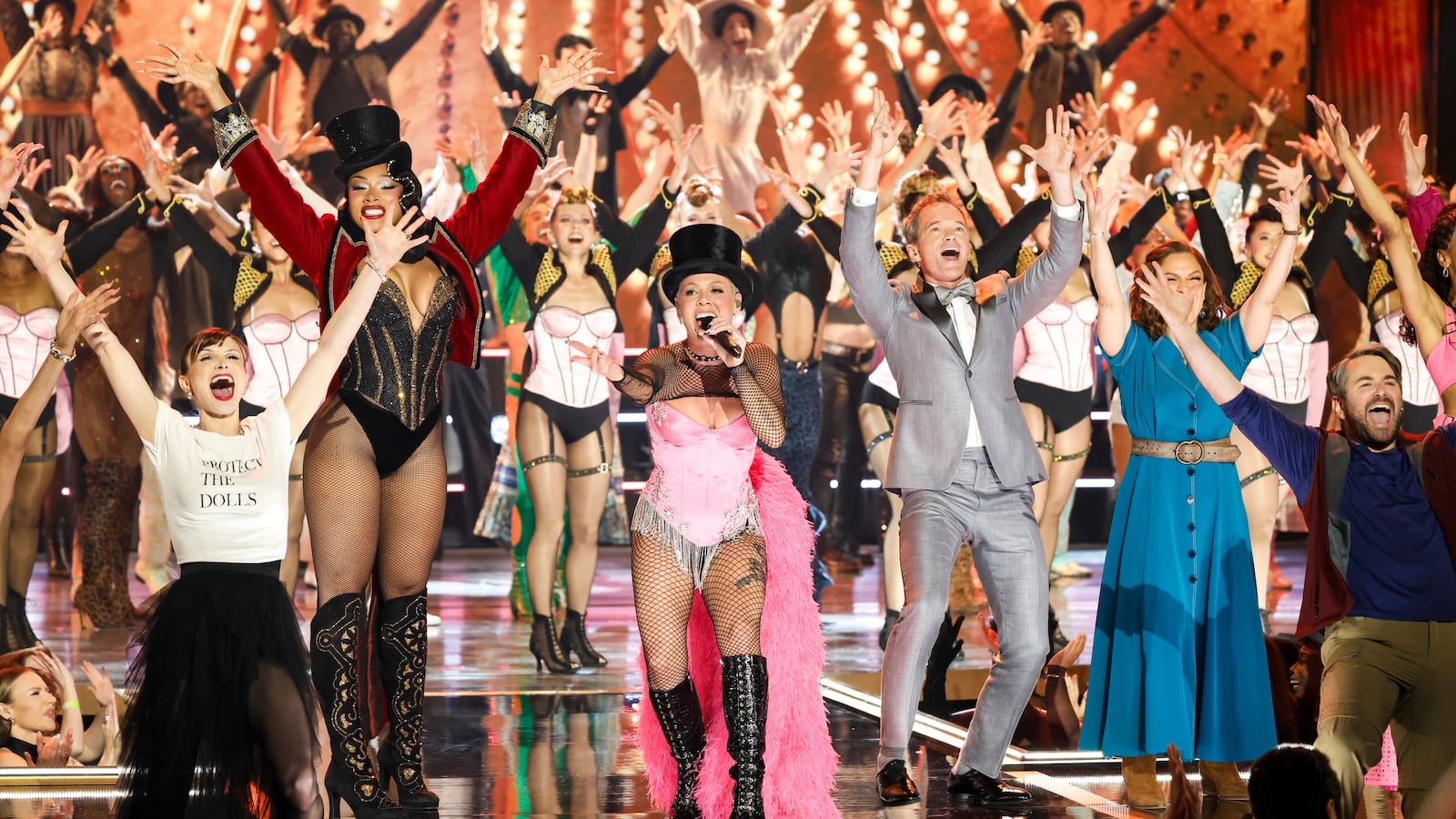
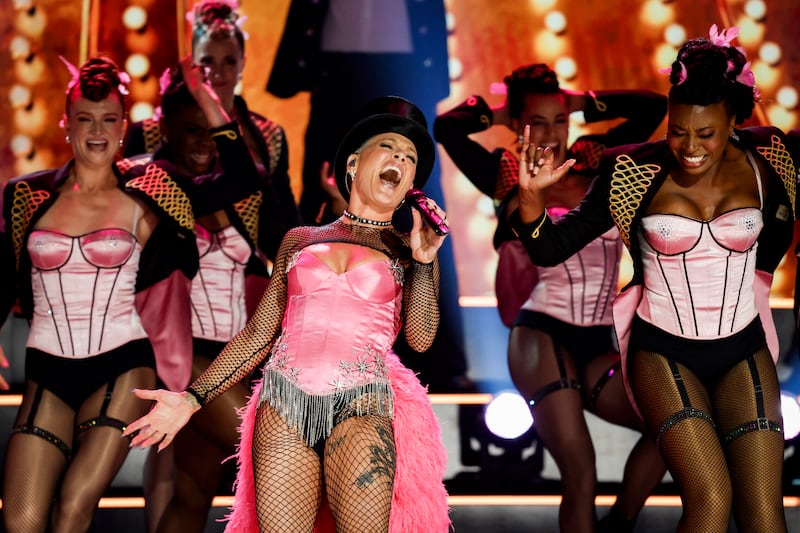
Pink’s opening number was an epic take on “Lady Marmalade” that featured 170 performers, including many from the year’s nominated programs.
Was there any explanation for why Marla Mindelle doing her Titanique impersonation of Céline Dion and Shoshana Bean in character from The Lost Boys were subbing in for Mya and Christina Aguilera at one point? Nope! Were viewers at home clued into the fact that June Squibb, at age 96, is the oldest acting nominee in Tonys history before Lea Michele (in costume from Chess) threw to her for a big comedic line? Definitely not. But that’s the fun of it. You are either hyper-aware and in on the joke or at least get the sense that something is being referenced here, and it’s intoxicating.
The lyrics to the song were changed to be a girl-power tribute to the year’s nominees. As such, we were gifted such gems as “gitchie gitchie Carrie Coon.” It’s nonsense! But the crowd was loving it, and I was guffawing at home.
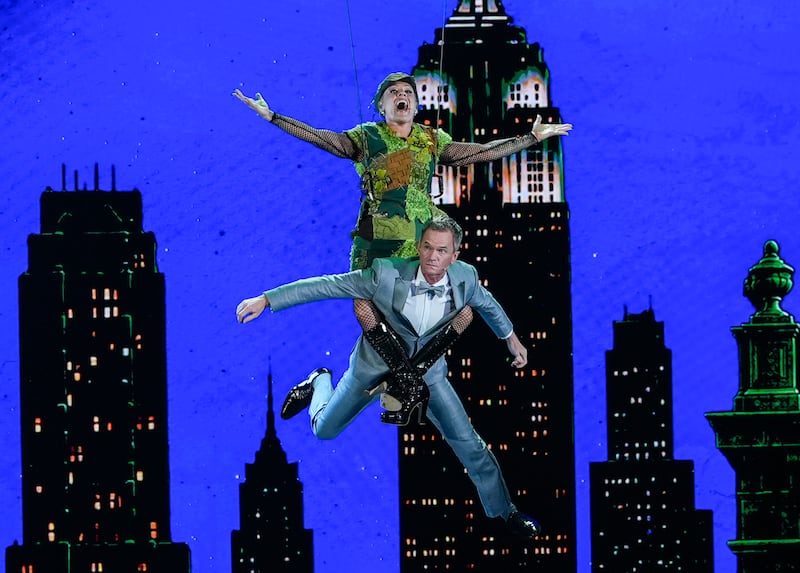
From the opening number to Pink’s incredibly impressive tribute to Chicago (get that booked immediately) and every winner’s gracious speech, it was a night for theater lovers by the people who love it, too.
Like so many things in entertainment that are specific but end up being widely appealing, it had an electrifying welcoming effect. You might not know anyone at the party, at least not yet, but at least for these three hours, you get to be a part of it—and it’s a whole lot of fun. Plus, the beauty of the theater and Broadway community is that you have an open invite to come back and to get to know everyone better. As a kid, I crashed that party a number of times. Decades later, I now never leave it, and it is one of the most important parts of my life.
Award shows could learn a lot from the Tony Awards. Namely, don’t seem so ashamed of your purpose of actually celebrating the art. Stop appealing to people who were never going to watch the show anyway, and instead put on something with integrity and actual entertainment value for those who are invested or at least curious. (Or, hear me out, at least just start showing acting clips again.)
And as for me, I learned something from the Tony Awards this year, too. Apparently, I’ve been pronouncing Oedipus wrong my whole life. Since when is the first syllable “ee” and not “eh”?! Who knew?