This piece first ran on the Obsessed by Kevin Fallon Substack. Subscribe here to read more like it!
There are roughly 400 people around the world whose wardrobes have been upgraded, hair finally works for them, and homes have traded tragic for chic, all thanks to the keen eyes of queer men.
Since Queer Eye for the Straight Guy first premiered on Bravo in 2003, the makeover series not only sparked a pop culture phenomenon and style movement—never forget the “metrosexuals”!—but has also spawned a slew of international adaptations and found new poignancy in a modern blockbuster Netflix reboot.
After 10 seasons of water-cooler domination, changing lives, inspiring viewers, and just plain making them sob, Netflix’s Queer Eye capped off its run with a farewell Emmy nomination for Outstanding Structured Series, which it’s been nominated for every year on the streamer. And, as a testament to how high-profile its cast became, it also drew a dash of tabloid drama over the hosts’ relationships.
We figured the show’s swan song is the perfect time to revisit its opening notes, tracing back Queer Eye for the Straight Guy’s unlikely turn-of-the-millennium beginnings, its renegade takeover of the zeitgeist, its role in ushering LGBTQ+ acceptance, and how the show helped put Bravo on the map.
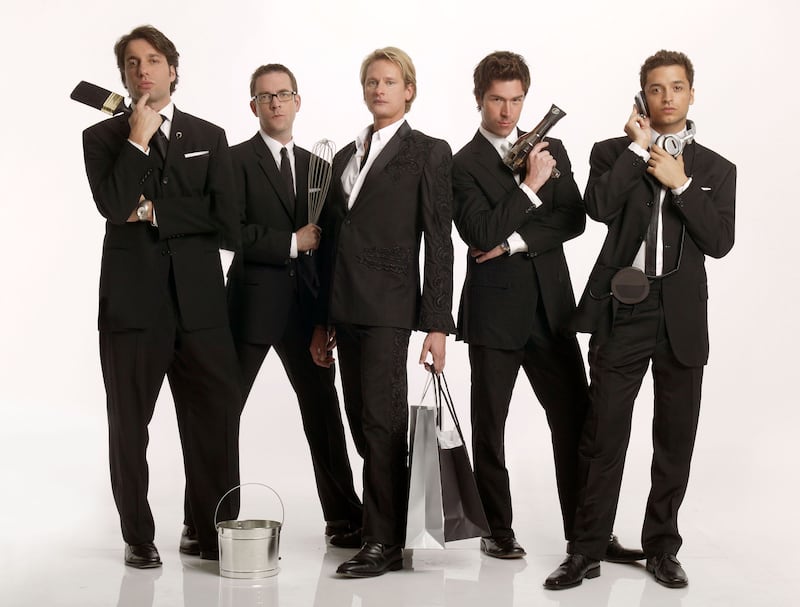
Before there were any Real Housewives, there were five gay guys with impeccable style, loud personalities, and an implacable mission for men to cuff their dress shirt sleeves.
“You’ve not heard the Queer Eye for the Straight Guy story?” David Collins gasped with a certain giddy disbelief when we connected over Zoom.
Collins created the series with his creative partner and then-husband Michael Williams, through their company Scout Productions, which, two decades later, is now behind Hulu’s House of Stassi, which follows Vanderpump Rules lightning rod Stassi Schroeder, and TLC’s series chronicling a Christian community of OnlyFans creators, Double Lives of Suburban Wives.
He’s eager to discuss Queer Eye’s legacy and its often overlooked impact on Bravo’s rise, but first must come the origin story.
Shortly after 9/11, Collins and Williams attended Open Studios in the South End “gayborhood” of Boston, where artists open up their galleries: “You have a little glass of wine, you eat cheese, and you look at their art,” Collins said.
There were about 200 people inside this particular space, and as soon as Collins and Williams walked in, a hush came over the room. In the middle of the crowd, rendering everyone quiet, was a woman “just berating the heck out of her husband,” he said. “‘Look at you! You’re a mess! Your hair, your belt, your shoes, your this, your that.’ Just berating him publicly.” She then turned to the gathered, now-silent (mostly gay) gawkers, gestured at them and screamed, “Why can’t you be more like them?”
Collins and Williams then watched three fantastically dressed, well-appointed men, champagne flutes in hand, push their way through to the just-shamed husband, surround him, and start consoling him while busily fixing his hair and tucking in his shirt. After sufficiently loving on the man and rebuilding his ego, they turned to the woman and said, “Look, confidence breeds success. We don’t tear down. We lift up.”
Collins turned to Williams in disbelief: “Did you see that? It was like queer eye for the straight guy?” As the words left his mouth, every hair on his body stood on end. Michael immediately responded, “This is gonna be something in a year.”
Boy was he right.
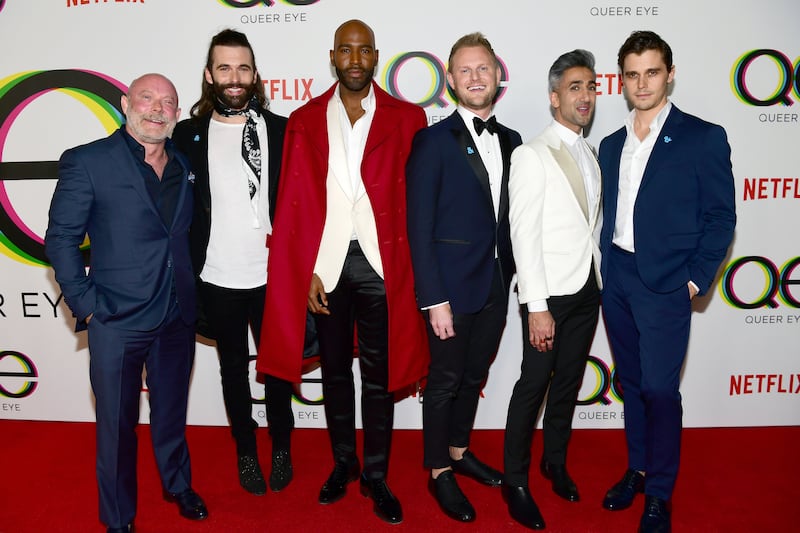
They made a Queer Eye for the Straight Guy pilot for Rainbow Media, inspired by Collins’ love for Esquire magazine, which had verticals for fashion, grooming, interior design, culture, and food and wine. “So I gave each of those subjects a gay.” The format is now familiar: the hosts, collectively known as the Fab Five, surprise a client (in the original run, typically a schlubby heterosexual man) and pummel him with physical and spiritual makeover tips meant to transform him into a more confident person.
At the time, Bravo specialized in performing arts and cultural programming, most famously the James Lipton-hosted series Inside the Actors Studio, as well as airing international and independent films. The network’s ratings success counterprogramming its series Gay Weddings opposite the 2003 Super Bowl excited it over the prospect of more LGBTQ+ programming, which led to the Queer Eye for the Straight Guy greenlight.
Collins credits Frances Berwick, now chairman of Bravo and Peacock unscripted, with championing the risky idea: “She truly carried that baby up the ladder and said, ‘Look, I know this title, Queer Eye for the Straight Guy, couldn’t get any crazier, but just take a peek at this.’” Bravo ended up funneling a heavy marketing budget to the show. “I think people tuned in just for the title alone,” Collins said. “Then, without sounding braggy, it became a cultural phenomenon.”
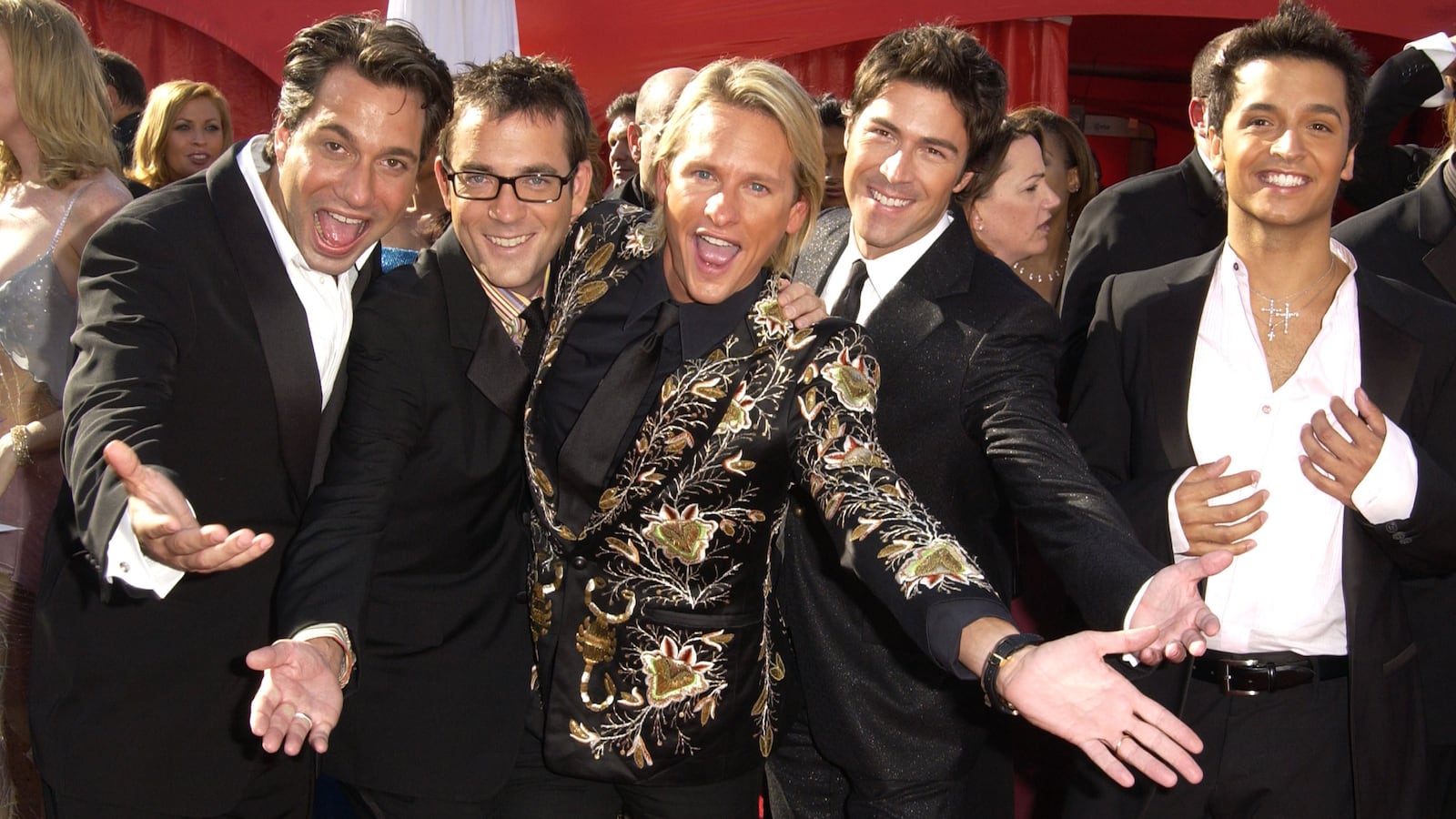
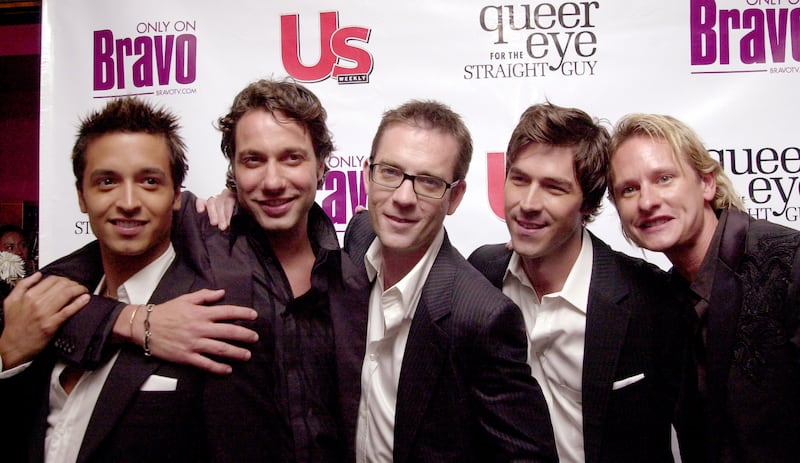
The show won the Emmy Award for Outstanding Reality Program in 2004, and its hosts—Ted Allen, Kyan Douglas, Thom Filicia, Carson Kressley, and Jai Rodriguez—gamely played pop culture’s flamboyant court jesters while, as their fame skyrocketed, positively changing the public perception of the gay community.
“It’s a lot harder not to have each other’s back after we get to know each other better, right?” Collins said. “That’s what this show was about: dignity, loving on someone, and these heroes getting to see a new perspective. That’s where the heart came from.” (Heroes are what the show calls the clients who are getting madeover.)
In 2003, when the show premiered, he said, “the gays were definitely still the butt end of the jokes. They were not seen as celebratory. I like to say the original Fab Five were superheroes. They flew in, they saved the day, and they flew out.”
At that point, he leaned into the Zoom camera, almost like he was going to tell me a secret. “And, by the way, we launched a little cable network called Bravo from that.” Queer Eye for the Straight Guy premiered a year before Project Runway; other reality TV breakouts like Million Dollar Listing, Top Chef, and, crucially, The Real Housewives of Orange County didn’t arrive until two years after that. “Then,” Collins added, “we were the first unscripted series on Netflix.”
When it comes to reality TV history, contributing to the dominance of Bravo, the hallowed House of Housewives, and then introducing a whole new arena of programming to the streamer that now boasts countless addicting and culturally significant series like Love Is Blind and Love on the Spectrum deserves a pretty major feather in a cap—permitting the Fab Five’s fashion expert would allow.
While the Netflix reboot of Queer Eye proved a societal need for the kind of compassion, grace, and bridge between marginalized communities that the show, for all the thrills of the makeovers, champions, Collins is struck by how much the cultural attitude towards the LGBTQ+ community changed in the years since the original series launched.
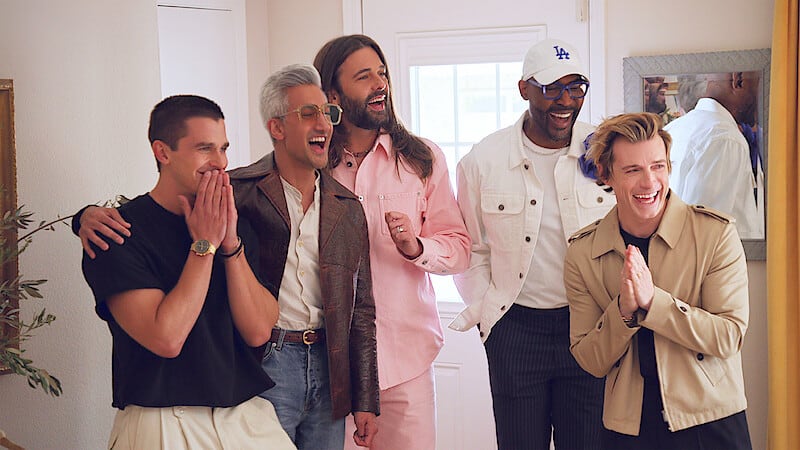
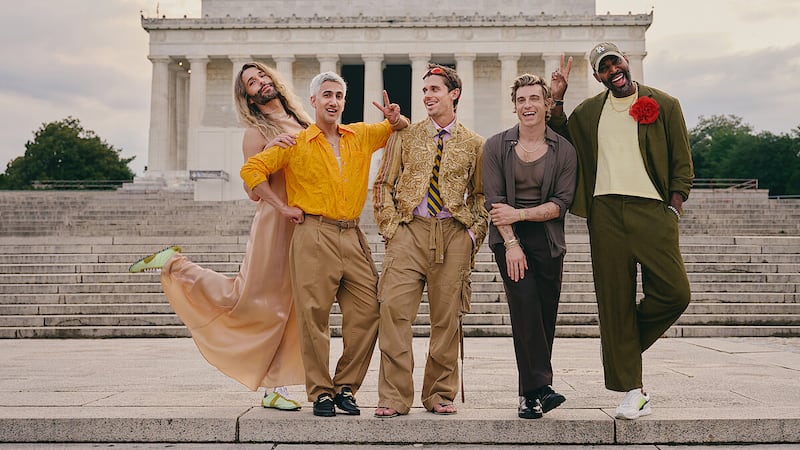
“The [new] Fab Five didn’t have to wear superhero costumes,” he said, referring to hosts Bobby Berk, Karamo Brown, Tan France, Antoni Porowski, Jonathan Van Ness, and, in the last seasons, Jeremiah Brent. “They got to be even more themselves. Back then, America didn’t want to know that Carson had a boyfriend. They didn’t want to know that Thom was dating someone. Whereas now, they knew that JVN got married. They knew that Jeremiah is married to Nate Berkus. America has definitely evolved over the past 23 years that Queer Eye has been going.”
The show’s warm, emotional catharsis for so many fans was both its calling card and its source of criticism. It’s a classic pop-culture arc: A series that is refreshing for its abashed earnestness and altruism is celebrated when it premieres, before cynics start battling enthusiasts over the “cringiness” of its purity. That happened with Queer Eye, though it certainly didn’t impact its awards attention. “The haters that are going to hate on things are just. They’re haters,” Collins said.
For all the good, niceness, and push for acceptance that was Queer Eye’s hallmark, it was noteworthy that the series ended on somewhat of a sour note. On the day of the final season’s launch, Karamo Brown skipped the cast’s appearance on CBS Mornings to, he said in a statement, “focus on and to protect” his mental health. The four other Fab Five members seemed blindsided. Later, Brown would allege in a People interview that he suffered emotional abuse, toxicity, and bullying on set.
Scout Productions told People at the time that “any issues brought to production leadership were taken seriously and addressed appropriately.”
When I asked Collins about how it feels about that drama coloring the end of the series, he said, “We’re all a big family. The old guys, the new guys. Everyone knows everyone. Like families do, there’s disagreements and different things. Was the timing great? No. But the reality is that we all loved each other, and we loved doing what we did on the show, which is for the heroes.”
The important thing, he concluded our chat with, is the impact: “I’m proud that this show with this crazy title and a little, teeny cable channel that, at the time, had just been bought was able to stand up strong and tall and proud.”