Paul Muldoon On Seamus Heaney: The Mark of a Great Poet
<p>Fellow Irish poet Paul Muldoon on the moral—and literary—authority of Seamus Heaney, who <a href="/content/dailybeast/articles/2013/08/30/seamus-heaney-1939-2013-accessible-yes-and-beautiful.html">died Friday at the age of 74</a>. Plus, <a href="/content/dailybeast/articles/2013/08/30/colum-mccann-seamus-heaney-brought-us-together.html">Colum McCann’s tribute to Heaney</a>.</p>
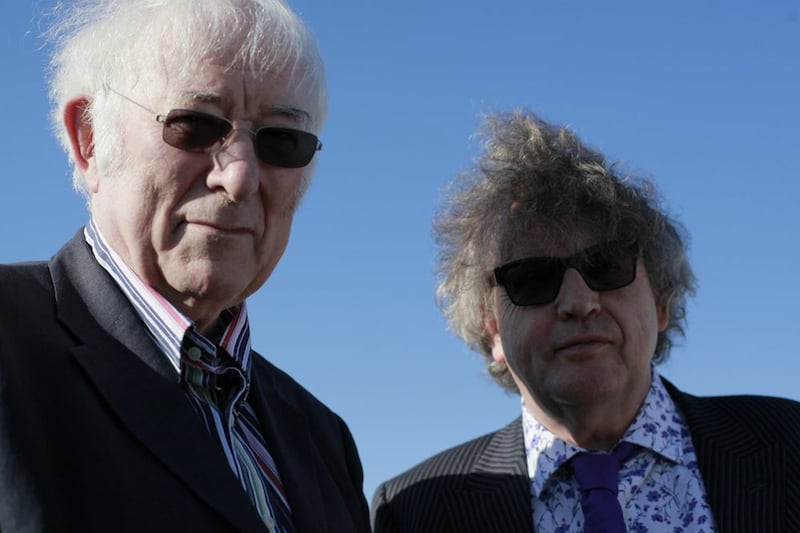
Paul Muldoon
Get the Beast Digest newsletter delivered straight to your inbox
By clicking “SIGN UP” you agree to our Terms of Use and Privacy Policy.
I met Seamus Heaney in 1968. I was 16 years old and he was 28, already a famous poet on the strength of Death of a Naturalist, his first groundbreaking collection. I say “groundbreaking” because, though we may trace its DNA back though Patrick Kavanagh to William Wordsworth, there was something quite new about the best of those poems. The engagement with the things of the world was so unadorned as to invite comparison with John Clare—yes, except a clearer John Clare.
That very clarity may have been one of the reasons why Seamus Heaney was an instant popular success. More significantly, though, was the availability of his subject matter. Though we understood that poetry about the everyday had been a hallmark of everything from Romanticism through modernism to the New York School, rarely had we seen such a high quotidian quota. The stuff of small-farm life—plows, horses, frogs—may have seemed exotic to some readers, but not to readers from Ireland. Heaney had the great gift of making it look easy and, moreover, making others feel that they could probably write a poem about a plow, a horse, or a frog.
If, as Eliot suggested, the mark of a great poet is that she or he will develop the milieu in which her or his work is seen to matter, then Heaney certainly had an educator’s gift for drawing out his readers and transporting them to places where they simply wouldn’t have expected to be. The truth is that he developed into a much more complex poet than anyone might have imagined, one who was increasingly recognized as having insights into not only plows, horses, and frogs, but international politics, human rights, and the attack on the World Trade Center. He was the only poet I can think of who was recognized worldwide as having moral as well as literary authority and, as such, may be the last major poet to even entertain such a possibility.
See more of our coverage in your search results.

Got a tip? Send it to The Daily Beast here.
Unlock a year of full access to The Daily Beast for $35.
Monthly
$1
First month then $5.99/month
Annual
$35
First year then $59.99/year
Premium
$79
First year then $119.99/year
*Substack access provided by the next business day, using your subscription email. Choosing the Premium plan constitutes your permission to share your subscription email with Substack and your agreement to Substack’s Privacy Policy.
Looks like you already have a subscription!
- Account (completed)
- Payment (completed)
- Confirmation (completed)
You're all set!
Thanks for subscribing.
- 1Account
- 2Payment
- 3Confirmation
Sign in or create an account
Register below to read this article for free or subscribe
to unlock unlimited access to The Daily Beast.
Monthly
$1
First month then $5.99/month
Annual
$35
First year then $59.99/year
Premium
$79
First year then $119.99/year
*Substack access provided by the next business day, using your subscription email. Choosing the Premium plan constitutes your permission to share your subscription email with Substack and your agreement to Substack’s Privacy Policy.
Already have an account? Sign In
Looks like you already have a subscription!
- Account (completed)
- Payment (completed)
- Confirmation (completed)
You're all set!
Thanks for subscribing.
- 1Account
- 2Payment
- 3Confirmation