
A group of senators has accused Defense Secretary Pete Hegseth and the Department of Defense of failing to protect its troops in the Middle East.
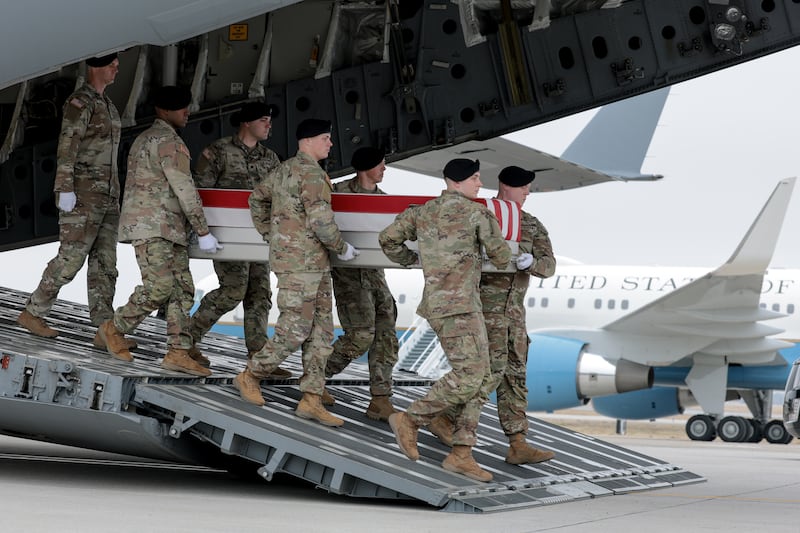
Six U.S. service members were killed in Kuwait in the first hours of President Donald Trump’s war with Iran, after their command and control trailer was struck by a drone.
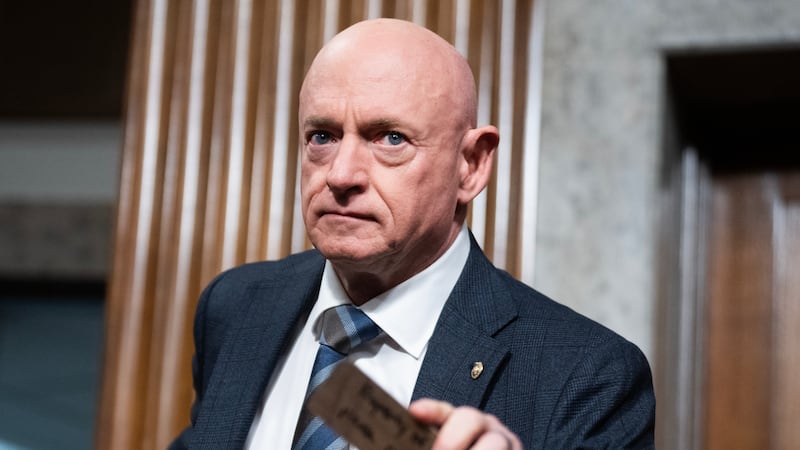
Senators Elizabeth Warren, Mark Kelly, and Kirsten Gillibrand, all Democrats, have written Hegseth a letter, suggesting the blame for their deaths lies with him due to a lack of preparation.

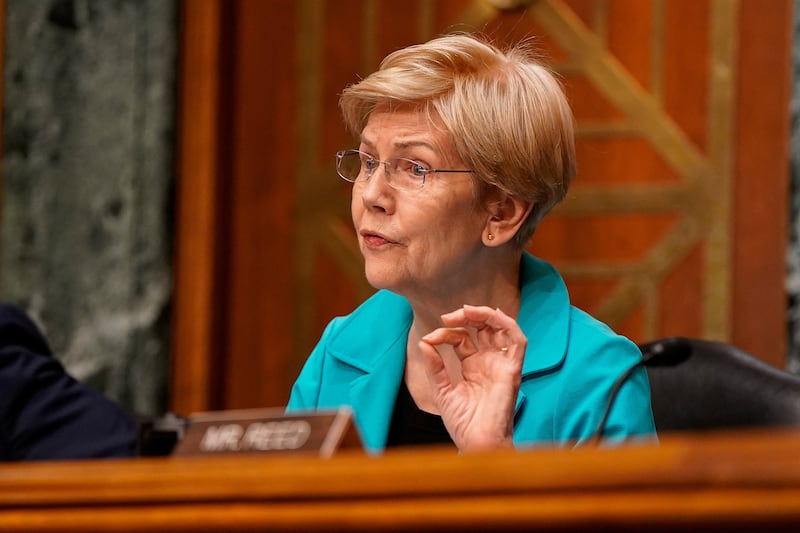
“We are concerned that this is part of a larger pattern in which this administration has failed to protect Americans in the region from Iranian retaliation,” the letter said.
Speaking to ABC News, Warren said Hegseth “must be held accountable,” adding, “Hegseth’s leadership has been one betrayal after another.”
They said there were insufficient “plans to prevent possible harm from foreseeable attacks,” the senators argued, ”like retaliation with drone strikes.”
They added, “Accounts from survivors and other officials with knowledge of the situation make clear that the risks to service members in the region were known.
“[B]ut leadership at DoD failed to take steps to prevent harm that could come from Iran’s retaliation,” they said.
An ABC News report at the time said the deceased were in a command-and-control trailer surrounded by six-foot-high concrete walls in Port Shuaiba, on Kuwait’s eastern seafront, looking directly out over the Persian Gulf toward Iran.
Those walls are a valuable means of defense against the mortars personnel faced in Iraq and Afghanistan, but are not effective at keeping out the drones used by Iran.
The senators are demanding to know whether it was thought that the walls would provide effective protection against overhead drones.
Speaking in the aftermath of the March 1 attack, Hegseth told reporters: “We have pushed every counter [drone] system possible forward sparing no expense or capability... This does not mean we can stop everything, but we ensured… the maximum possible defense.”
He also said the drone that killed Chief Warrant Officer 3 Robert M Marzan, Maj Jeffrey R O’Brien, Capt Cody Khork, Sgt Noah Tietjens, Sgt Nicole Amor, and Sgt Declan Coady, was a “squirter.”
At the time of writing, the death toll for the U.S. military stands at 13, while hundreds have been injured.
The U.S. has also lost several fighter jets—three in a friendly fire incident over Kuwait—as well as helicopters and transporter cargo planes, amounting to millions of dollars in losses.
The war has also led to ramifications on the global economy, affecting how much Americans are paying for their gas at the pump, after Iran took control of the Straight of Hormuz, strangling one-fifth of the world’s oil supply.
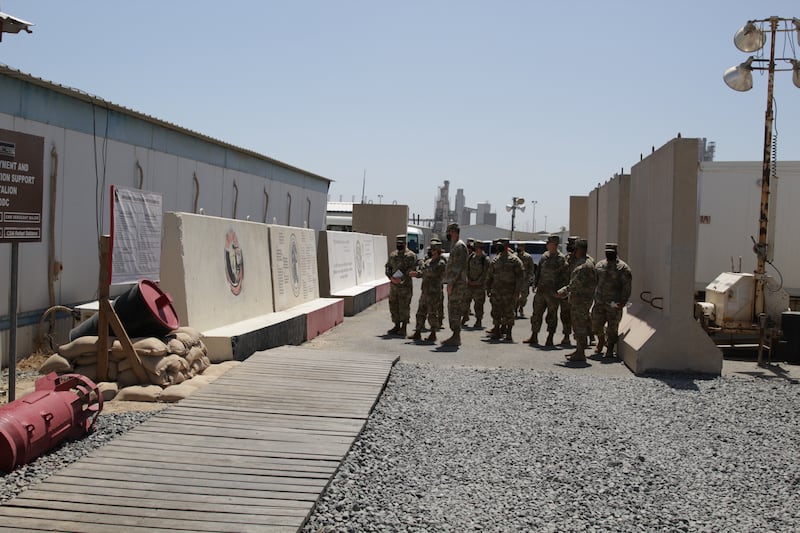
Meanwhile, a CBS News report in early April revealed service members disputing the Pentagon’s narrative surrounding the Kuwait attack, claiming the base was left with dangerously few defenses.
“Painting a picture that ‘one squeaked through’ is a falsehood,” one of the troops wounded in the attack said anonymously. “I want people to know the unit… was unprepared to provide any defense for itself. It was not a fortified position.”
Describing the moment of the attack, one soldier at the scene said, “And it’s something like what you see in the movies. Your ears are ringing. Everything’s fuzzy. Your vision is blurry. You’re dizzy. There’s dust and smoke everywhere.”
They added that they saw, “Head wounds, heavy bleeding, lots of perforated eardrums, and then just shrapnel all over, so folks are bleeding from their abdomen, bleeding from arms, bleeding from legs.”
When one of the soldiers was quizzed on the level of defense present at the base, they said, “I mean, I would put it in the none category. From a drone defense capability… none.”
The Daily Beast has contacted the Pentagon and representatives for Hegseth for comment.