Since taking up the post of Secretary of Defense, Pete Hegseth has moved to put his personal stamp on all things religious in the military. But his actions have caused concern among service members.
In early April, Hegseth forced Maj. Gen. William Green Jr., the Army Chief of Chaplains, to retire early, and the position remains unfilled. Critics say Green was a respected leader and seasoned Army chaplain who should not have been let go.

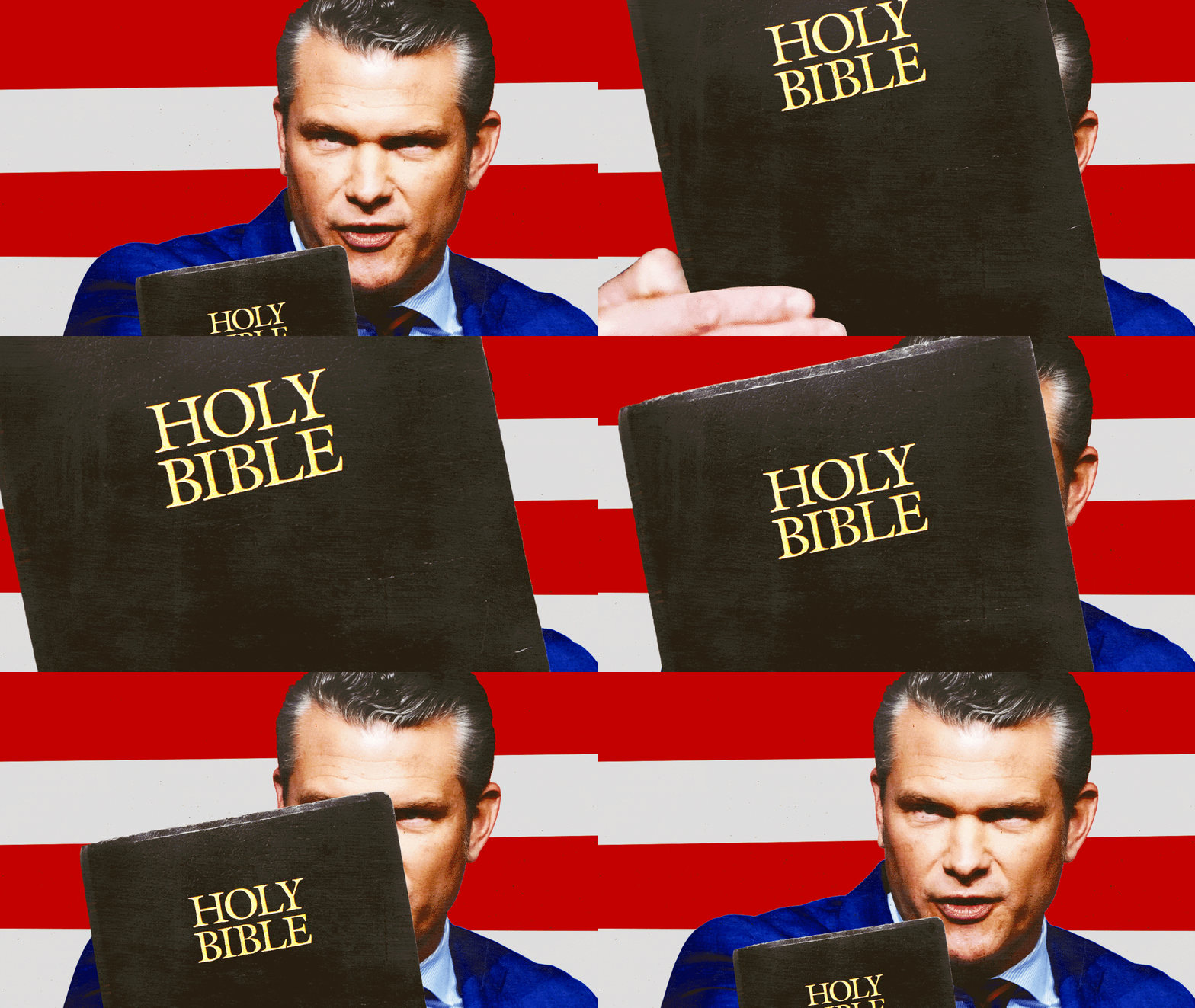
Hegseth, a member of the Communion of Reformed Evangelical Churches, has consistently sought to introduce his evangelical Christian faith into military proceedings—a move that has raised concerns for some.
The Military Religious Freedom Foundation (MRFF) told USA Today that it has received “several scores” of complaints about Green’s forced retirement, and even more raising concerns that Hegseth’s narrow evangelical focus is crowding out religious freedom.
Michael Weinstein, MRFF founder and president, has previously highlighted concerns among members worried about creeping Christian nationalism in the military.
He said one complaint he received involved an allegation that a commander told non-commissioned officers in a briefing that President Donald Trump was “anointed by Jesus to light the signal fire in Iran to cause Armageddon and mark his return to Earth.”

Another former Army Chaplain, Rev. Jonathan Shaw, highlighted the diversity of faith in the military and said having no chief of chaplains leaves an “enormous gap.”
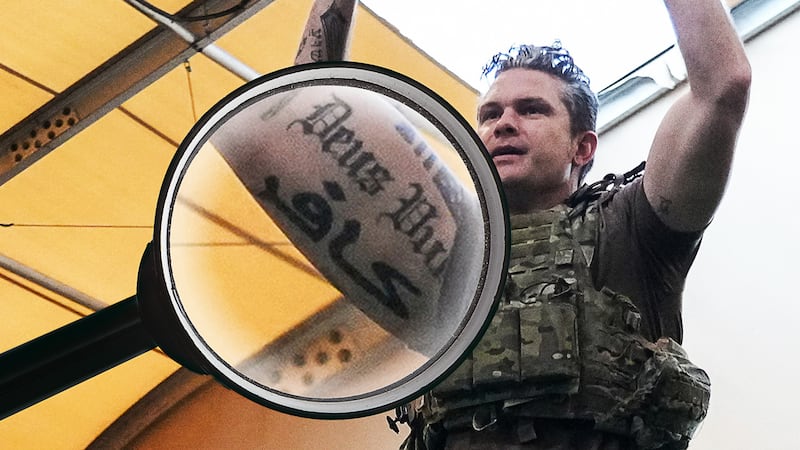
Hegseth reportedly has a tattoo of the Latin phrase “Deus Vult,” which translates to “God wills it”—a reference to the Crusades, which has been co-opted by some far-right groups—on his bicep.
In March, Hegseth described the Iran war as a battle against “religious fanatics,” and foreshadowed his intent to make changes to the chaplaincy in an interview with 60 Minutes.
“I mean, obviously, we’re fighting religious fanatics who seek a nuclear capability in order for some religious Armageddon. But from my perspective, I mean, obviously, I’m a man of faith who encourages our troops to lean into their faith, rely on God. There are no atheists in foxholes,” he said.
“Your mortality’s right in front of you. I remember prayer for me on combat missions, how important that was. That’s why we’re making the Chaplain Corps great again and active again, making sure we’re pouring into the faith of our troops.”
There are over 1.2 million military members, and almost a quarter of them self-reported as having no religious preference in surveys.
The First Amendment’s Free Exercise Clause mandates that service members have the right to observe the tenets of their preferred religion, or to observe no religion at all. And that military leaders must maintain religious neutrality in order to avoid promoting their own faith.