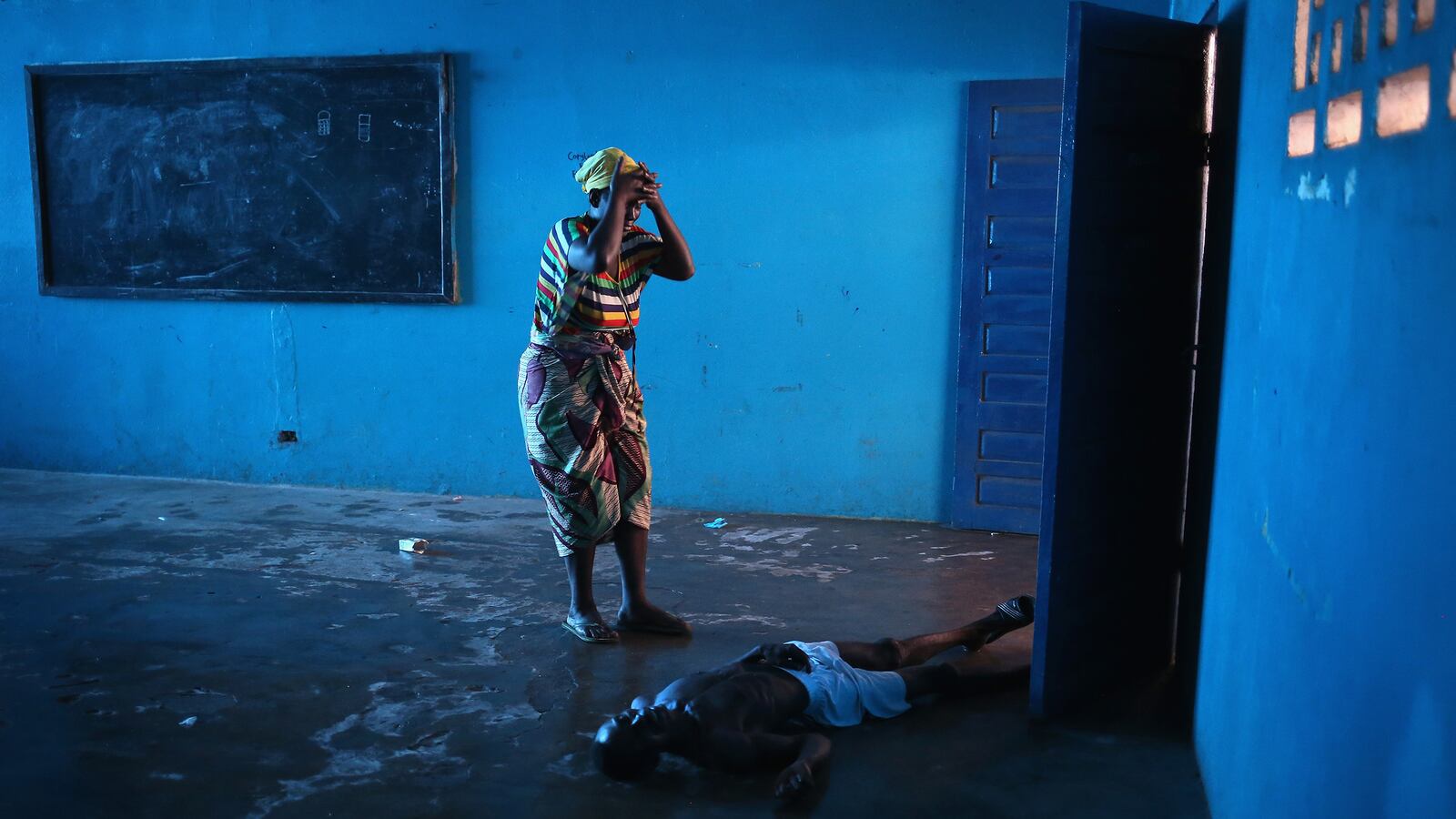
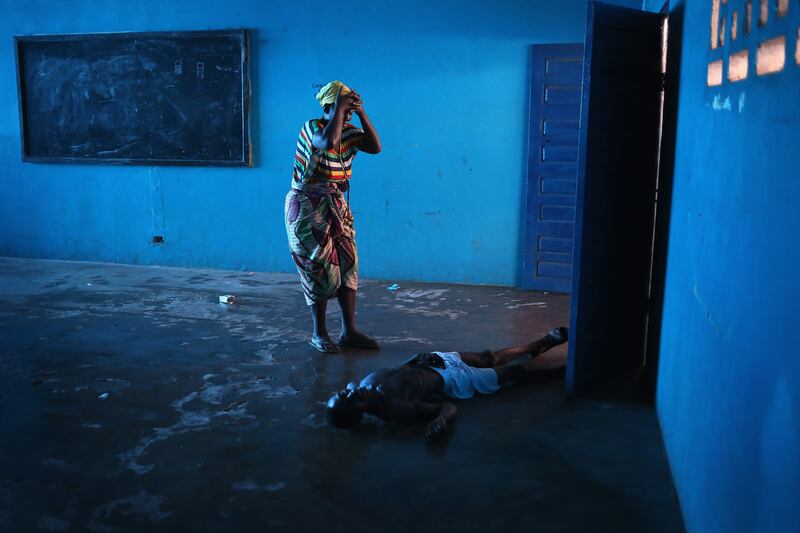
Umu Fambulle stands over her husband Ibrahim in despair after he staggered and fell, knocking him unconscious in an Ebola ward on August 15 in Monrovia, Liberia. People suspected of contracting the Ebola virus are being sent by Liberian health workers to the center, a closed primary school originally built by USAID.
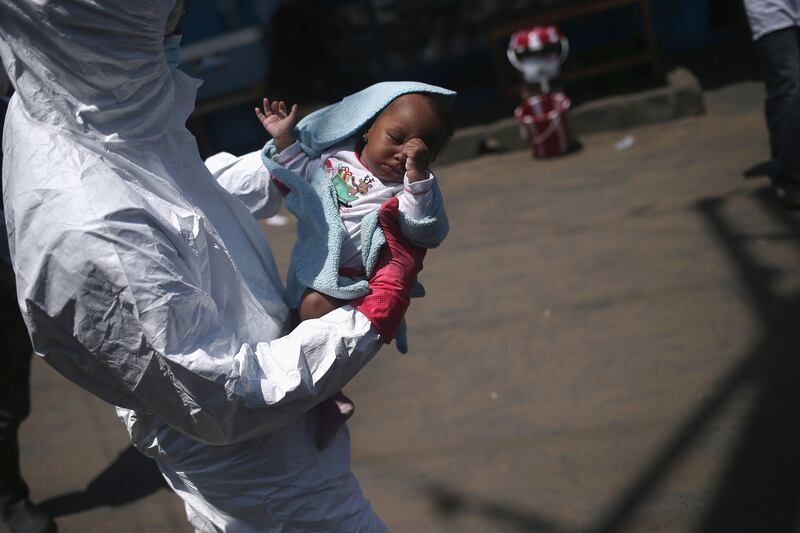
A health worker carries Benson, 2 months, to a re-opened Ebola holding center on October 17 in the West Point neighborhood in Monrovia. The baby, his mother, and grandmother were all taken to the center after a relative died of Ebola in their home. The West Point holding center was re-opened this week with community support, two months after a mob overran the facility and looted it. Many in the area still deny the presence of Ebola in their community.
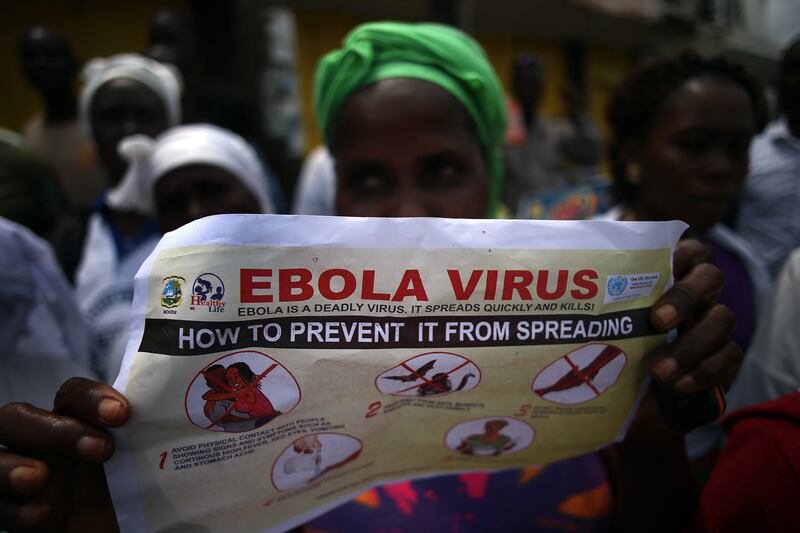
Public health advocates stage street theater to attract people to attend an Ebola awareness and prevention event on August 18 in Monrovia. The Liberian government and international groups are fighting tirelessly to convince residents of the danger and are urging people to wash their hands to help prevent the spread of the epidemic, which is spread by bodily fluids.
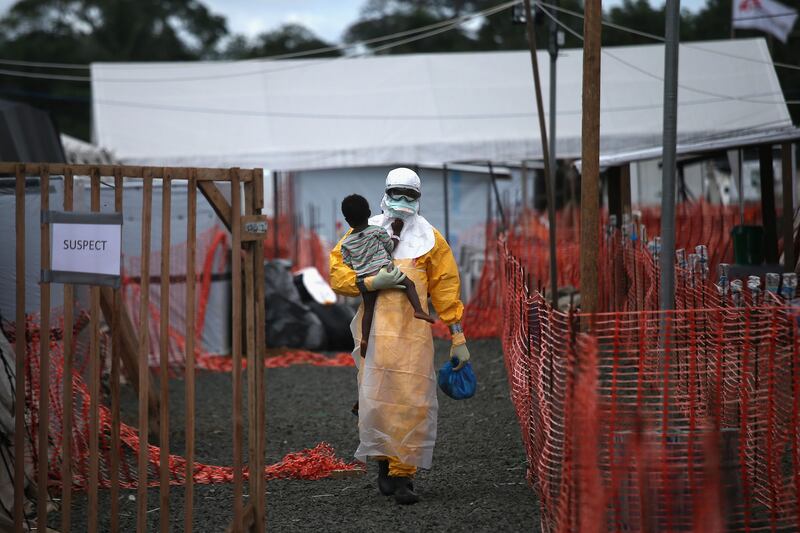
A Doctors Without Borders (MSF), health worker in protective clothing carries a child suspected of having Ebola in the MSF treatment center on October 5 in Paynesville, Liberia. The girl and her mother, showing symptoms of the deadly disease, were awaiting test results for the virus. According to the World Health Organization, 443 health care workers have been infected with Ebola during this epidemic—244 have died.
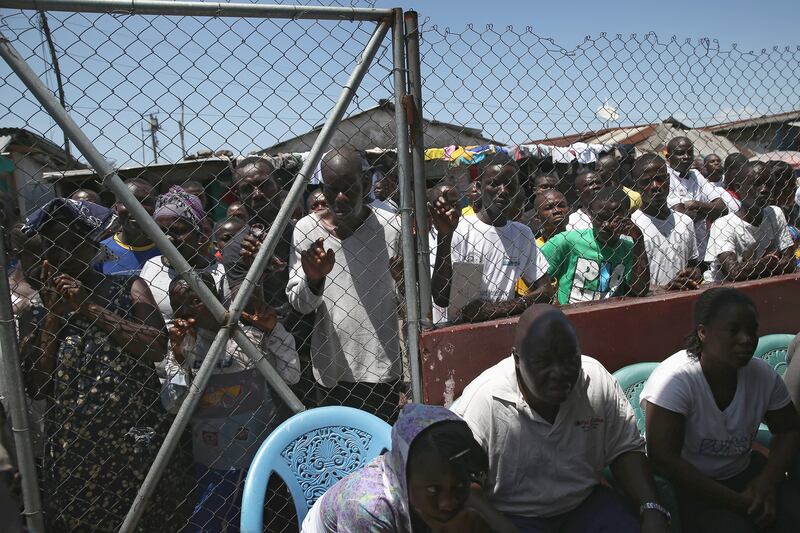
West Point residents attend a community meeting called "The Dialogue" next to a re-opened holding center for people suspected of having Ebola on October 17, in Monrovia, Liberia. Roughly 75,000 people reside in the small region, the majority of whom live in shanties with tin roofs.
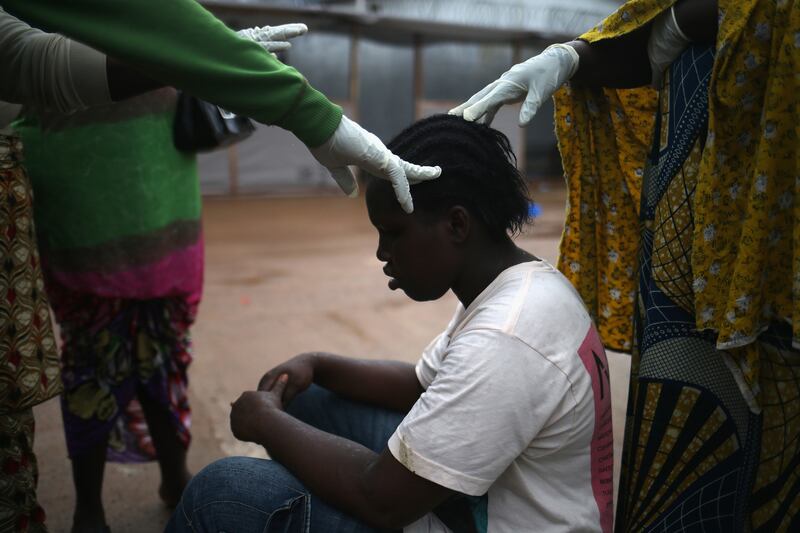
Relatives pray over a weak Siata Johnson, 23, who was waiting to enter the Ebola treatment center at the Island Hospital on October 6 near the outskirts of Monrovia, Liberia. The hospital, with it's 120 beds, has remained at capacity since it's opening by the Liberian Ministry of Health and the World Health Organization (WHO), in September.
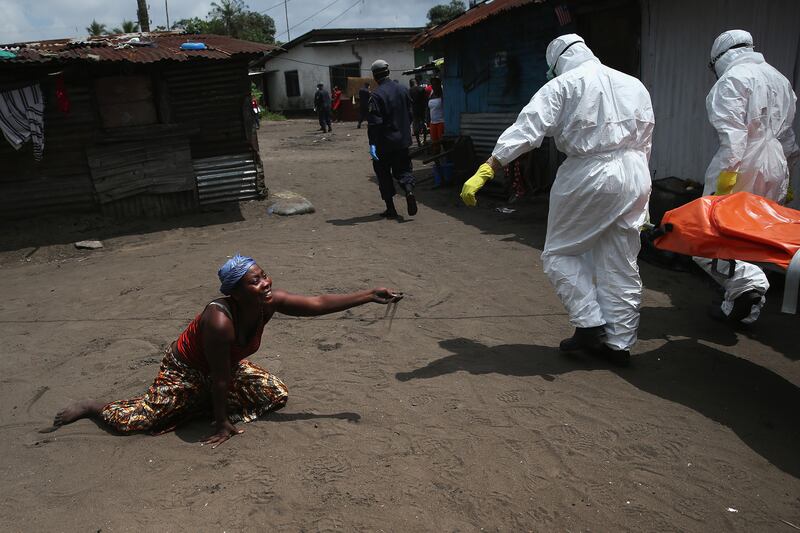
A woman throws a handful of soil towards the body of her sister as Ebola burial team members take her for cremation on October 10 in Monrovia, Liberia. The woman had died outside her home earlier in the morning while trying to walk to a treatment center, according to her relatives. The burial of loved ones is important in Liberian culture, making the removal of infected bodies for cremation all the more traumatic for surviving family members.
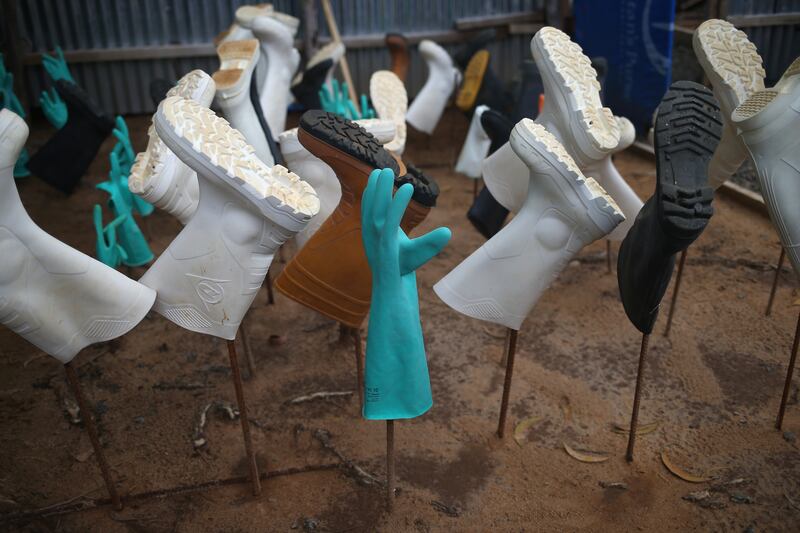
Sanitized gloves and boots hang to dry as a burial team collects Ebola victims from a Ministry of Health treatment center for cremation on October 2 in Monrovia, Liberia. Eight Liberian Red Cross burial teams under contract with the country's Ministry of Health collect the bodies of Ebola victims each day in the capital.
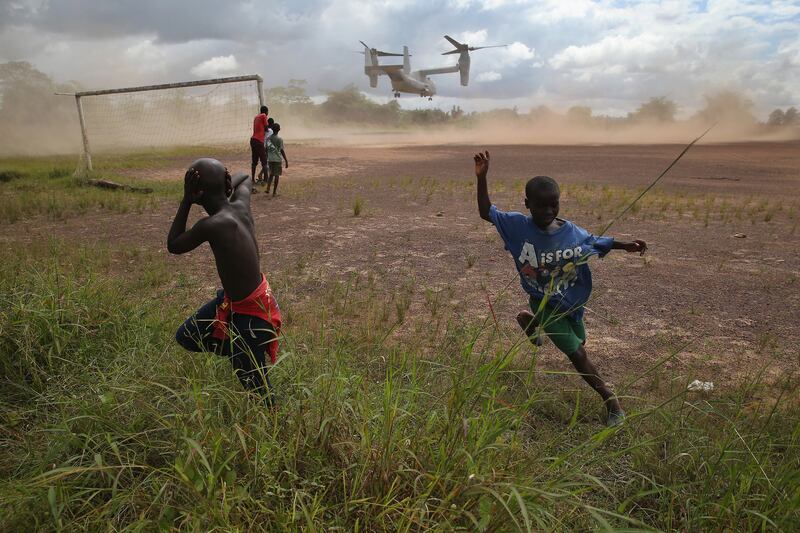
Boys run from the blowing dust as a U.S. Marine MV-22 Osprey tiltrotor departs the site of an Ebola treatment center under construction on October 15 in Tubmanburg, Liberia. The center is the first of 17 Ebola treatment centers being built by Liberian forces under American supervision as part of Operation United Assistance to combat the Ebola epidemic.
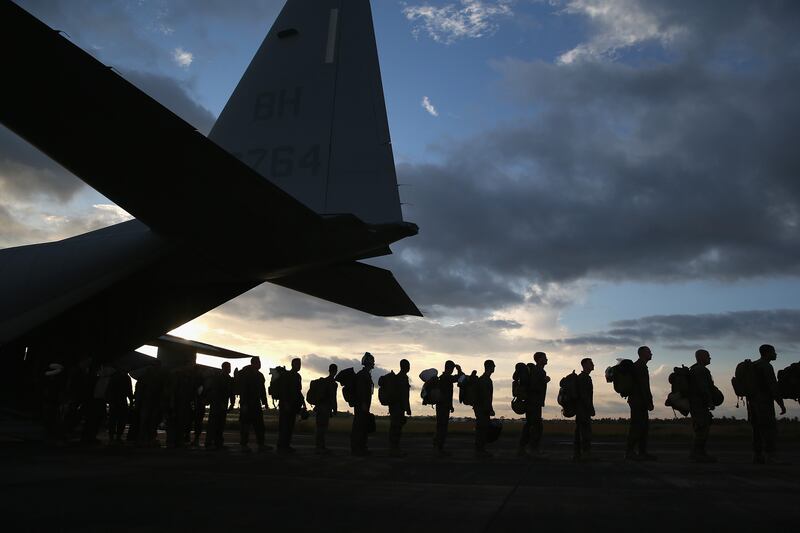
U.S. Marines arrive to take part in Operation United Assistance on October 9 near Monrovia, Liberia. Some 90 Marines arrived on KC-130 transport planes and MV-22 Ospreys to support the American effort to contain the Ebola epidemic. The Ospreys, which can land vertically like helicopters, will transport U.S. troops and supplies as they build 17 Ebola treatment centers around Liberia. U.S. President Barack Obama has committed up to 4,000 troops in West Africa to combat the disease.
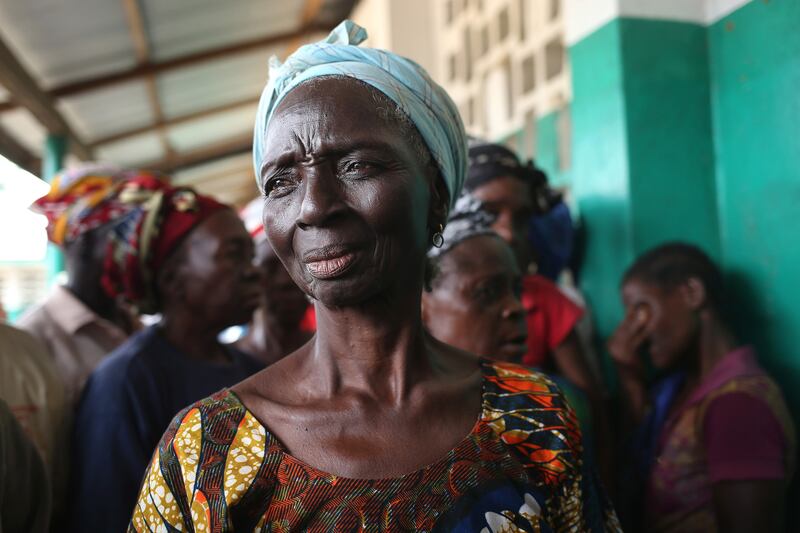
Matua Fallah waits to receive a small ration of rice at a makeshift distribution center on August 23 in Dolo Town, Liberia. The government has been slow to deliver sufficient food aid to the rural town of some 20,000 people, following an August 20 quarantine to stop the epidemic from spreading from the community, located near Liberia's international airport. The military is stopping residents from leaving the area.
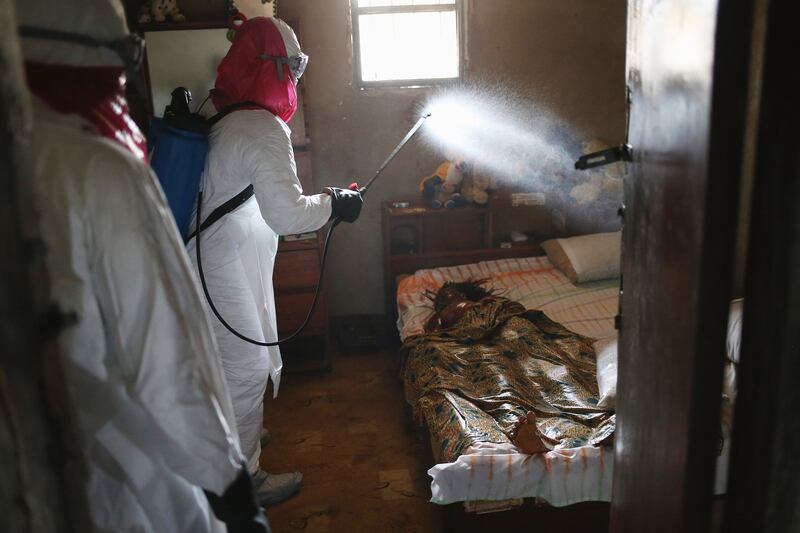
A burial team from the Liberian health department sprays disinfectant over the body of a woman suspected of dying of the Ebola virus on August 14 in Monrovia, Liberia. Teams are picking up bodies from all over the capital of Monrovia, where the spread of the Ebola virus has been called catastrophic.
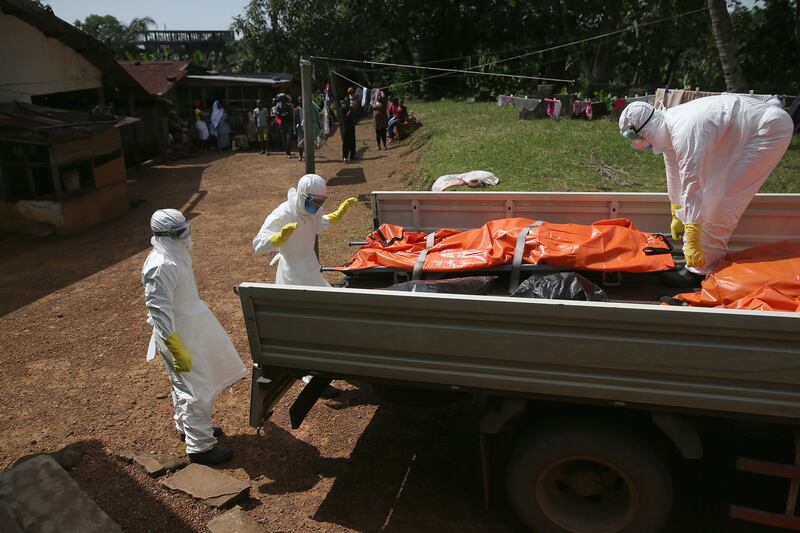
An Ebola burial team removes the body of Nama Fambule for cremation on October 10 in Monrovia, Liberia. Family members and neighbors said that she had been sick for more than a year with an undiagnosed illness and protested her body being taken away as an Ebola victim. For many Liberians, traditional burial rites are viewed as necessary to escort the deceased safely into the next life.
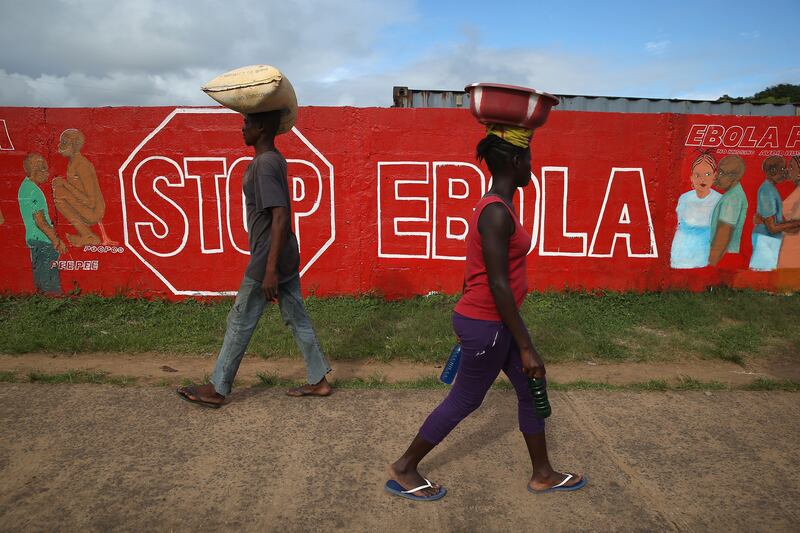
People pass an Ebola awareness mural in Monrovia, Liberia. The World Health Organization says that close to 10,000 people have died due to the Ebola epidemic in West Africa, with the Centers for Disease Control and Prevention projecting a worst-case scenario of 1.4 million cases by January.
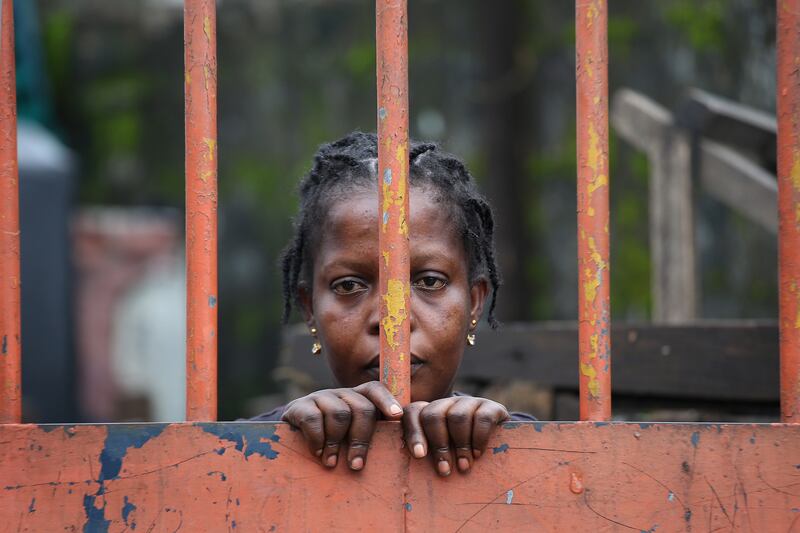
A West Point slum resident looks from behind closed gates on the second day of the government's Ebola quarantine on their neighborhood on August 21 in Monrovia, Liberia. The government delivered bags of rice, beans and cooking oil to residents, who are forbidden from leaving the seaside slum, due to the Ebola outbreak in their community. The Famine Early Warning Systems Network predicts that more than 1 million people may be struggling to find food by January.