
Several regions of Russia are experiencing major fuel shortages after Ukraine resumed its drone attacks targeting the country’s oil refineries.
In the Orenburg region, a rationing system has been introduced, allowing only drivers with designated license plates to purchase a limited supply of gasoline and diesel, Bloomberg reported.
The disruption occurred after Ukraine struck the Orsk oil refinery in the region Tuesday, which officials fear could take as long as six months to repair. “We’re preparing for the worst-case scenario,” regional Governor Yevgeny Solntsev said Thursday.
A similar rationing system has also been implemented in Russia’s Lipetsk region.
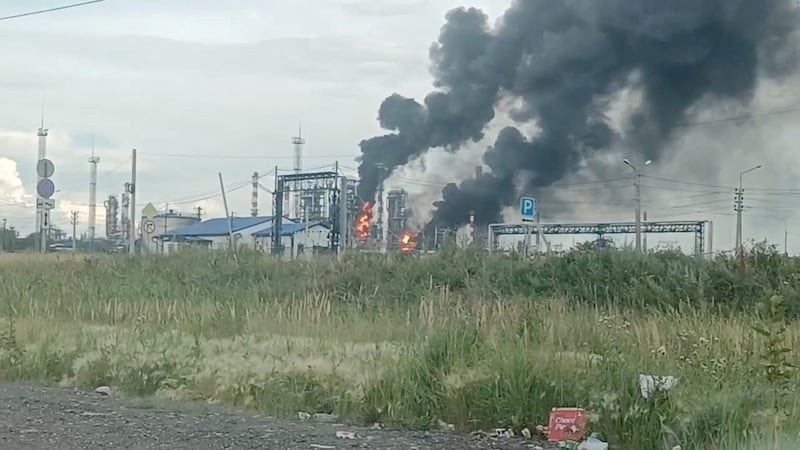
According to a Bloomberg analysis, Ukraine has targeted 10 of 34 large oil refineries in Russia, which are vital to funding President Vladimir Putin’s invasion as well as Moscow’s economy.
For months, Ukraine has been targeting Russian oil refineries with long-range attack drones in order to pressure Putin to end the war, which has stretched into its fifth year.

In a widening of its strategic campaign, Ukraine last month started using drone strikes to target warehouses and facilities belonging to Wildberries, Russia’s largest online retailer, which is often described as the country’s equivalent of Amazon.
Kyiv has now resumed almost daily attacks on oil refineries, helping bring Putin’s invasion home to the Russian people by targeting the country’s economy and fuel supplies.
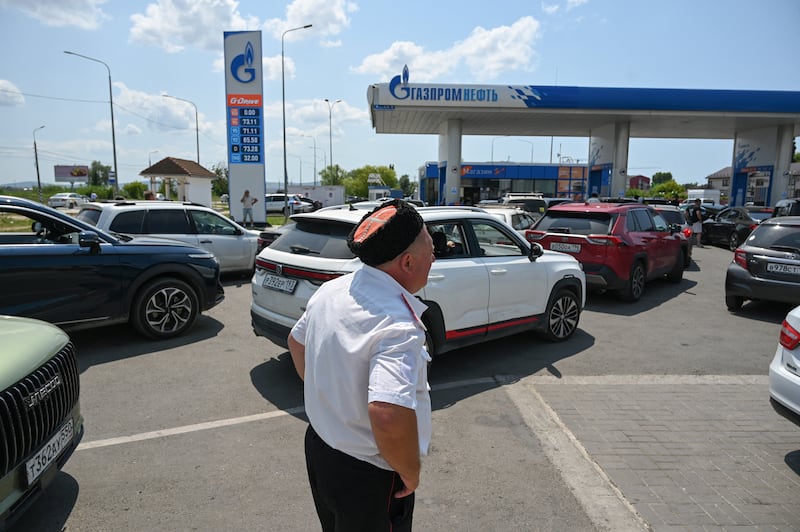
Alexander Gusev, the governor of Voronezh, had warned that the attacks would result in a fuel shortage.
“There are no indications that it will improve in the near future,” Gusev said. He also warned residents that the situation is worsening as fuel is being redistributed to other parts of the country “where the problem is even more acute.”
Ukrainian President Volodymyr Zelenskyy refers to the country’s drone attacks as “long-range sanctions.” He used the term while discussing an attack on Russia’s Black Sea port city of Novorossiysk on Wednesday that targeted several warships.
“It is entirely fair that Ukraine responds to Russia’s war, and it is Russia that can and must end its war,” Zelenskyy posted on X. “We will continue to encourage Russia to pursue peace through the further use of our long-range sanctions and mid-range sanctions.”