A wave of long-range attack drones has slammed into the Moscow region, bringing Vladimir Putin’s war right to his doorstep.
The overnight Ukrainian blitz from Monday into Tuesday sent air raid sirens wailing across the capital, marking one of the most direct and disruptive aerial assaults on the Russian power center since the conflict began.

Local officials claimed air defense systems intercepted hundreds of incoming aircraft. Moscow Mayor Sergey Sobyanin reported that 650 drones were launched toward the capital region, with 105 knocked down as they approached. Meanwhile, Moscow Oblast Governor Andrei Vorobyov stated that 185 drones were downed across surrounding municipalities.
Despite official claims of high interception rates, multiple strikes hit. The assault killed two people—a 20-year-old man in Radumlya and a 71-year-old man in Barybino—and wounded nine others, while damaging 47 private homes and four apartment buildings.
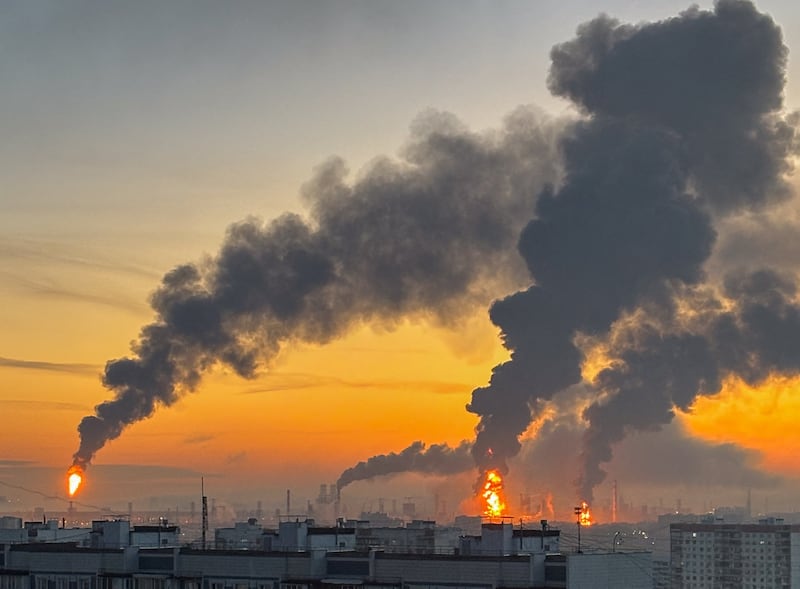
The attack’s primary target was the Volodarskaya Line Production and Dispatch Station, widely recognized as the largest fuel storage facility in the Moscow region. Operated by Transnefteprodukt—a subsidiary of state-owned pipeline giant Transneft—the facility handles up to 3 million metric tons of petroleum products annually, including gasoline, diesel, and aviation fuel.
The station serves as the key distribution junction, piping fuel straight to Moscow’s three major commercial aviation hubs. Emergency air raid alerts forced severe flight delays and widespread cancellations at Sheremetyevo International Airport as flames erupted from the facility’s storage tanks.
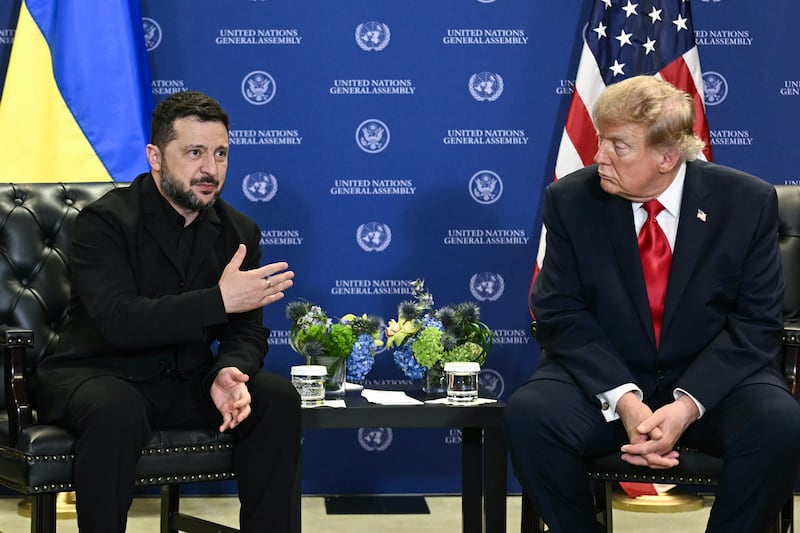
The strike follows a direct pledge from Ukrainian President Volodymyr Zelensky to hammer Russian energy infrastructure in response to Moscow’s intensified bombardment of Ukrainian cities.
The hit on Volodarskaya comes just days after Ukrainian forces struck the Samara dispatch station—Europe’s largest oil storage hub—setting off a massive inferno across its 71 storage tanks.
Russian Deputy Prime Minister Alexander Novak acknowledged that four domestic refineries were hit in a single night, forcing officials to scramble for new security and funding extensions to protect the country’s crumbling energy processing sector.
The escalating hits on Russian oil infrastructure have also set off political fireworks in Washington. President Donald Trump went on Truth Social to blame elevated gasoline prices on Ukrainian refinery strikes rather than Middle East supply chain issues.
“What’s driving up Gasoline is no longer the Strait of Hormuz,” Trump claimed, arguing that Ukrainian drones blowing up Russian facilities are pushing fuel prices higher as Republicans face a tough fight to retain control of Congress.
In response to the Moscow strikes, Russia’s Defense Ministry claimed it launched retaliatory attacks against Black Sea port infrastructure in Chornomorsk and Izmail, alongside digital data centers across Ukraine.
Moscow also pledged to ramp up strikes against Kyiv, but the burning fuel tanks near the capital stand as a stark visual testament that the Kremlin can no longer shield its core territory from the war it started.