Russia doesn’t seem to agree with U.S. Special Envoy Steve Witkoff’s assessment that the country is “fully committed” to achieving peace with Ukraine.
Russian forces bombed Kyiv on Saturday morning, killing one person and injuring dozens more, less than one week after Witkoff boasted of Russia’s so-called “commitment” on social media.
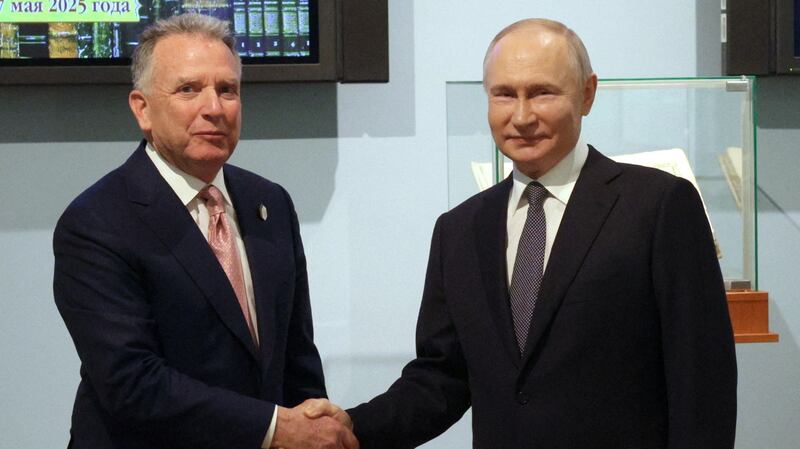
“Russia remains fully committed to achieving peace in Ukraine. Russia highly values the efforts and support of the United States to resolve the Ukrainian conflict and re-establish global security,” Witkoff wrote on Dec. 21.
On Dec. 27, the Russian Defense Ministry bragged that it carried out a “massive strike” on Ukraine, saying it used “long-range precision-guided weapons from land, air, and sea, including Kinzhal hypersonic aeroballistic missiles” to attack “Ukrainian military-industrial complex enterprises.”
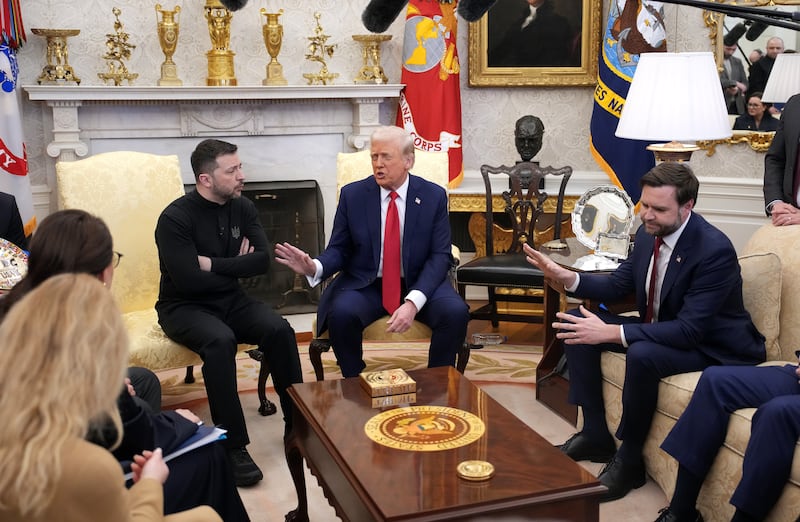
The 10-hour bombardment comes one day before Ukrainian President Volodymyr Zelensky, 47, is set to meet with Donald Trump,79, in Florida to discuss his peace proposal to end the Russia-Ukraine war.
Zelensky said the attack typified Russia’s attitude toward peace.
“Where is the Russian response to the proposals to end the war, which were made by the United States and the world?” he said on Telegram, adding, “Russian representatives hold long talks. In reality, the ‘Kinzhal’ and ‘Shaheds’ speak for them.” “Kinzhal” and “Shahed” are the missiles and drones used in the attack.
The attack ramps up the pressure on Sunday’s meeting. President Trump has seemingly grown tired of the ongoing war, but has blamed the drawn-out nature of the conflict on Ukraine and its allies in Europe, rather than Russia.
Zelensky said that during the meeting, he hopes to convince the United States to pressure Russia to end the war. He also signaled that he is willing to compromise to achieve peace.
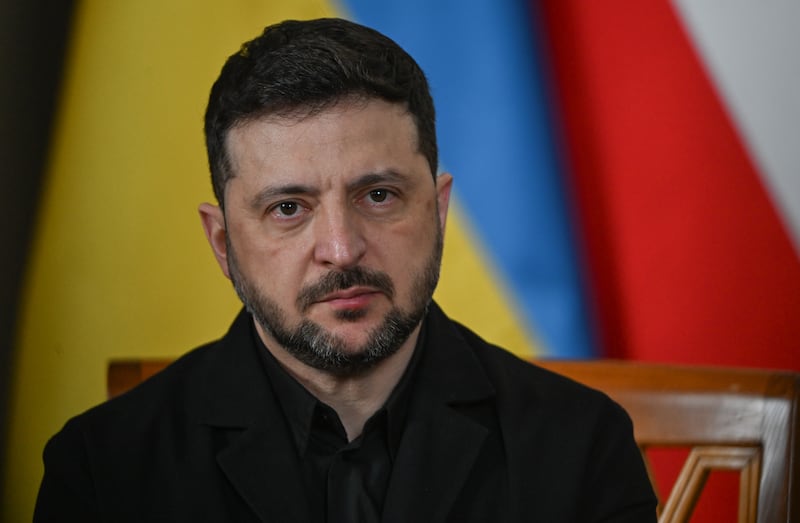
“Russia is constantly looking for reasons not to agree [to a peace deal],” he said. “The answer is very simple: If Ukraine demonstrates its position and it is constructive, while Russia, for example, does not agree, then it means the pressure is insufficient. And this is also something I want to discuss with the president of the United States.”
At the center of the talks are Zelensky’s revisions of two peace plans proposed by the United States and Europe. The first U.S. peace plan, originally pitched in November and drafted by Witkoff, was based on a Russian peace plan. Europe balked, saying it was overly generous to Russia, and responded with its own version of a deal.
Zelensky’s deal, drafted with the U.S., would pull troops out of disputed territory in Donetsk on condition that Russia do the same. Russia has so far been unwilling to compromise on any of its goals in peace negotiations.

Trump didn’t seem eager to sign off on Zelensky’s proposal in a conversation with Politico on Friday, saying of Zelensky, “He doesn’t have anything until I approve it, so we’ll see what he’s got.”
He added, “I think it’s going to go good with him. I think it’s going to go good with Putin.”
As for when Trump plans to talk with Putin, he said, “Soon, as much as I want.”