
Vladimir Putin’s war is biting Russians at the checkout as the war with Ukraine takes its toll, with basic food prices surging faster than inflation.
Soaring grocery costs have put mounting pressure on ordinary Russians, according to official data and supermarket prices reported by The New York Times.
A kilogram of bananas at one Moscow neighborhood store now costs 149.99 rubles ($1.78), compared with 79.90 rubles ($0.95) in August 2022, an increase of 87 percent.
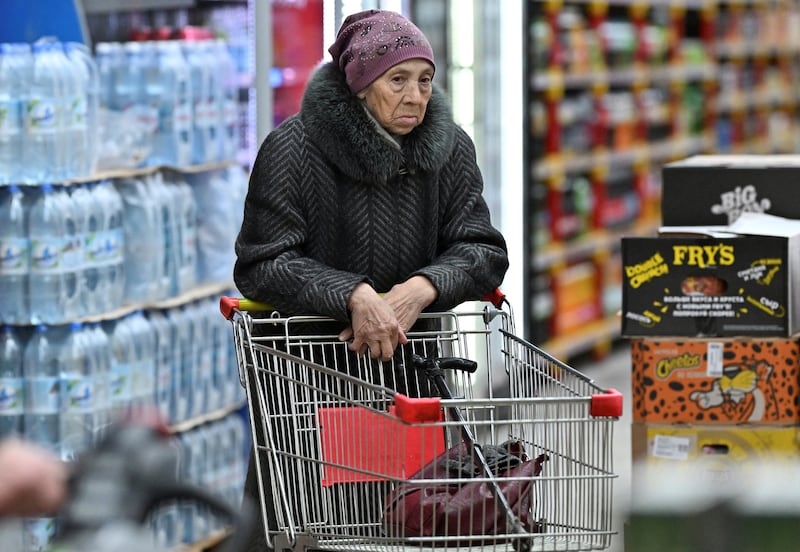
According to Russia’s state statistics agency Rosstat, the average price of beef rose by 76 percent between January 2022 and July 2026, while fresh coffee jumped by 81 percent. Butter and milk increased by almost 50 percent.
Food prices have also continued to outpace Russia’s headline inflation rate this year.
Rosstat’s minimum basket of 33 food products that it uses to compare inflation across regions—including meat, milk, cereals, eggs, fruit and vegetables—rose 8.5 percent between January and July this year, while overall inflation during the same seven-month period stood at 4.75 percent.
Some staples have increased much faster. Sugar has risen 26 percent, while potatoes, cabbage, onions and carrots have climbed between 27 and 36 percent. Chicken and fish have increased 11 percent and beef 10 percent.
The increases have begun changing how some Russians shop and eat.
Ekaterina, a 37-year-old marketing director interviewed by the Times, said rising prices have forced her to cut foods including salmon and berries from her diet.
“I used to have spare money left I would save for vacation or other things,” she said. “But this January and February, this money was gone.”

Andrey, a 30-year-old history and social studies teacher in the Nizhny Novgorod region, said the squeeze has been particularly acute for workers on lower salaries.
“Inflation is felt very acutely, especially by educators and public sector workers in general,” he said. “We have stable incomes—fixed by the state—that simply don’t keep pace with rising prices.”
He estimated his monthly take-home pay at between 42,000 and 45,000 rubles, or roughly $498 to $534.
“As you can imagine, given today’s prices—for groceries, clothing, electronics—that is, to put it mildly, not enough,” he said.
Russia’s government has begun responding to the pressure. It has approved the price monitoring of 24 food products—including beef, fish, eggs, milk, sugar, potatoes and other staple vegetables—beginning Jan. 1, 2027.
Igor Igoshin, first deputy chairman of the State Duma Committee on Competition Protection, has insisted the system will not impose government price controls.
“This is about monitoring and identifying the causes, not about setting fixed prices or trade markups,” he told state-run news agency Tass, adding that authorities could respond if they identified speculative price increases.
The pressure has even prompted rare public criticism from within the Russian government.
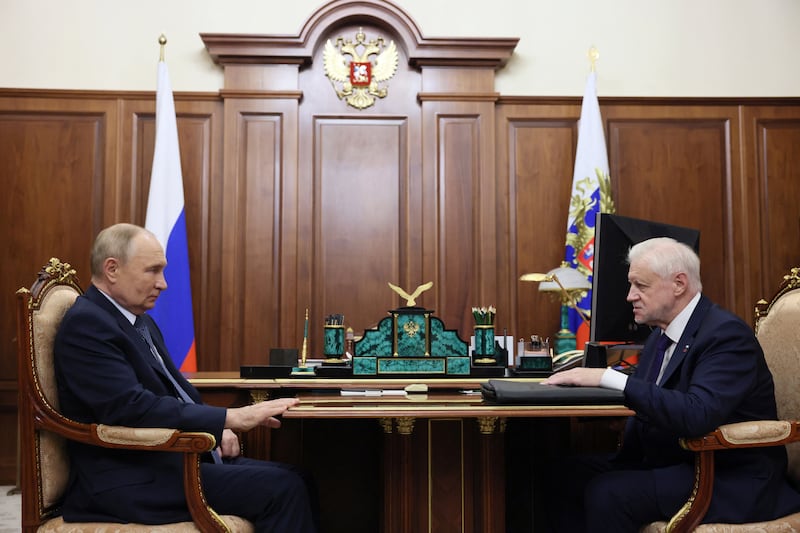
Sergey Mironov, 73, a member of Russia’s lower house of parliament, the State Duma, said he personally appealed to the Russian prime minister to act on rising food prices.
“Many citizens simply can’t afford to buy food anymore. Food prices are rising at record highs! But we see no real fight against inflation. I told Prime Minister Mikhail Mishustin this personally,” he wrote on Russian social media platform VK in March 2025.
“People have many problems. Healthcare, housing and utilities... But finances come first. And here, unfortunately, the situation is this: prices in stores are steadily rising, and wages... You know it yourself. Why doesn’t the government regulate retail chains? Why do they raise prices as they please?” Mironov added.
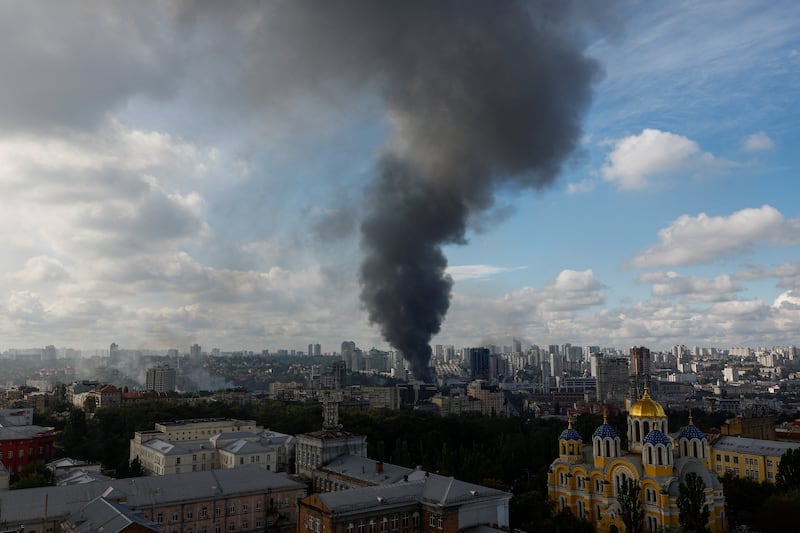
Russia, the most sanctioned country in the world, has faced inflationary pressure since its February 2022 invasion of Ukraine. Western levies have disrupted supply chains, skilled workers have left the country, and Moscow has shifted resources toward its wartime economy.