Putin’s Nightmare Deepens After Humiliating Strikes
Ukrainian drones set two oil tankers ablaze in the Sea of Azov and hit fresh depots as the Kremlin’s fuel misery grows.

Vladimir Putin’s fuel nightmare has worsened as Ukrainian drones set two oil tankers ablaze in the Sea of Azov and torched depots deep inside Russia.

Thursday’s strikes are the latest blows in a punishing months-long campaign that has crippled Russia’s refineries and plunged roughly 50 million people—about a third of the population—into a fuel crisis on a scale not seen since the dying days of the Soviet Union.
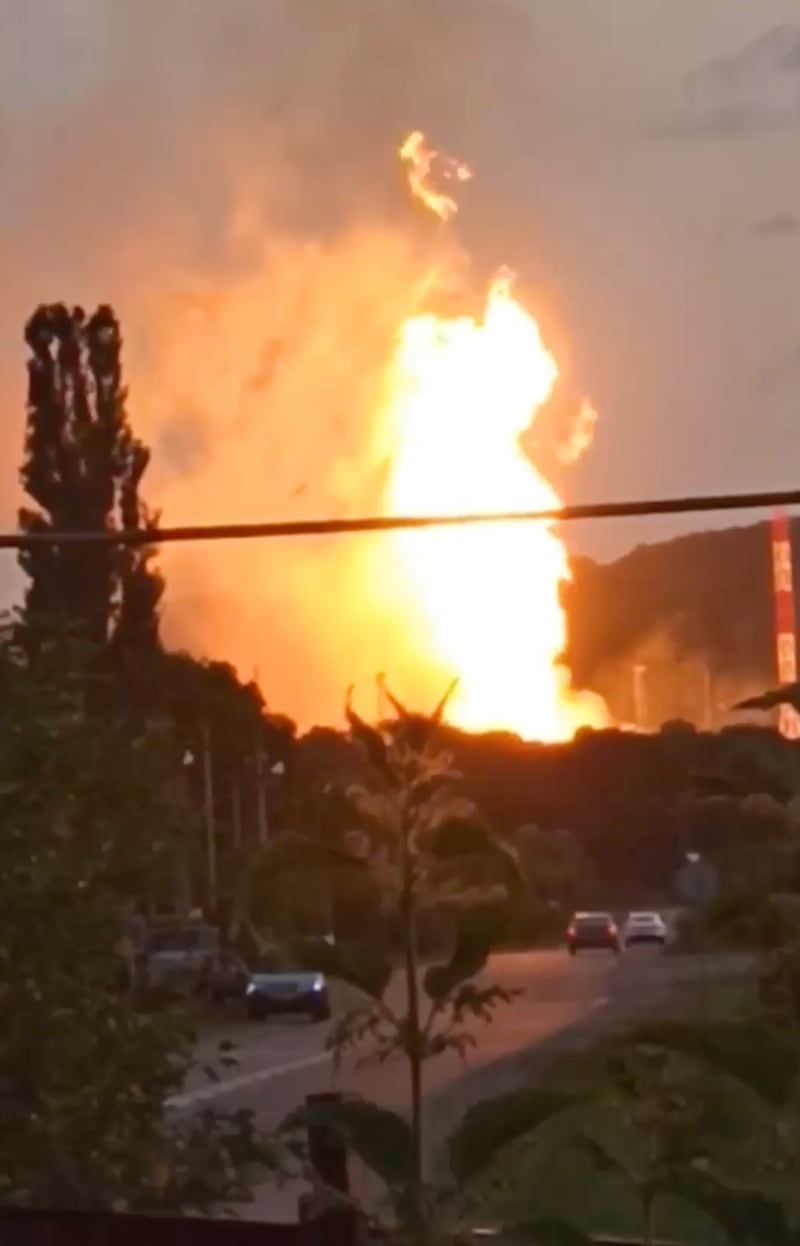
Oil facilities in Russia burn after being hit by Ukrainian drones.
X
At the time of publication, the tankers were still burning off Russia’s southern coast, Rostov Gov. Yuri Slusar said, with one crew forced to evacuate. It was the latest in a run of strikes on shipping in the area, part of Kyiv’s push to choke fuel supplies to Crimea, the peninsula Russia illegally annexed in 2014.
Drones also triggered a blaze at an oil depot in the western city of Tver, acting Gov. Vitaly Korolyov said. In the Stavropol region, burning reservoirs forced residents of several apartment blocks to flee, according to Gov. Vladimir Vladimirov.

Ukrainian President Volodymyr Zelensky, 48, has cast the attacks as “long-range sanctions”—payback for Moscow’s refusal to stop fighting. “We have long proposed that Russia end this war, and every day of delay should bring the feeling of war to where it all began—to Russia,” he said.
The strikes landed a day after U.S. President Donald Trump, 80, told Zelensky the U.S. would grant Ukraine a license to build its own Patriot air defense systems, as the Associated Press reported.
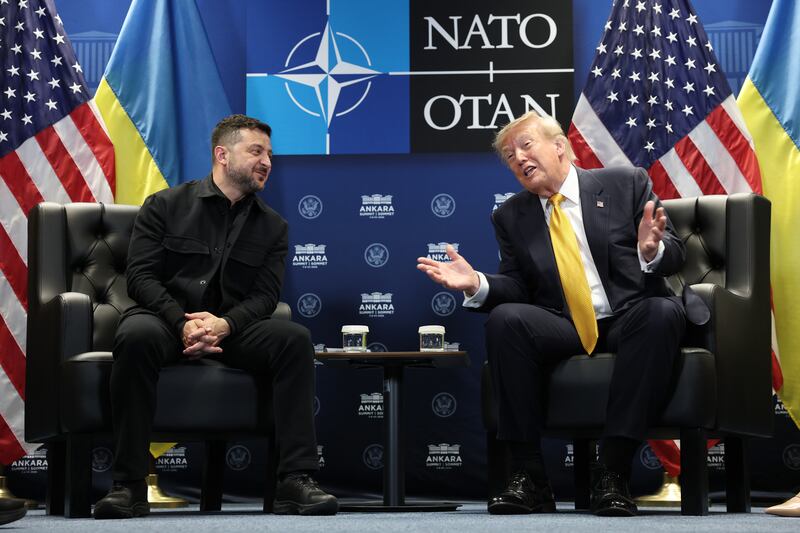
U.S. President Donald Trump (R) meets with Volodymyr Zelenskyy, President of Ukraine (L) for bilateral talks at Beştepe Presidential Compound during the NATO Summit on July 08, 2026 in Ankara, Turkey.
Win McNamee/Win McNamee/Getty Images
While this would hand Kyiv a long-sought win at the NATO summit in Ankara, Turkey, a top Ukrainian official warned homegrown Patriot interceptors could be a year or more away. Serhii Beskrestnov, an adviser to Ukraine’s defense minister, said the real obstacle is time, not skill, with some subcontracted parts taking up to two years to produce.
Russia’s Defense Ministry said it downed 73 Ukrainian drones overnight. Meanwhile, Ukraine’s air force said it faces its own barrage from 94 Russian drones and two ballistic missiles, saying 19 drones and both missiles hit 13 sites.

Russia's President Vladimir Putin attends a meeting with service members of the Russian armed forces involved in the country's military campaign in Ukraine last month.
Alexander Kazakov/via REUTERS
The Kremlin brushed off any idea that the strikes would expedite peace. Spokesman Dmitry Peskov called Washington’s stance “ambivalent” but said Moscow still welcomed Trump’s efforts.
Get the best of The Beast delivered right to your inbox
By clicking “SUBSCRIBE” you agree to our Terms of Use and Privacy Policy.
“It’s a mistake to think that escalation and military pressure could pave the way to a peaceful settlement,” Peskov said, warning that more strikes would only push Russia to carve out a bigger “buffer zone” in Ukraine.
He added that Putin is “open to dialogue” and ready for another call with Trump.
See more of our coverage in your search results.

Got a tip? Send it to The Daily Beast here.
Register below to read this article for free or subscribe
to unlock unlimited access to The Daily Beast.
Monthly
$1
First month then $5.99/month
Annual
$35
First year then $59.99/year
Premium
$79
First year then $119.99/year
*Substack access provided by the next business day, using your subscription email. Choosing the Premium plan constitutes your permission to share your subscription email with Substack and your agreement to Substack’s Privacy Policy.
Already have an account? Sign In
Looks like you already have a subscription!
You're all set!
Thanks for subscribing.
Sign in or create an account
Login dialog
Loading comments…