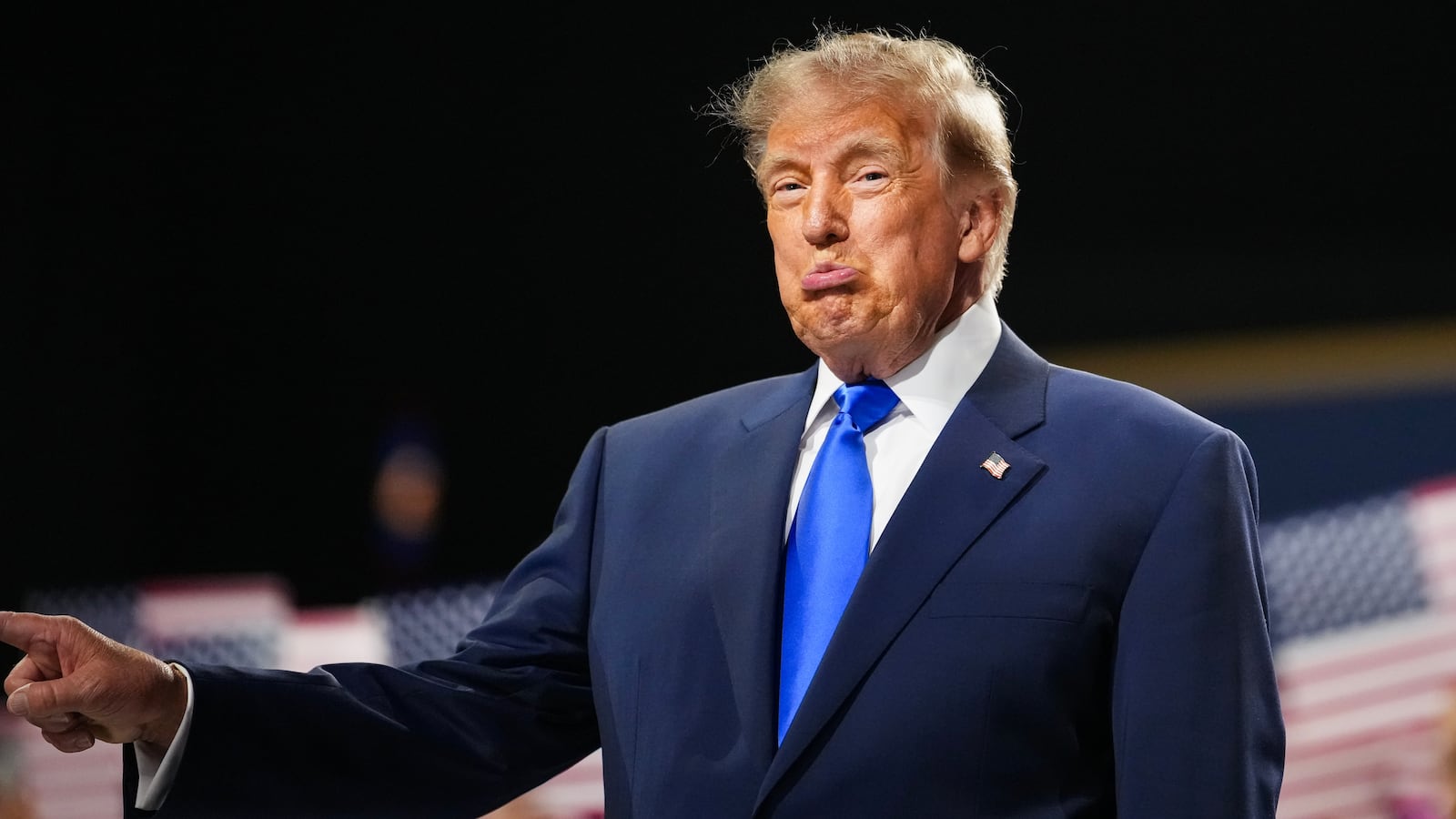
President Donald Trump’s plan to boost Republican support ahead of the midterms with his first-ever midterm convention appears to have backfired, according to polling.
The GOP event, held on Wednesday and Thursday last week in Dallas, was designed to shore up support for the party ahead of the race for control of the House and Senate.
“The Republican Midterm Convention in Dallas was a solidly sold out winner for Republicans,” the 80-year-old president posted on Truth Social on Monday evening. “Also, great Views and Ratings. Should have a big impact on November 3rd.”
At the convention, Trump promised every American a $5,000 dividend if Republicans retain control of Congress in November’s midterm elections.

But polling since the event suggests the strategy has yet to translate into greater support for the GOP.
In a four-day Reuters/Ipsos poll of 1,143 Americans conducted in the days after the convention, Democrats held a 44 percent to 37 percent advantage over Republicans in the generic ballot.
The seven-point gap was the widest since the beginning of Trump’s second term.
Voters also picked Democrats over Republicans as the better stewards of the economy, 38 percent to 37 percent, with Democrats gaining that edge over the summer for the first time in about a decade.
Meanwhile, 63 percent of Americans — including four in 10 Republicans and nine in 10 Democrats — disapproved of Trump’s dividend offer.
The offer came as Republicans have been lagging behind in the polls, with voters consistently favoring Democrats over Republicans.
While midterms are historically difficult for the party in power, things have been particularly bleak for the Republicans amid Trump’s deeply unpopular war in Iran.
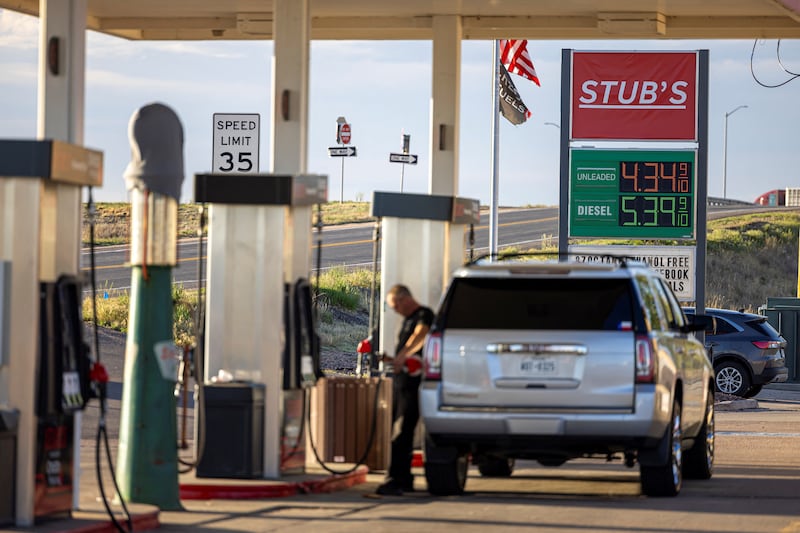
The conflict, launched in February without congressional authorization, has sent energy prices sharply higher, with Brent crude climbing to around $109 a barrel on Monday, its highest level since May. Gasoline reached $4.32 a gallon, while diesel hit a record $6.23, according to AAA.

Overall, gas prices have climbed 52 percent since January, according to AAA. That is nearly double the previous midterm-year record of 27 percent and almost three times the 18 percent average.
Trump has insisted the price rises are temporary, but polls have repeatedly shown that voters do not think the cost of the war is worth it.
In a CBS News/YouGov poll this week, 71 percent said they were unwilling to pay more at the pump because of the conflict, rising to 81 percent among independents.
And with no end in sight for the war or the price rises, Trump’s approval rating has reached a record low.
A Financial Times/Focaldata poll this month put Trump’s approval at just 33 percent.
And that could be a significant problem for Republicans in the November midterms, which are widely viewed as a referendum on Trump’s leadership.
Polls increasingly suggest his performance is influencing voters’ views of Republican candidates.
A CBS News/YouGov poll of 2,460 U.S. adults conducted from September 8 to September 11 found that 48 percent of likely voters said a Trump endorsement would make them less likely to support a candidate, compared with just 21 percent who said it would make them more likely.
The Financial Times/Focaldata poll found 46 percent of voters believed Trump was making it harder for Republican congressional candidates to win. Among independents, 47 percent said a Trump endorsement would make them less likely to back a candidate.
Republican strategist Doug Heye summed up the pressure facing his party on CNN’s The Source with Kaitlan Collins:
“Republicans know that their back is against the wall,” Heye said.
The Daily Beast has contacted the White House for comment.