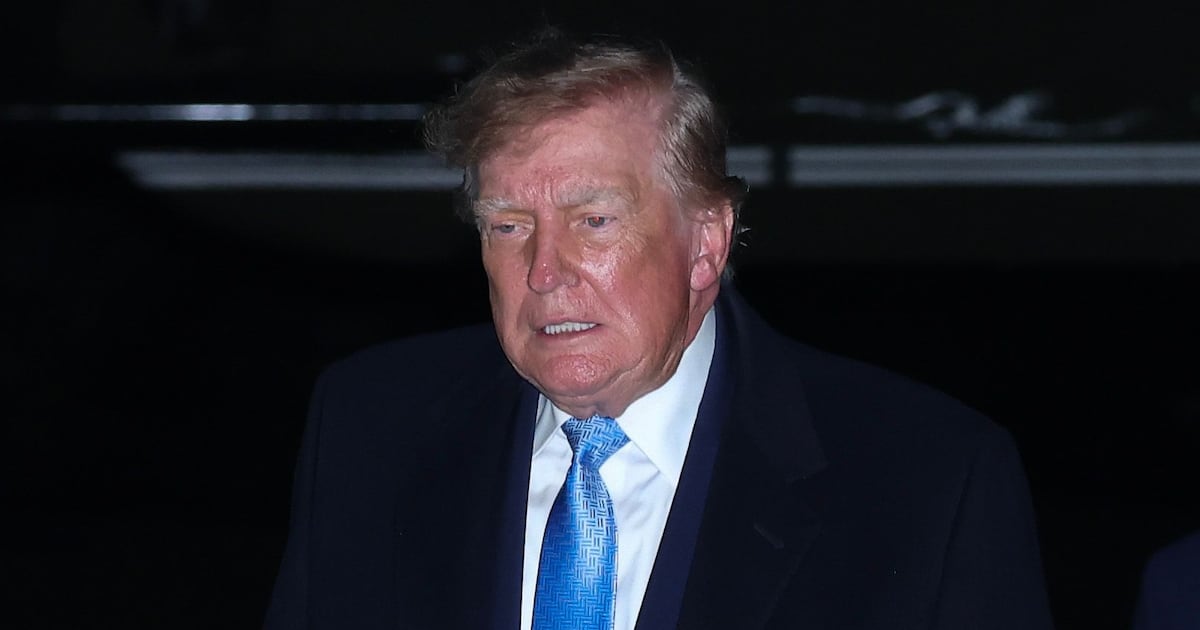
Donald Trump and his health secretary believe they have reinvented math—and it just so happens that their “different way of calculating” gives the president a win.
During a healthcare affordability event held in the Oval Office on Thursday, the 79-year-old president boasted about his deal with the pharmaceutical company Regeneron to lower prescription drug prices for Americans. But the figures he bragged about don’t add up.
“We’ve secured gigantic discounts with price differences from four to five, and even 600 percent. 600 percent!” the president boasted.
Trump’s health secretary, Robert F. Kennedy Jr., backed up his calculations with an anecdote from his trainwreck Senate hearing on Wednesday.
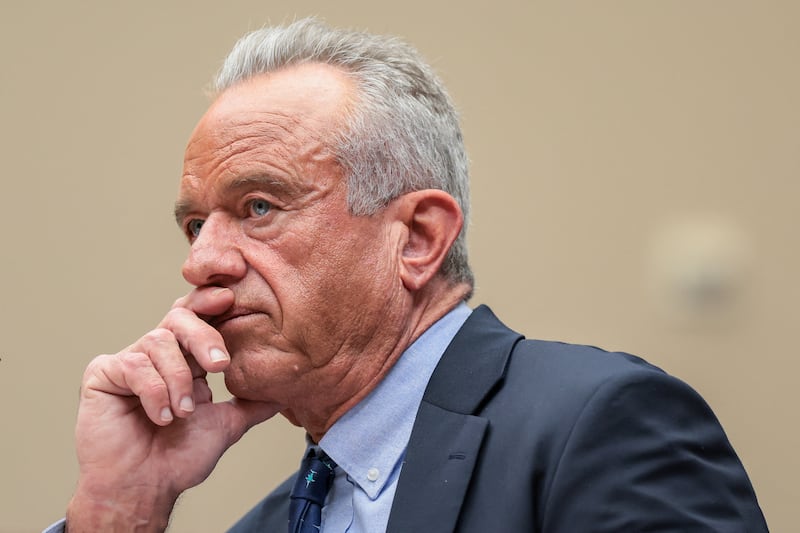
“A conversation that I had yesterday with one of the Democratic senators was questioning me during a hearing and she was ridiculing President Trump for his math, and she was saying it’s mathematically impossible to have a drug drop by 600 percent in cost, which he had claimed,” Kennedy, 72, said.
“And then I said, well, if the drug is $100, and it raised the price to $600, that would be a 600 percent rise. If it drops from $600 to $100, that’s a 600 percent savings,” the health secretary added.
“That’s right,” Trump said approvingly.
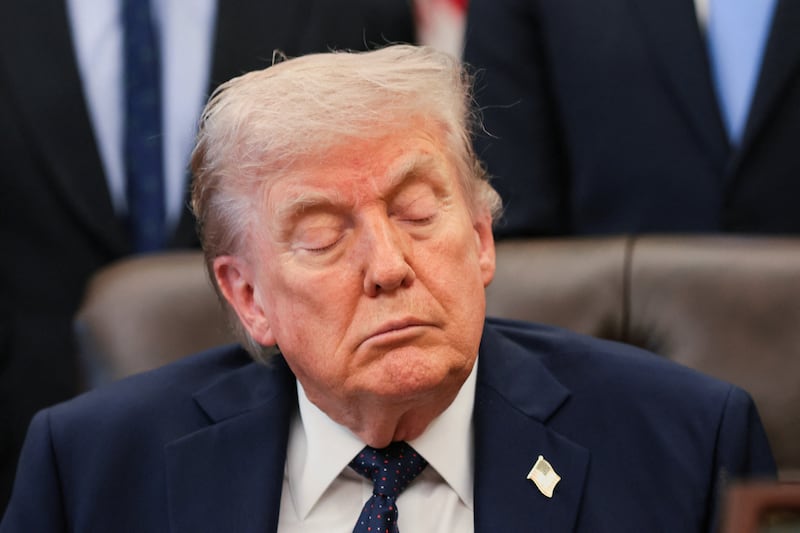
Price decreases, realistically, can never exceed 100 percent. The formula for calculating percent change, commonly taught in the seventh grade in American schools, divides the difference between the final and initial values by the absolute value of the initial value, then multiplies by 100.
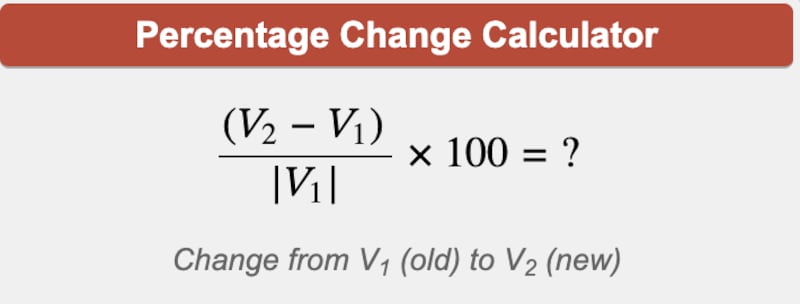
If a price drops from $600 to $100, it would be an 83.3 percent decrease—not a 600 percent decrease, as Trump and Kennedy claimed.
If a $600 drug were to drop by 600 percent, the pharmaceutical company would have to pay a customer $3,000.

Reached for comment on the president’s questionable math, White House spokesperson Kush Desai told the Daily Beast in a statement: “President Trump is right: for decades Americans were forced to pay anywhere from 100 to 1,000 percent more for the same exact prescription drugs as our peers do in other wealthy nations. President Trump pledged to put an end to hardworking Americans singlehandedly having to shoulder the costs of global pharmaceutical innovation with high drug prices, and the Administration securing 17 Most-Favored-Nations drug pricing deals with the largest pharmaceutical companies in the world speaks to how the President is delivering for American patients.”
Trump completed seventh grade at the Kew-Forest School in Queens, New York, in 1959, right before he was sent to the New York Military Academy for eighth grade after his father, Fred Trump, discovered his knife collection.
“I took a lot of heat—I’d say, 500, 600 percent. But we also say, sometimes, 50 percent, 60 percent," the near-octagenarian said at the healthcare event. “Different kind of calculation. 70, 80, and 90 percent, and people understand that better, but there are two ways of calculating it.”
Other officials close to the president have also flaunted impossible numbers to boost the administration’s claims.

In October, Dr. Mehmet Oz, the president’s administrator for the Centers for Medicare and Medicaid Services, defended the president’s absurd math during an appearance on NBC News’s Meet the Press.
“Cutting drug prices by...anything over 100 percent— wouldn’t that effectively make them free?” anchor Kristen Welker asked the former television host. “Is that a realistic goal from the president?”
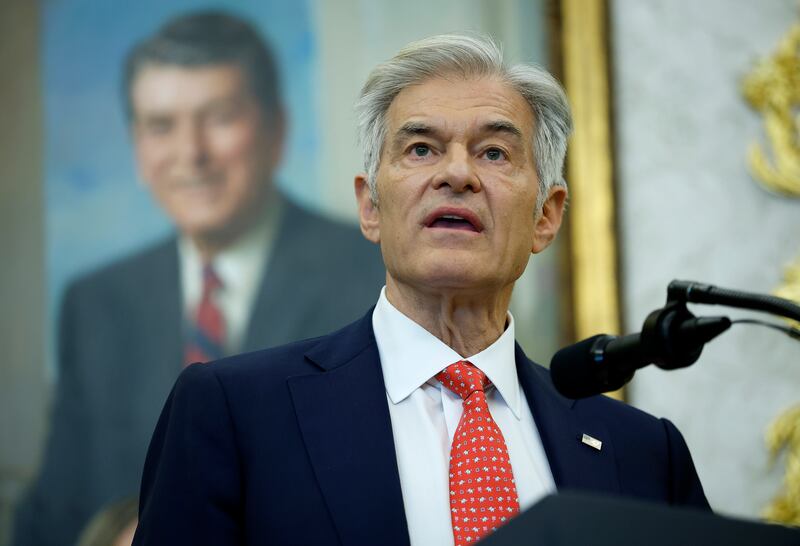
“The president does the calculation by saying, ‘OK, if a drug was $100 and you reduce it to $50, it’s 100 percent cheaper because you’re taking $50 off and left with only $50. So the amount you took off the price is equal to the amount that’s left,” Oz, 65, replied with a straight face. “They’re equal, so it’s 100 percent.”
In Oz’s example, he described a 50 percent decrease. A 100 percent decrease would equal $0.