Rising Left in the Democratic Party Killed Larry Summers' Fed Chair Chances
Larry Summers was forced out of the race to be Fed chair by the new Democratic left. By Peter Beinart.
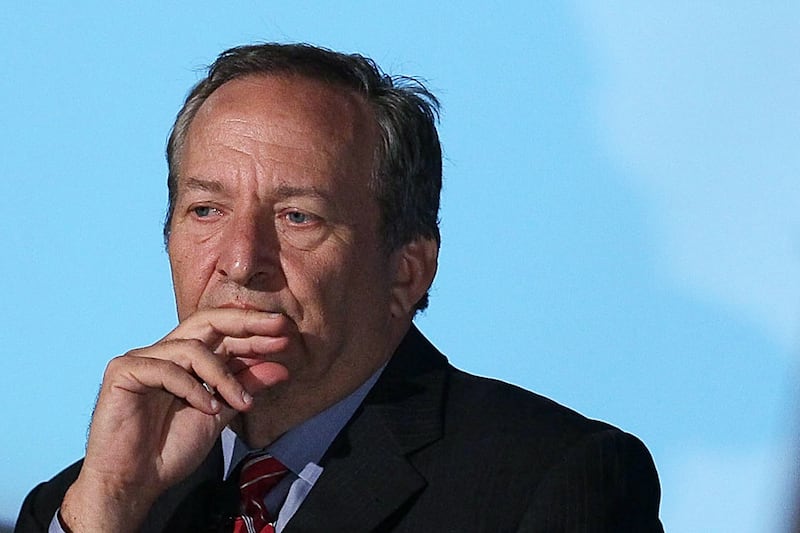
Mark Wilson/Getty
Get The Swamp newsletter delivered straight to your inbox
By clicking “SIGN UP” you agree to our Terms of Use and Privacy Policy.
Still not convinced that the Democratic Party’s becoming more anti–Wall Street? Over the last few days, in response to my essay on the new new left, some commentators have suggested that I made too much of Bill de Blasio’s success in the New York mayoral primary. After all, New York Democrats are more liberal than Democrats nationally. De Blasio faced a weak field. And he may still face problems in the general election.
OK, then. Let’s try this peg instead: Larry Summers has just dropped out of the race for chairman of the Federal Reserve.
Summers dropped out despite numerous reports that President Obama wanted to give him the job. He dropped out despite having been confirmed with 97 votes as Treasury secretary in 1999. He dropped out despite the fact that there had been minimal criticism from Capitol Hill when Obama named him to head the National Economic Council in 2009.
And despite the fact that no Fed chairman in history had ever been confirmed with less than 70 votes.
To be sure, Summers had idiosyncratic liabilities. As president of Harvard, he had made insensitive comments about women and was running against the first woman with a serious chance of chairing the Fed.
But the main reason Summers dropped out is that he became identified with deregulatory policies that were far more tolerated inside the Democratic Party in 1999—or even 2009—than they are today. Four of the 12 Democrats on the Senate Banking Committee and 19 Democrats (plus one independent) of the 54 in the full Senate had already expressed their public opposition, meaning that Obama would have had to rely for Summers’ confirmation on Republican votes. The AFL-CIO had come out against Summers. So had MoveOn, Daily Kos, Chris Hayes, Paul Krugman, and the editorial page of The New York Times. By contrast, Summers had barely any high-profile defenders outside the administration. When people did speak up in his defense, it was often on background.
What the Summers fight shows is how dramatically the financial crisis has reshaped the economic debate inside the Democratic Party. In 2008, his patron and ally, Robert Rubin, was rumored as a potential Obama running mate. Today, Rubin has largely disappeared from public view and, given his role in the deregulatory policies of the 1990s, any defense he offered of Summers would have hurt his cause. In 2006, an ambitious Democratic policy wonk like Gene Sperling could write a book that criticized liberals for being insufficiently pro business without worrying that it would hurt his chances of getting a top government job. No one would do that today.
It’s not that Wall Street no longer wields influence among Democrats. The party still relies on the financial services industry to help fund its campaigns, and its lobbyists can still shape legislation. But the danger of being too publicly associated with Wall Street has increased. Democrats who want to pass their time between government gigs and earning millions at an investment bank now have to think harder about the political risk. And regulators who coddle Wall Street have to worry more about becoming props in an Elizabeth Warren YouTube video gone viral.
Ironically, Warren may be the political loser in Summers’ decision to drop out. Had he come before her banking committee, their duel would have dominated cable news. And he would have served as the perfect foil for her populist challenge to the Wall Street branch of her party. Hillary Clinton, by contrast, would have had to explain on the stump whether she supported confirming as Fed chairman the man her husband had picked to run the Treasury Department.
The Democratic rebellion against Summers, like the Democratic rebellion against military action in Syria, bespeaks a deep frustration that party elites still share the economic and foreign policy assumptions that helped cause the disasters of the last decade. The next battle may be the Obama administration’s desire for “fast track” authority to help push through giant new trans-Atlantic and trans-Pacific free trade deals. If I were Hillary Clinton, I’d come out against it now.
See more of our coverage in your search results.

Got a tip? Send it to The Daily Beast here.
Unlock a year of full access to The Daily Beast for $35.
Monthly
$1
First month then $5.99/month
Annual
$35
First year then $59.99/year
Premium
$79
First year then $119.99/year
*Substack access provided by the next business day, using your subscription email. Choosing the Premium plan constitutes your permission to share your subscription email with Substack and your agreement to Substack’s Privacy Policy.
Looks like you already have a subscription!
- Account (completed)
- Payment (completed)
- Confirmation (completed)
You're all set!
Thanks for subscribing.
- 1Account
- 2Payment
- 3Confirmation
Sign in or create an account
Register below to read this article for free or subscribe
to unlock unlimited access to The Daily Beast.
Monthly
$1
First month then $5.99/month
Annual
$35
First year then $59.99/year
Premium
$79
First year then $119.99/year
*Substack access provided by the next business day, using your subscription email. Choosing the Premium plan constitutes your permission to share your subscription email with Substack and your agreement to Substack’s Privacy Policy.
Already have an account? Sign In
Looks like you already have a subscription!
- Account (completed)
- Payment (completed)
- Confirmation (completed)
You're all set!
Thanks for subscribing.
- 1Account
- 2Payment
- 3Confirmation