
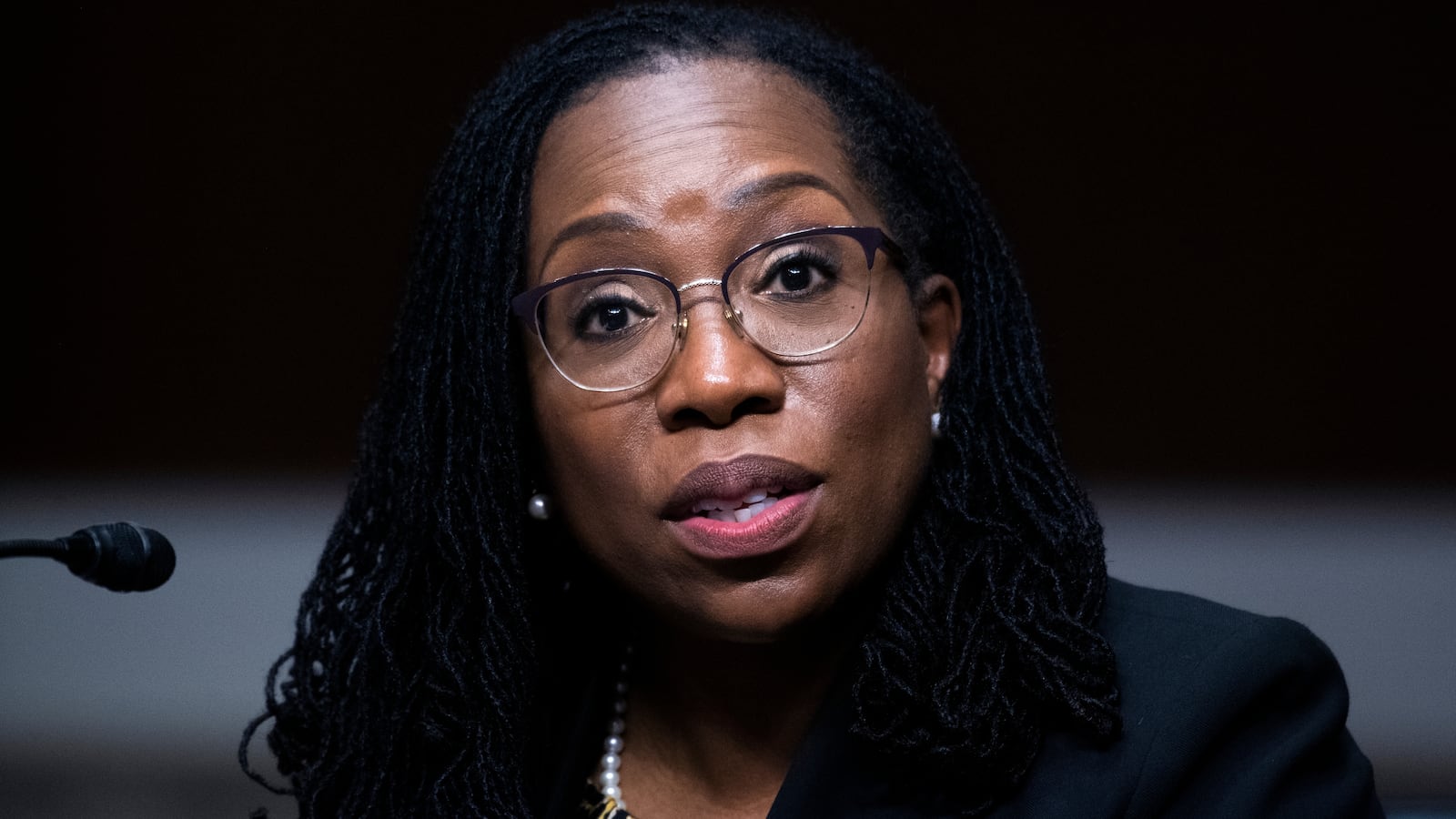
A new study has bolstered a scathing dissent from liberal Supreme Court Justice Ketanji Brown Jackson that warned the court appeared to favor the rich.
The study, published Monday by the National Bureau of Economic Research, investigated whether the Supreme Court has contributed to rising income inequality by ruling in favor of policies that favor wealthy parties.
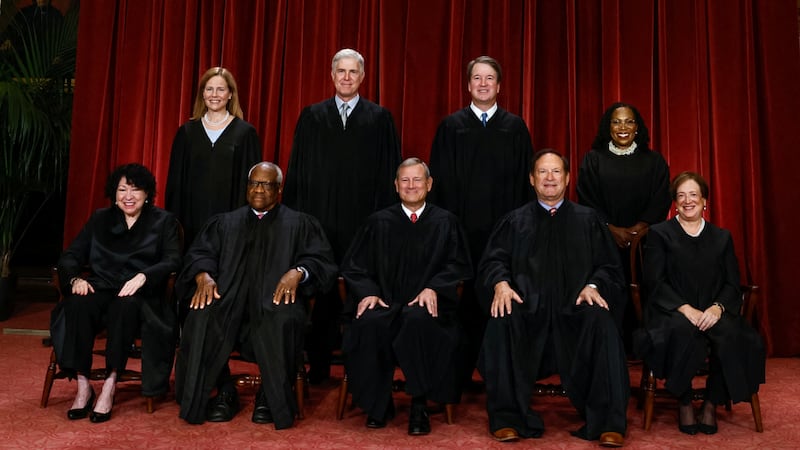
Its authors—two academics from Columbia University in New York and one from Yale University—found that in cases pitting the rich against the poor, Republican appointees were far more likely than their Democratic colleagues to side with the wealthier party.
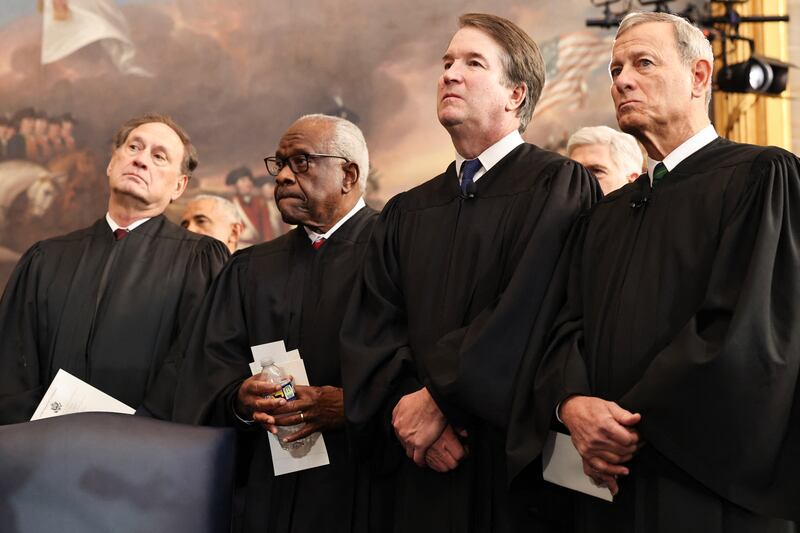
Back in 1953, Democratic and Republican appointees were statistically indistinguishable on the issue, with justices appointed by members of both parties favoring the rich in 45 percent of cases on average.
By 2022, the average Republican-appointed justice was voting in favor of the rich a whopping 70 percent of the time.
The average Democratic justice cast a “pro-rich” vote—which was defined as a vote that would directly shift resources to the party that was more likely to be wealthy, including votes that supported businesses over consumers or workers—just 35 percent of the time.
“The results reveal a steady increase in polarization, mostly due to Republican appointees whose decisions rise from about 50 percent pro-rich share to a 70 percent pro-rich share over the course of 70 years,” the study’s authors, Andrea Prat, a Columbia economics professor, Jacob Spitz, a Columbia PhD student, Fiona Scott Morton, a Yale economics professor, and wrote.
The findings also supported a June dissent authored by Brown Jackson, according to The New York Times.
The justices held 7-2 that oil and gas companies had legal standing to challenge California’s environmental regulations requiring automakers to produce more electric vehicles and fewer gasoline-powered ones.
“This case gives fodder to the unfortunate perception that moneyed interests enjoy an easier road to relief in this Court than ordinary citizens,” Brown Jackson wrote. “I worry that the fuel industry’s gain comes at a reputational cost for this Court, which is already viewed by many as being overly sympathetic to corporate interests.”
That perception could be contributing to an overall drop in public confidence in the court, according to the Times. The Daily Beast has reached out to the Supreme Court for comment.
The court’s favorability rating has plunged by 22 points over the past five years, from 70 percent in 2020 to a near-record low 48 percent late last year, the Pew Research Center reported in September.

And although a vast majority of Americans, or 86 percent, think the justices should be non-partisan, 56 percent said the justices were doing only a fair or poor job of keeping their political views out of their legal decision-making.