Shelly Yachimovich’s Balancing Act
Brent Sasley on the Israeli Labor Party's new look and whether leader Shelly Yachimovich can hold it together.

The Labor Party held its primaries on Thursday. The results give leader Shelly Yachimovich an opportunity to continue claiming the center by playing off the rightward shift in Likud, but they also pose some difficulties for her internally and on foreign policy.
I’ve argued before in these pages that Yachimovich is playing a smart long game, carefully reconstructing Labor and avoiding issues that are overly controversial and of less interest to the Israeli public at this moment. She has channeled Israelis’ disenchantment over growing income inequality, rising prices, and a general sense that the country’s drift from its former collectivist ethos is not necessarily a good thing (a feeling not shared by everyone, to be sure). These sentiments were best captured by last year’s “tent” protests, and Yachimovich has successfully built on them.
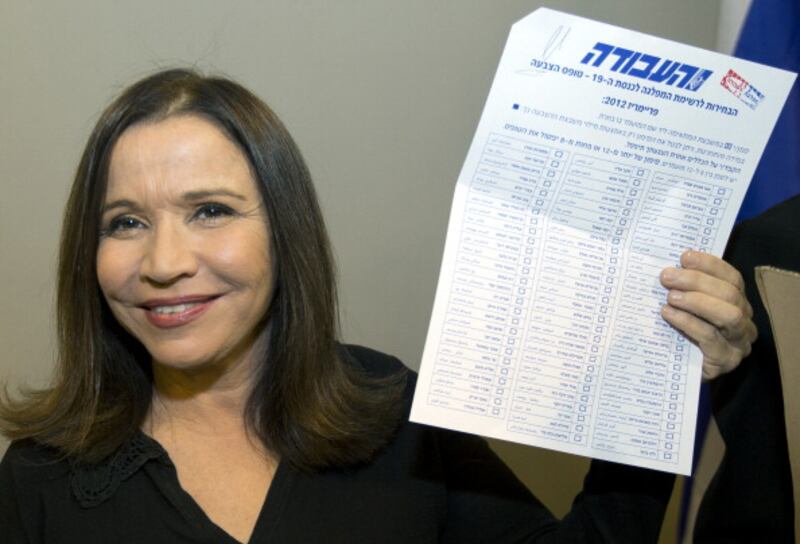
The primary enhanced her ability to campaign on this issue in a way no other party can. In second place on the electoral list is Isaac Herzog, who’s long been identified with the more liberal social wing of the party. In third spot is Amir Peretz, former chairman of the Histadrut, the giant labor federation.
Cementing the image of Labor as now focused on socio-economic issues are the spots given to two young leaders of the social protests: Stav Shaffir was elected to ninth place and Itzik Shmuli, former president of the National Union of Students, took 12th. Supplementing them are Merav Michaeli, a feminist activist, in fifth place and Mickey Rosenthal, a well-known journalist, in 13th place.
All of this allows Yachimovich to claim her party is the only genuine alternative to Likud. But Israeli party politics is known for being a sharp-elbowed game. Particularly since the 1990s, parties have become unstable in the sense that challengers are always campaigning against the contemporary leader.
Get the best of The Beast delivered right to your inbox
By clicking “SUBSCRIBE” you agree to our Terms of Use and Privacy Policy.
This undermines party unity, shifts everyone’s attention away from policy, and contributes to a poor image of the party in the popular mind. Although Yachimovich has retained a strong grip on party politics, even she has suffered from this: Amir Peretz is considered a rival for control over the party’s ideas—she wants to keep the party centrist, while he wants to move it more left. There have also been reports of tensions between Yachimovich and Michaeli.
Indeed, Israeli journalist Lahav Harkov tweeted as the results came in that “A lot of people [Yachimovich] didn’t want got in high spots.” It’s not clear that Yachimovich will be able to avoid these internal disputes, or that potential rivals and dissidents won’t challenge her. Ari Shavit, writing at the start of the Labor leadership campaign last year, noted that Yachimovich has enough drawbacks—such as being too confrontational or ill-informed about policy issues—that raise concerns about whether she can manage domestic party affairs.
At the same time, Yachimovich has generally avoided commenting on the peace process or conflict with the Palestinians. But if she’s going to remain successful she’ll have to address it sooner rather than later. The U.N. General Assembly’s recognition of Palestine as a non-member state yesterday along with the Likud’s rightward shift will make it a more important policy issue than it would otherwise have been.
So far, when she has commented on it, she’s tried to stay within the current consensus: no Right of Return, annexation of major settlement blocs, and Jerusalem as Israel’s undivided capital. But Yariv Oppenheimer, director of Peace Now, was elected to the unrealistic 27th slot, making it unlikely he’ll enter the Knesset. This means Labor has fewer people with credibility and a record on the issue. While Peace Now has long been associated with the “delusional” left, it’s more careful policies in recent years have put it in a good position to make stronger arguments.
Yachimovich still has her work cut out for her. Yesh Atid and the Tzipi Livni Party, her main contenders in the center and center-left, have not been polling so well. But to be a real challenge or opposition to a Likud government, she’ll have to maintain party unity and continue to attract the bulk of the centrist and leftist vote. Not an easy task in the rough-and-tumble world of the Israeli political system.
See more of our coverage in your search results.

Got a tip? Send it to The Daily Beast here.
Register below to read this article for free or subscribe
to unlock unlimited access to The Daily Beast.
Monthly
$1
First month then $5.99/month
Annual
$35
First year then $59.99/year
Premium
$79
First year then $119.99/year
*Substack access provided by the next business day, using your subscription email. Choosing the Premium plan constitutes your permission to share your subscription email with Substack and your agreement to Substack’s Privacy Policy.
Already have an account? Sign In
Looks like you already have a subscription!
You're all set!
Thanks for subscribing.