A new study reveals the staggering cost of Donald Trump’s war in Iran on U.S. households.
Trump started the war in February without congressional approval. Since then, energy prices have spiked, and the war has no end in sight.
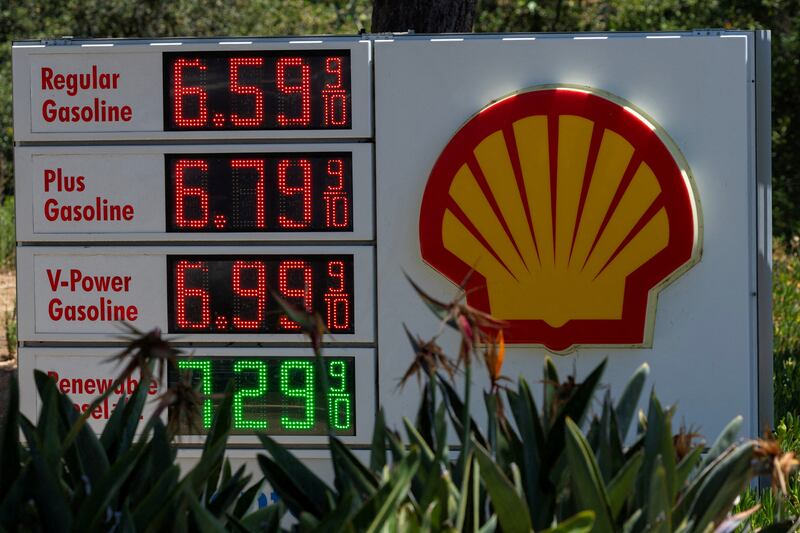
According to Moody’s Analytics, the war has cost U.S. households $100 billion overall so far. That amounts to nearly $750 a household.
That is mostly down to rising energy prices. According to AAA, the national average price for regular gasoline has climbed above $4.50 a gallon, topping $5 in seven states, following Trump’s decision to wage war in Iran and the resulting closure of the Strait of Hormuz.
Meanwhile, oil prices have surged by about 35 percent.
Although Trump has brushed aside fears over rising prices—saying the rise in cost was “peanuts” in comparison to the threat of Iran developing a nuclear weapon—polls have shown that the impact of rising prices is hitting U.S. households hard.
A May survey, conducted by Public First for Politico, found that 53 percent of Americans say the cost of living is the worst they can remember, up from the 46 percent recorded in November.
Mark Zandi, Moody’s chief economist, said in a post on X that the deeply unpopular war in Iran has been a “big economic blow” for Americans.

He added that the tax cuts in Trump’s Big Beautiful Bill had cushioned some of the impact of the rising prices, until now.
“As of May 16, the bigger tax refunds Americans have received this year no longer cover the higher costs of gasoline, diesel, and jet fuel caused by the war,” he wrote.
So overall, Zandi said, households are feeling more financial pressure—especially middle- and lower-income families who are already struggling.
“The financial pressure is thus mounting quickly, particularly on already hard-pressed middle and lower-income households,” he wrote.
It comes as the personal savings rate fell to 2.6 percent in April, down from 5.8 percent a year earlier, according to data from the Bureau of Economic Analysis, suggesting households are setting aside less money as prices rise.

For Zandi, the trend is concerning, particularly if fuel prices remain elevated. He said lower savings leave families with less of a financial cushion to absorb higher costs, forcing them to cut back on spending and potentially further slowing the economy.
“With the saving rate about as low as it ever goes, unless the war ends soon and energy prices come down, they will have little choice but to rein in their spending, weighing further on the already sagging economy,” he wrote.
The White House has insisted the price of energy will “plummet” once the Strait of Hormuz reopens.
White House spokeswoman Taylor Rogers told the Daily Beast: “The President remains laser focused on keeping the American people safe, lowering costs for working families, and making our country greater than ever before.
“President Trump has delivered thousands of dollars in tax relief for the average American family and brought oil and gas prices down to multi-year lows at record speed, and when the Strait of Hormuz fully opens, these energy prices will plummet once again.”