Tension Rises, But Israel and Egypt Stick to Economic Pact
Despite considerable tension, Egypt and Israel are largely maintaining their economic partnership.
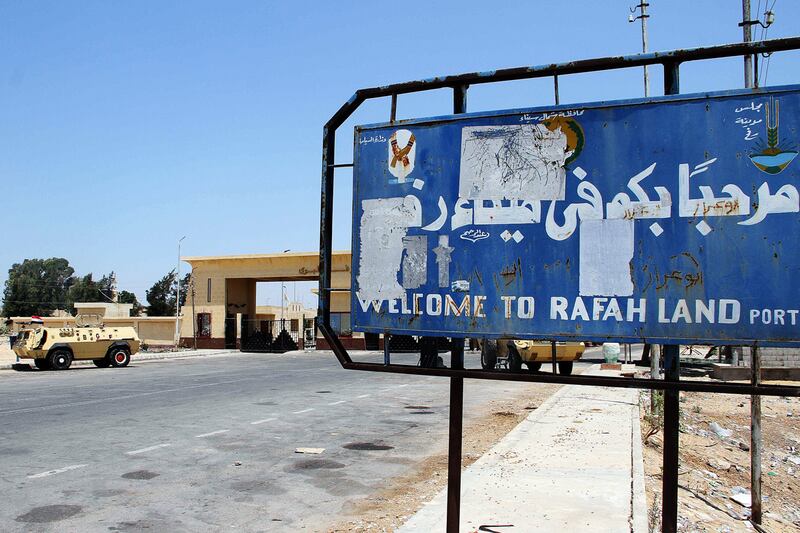
Ahmed Mahmoud, AFP / Getty Images
Get the Beast Digest newsletter delivered straight to your inbox
By clicking “SIGN UP” you agree to our Terms of Use and Privacy Policy.
In the year since Hosni Mubarak’s fall from power, there’s been no shortage of animosity between Israel and Egypt. Violence along the Sinai border and protests at Israel’s embassy in Cairo last year have created considerable tension between the two countries. Yet as this tension has mounted, Israel and Egypt have managed to maintain some semblance of economic partnership—something that analysts point to as a positive sign for bilateral relations.
Indeed, despite its harsh rhetoric and political misgivings about Israel, the Islamist-led government of President Mohamed Morsi has made it a priority to repair Egypt’s troubled economy. And by and large, Morsi and his allies appear reluctant to abandon a profitable trade relationship, which helps create jobs and allows Egypt a foothold into the U.S. market—especially for textiles.
Last month for instance, Egyptian Prime Minister Hisham Qandil said his country wanted to maintain a seven-year-old textile agreement with Israel. “A lot of people are making good business,” Qandil told Bloomberg News. “We want to make sure we do the right thing for them to flourish.”
The agreement eliminates duties on a variety of Egyptian exports—jackets, towels, and pants, among other things—to the American market, provided that roughly 10 percent of these products consist of Israeli components, among other provisions. And while some Egyptian officials have said they would like to lessen the percentage of required Israeli materials, Mohamed Abu Basha, an economist at EFG Hermes, an Egypt-based regional investment bank, said this has more to do with economics than anything else. “It’s hard to see [the agreement] vanishing overnight,” he said.
Over the past seven years, analysts say the agreement has been good for both countries. Israel has benefitted from cheap Egyptian labor and the image of normalized business relations with an Arab neighbor. For Egypt, the deal has generated jobs and helped exports remain resilient throughout the global financial crisis, said Magda Kandil, the former executive director of the Egyptian Center for Economic Studies.
When the agreement began in 2005, 397 Egyptian companies benefitted from it. Now that list has nearly doubled to include 700 firms across the country, according to the Egyptian government. Last year, Egypt exported more than $20 million worth of textiles through these firms, a figure that has grown every year since the deal was signed.
Yet not every economic agreement has stood the test of time. In April, Egypt ended a 2005 deal to export natural gas to Israel. For Israelis, the cancellation was significant not only for its symbolism; the Jewish state received nearly half of all its natural gas from Egyptian sources. Yet for lawmakers in Cairo, the cancellation was an obvious plus: Not only did Egypt need the natural gas domestically, but the agreement was seen as a corrupt remnant of the Mubarak era.
“Israeli trade with Egypt since the cancellation of the gas deal is minimal,” said Ehud Yaari, an analyst at the Washington Institute for Near East Policy, in an email. “[B]ut it is politically important to maintain trade relations and the [agreement] has proven to be the best route.”
See more of our coverage in your search results.

Got a tip? Send it to The Daily Beast here.
Unlock a year of full access to The Daily Beast for $35.
Monthly
$1
First month then $5.99/month
Annual
$35
First year then $59.99/year
Premium
$79
First year then $119.99/year
*Substack access provided by the next business day, using your subscription email. Choosing the Premium plan constitutes your permission to share your subscription email with Substack and your agreement to Substack’s Privacy Policy.
Looks like you already have a subscription!
- Account (completed)
- Payment (completed)
- Confirmation (completed)
You're all set!
Thanks for subscribing.
- 1Account
- 2Payment
- 3Confirmation
Sign in or create an account
Register below to read this article for free or subscribe
to unlock unlimited access to The Daily Beast.
Monthly
$1
First month then $5.99/month
Annual
$35
First year then $59.99/year
Premium
$79
First year then $119.99/year
*Substack access provided by the next business day, using your subscription email. Choosing the Premium plan constitutes your permission to share your subscription email with Substack and your agreement to Substack’s Privacy Policy.
Already have an account? Sign In
Looks like you already have a subscription!
- Account (completed)
- Payment (completed)
- Confirmation (completed)
You're all set!
Thanks for subscribing.
- 1Account
- 2Payment
- 3Confirmation