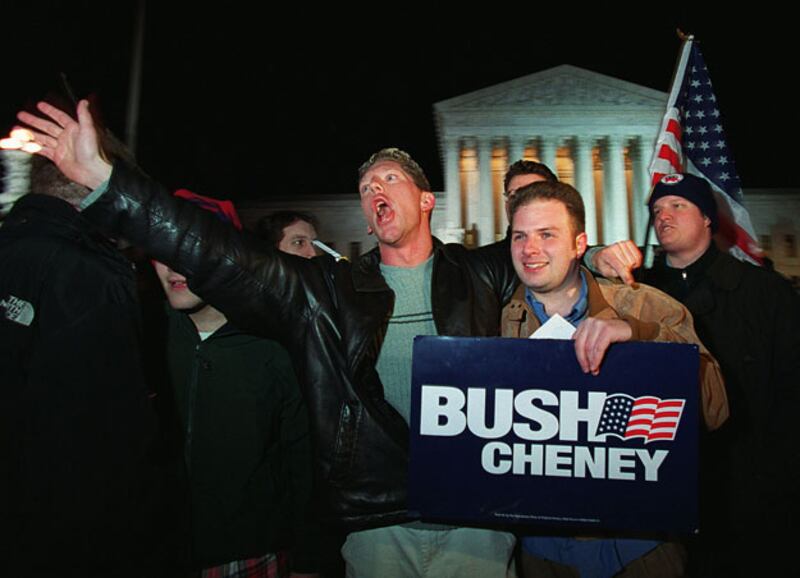
In a 5-4 decision, the U.S. Supreme Court ruled in Bush v. Gore that the contested Florida recount of dimpled chads, hanging chads and pregnant chads should cease. The argument: Standards for recounting varied from county to county, placing more value on some votes than others. Though Al Gore received more popular votes, George W. Bush won the electoral vote. But questions about the legitimacy of the decision lingered, haunting W's two terms as president. And a decade of hyperpartisanship was born.
Manny Ceneta, AFP / Getty Images
The world stopped turning that ordinary morning when the skies over New York City, Washington, D.C., and Shanksville, Pennsylvania, filled with smoke and sorrow. The tears of a nation changed the flow of life around the world. America's national anthem was played at Buckingham Palace, on the streets of Paris, and at Berlin's Brandenburg Gate. We awoke from oblivion, and were united. From many, one. And George W. Bush became the president we needed.
Doug Canter, AFP / Getty Images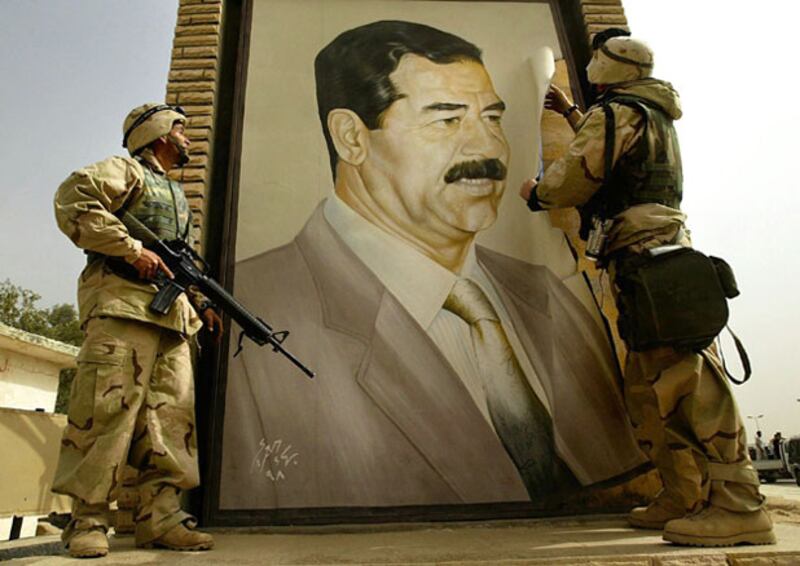
Oct. 7, 2001
Photo Credit
Hopes that Bush might follow a humble foreign policy were buried in the rubble of 9/11. Just 26 days after the attacks, Operation Enduring Freedom began with military strikes against Al Qaeda terrorist training camps and Taliban military installations a world away. Joined by Great Britain, and with the support of allies and nations around the world, the U.S. brought the fight to the caves of Afghanistan. The global war on terror expanded with the bombing of Baghdad on
March 20, 2003
Operation Iraqi Freedom ended the barbarous 24-year rule of Saddam Hussein. His statue was toppled and purple ink-stained fingers were raised, a new monument to hope for the future.
Heroes were made, and lost. And the fighting continues today.

The worst of the destruction that followed Katrina in Mississippi and Louisiana was not from the still-deadly Category 3 hurricane, but from the surge of storm water that caused the levees in New Orleans to fail (not to mention a surge of human weakness that caused men to fail). There were rays of hope amid the horror, as neighbors helped neighbors when elected leaders fell short. The media opened our eyes as the waters receded, but also clouded our view. And the debate about the role of government grew louder.
Ben Sklar / AP Photo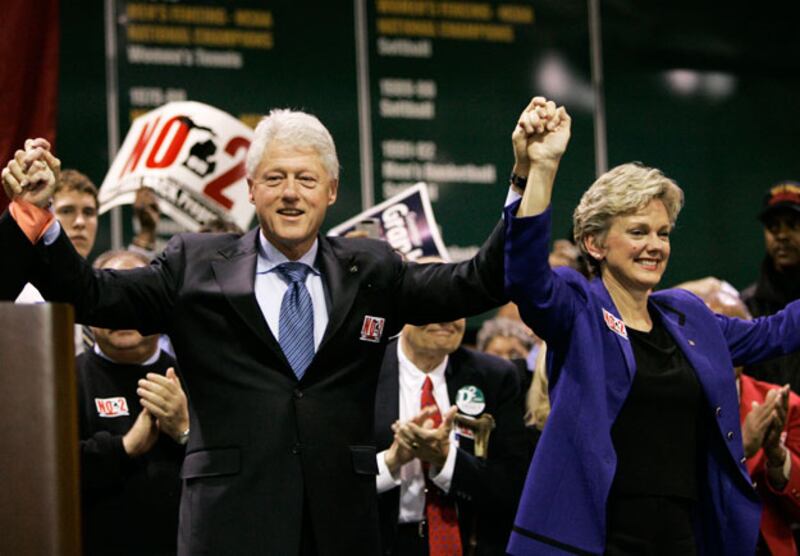
A decline in the president's popularity, fatigue over fighting the wars abroad and at home, and promises to drain the swamp helped the Democratic Party sweep to victory in the midterm elections. The Democrats gained control of both the U.S. House and Senate, and won a majority of governorships. The age of conservatism was thought to be dead. And Nancy Pelosi made history, taking the gavel as the first female Speaker of the House. (She also later showed how short-lived triumph can be).
Carlos Osorio / AP Photo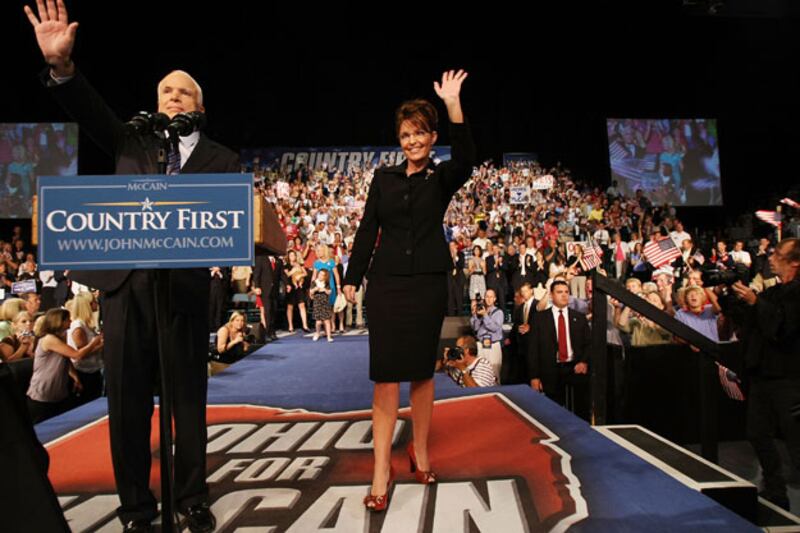
In an unexpected move even for a maverick, John McCain introduced Sarah Palin as his pick for VP, and the nation soon learned the finer points of hockey moms and pit bulls with lipstick. From the Wasilla warrior's first stiletto-heeled step onto the national stage, Palin ignited a firestorm of support and savage criticism. With her pitchfork populism, plainspeak and "prom hair," she befuddled metro-intellectuals, but gave hope to the heartland and even a few Hillary fans. Since then, she built one-name fame and a new media empire, while collecting political chits. Turning toward 2012, a nation wonders: Will she, or won't she?
Mario Tama / Getty Images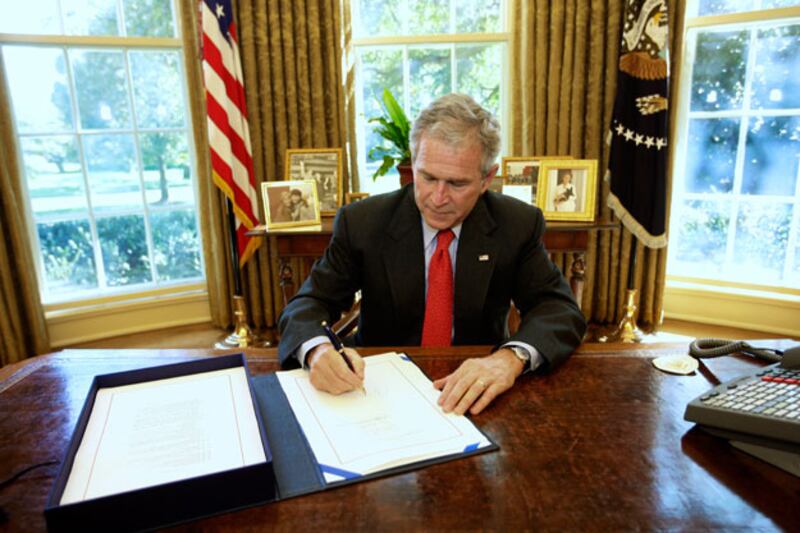
Perhaps no event other than a world at war caused as many dreams to die as the financial meltdown of 2008. Building for decades—the unintended consequence of manipulations of the housing and finance markets by a few—risk was spread among the many. The world economy was in jeopardy of collapse, and the United States, once thought too big to fail, faced that very fate. With bipartisan support from Congress and both candidates seeking the Oval Office, President Bush signed a bill to bail out the financial system, bringing some stability to the U.S. and world markets but instability to the political process. And while recovery is still long and slow, we appear to have crawled out of a truly catastrophic hole. For now.
Charles Dharapak / AP Photo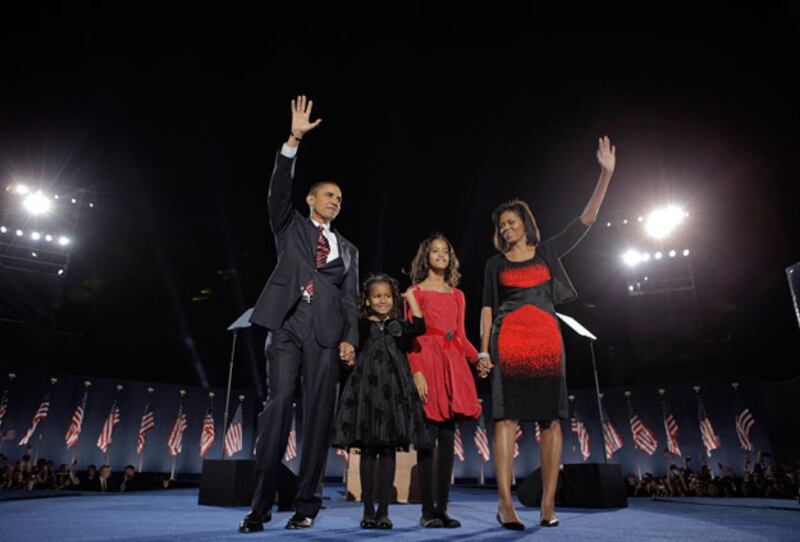
John F. Kennedy was sworn in, martial law was declared after race riots in the South, and the Viet Nam War began when the first American helicopters arrived in Saigon—all in the year Barack Obama was born. Forty-seven years later, history was made again with the election of a man who did not fit any of the molds of his predecessors. In his acceptance speech, Obama promised: "...through hard work and sacrifice, each of us can pursue our individual dreams but still come together as one American family, to ensure that the next generation can pursue their dreams as well." Reality does not yet match the dreams.
Jae C. Hong / AP Photo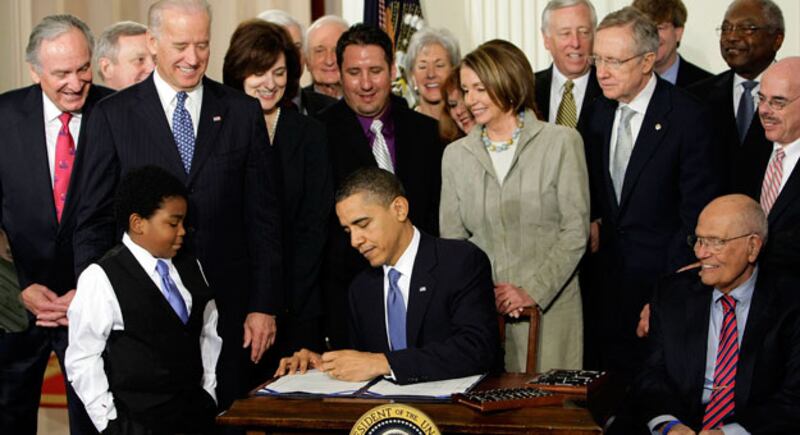
For the second time in American history, Boston was the birthplace of a revolutionary movement. With the balance of votes in Congress on the line, and the threat of a major expansion of government's role in health care looming, Republican Scott Brown was elected to the Senate seat held for 46 years by the late "liberal lion" Ted Kennedy. Buoyed by grassroots support, online money bombs, and the newly awakened Tea Party movement, Brown became the "man who could stop Obamacare"—albeit temporarily. Shock waves reverberated that day through the halls of Congress, gaining momentum with Rick Santelli's later rant on CNBC to "Stop spending! Stop Spending! Stop spending!" and reaching a crescendo in the midterm "shellacking." The Tea Party movement that announced its arrival with Brown's election stands poised to shape the direction of the Republican Party—and American politics—in 2012.
J. Scott Applewhite / AP Photo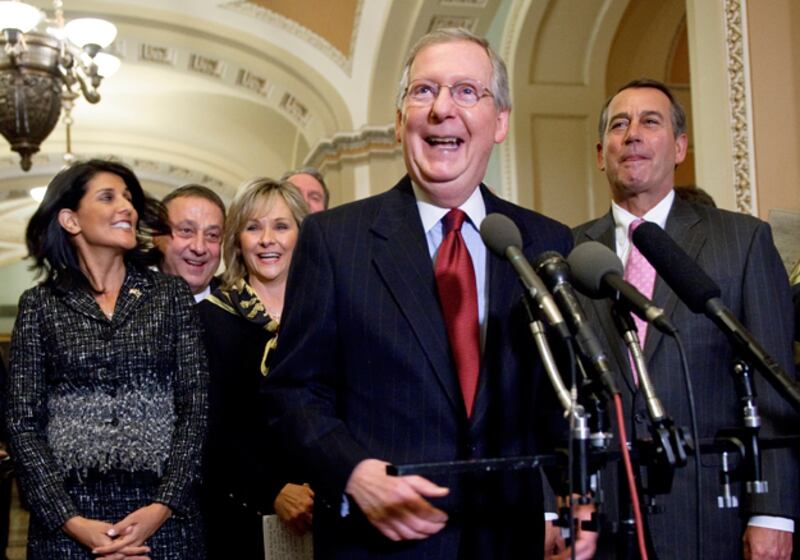
No single piece of legislation was more controversial in 2010 than "Obamacare." Intended to provide health insurance coverage for all, the measure, signed into law by the president last spring, gives the federal government an unprecedented role in what kind of health care Americans get and how much that care will cost. With public sentiment against the mandate growing, questions of constitutionality being debated in court, and Republicans in control of the nation's purse strings in the U.S. House, the battle over the proper role of government in determining health care choices will continue through 2011 and beyond.
Scott J. Ferrell, Congressional Quarterly / Getty Images