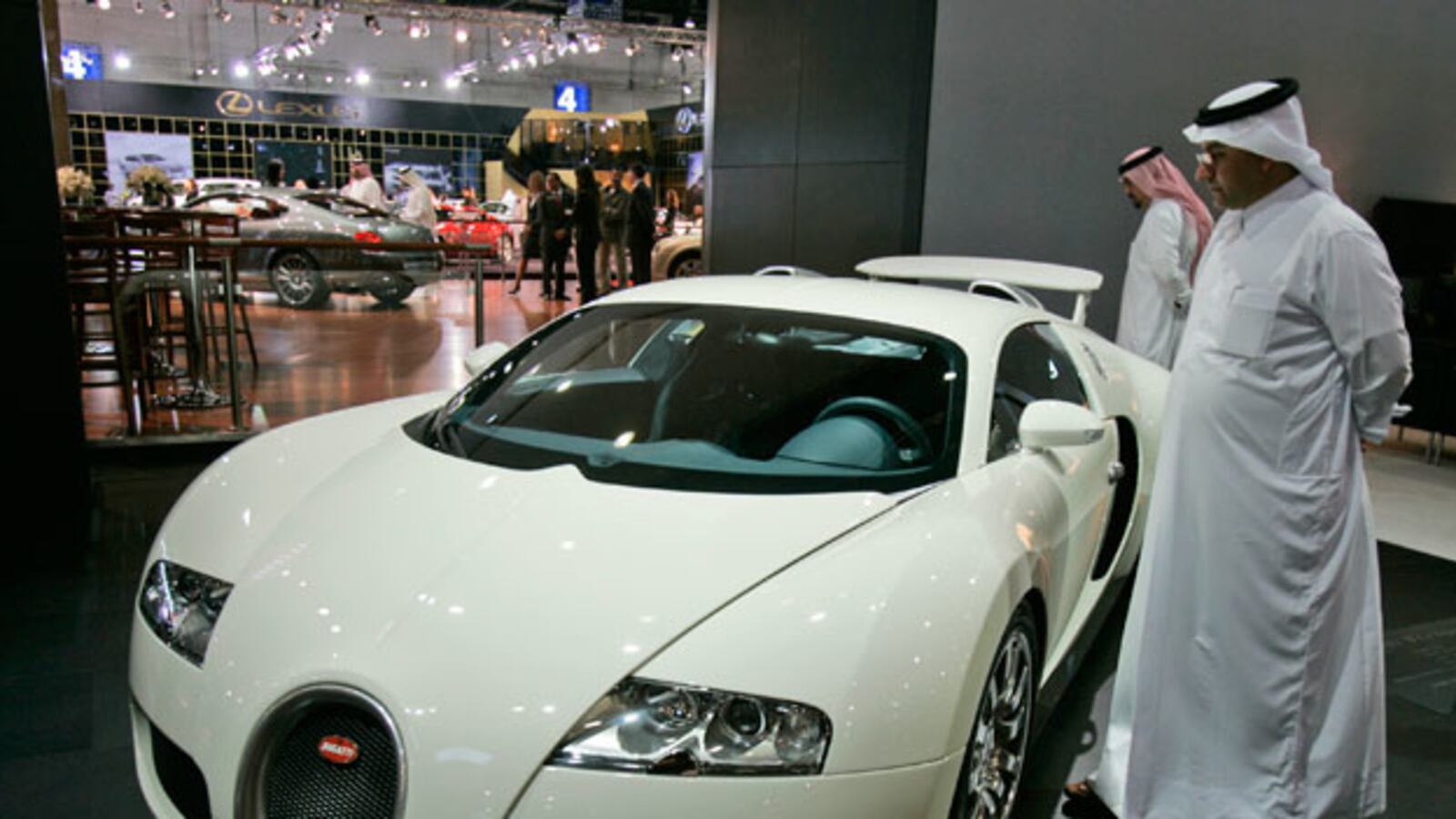
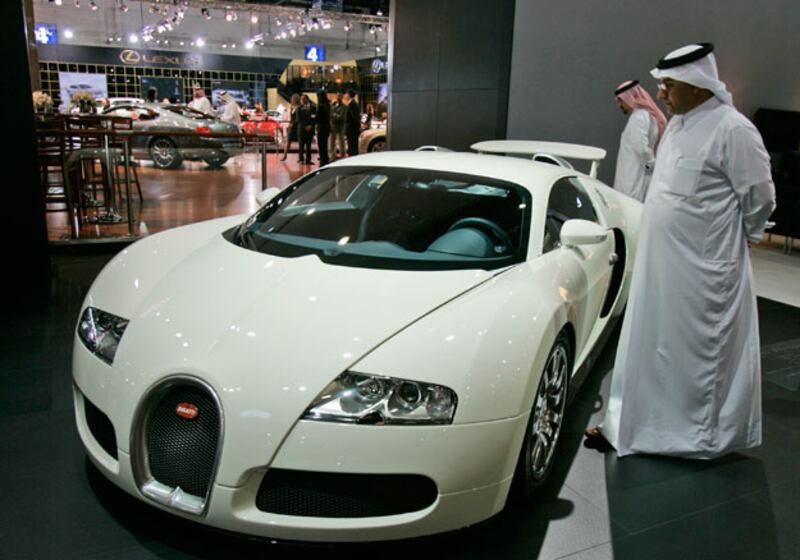
The legendary French car company established by engineer and racer Ettore Bugatti and owned by Volkswagen is now officially the maker of the world’s fastest production car. The 1,200-horsepower Bugatti Veyron 16.4 Super Sport broke the speed record for a production car on June 24, clocking a two-way average speed of 276.8 mph. The Super Sport is an update to the standard Veyron 16.4, Bugatti’s flagship model that held the world record in 2007 with a top speed of 253 mph. Even Bugatti engineers were impressed by the Super Sport’s speed; Chief Engineer Wolfgang Schreiber said, “We took it that we would reach an average value of 264 mph, but the conditions today were perfect and allowed even more.” The starting price of the Veyron, of which less than 300 have sold since its introduction in 2005, is rumored to be $2.5 million.
Kamran Jebreili / AP Photo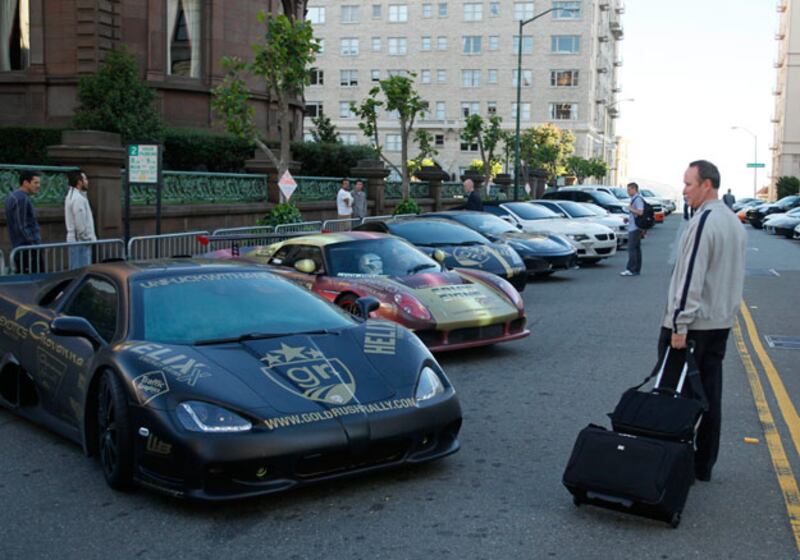
In September 2007, Shelby SuperCars’ Ultimate Aero became the first American-made car since the 1967 Ford GT40 to be anointed as the world’s fastest production car. On a two-lane road in Washington state, with a 71-year-old test driver behind the wheel, the Ultimate Aero recorded an average top speed of 256.19 mph. With an 1,183-horsepower engine and a 0-to-60 time of 2.78 seconds, the Ultimate Aero had a starting price of $654,400. Another Ultimate Aero claim to fame: Jay Leno reviewed the car in 2008. “The cool thing is, it’s a real car, it’s made in America using American components and it’s the fastest car in America. We’ve now taken that away from the Europeans. It’s like we’ve won the World Cup,” said Leno.
Eric Risberg / AP Photo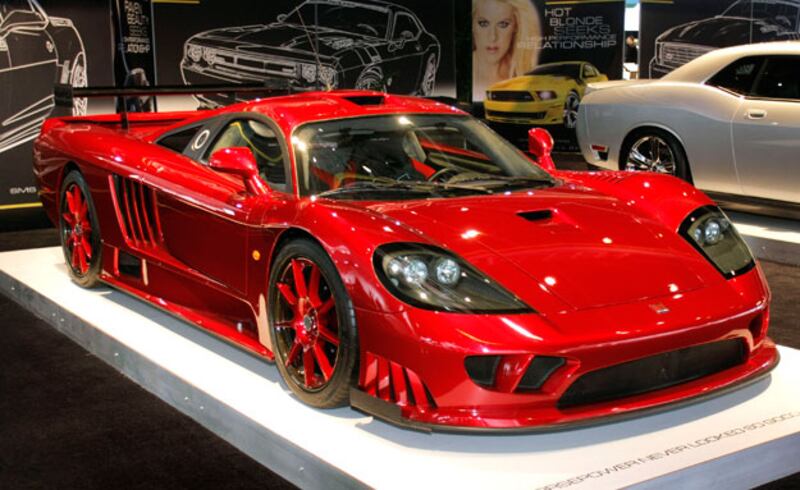
A $555,000, two-door, American-made coupe with a top speed of 248 mph, Saleen’s S7 was a limited-edition sports car built by hand in 2005 as an update to the original S7 and one of the few street-legal cars with provenance as an actual race car. The car’s cabin is asymmetrical, with a custom-fit driver’s seat facing center to concentrate weight toward the middle and improve visibility. It bears a twin-turbo V8 engine configured to the middle of the car, meaning there is trunk space on both ends of the vehicle.
Bill Pugliano / Getty Images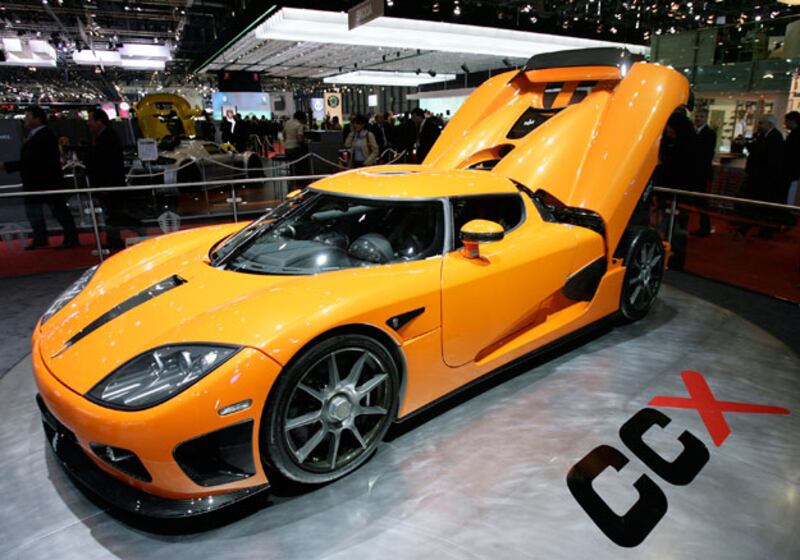
Swedish manufacturer Koenigsegg, launched by then-22-year-old Christian von Koenigsegg in 1994, debuted the CCX in 2006 as an update to its CCR model. It’s one of the rarest cars in the world, with only 25 made each year and just 18 sold in 2009. The sports car boasts a top speed of 250 mph and 806 horsepower. It’s also well known as one of the prettier supercars on the market, though the company is not all about speed and looks. Koenigsegg has committed itself to manufacturing greener sports cars. The CCXR, trumped as the first green supercar, is a derivation of the CCX, but with an engine that can run on biofuel and an estimated top speed of 250 mph.
Martial Trezzini / AP Photo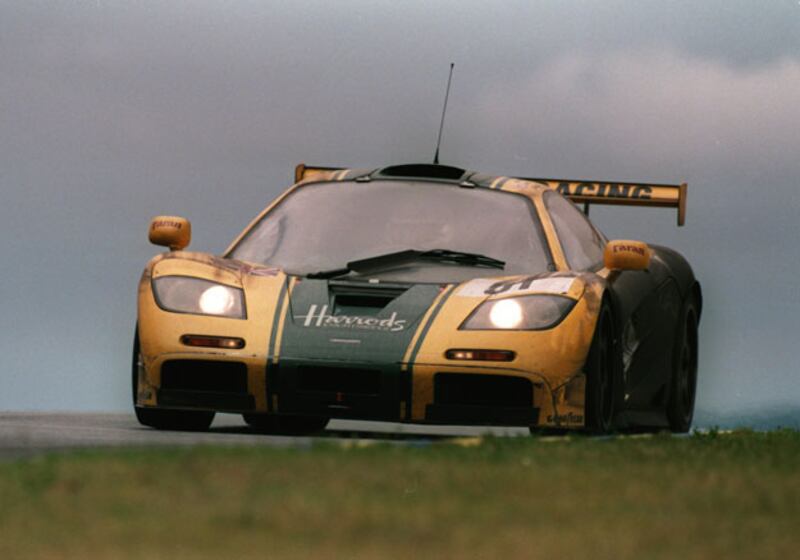
The F1 set the world record for the fastest production car in March 1998 with a speed of 240.1 mph. At the time, it was also the most expensive and most powerful production car, and the first road car to have an internal framework made completely out of carbon fiber-reinforced plastic. Only 106 of the three-seater coupe were ever produced. Following the launch of the F1, McLaren developed three versions of it for racing—in 1995, 1996, and 1997. The F1 GTR placed first in Le Mans in 1995 and in the 1996 All-Japan Grand Touring Car Championship.
Mike Cooper / Allsport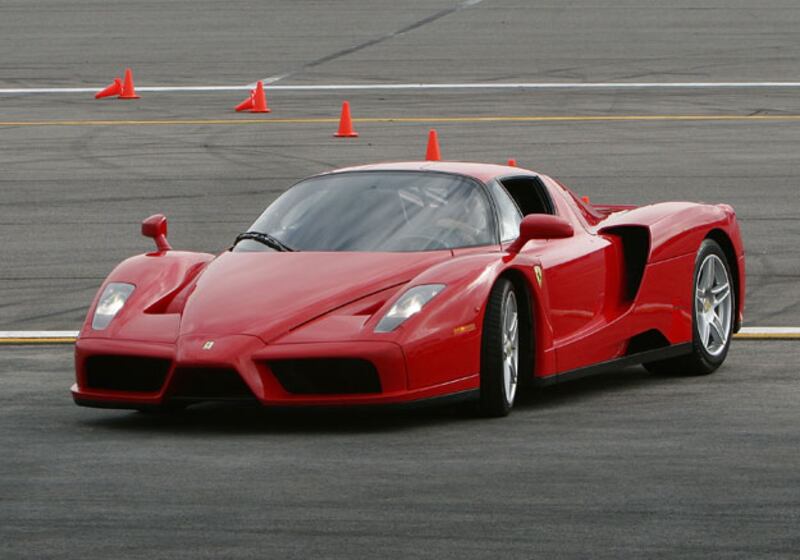
Named for the company’s founder, Enzo Ferrari, the two-seater sports car was first produced in 2002. Only 400 were ever made; 349 were in the initial limited-production run, an additional 50 were manufactured due to demand, and one more was built specifically to be auctioned at Sotheby’s Maranello Auction in 2005 to benefit Indian Ocean Tsunami survivors. The Enzo has a top speed of 226 mph and can climb to 100 mph in 6.6 seconds. Its original list price was nearly $660,000, but now trades at values close to $1 million. Of course, Enzo has a fast pedigree—of the 27 cars that have held the Guinness record for fastest production car, six have been Ferraris.
Charley Gallay / Getty Images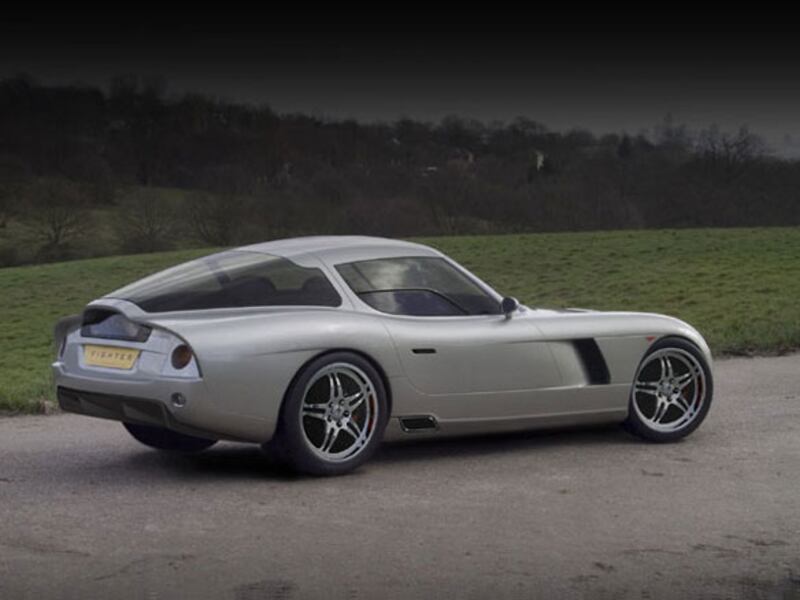
Debuting around the same time as the Bugatti Veyron, the Bristol Fighter T was viewed by many supercar aficionados as a rarer offering. Bristol claims the car could reach speeds as high as 270 mph, but is electronically limited to 225 mph, and can reach 62 mph in 3.5 seconds. Under its hood: a twin turbo-charged, 8-liter, 10-cylinder engine. The built-by-hand coupe is available for a starting price of about $535,000. The total number of Fighter Ts that have been manufactured or sold has never been published.
Bristol Cars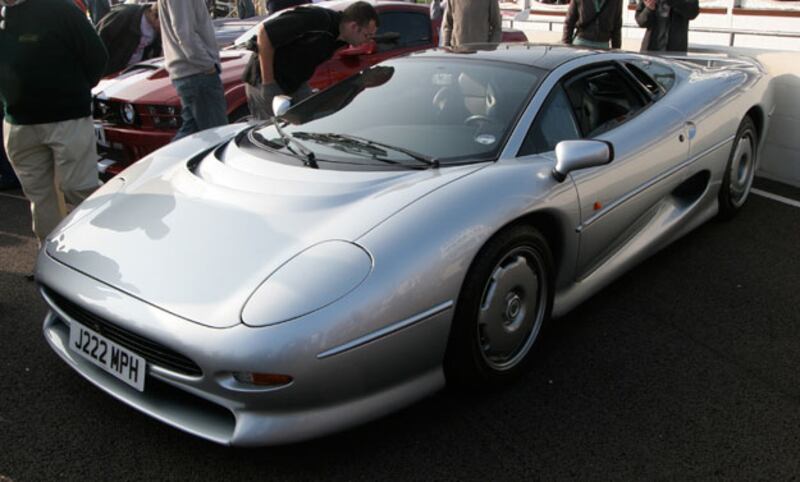
The much-hyped prototype premiere of Jaguar’s two-door coupe in 1988 was justified when the car earned the honor as the fastest production car in 1992 for reaching a top speed of 217 mph, a place it held until the McLaren F1 came along in 1994. A total of 281 were produced. It was the first Jaguar to bear a V6 engine, and remains the fastest—and, at a width of 6.9 feet, the widest—car the company has ever manufactured. But with initial price tag of $650,000 (about $1 million, adjusted for inflation), it was plagued by consumer reluctance when the recession of the early '90s plagued the economy.
Brian Snelson / Flickr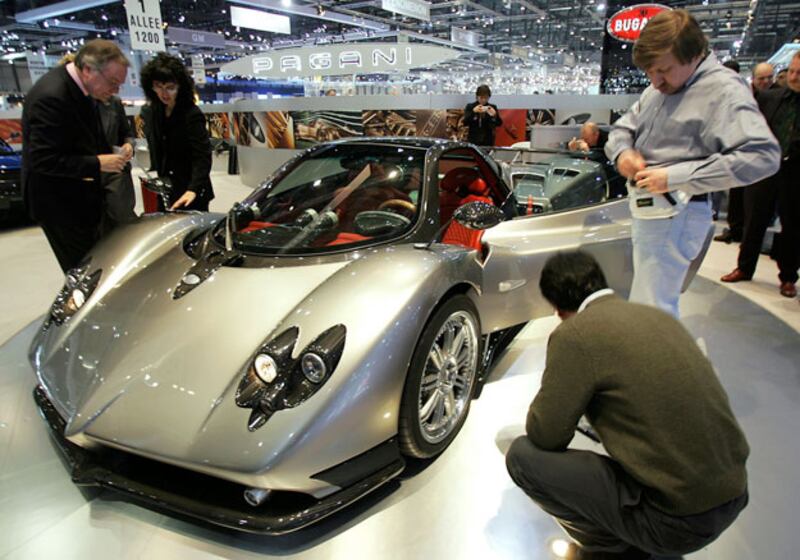
Built by the independent and relatively small car company Italian car manufacturer Pagani, the Zonda F was introduced in 2005. In total, 25 have been produced. It has the capability to reach 214 mph and has a Mercedes AMG V12, 600 horsepower engine. Price for the car starts around $700,000, but that’s not going to protect against crashes. At least a few have been decimated in Hong Kong and Poland.
Martial Trezzini / AP Photo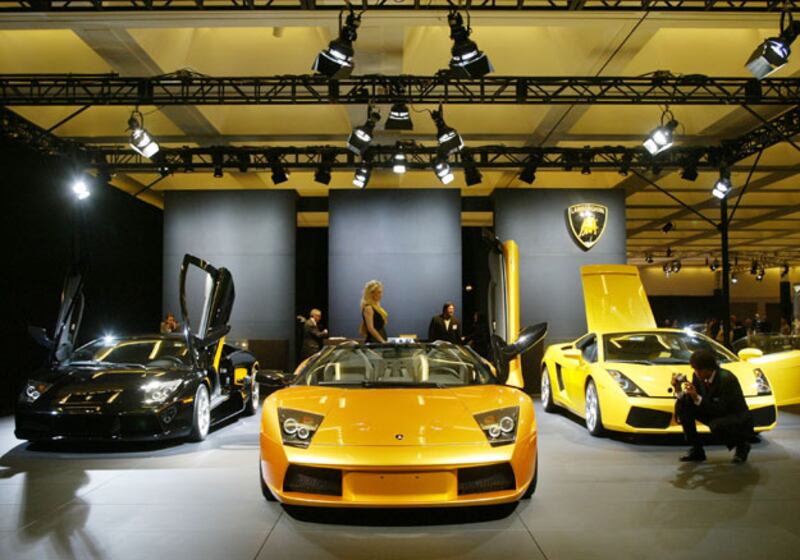
The 2006 update to the Lamborghini’s Murcielago line, the LP640 model was announced days before the 2006 Geneva Auto Show. With a starting price of $354,000, the Murcielago model is the legendary car company’s flagship. It can go from stop-to-60 in 3.4 seconds and has a maximum speed of 211 mph. The most recent version of the car has a few significant improvements on the original. The engine was moved to the rear and was upgraded from a 6.2 liter to a 6.5 liter. As well, the body was slightly redesigned and a new “E-gear” semi-automatic, six-speed transmission was introduced.
J. Emilio Flores / Getty Images