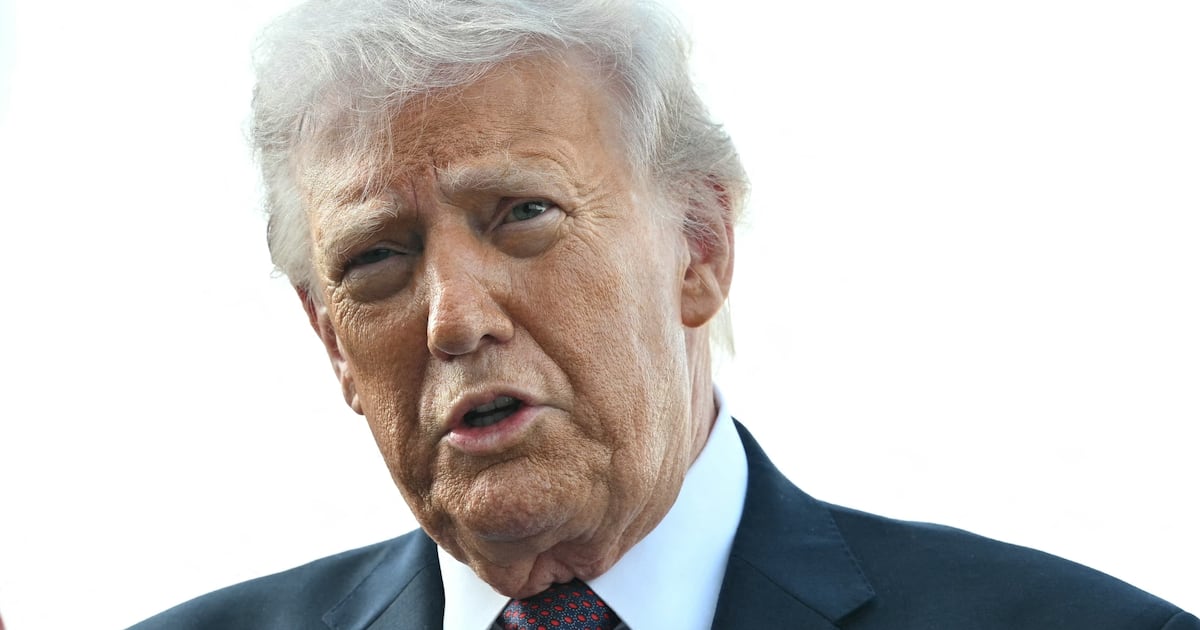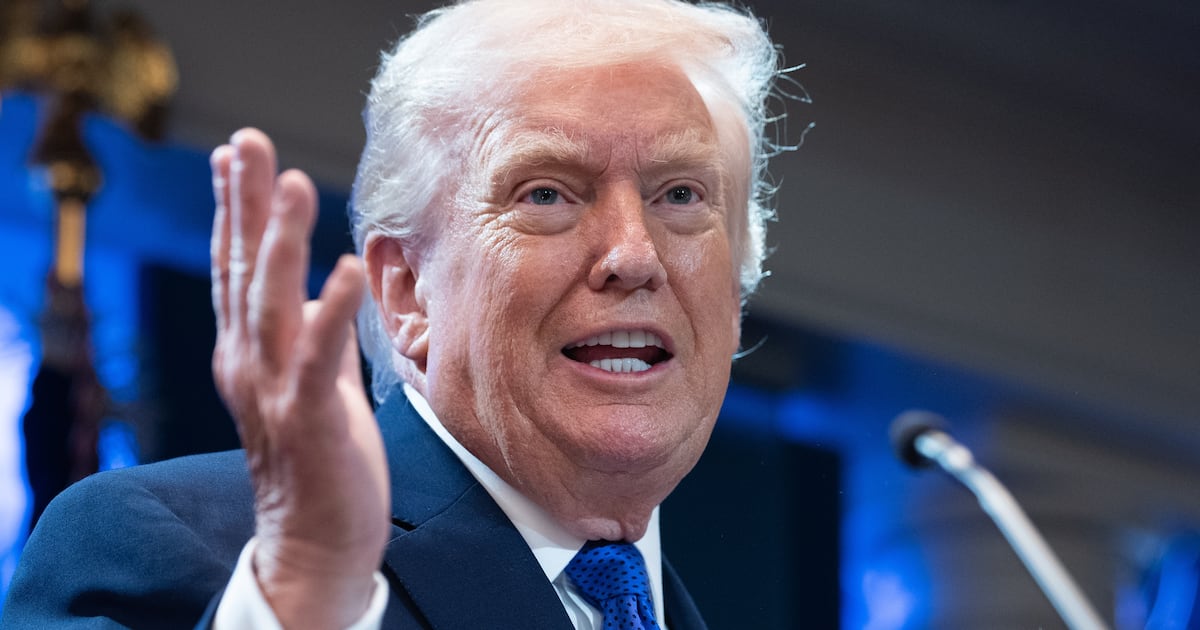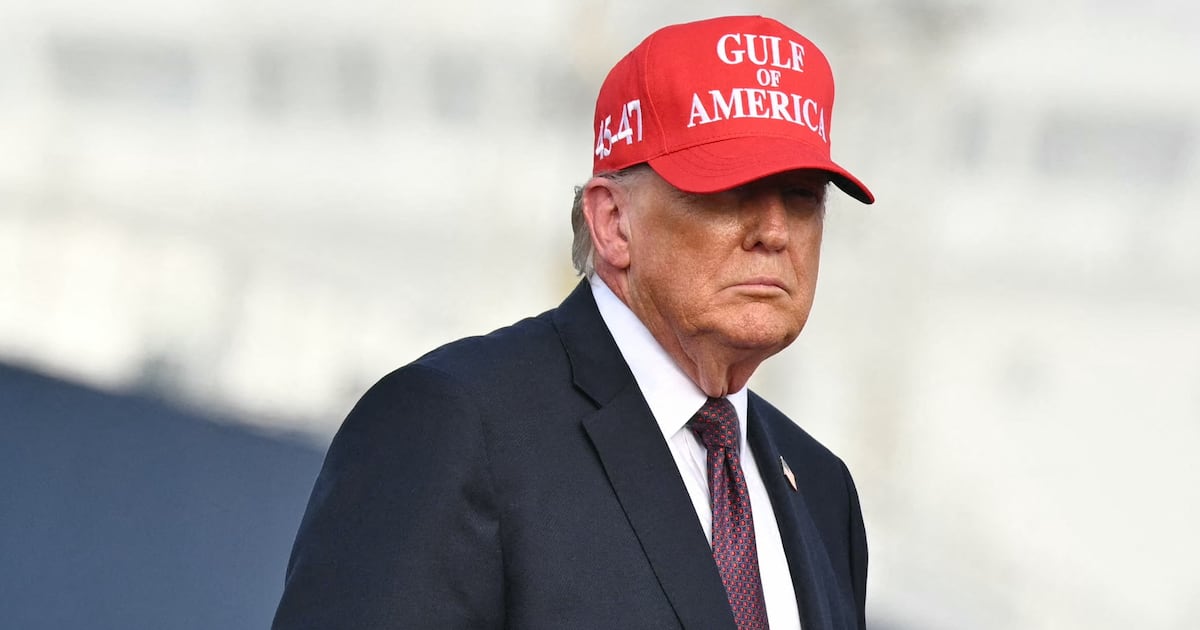
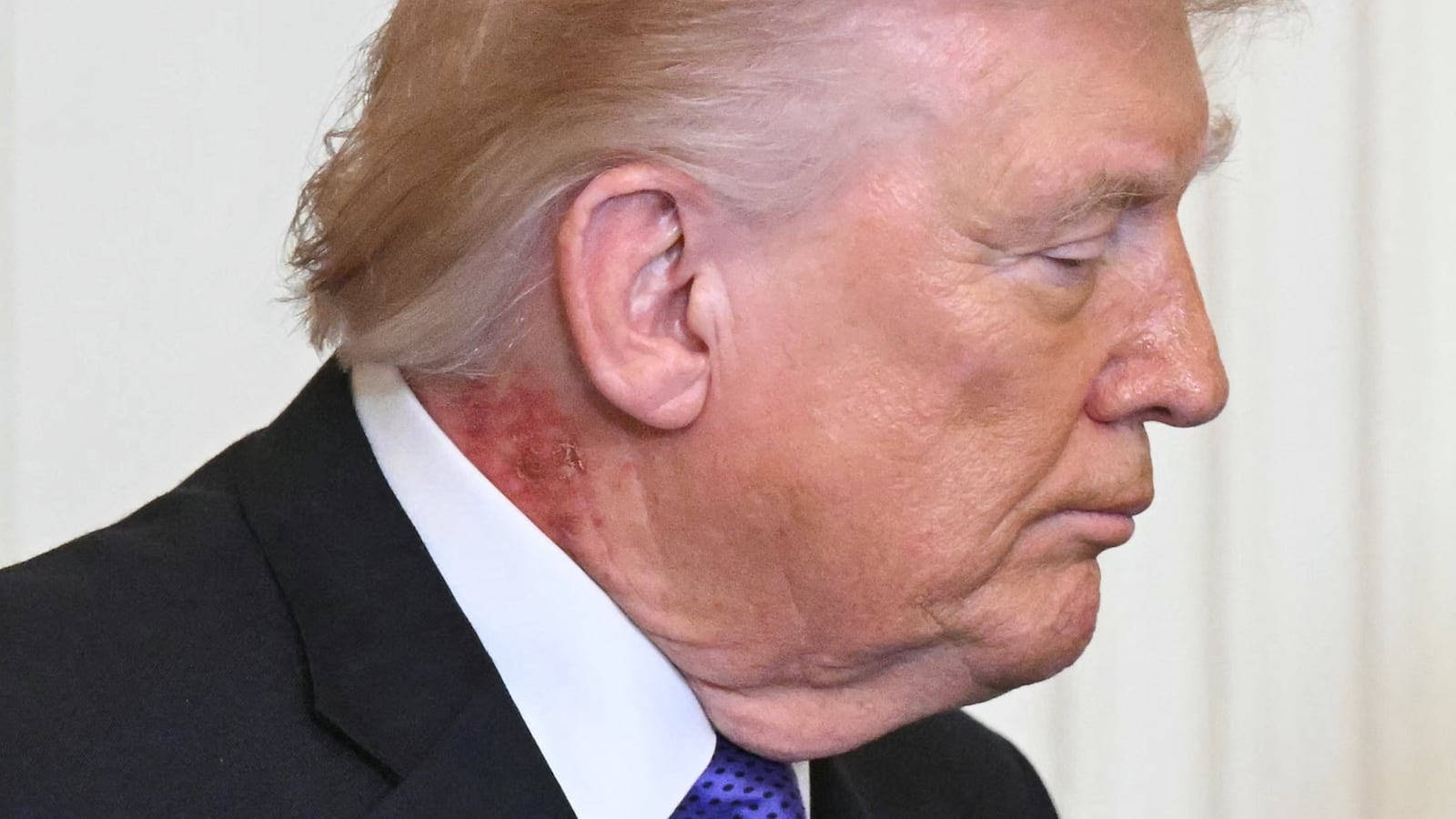
President Donald Trump has displayed a troubling new skin condition, renewing speculation about his health.
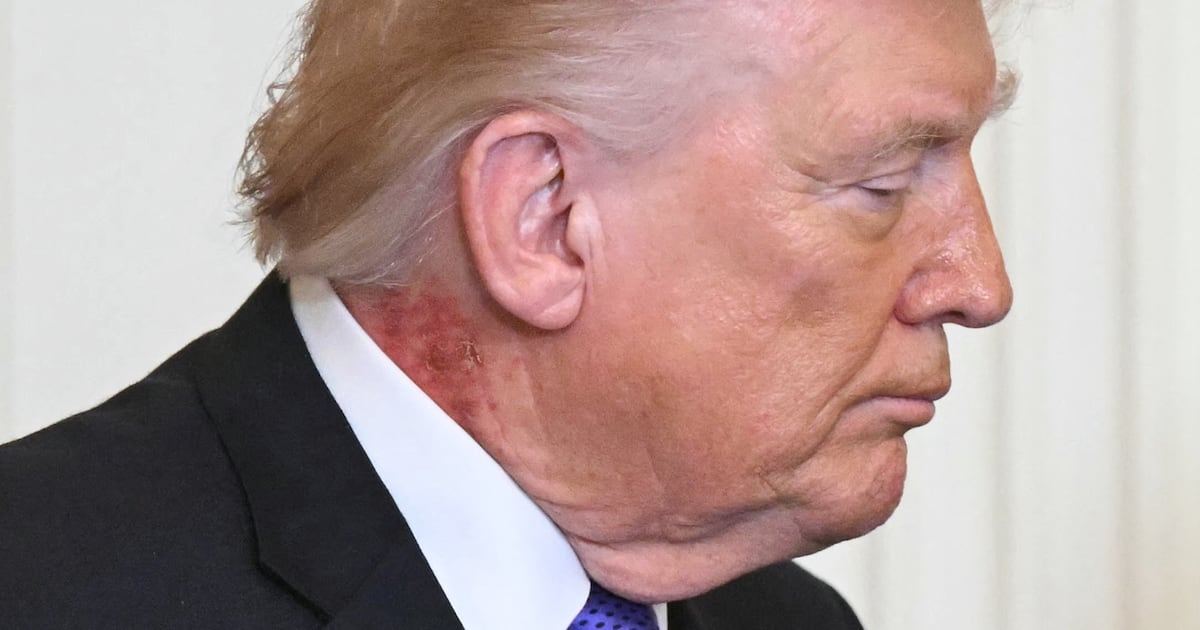
Photographers captured the nasty-looking rash on the side of the president’s neck as he attended a Medal of Honor event at the White House on Monday.
The mystery rash is likely to raise further concerns about the 79-year-old president, who has also come under scrutiny over his severely bruised hands, swollen ankles, and cognitive fitness.
In a statement, Trump’s physician, Dr. Sean Barbabella, told the Daily Beast: “President Trump is using a very common cream on the right side of his neck, which is a preventative skin treatment, prescribed by the White House Doctor.
“The President is using this treatment for one week, and the redness is expected to last for a few weeks,” he added. But the White House has so far refused to say what exactly the cream is preventing.
In the absence of a more detailed explanation identifying the ailment, speculation and jokes proliferated across the internet.
“Look forward to the White House explaining that it’s hickeys,” quipped Shannon Watts, the founder of Moms Demand Action, a grassroots network fighting to end gun violence.
“Shingles?” asked podcaster Jack Hopkins.
California Governor Gavin Newsom’s office also posted a photo of the president’s new skin condition with a series of eye emojis.

And some observers even pondered whether it could be a reaction to anti-skin cancer prescription medication such as Fluororacil, more commonly known as 5-FU.
Photos suggest the redness on Trump’s neck first emerged during his trip to Corpus Christi in Texas on Friday, as he stood alongside actor Denis Quaid.
But the irritation was far more noticeable on Monday, with the skin behind his right ear also looking scabbed and flaking, as Trump addressed the war in Iran for the first time publicly since the strikes began over the weekend.
As casualties mount, Trump declared he would not get “bored” of waging war with Iran, signaling that America could be involved in the conflict for longer than he first claimed.

“Right from the beginning, we projected four to five weeks, but we have capabilities to go far longer than that. We’ll do it,” he said.
But the president’s remarks on Iran lasted about 10 minutes, after which he immediately pivoted to his pet project: his $400 million ballroom renovation.
“See that nice drape?” he asked the audience as he pointed to the East Room decor. “In about a year and a half from now, you’re going to see a very, very beautiful building.”
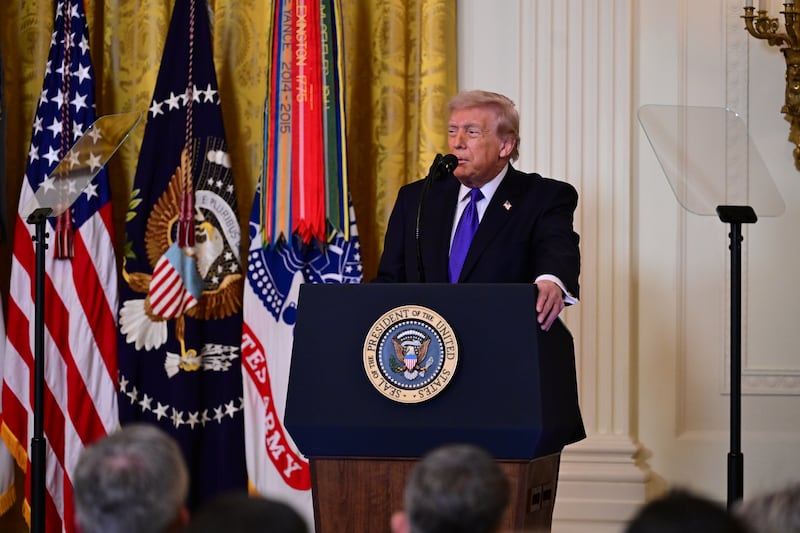
The photos of Trump’s irritated-looking skin emerged after the event, with a red patch extending from below his jawline toward the side of his neck.
Common explanations could include contact dermatitis from shaving products or cologne, razor burn, allergic reactions, heat rash, or irritation from clothing.
Viral infections such as shingles can also produce localized rashes, though such diagnoses cannot be made without a medical examination.
While Trump insists he is in “great shape” for his age, he has faced the same kind of scrutiny that haunted his predecessor, Joe Biden.

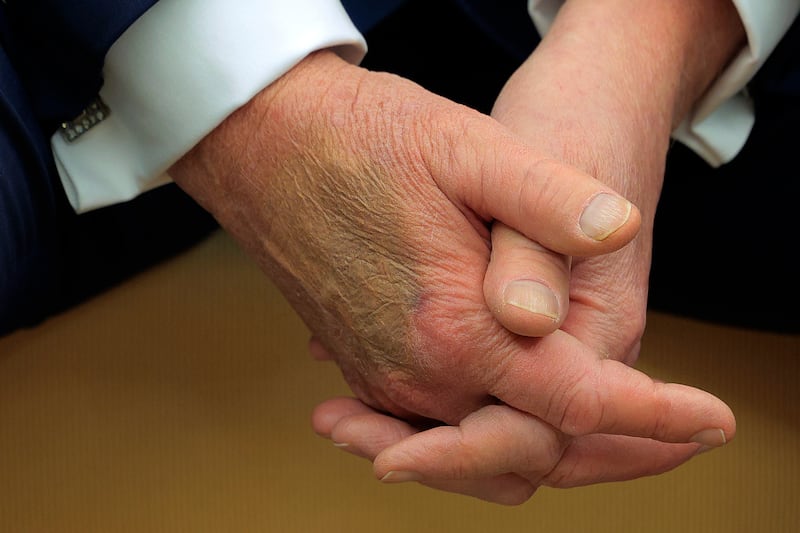
Last February, photographers captured what appeared to be a dark bruise on his hand, partially concealed with makeup.
The images were plastered across the news and social media, forcing the White House to give what would soon become a familiar “explanation” for the bruising: Trump’s frequent handshaking.
“President Trump is a man of the people, and he meets more Americans and shakes their hands on a daily basis than any other president in history,” White House Press Secretary Karoline Leavitt insisted at the time.
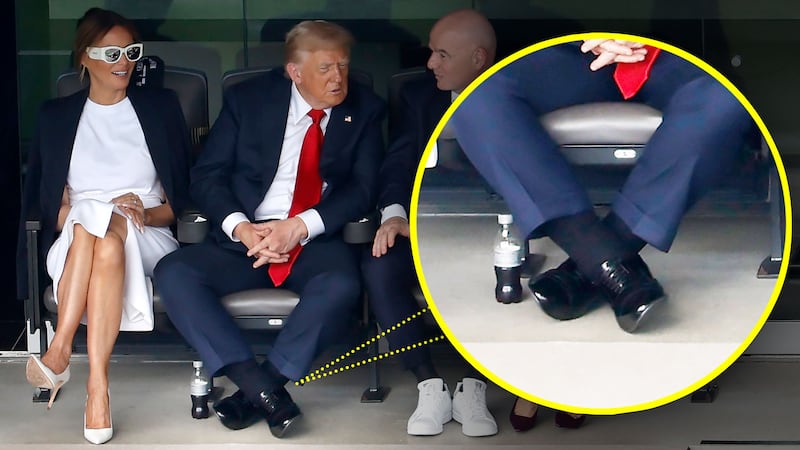
Then, in July, photos showed what appeared to be visible swelling around Trump’s ankles and lower legs as he sat between First Lady Melania Trump and FIFA President Gianni Infantino at a FIFA event.
This led to the White House admitting Trump had been diagnosed with chronic venous insufficiency (CVI), a common circulatory condition in older adults that can cause leg swelling.
More recently, his cognitive health has come under question, with the president sometimes appearing to doze off at events or regularly confusing names and dates.
But the latest skin condition, and the White House’s response to it, is likely to spark even more questions and claims of a cover up.
“Seems like the “common cream” may likely be 1% hydrocortisone for a contact dermatitis. That seemed likely given the numerous pictures shared online. But the idea this cream is a “preventative” is nonsensical," Dr Vin Gupta, a lung MD and medical analyst for MS Now speculated on X.
“The @WhiteHouse medical team can’t get out of its own way.”