Trump Designates English as America’s Official Language
Prior to Trump, the United States of America has never had an official language.
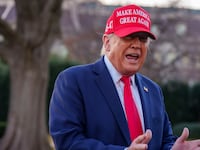
Andrew Harnik/Getty Images
The White House revealed on Saturday that President Donald Trump has signed an executive order designating English as the official language of the United States, a largely symbolic move designed to appeal to his nativist base.

The order does not require any changes to federal programs, although it does rescind a Bill Clinton-era requirement that agencies and recipients of federal funding provide language assistance to non-English speakers. Agencies will be able to keep their current policies and provide services in other languages if they choose to.
The executive order states, “Establishing English as the official language will not only streamline communication but also reinforce shared national values, and create a more cohesive and efficient society,” although it’s unclear how, exactly, that would be the case. Several other primarily English-speaking countries have declined to give any one language official status, including the United Kingdom and Australia, and there are no signs of social cohesion or efficiency being affected by the lack of an official national language.
Rather than having any particular practical utility, the move is seemingly a nod to the English-only language movement, The New York Times explains. Key figures in the anti-immigration movement, including John H. Tanton, described by watchdogs as a “thinly-veiled white nationalist,” advocate for the restriction of bilingual education programs in areas with large Spanish-speaking populations alongside the restriction of immigration in an attempt to “preserve American culture.”
Americans who speak a language other than English at home—a group that includes Trump’s wife Melania, who taught their son Barron her native language of Slovenian—are already a minority, with 78.3 percent of Americans speaking English at home. Of the remainder, 61.1 percent speak Spanish at home, with 61 percent of those who speak Spanish at home also speaking English “very well.”
Sign Up for The Swamp Newsletter
By clicking “SUBSCRIBE” you agree to our Terms of Use and Privacy Policy.
The United States government’s own website still currently states that the U.S. does not have an official language, although “some states designate it as their official language”—30, to be precise.
The website also states that Americans speak some 350 languages, which is consistent with America’s history of immigration from all corners of the globe; a history that is the precise reason this move has been condemned by pro-immigration groups, as well as Democratic leaders.
House minority leader Rep. Hakeem Jeffries (D-NY) said on Friday that “we’re going to have to examine if what he’s doing is actually in compliance with the law and the U.S. Constitution,” adding, “And to the extent that it’s not, I’m confident that he will be sued.”
Anabel Mendoza, communications director for United We Dream, the largest immigrant youth-led network in the country, said, “We mean this with all disrespect: No gracias.” She continued, “We see exactly what Trump is trying to do by continuing to put a target on the backs of Black and brown immigrants and communities who speak different languages, and we won’t tolerate it.”
Pablo José Hernández Rivera, the resident commissioner of Puerto Rico, an American territory where 94 percent of residents speak Spanish, also condemned the move. He argues that the order “reflects a vision of American identity that conflicts with our Puerto Rican identity,” emphasizing that, “There will be no statehood without assimilation, and Puerto Ricans will never surrender our identity.”
See more of our coverage in your search results.

Got a tip? Send it to The Daily Beast here.
Register below to read this article for free or subscribe
to unlock unlimited access to The Daily Beast.
Monthly
$1
First month then $5.99/month
Annual
$35
First year then $59.99/year
Premium
$79
First year then $119.99/year
*Substack access provided by the next business day, using your subscription email. Choosing the Premium plan constitutes your permission to share your subscription email with Substack and your agreement to Substack’s Privacy Policy.
Already have an account? Sign In
Looks like you already have a subscription!
You're all set!
Thanks for subscribing.