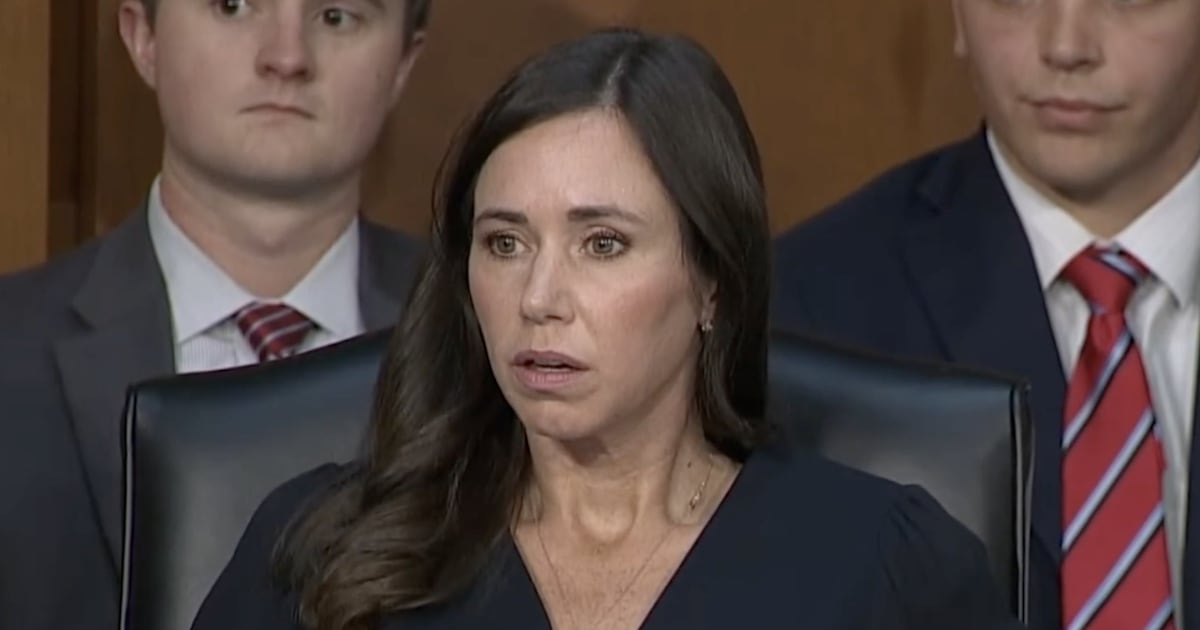
Transportation Secretary Sean Duffy has come clean about what led to Marine One’s close call last week.
The 54-year-old father of nine was speaking in Newark, New Jersey, on Tuesday when he admitted that his department was working to fix a telecommunications problem that caused the president’s helicopter to fly too close to a passenger plane departing from Reagan Washington National Airport (DCA).
President Donald Trump had been aboard at the time of the incident, sparking questions about why the jet had been permitted to depart, despite protocol usually leading to a pause in commercial traffic when the presidential helicopter is close.

Duffy was speaking at Newark Liberty International Airport with FAA Administrator Bryan Bedford to mark the opening of a new surface movement radar when he was quizzed by a reporter about the incident.
“Yeah, so this is a question about Marine One from last week. Loss of separation. Just, so first to be clear, they were not converging flight paths. We’ve found at a staff level between the Marine One team and the FAA there had been some telecom issues. That’s been now elevated.
“Brian and I, along with the president’s Marine One team, are working on a fix to the telecom issue. The president was never in any danger. But just to be clear, after we had the crash at DCA, we have prohibited cross traffic between helicopters and airplanes.
“Unless it’s presidential movement or if it’s law enforcement or first responder movement. But even when that happens, we shut down the airspace. We are not going to have cross traffic again in these complicated airspaces like DCA.”
Then, trying to turn a negative into positive, Duffy added, “So it was a good flag for us. We are resolving that and our teams are working very well together.”
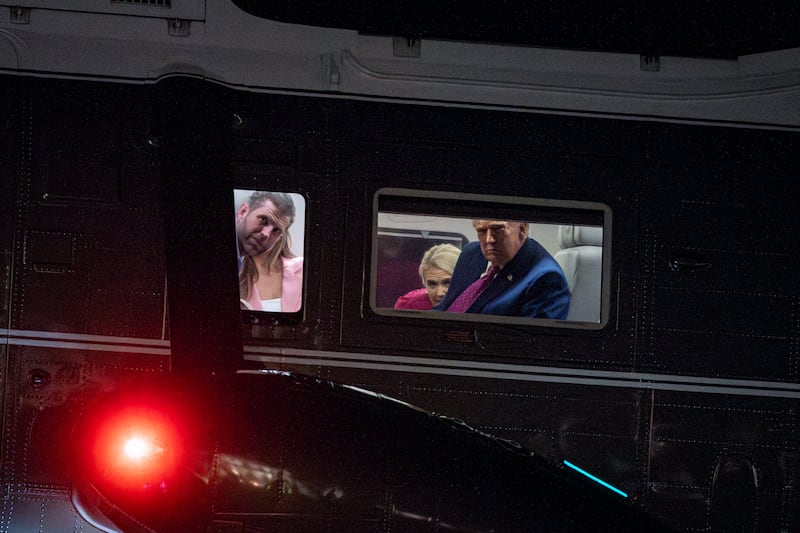
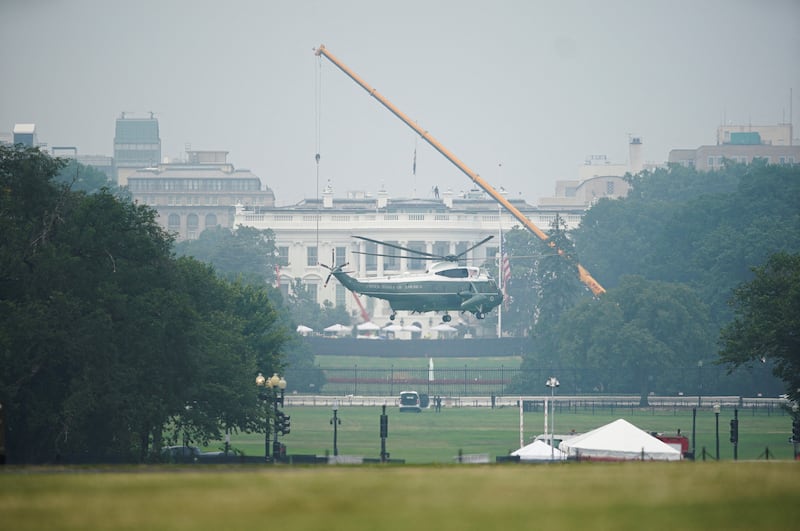
Trump’s helicopter had taken off from the Eclipse, next to the White House South Lawn, bound for Joint Base Andrews, Maryland, with CNN reporting that the pilot had tried to tell the control tower at Reagan at least three times that they were taking off.
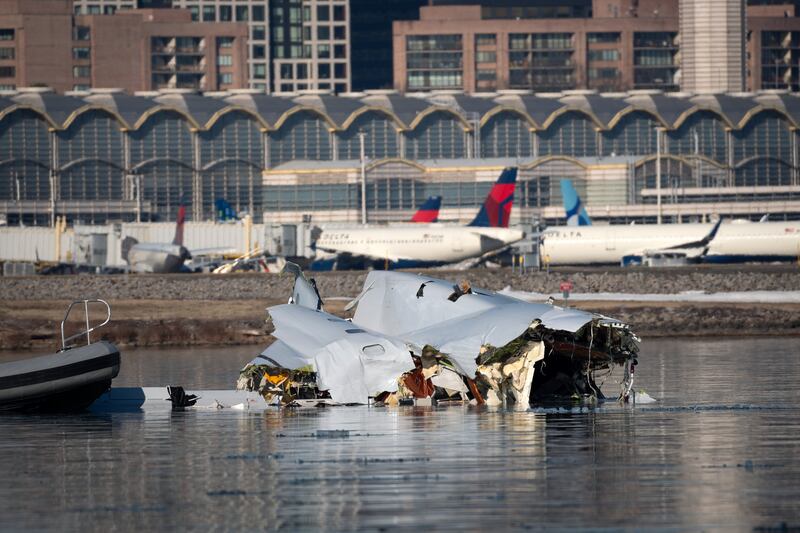
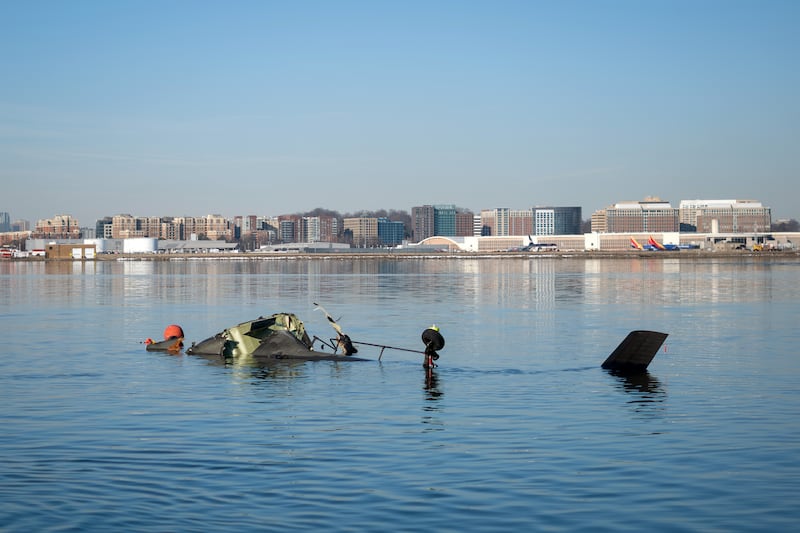
The incident comes after the Potomac River mid-air collision in January last year, which saw a Blackhawk helicopter collide with American Airlines Flight 5342, killing all 67 people onboard both aircraft.
Since then, new laws have increased the use of radar in busy airspace, while a series of orders were introduced to decrease the number of helicopters in the area.
Speaking about last week’s incident, the FAA said in a statement, “Based on our preliminary safety review, there was momentary loss of separation after which the aircraft continued to move away from one another.
“We are continuing to review the incident and will implement any appropriate corrective actions based on our findings.”