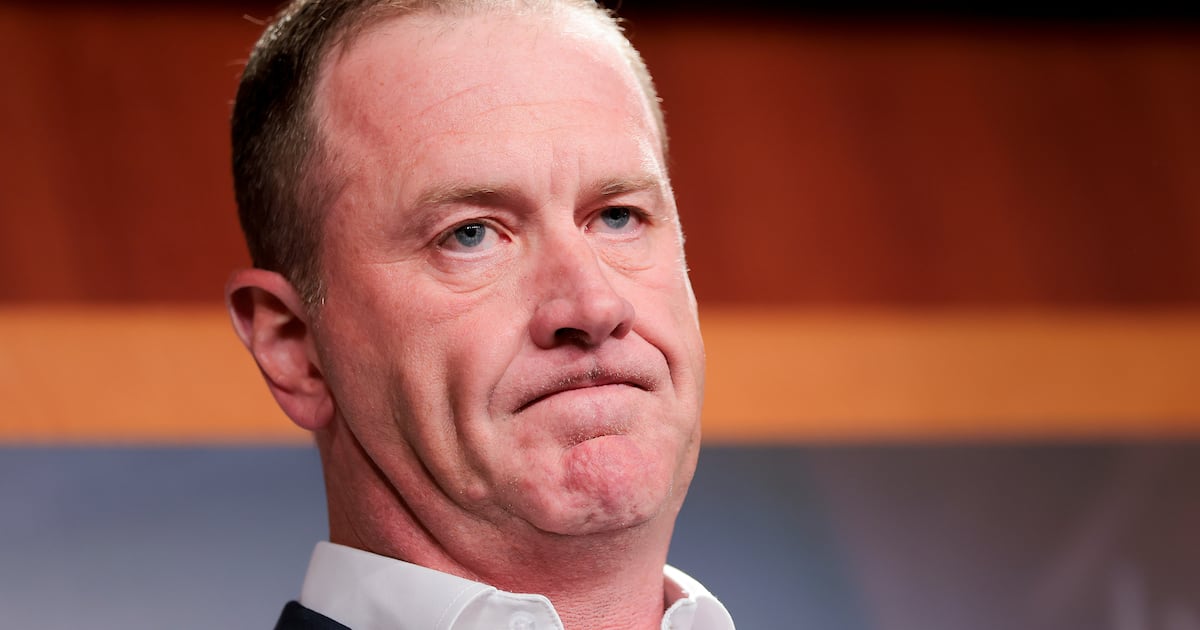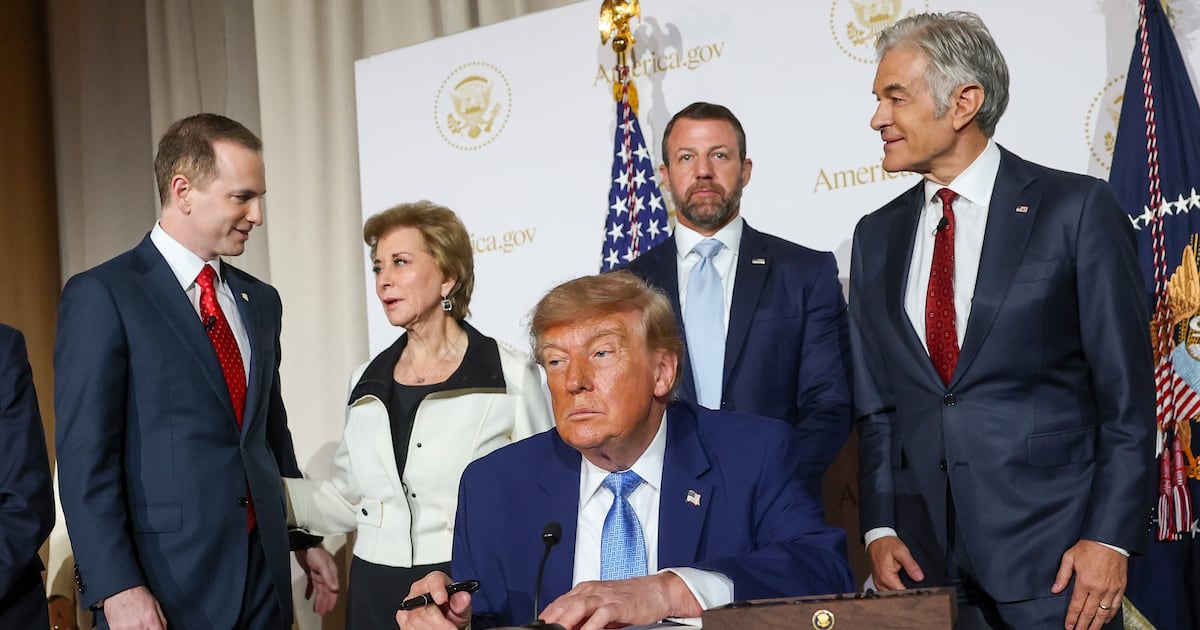
Donald Trump launched a new AI website on Tuesday intended to promote services provided by the federal government.
America.gov boasts that it will improve “the citizen experience” at the culmination of “250 years of American progress” with a “modern interface worthy of the American people.”
Americans, however, were apparently not worthy of featuring on the new website. A Daily Beast analysis of America.gov found that most of the photos on its home page actually depict families and individuals living happy lives in foreign countries.
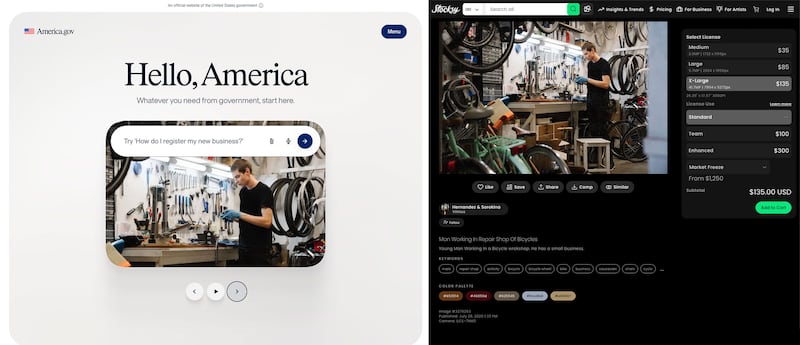
The Beast analysis found that, in the carousel of 11 photos on the chatbot’s page, at least six, and possibly more, were shot abroad, including in countries Trump has publicly railed against, and in China, which he publicly said he wants to beat in the artificial intelligence race.
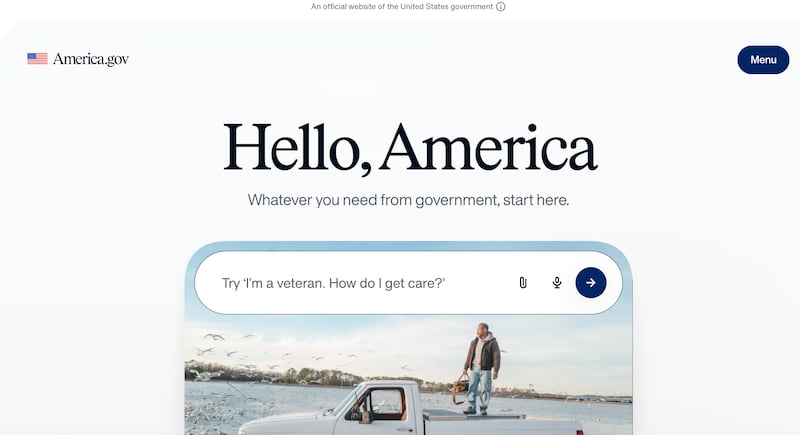
The America.gov site greets users with the words, “Hello, America. Whatever you need from government, start here.”
It was launched by JD Vance in Washington, D.C., at an AI conference, which was overshadowed by Trump’s own AI event at the White House. Vance credited the work of Airbnb co-founder Joe Gebbia, who is now in charge of the White House’s “National Design Studio.” The vice president launched the website with a gaffe, saying that he had told Gebbia, “Don’t let it be a clusterf--- like America.gov.” He then had to explain that he actually meant the glitch-stricken Healthcare.gov, launched by President Barack Obama after the passage of Obamacare.

America.gov offers artificial intelligence answers to questions about the federal government.
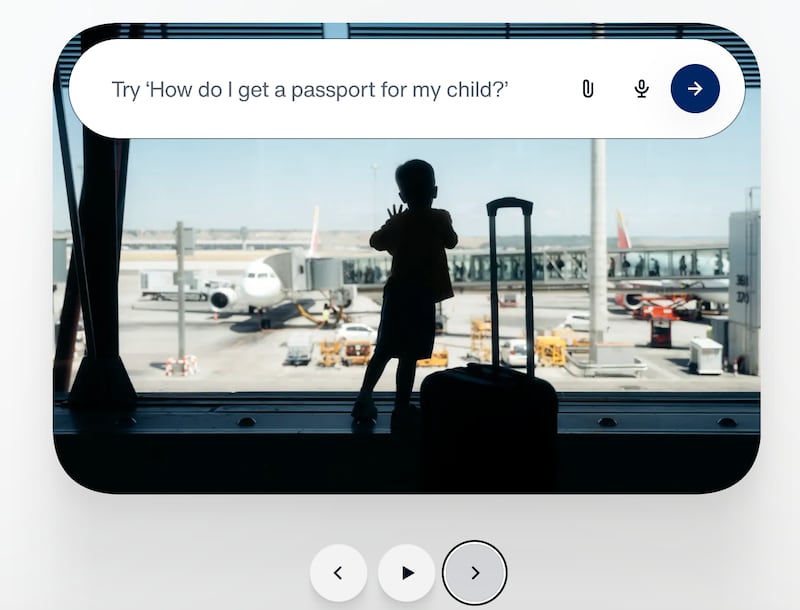
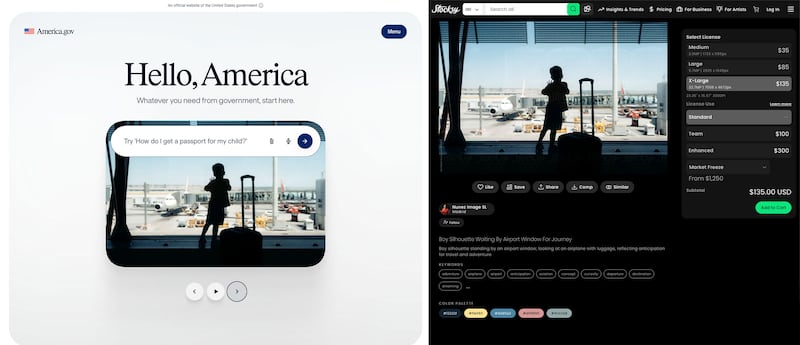
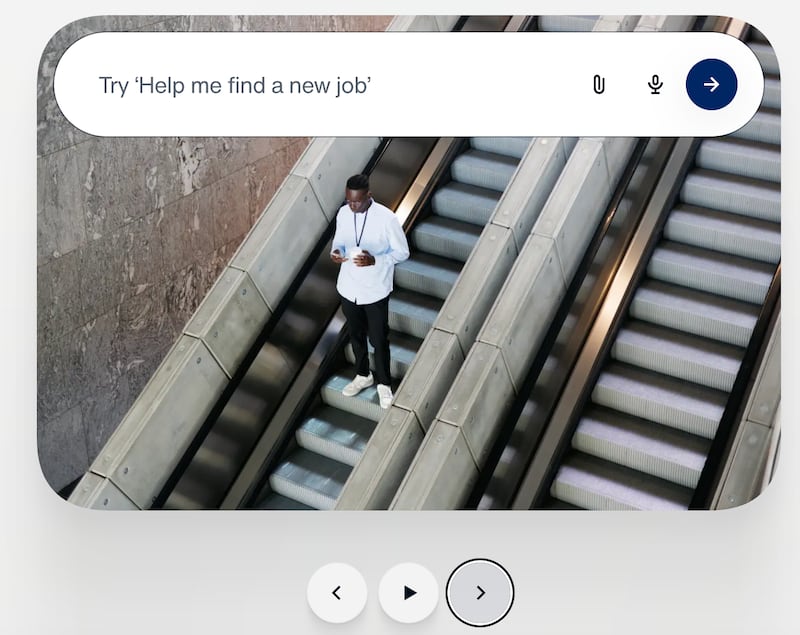
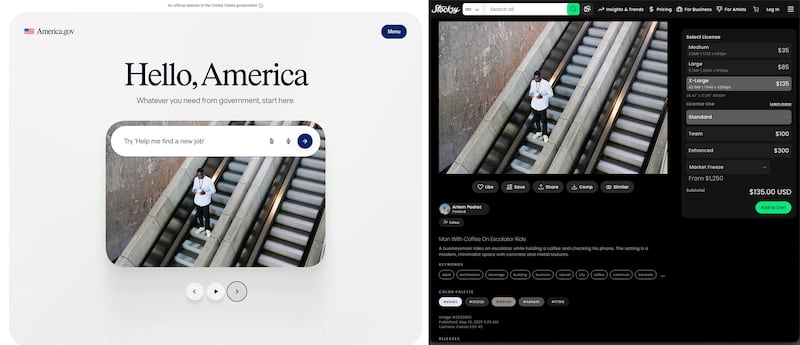
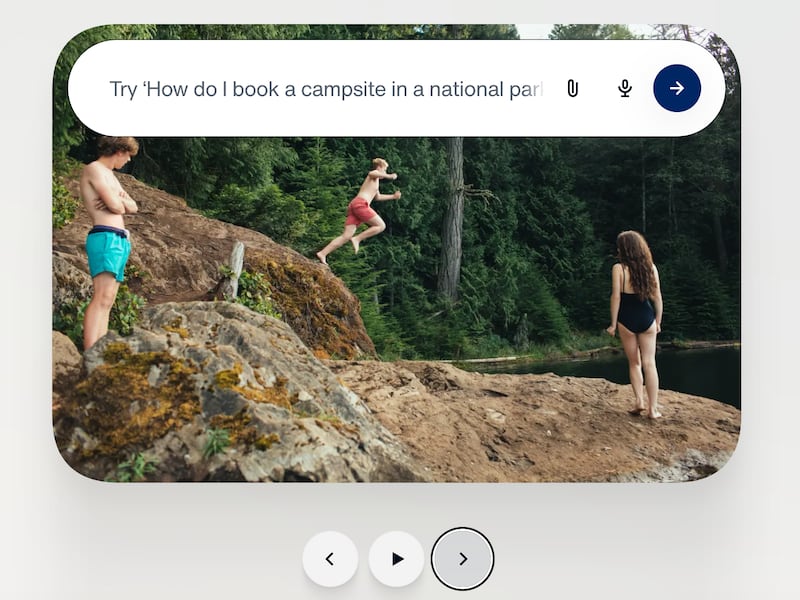
Beneath the place to ask your questions is a sliding set of pictures which are supposed to match suggested questions, and apparently to show off the best of America. The only issue is that they show people living in Madrid, Warsaw, Beijing, Tallinn, and British Columbia.
All cities with wonderful sights, no doubt. But not America.
A photo of a young child in silhouette, with a case, looking plaintively at passengers boarding a plane could have been taken at one of the many airports across the United States. This one, however, is from Madrid, Spain.
There is a man checking his phone as he makes his way down an escalator. The photo could have been taken in any U.S. city, but instead Trump’s lackeys opted for one in Warsaw, Poland.
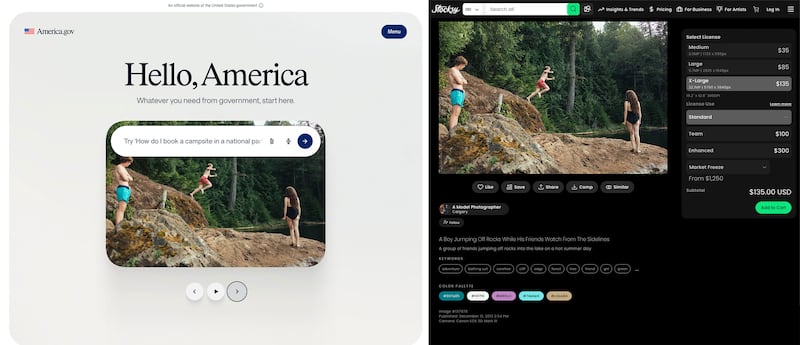
Another shot shows a boy jumping off rocks while his friends watch, a scene from childhoods all over America. This scene was from Salt Spring Island in British Columbia, Canada.
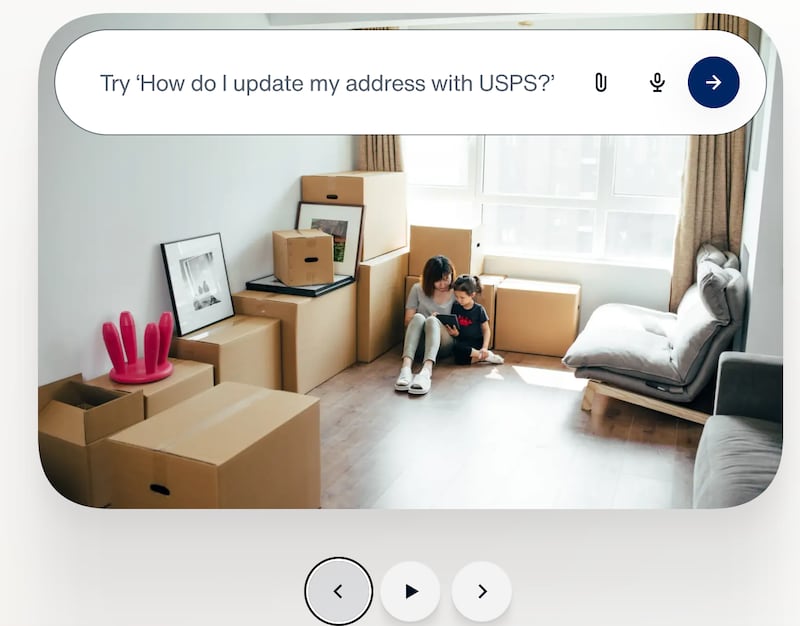
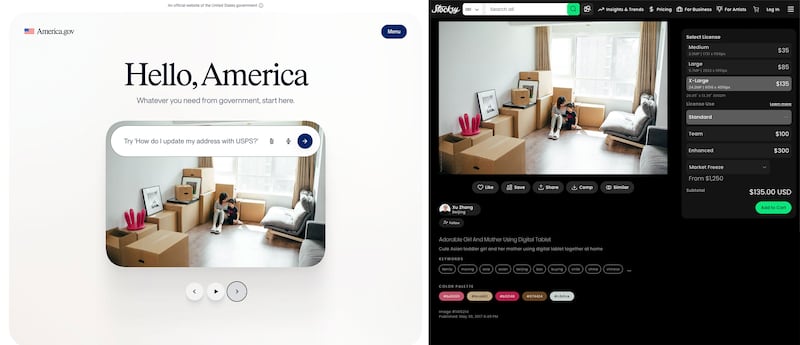
A mother reads from a digital tablet to her daughter in a room lined with moving boxes. There’s a small chance they are moving to America, but the photo was definitely taken in Beijing.
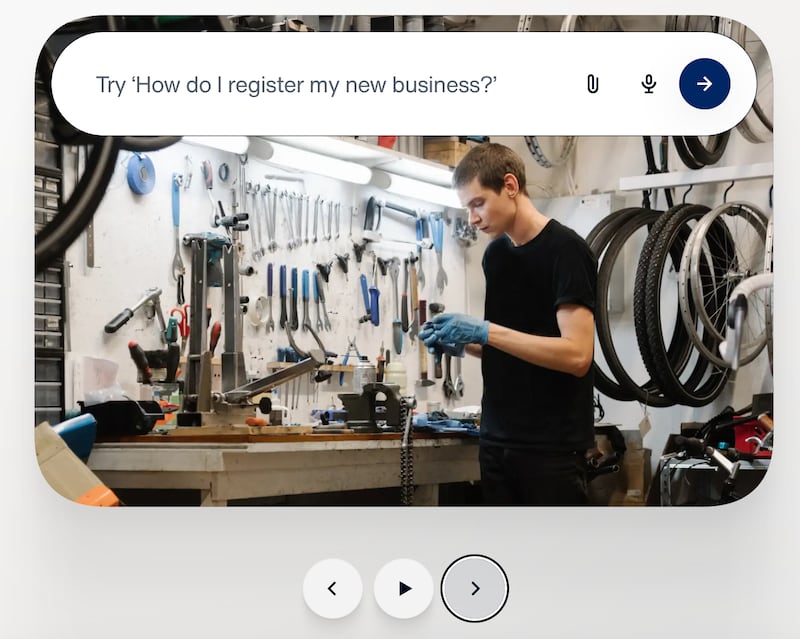
Of all the bicycle mechanics working in repair shops around the country, America.gov chose to picture one in Tallinn, Estonia.
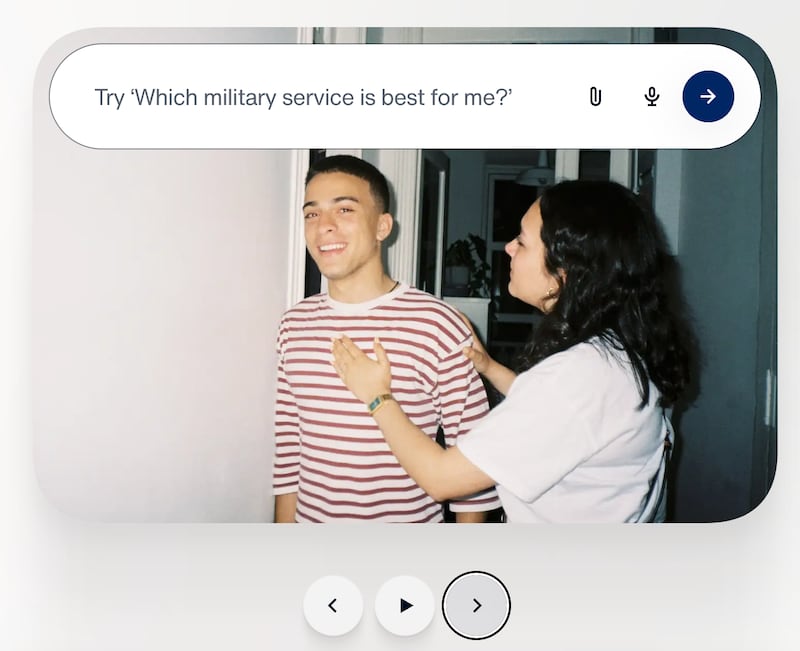
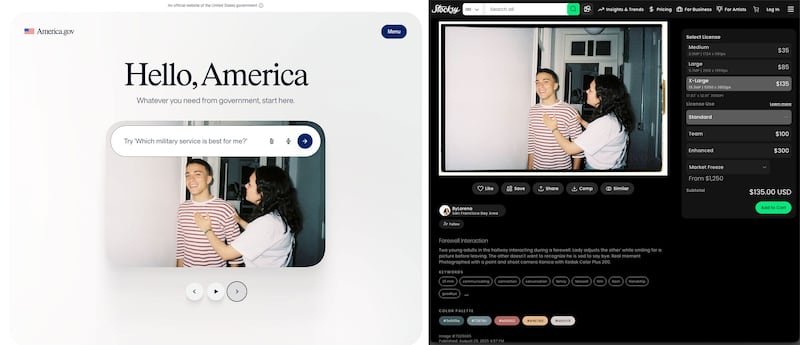
A young couple pictured inside a home could have come from anywhere. In fact, they were from Vigo, Spain.
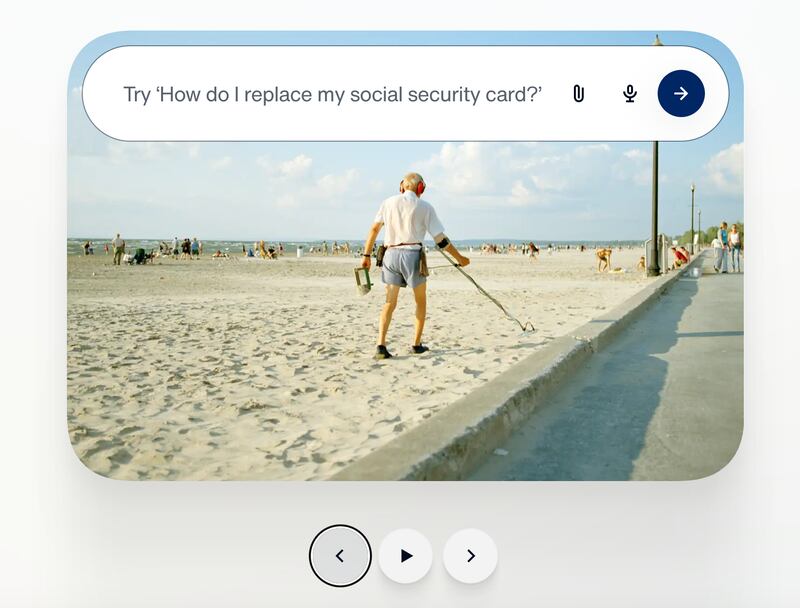
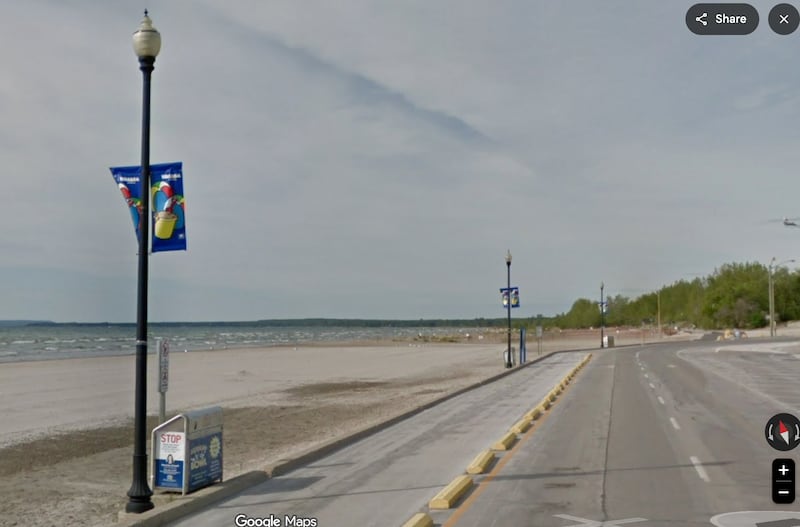
A beach scene of an elderly man with a metal detector looked remarkably like Wasaga Beach in Ontario, though we couldn’t be certain.
Among those praised for the rollout of America.gov in Washington on Tuesday was Edward Coristine, 20, who was nicknamed “Big Balls” while working for Elon Musk’s DOGE during the early months of Trump’s second presidency.

“The lead engineer, Ed Coristine, Ed, thank you,” the president said during the ceremony at the Mellon Auditorium.

Trump added that the AI team had been “working 20-hour days in government on behalf of our country, and we salute them.”
The president launched the National Design Studio, which employs Coristine and created America.gov, with an executive order in August, 2025.
The Daily Beast has reached out to the White House for comment.
Even the purchase of the six stock images confirmed to be non-American is hardly America First. One might have thought a U.S. company would provide the homepage photos, but they are licensed through Stocksy, based in Victoria, British Columbia, Canada.
The company is hardly MAGA. Stocksy’s CEO, South African-educated Trace Cohen, has served as a board member of Phluid Project, a non-binary fashion brand grounded in community and activism, and Defy Ventures, a non-profit providing entrepreneurial training for incarcerated populations to prepare them for post-release work.

The company’s team, like the photos they provide, reflects the world’s diversity, saying online that they are from countries including Canada, the U.K., South Africa, and Romania.