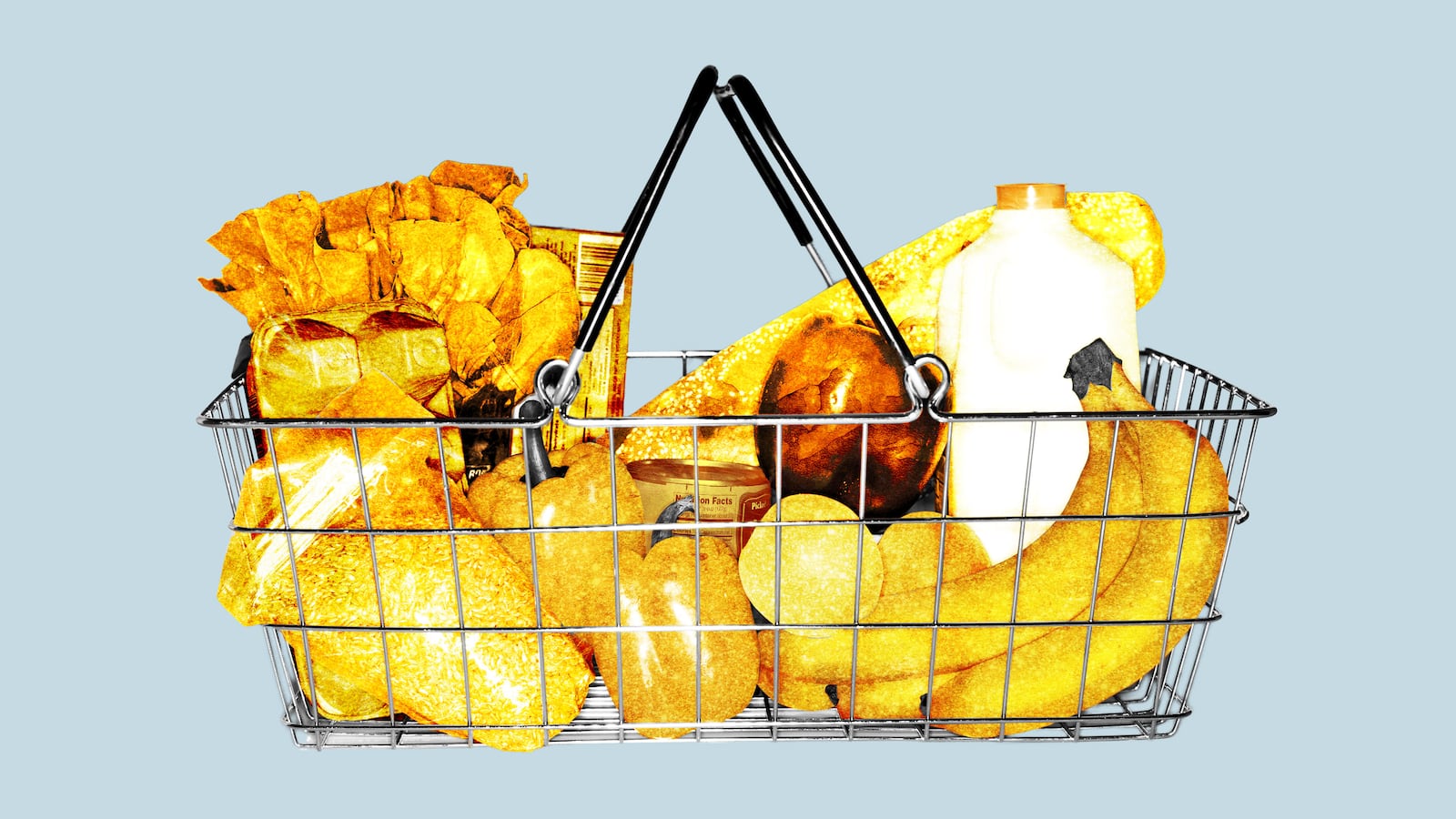
Americans have just been hit with the largest grocery price hike in four years.
The country, already reeling from high grocery prices before President Donald Trump launched a war with Iran on Feb. 28, saw food‑at‑home costs rise 0.7 percent in April—the highest single-month increase since 2022.
Bureau of Labor Statistics data shows that grocery prices, which Trump vowed to bring down on the campaign trail in 2024, are up 2.9 percent from a year ago—an extra burden on Americans who are also paying 43 percent more to fill their cars with gas compared to a year ago.
Prices for many grocery items spiked in the months since the president’s war with Iran began, an analysis by The Washington Post has found. The cost of tomatoes rose by 15 percent in April compared with the month prior, while beef is up the same amount compared with April 2025.
Also among the biggest cost risers are fresh vegetables. On an annualized basis, fresh vegetable prices were more than 44 percent higher in April than they were three months prior. During that same period, bread prices have risen by 8 percent and milk by 5 percent, the Post reports.
The higher prices are tied to higher costs, analysts say. Will Harris, a fourth-generation cattle farmer in Bluffton, Georgia, told NBC News that the price he charges for beef is 20 percent higher than it was two years ago.
Higher diesel costs, which farmers and ranchers use to operate tractors, transport livestock, and conduct other day-to-day operations, mean they must charge more to stay profitable.
“It’s unprecedented for us,” Harris said. “This is the first time we’ve ever gone up that much, that fast... I think that I can produce it as cheap as anybody else, but I don’t know where consumers draw their lines.”
Reached for comment, the White House told the Daily Beast that the higher supermarket prices are temporary.
“President Trump has always been clear about temporary disruptions as a result of Operation Epic Fury,” said White House senior deputy press secretary Kush Desai, referring to the war with Iran. “The April CPI report reinforces, however, that President Trump’s long-term economic agenda continues to deliver despite these disruptions: drug and hospital services prices are declining thanks to the President’s Most-Favored-Nation and price transparency initiatives, while trillions in investments continue to drive robust real wage growth for manufacturing and construction workers.”
Trump himself does not appear particularly concerned about the higher prices. He was asked by a reporter before he left for China, “When you’re negotiating with Iran, Mr. President, to what extent are Americans’ financial situation motivating you?”
Trump answered without hesitation: “Not even a little bit. The only thing that matters when I’m talking about Iran is they can’t have a nuclear weapon. I don’t think about Americans’ financial situation.”
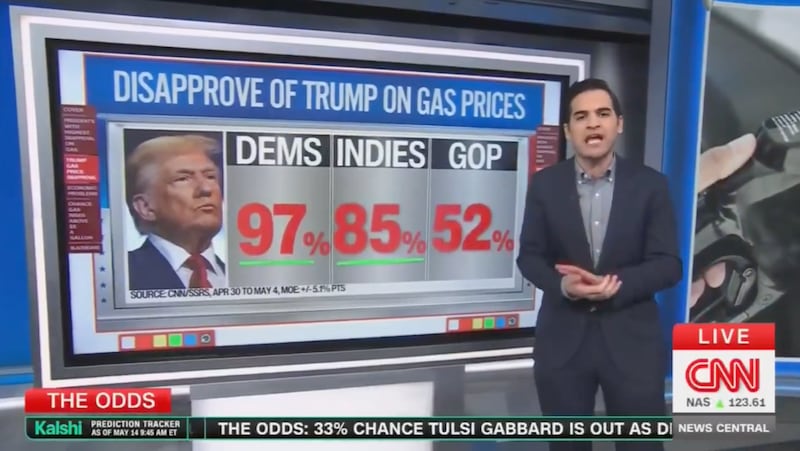
The vast majority of Americans do not view Trump favorably on the cost of living, according to a CNN poll released this week, which also found that disapproval of his handling of the economy has reached an all-time low.
The survey revealed that 77 percent of Americans, including a majority of Republicans, blame Trump’s policies for recent cost-of-living increases—a belief bolstered by a report by the April CPI report that revealed inflation is up 3.8 percent from a year ago.
CNN reports a “surge” in people naming high prices and the cost of living as the top economic problem facing their family, to the point that seven in 10 Americans believe a recession will begin in the next year.