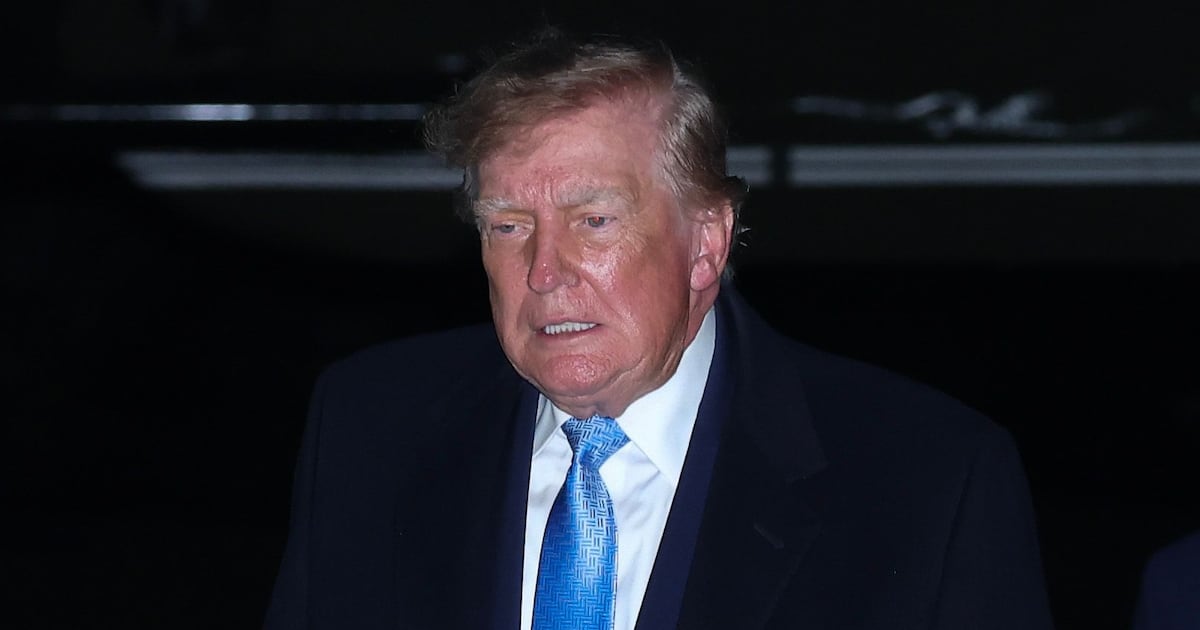
President Donald Trump’s Truth Social threats have backed him into a corner on the war with Iran, an analyst said.
Trump, 79, indefinitely extended the ceasefire on Tuesday night as planned peace talks in Pakistan fell apart the same day that Vice President JD Vance and other officials were expected to depart for Islamabad. It marked a sharp reversal from Trump’s comments on Tuesday morning, when he threatened to attack Iran if it refused to accept U.S. demands.

Alex Vatanka, a senior fellow specializing in Iran at the Middle East Institute, said the president “cornered himself” because he doesn’t want to return to combat.
“He has made a strategic error of thinking that shouting louder and louder at the Iranians is going to pay off. This is not going to work with this regime,” he told Bloomberg. “Pressure works much better quietly than publicly.”
On Tuesday morning, Trump told CNBC that he would resume bombing Iran if it did not agree to U.S. demands.
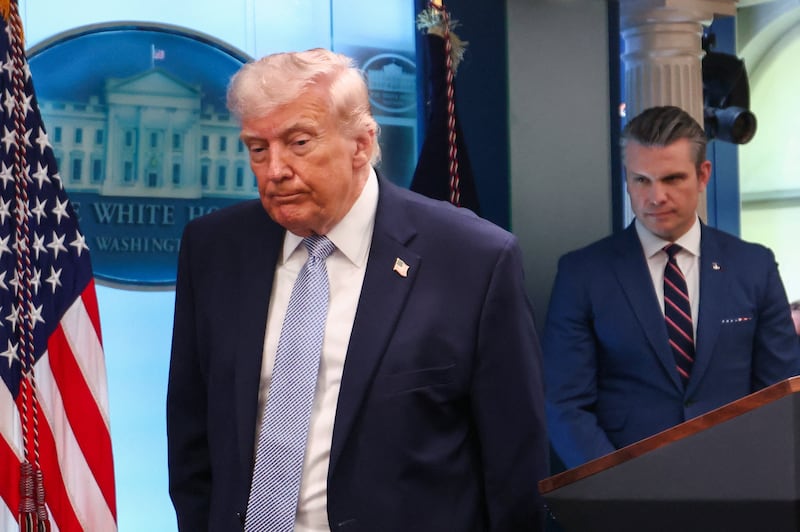
“I expect to be bombing because I think that’s a better attitude to go in with. But we’re ready to go. I mean, the military is raring to go,” he said.
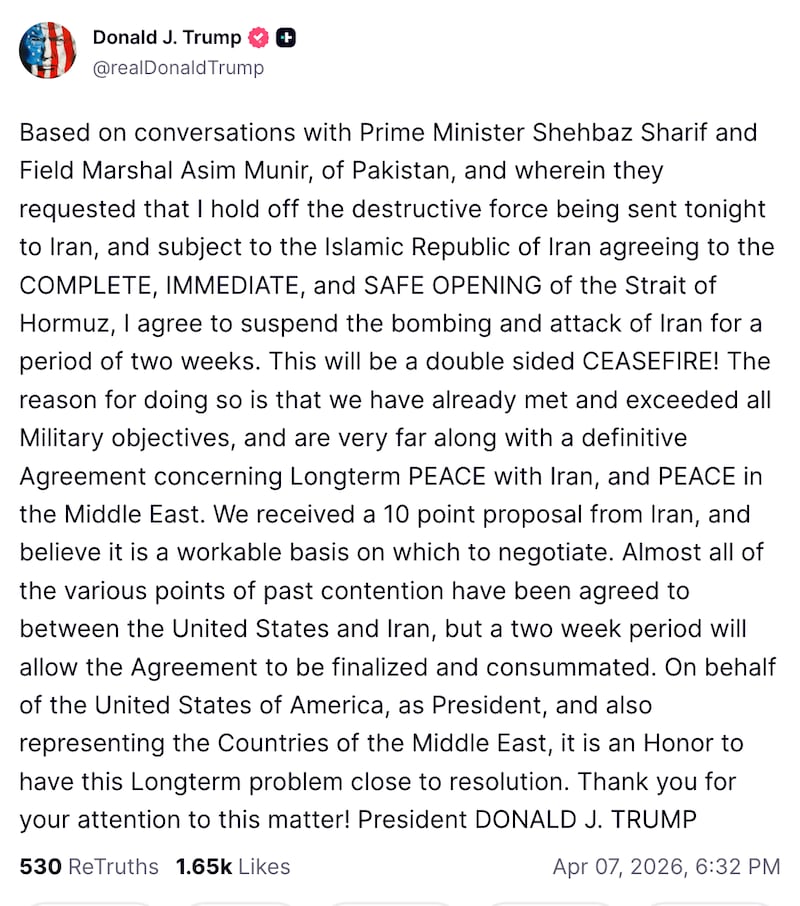
But just hours later, Trump announced in a Truth Social post that he was extending the ceasefire until Iranian leaders “can come up with a unified proposal.”
“I have therefore directed our Military to continue the Blockade and, in all other respects, remain ready and able, and will therefore extend the Ceasefire until such time as their proposal is submitted, and discussions are concluded, one way or the other,” he wrote.
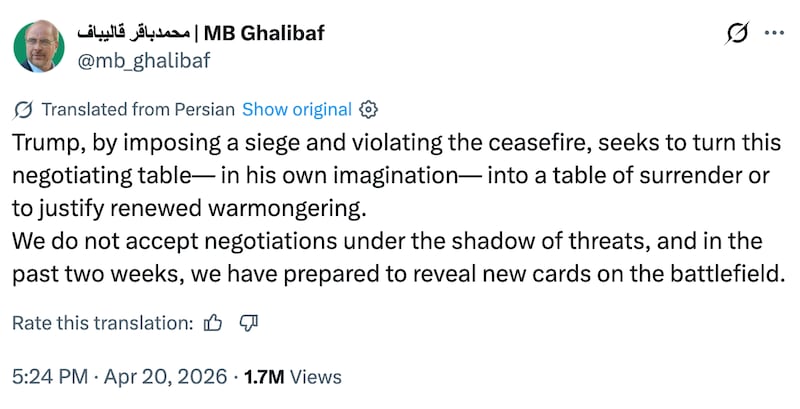
Iranian Parliament Speaker Mohammad Bagher Ghalibaf mocked Trump in a scathing statement after the ceasefire extension was announced.
“Trump, by imposing a siege and violating the ceasefire, seeks to turn this negotiating table—in his own imagination—into a table of surrender or to justify renewed warmongering,” he said. “We do not accept negotiations under the shadow of threats, and in the past two weeks, we have prepared to reveal new cards on the battlefield.”
Vatanka said Iranian leaders were having internal debates about peace talks with the U.S., but noted that “there’s zero evidence those divisions explain the delay in new talks in Islamabad.”
“This is Iran’s leverage, not policy confusion. Iran wants its bottom lines locked into the agenda before it shows up. They say so too,” he wrote on X.