A Trump-appointed federal judge has shot down the president’s bid to seize control of mail-in voting during the November midterm elections.

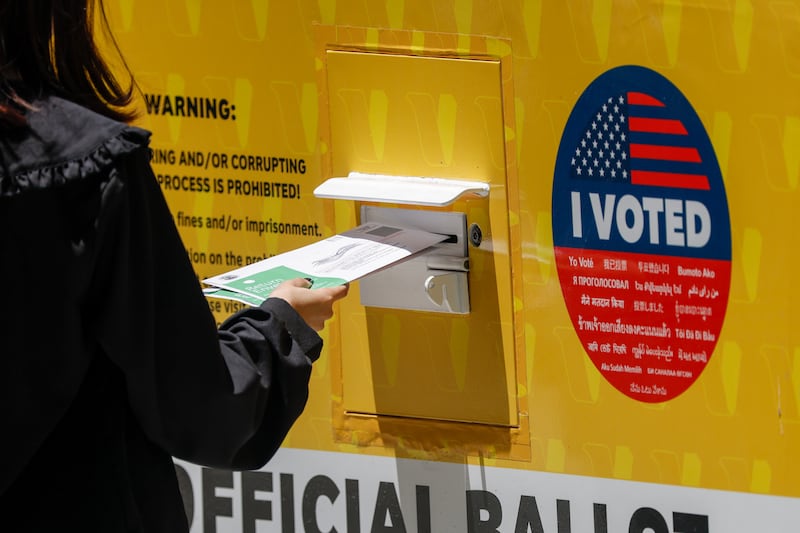
The U.S. Postal Service adopted a rule last month requiring vote-by-mail ballots to be sent only to people enrolled in a federal database of absentee voters maintained by the USPS, with ballots transported in envelopes whose design has been approved by the Postal Service.
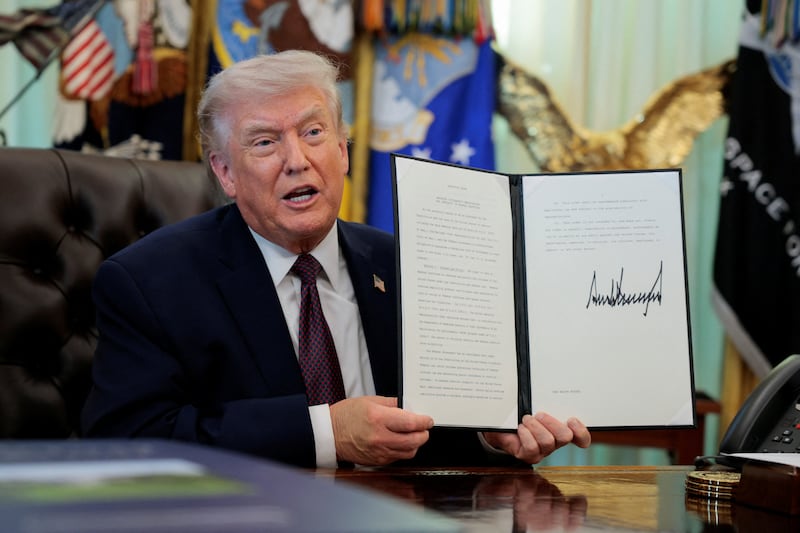
It came in response to a March executive order from Trump that sought to limit voting by mail, despite the Constitution giving states the authority to carry out elections, with Congress, not the executive branch, playing an oversight role.
But critics immediately decried the president’s move, which he said would cut down on fraud, as unnecessary and illegal.
In a decision issued on Sunday, Judge Carl Nichols of the U.S. District Court for the District of Columbia issued a preliminary injunction against the restrictions, saying the USPS had illegally adopted a rule that exceeded its statutory authority.
“As the government concedes, the Postal Service could issue (and enforce) the Rule only if Congress gave it the authority to do so, but here no statute grants the Postal Service the power to issue key parts of the Rule,” Nichols wrote.
The rule took effect on Aug. 21, just over two months before the midterms and a couple of weeks before some states were required to start sending out absentee ballots under state law.
It was quickly blocked in a separate ruling issued by a federal court in Massachusetts.
In his ruling, Nichols flatly rejected the government’s argument that any alleged harms suffered by the USPS rule were “speculative.”
“The record demonstrates that the Rule will make voting by mail more difficult and, for some voters, effectively foreclose that option altogether,” Nichols wrote.
The Daily Beast has approached USPS for comment.
Nichols also wrote that the government had failed to provide any evidence that the rule was needed to combat “significant fraud” in the upcoming elections.
Trump has argued that his proposed voting restrictions are necessary because of widespread voter fraud, despite court records and independent audits repeatedly finding that electoral fraud is vanishingly rare.
For years, the president has spread baseless claims that voting by mail in particular is a form of “cheating,” while repeatedly casting his own absentee ballots.
The president has tried to control who can cast mail-in ballots using a patchwork of procedural mechanisms, leading to a dizzying array of legal rulings and challenges.
Government lawyers had asked the court to keep parts of the USPS rule in place—including the new envelope design requirements and national voter database—even if it temporarily ruled that USPS couldn’t reject ballots that didn’t conform to the changes.
A partial injunction, however, was likely to create “even more confusion and misunderstanding (and thus delays and mistakes),” Nichols wrote.
A whistleblower revealed earlier this month that the USPS was rushing to adopt a “fundamentally flawed” new IT system that could disenfranchise millions of voters in the midterms.

The USPS responded in a statement that it had spent months developing a federal portal to “provide election officials with a simple, secure, and efficient way to share lists of individuals receiving ballots by mail in their respective states,” and that its use was voluntary.